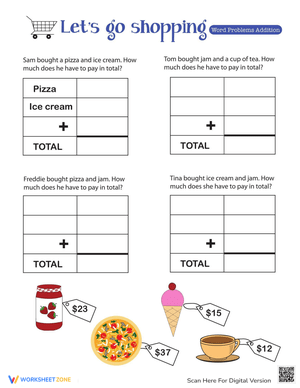
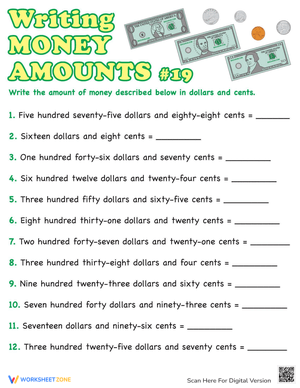
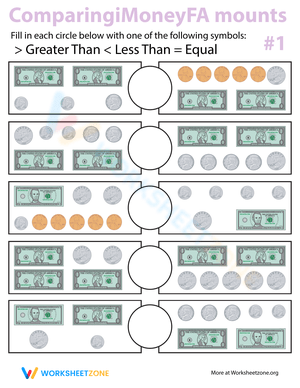
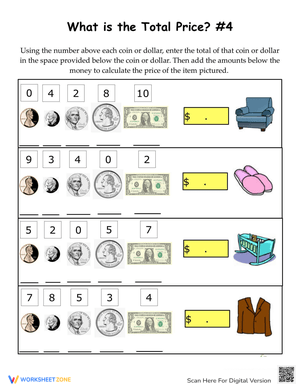
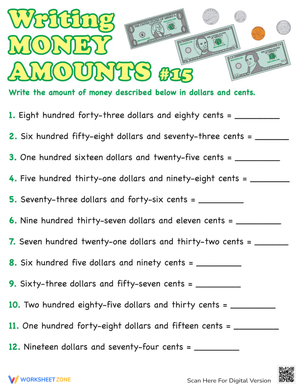
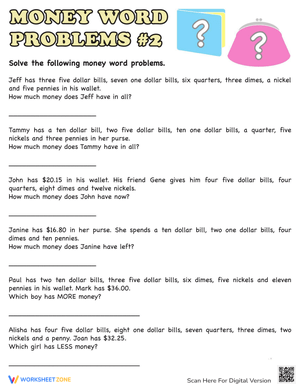
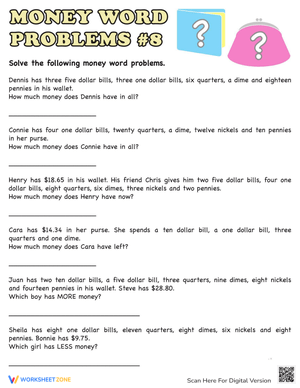
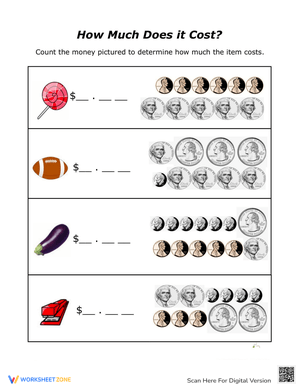
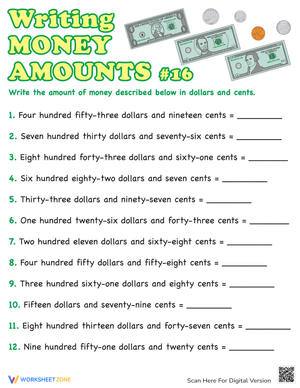
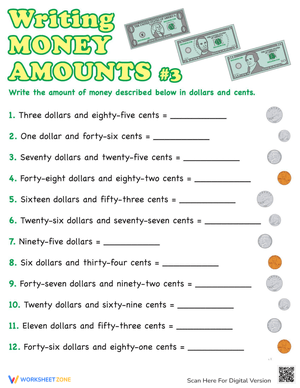
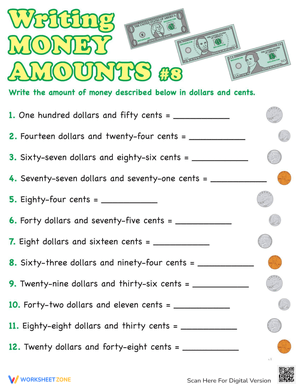
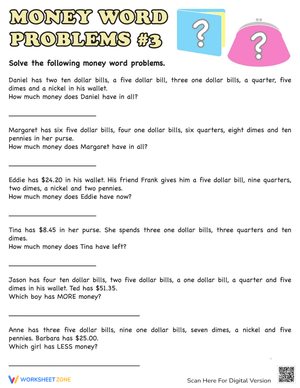
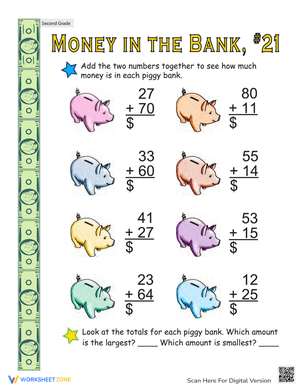
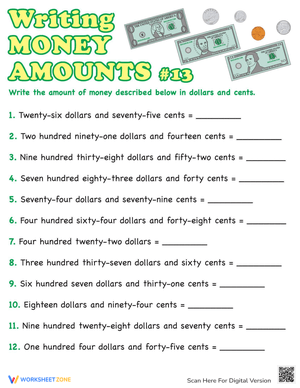
Dollars worksheets for 2nd grade give students a structured on-ramp to money instruction before they attempt the multi-step word problems that show up later in the year. Bill and coin identification has to come first because students cannot solve a problem involving dollars and cents if they cannot yet name the values in front of them.
Second grade is the point where money moves from an informal classroom activity into a formal, tested standard. That shift matters for how you sequence instruction. Rather than jumping straight into change-making scenarios, start with worksheets that isolate one skill at a time: identifying a dollar bill, counting a group of same-value bills, and then layering in coins.
How Dollars Worksheets Align to Grade 2 Standard: CCSS 2.MD.C.8
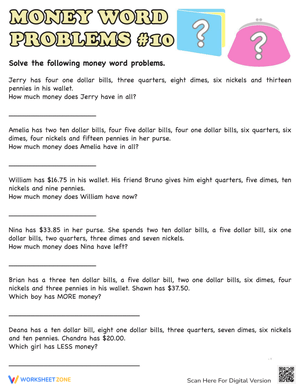
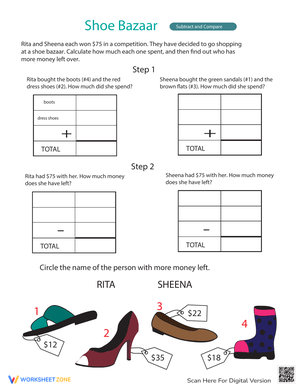
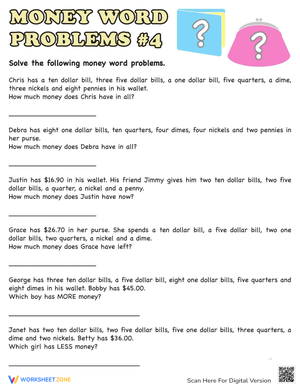
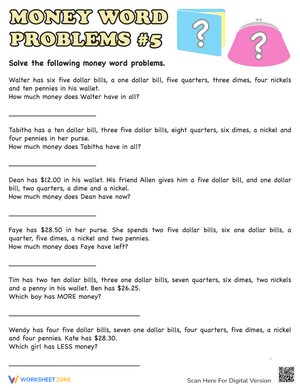
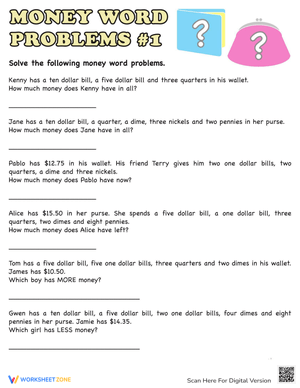
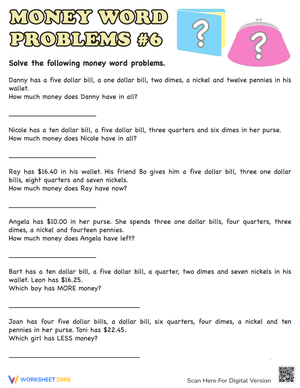
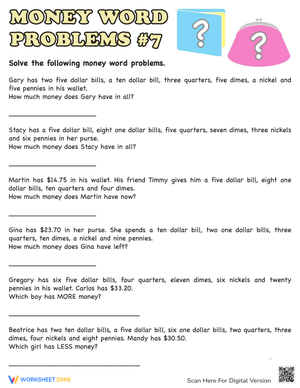
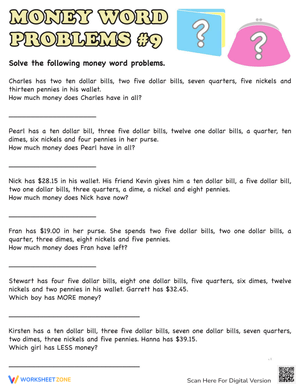
CCSS 2.MD.C.8 requires second graders to solve word problems involving dollar bills, quarters, dimes, nickels, and pennies, using dollar and cent symbols appropriately. This is the first grade level where money appears as a formal, named standard, which means many students arrive with little to no prior formal instruction on the topic.
That timing gap is worth planning around. Because 2.MD.C.8 introduces money as a standalone standard rather than building on a prior-grade money benchmark, teachers often need to spend extra instructional time on bill and coin recognition before word problems can succeed, even though the standard itself is framed around problem solving rather than identification.
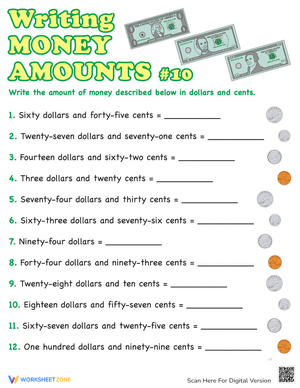
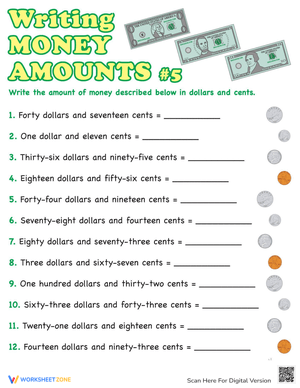
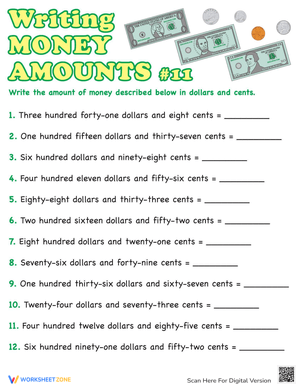
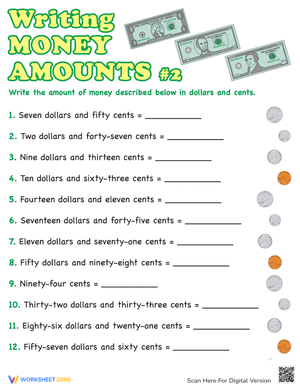
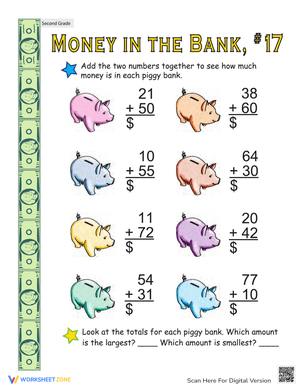
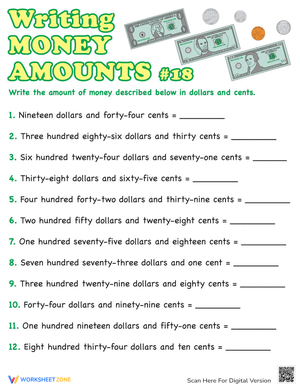
A useful worksheet sequence for this standard looks like: recognize and label bills, count groups of whole dollars, count groups of coins, then combine dollars and coins into a single total using the correct symbol. Worksheets that isolate these steps let you see exactly where a student's understanding breaks down.
Sequencing Skip Counting Into Dollar Practice
Before assigning a worksheet with mixed dollar-and-coin totals, check whether your students can fluently skip count by 5s, 10s, and 25s. If they cannot, a dollars worksheet becomes an exercise in confusion rather than reinforcement.
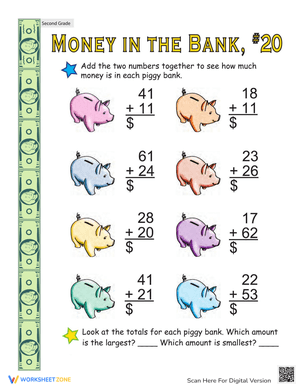
A practical sequence: open your money unit with five minutes of daily skip-counting drills, then introduce dollar bill worksheets that ask students to count by ones (single dollars) and tens (grouped ten-dollar bills). Once that is solid, move to coin worksheets using the same skip-counting patterns, and only then combine dollars and coins on a single worksheet. This scaffolded order keeps the cognitive load manageable and lets you pinpoint whether a wrong answer is a money issue or a counting issue.
Classroom Implementation
Dollars worksheets for 2nd grade work well across several classroom formats, and matching the worksheet type to the setting makes your prep time go further.
- Whole-group instruction: Use a bill-identification worksheet as a shared warm-up, then walk through one or two problems together on the board before releasing students to finish independently.
- Small-group intervention: Pull students who show gaps in skip counting or coin value and use a simplified, single-skill worksheet (dollars only, no mixed totals) so you can isolate and reteach the specific breakdown.
- Morning work or review: A short, familiar worksheet format keeps money skills fresh between formal lessons without requiring new instruction each time.
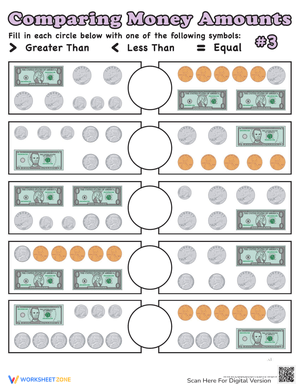
- Formative assessment: A mixed dollar-and-coin worksheet completed independently gives you a quick read on whether a student is ready to move toward CCSS 2.MD.C.8 word problems.
Pairing worksheets with hands-on practice matters here more than in most math strands. Hands-on practice with real or play currency, combined with daily skip-counting drills, is consistently recommended as the most effective classroom intervention for building money sense. Consider having students physically sort play bills and coins before completing the matching worksheet so the abstract symbols on the page connect to something they have touched.
Frequently Asked Questions
1. How do dollars worksheets fit into the CCSS 2.MD.C.8 standard for 2nd grade?
CCSS 2.MD.C.8 asks students to solve word problems involving dollar bills, quarters, dimes, nickels, and pennies using dollar and cent symbols. Dollars worksheets build the recognition and counting skills students need before they can tackle those word problems successfully.
2. What prerequisite skills should students have before starting dollar identification worksheets?
Students benefit from solid skip-counting fluency by 5s, 10s, and 25s and a basic sense of place value, since gaps in these areas are often the real cause of money-counting struggles rather than the money concept itself.
3. How can teachers use these worksheets for small-group intervention versus whole-class instruction?
In small groups, use single-skill worksheets that isolate dollar identification or skip counting to pinpoint a specific gap. In whole-class settings, use a shared worksheet as a warm-up followed by guided practice before independent work.
4. What is the best way to combine dollar bill worksheets with coin-counting practice?
Sequence instruction so students master dollars alone, then coins alone, then move to a worksheet that combines both into a single total, which mirrors the structure of CCSS 2.MD.C.8 word problems.
5. How often should 2nd graders practice money skills to build fluency?
Short, frequent practice works better than occasional long sessions. Daily skip-counting drills paired with a rotating set of dollar and coin worksheets during morning work or review time help build lasting fluency.













 Interactive Worksheet Maker
 Quiz Maker
 Word Search Maker
 Crossword Puzzle Maker
 Word Scramble Generator
 Sentence Scramble Generator
 Handwriting Worksheet Generator
 Name Tracing Generator
 Fill In The Blank Generator