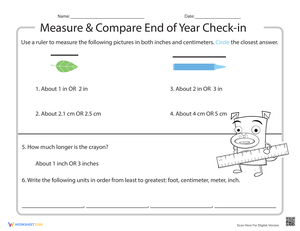
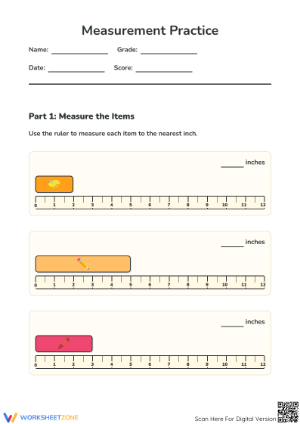
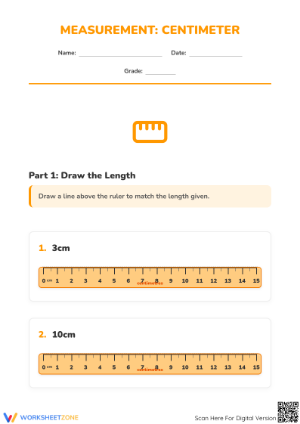
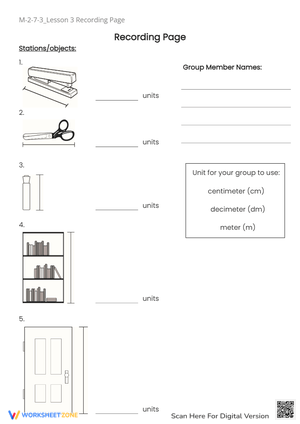
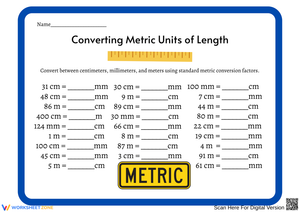
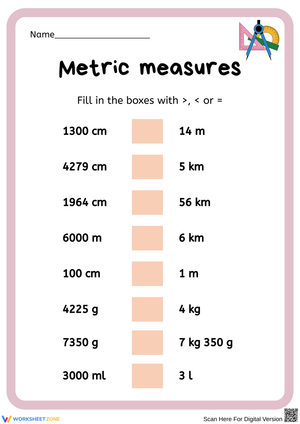
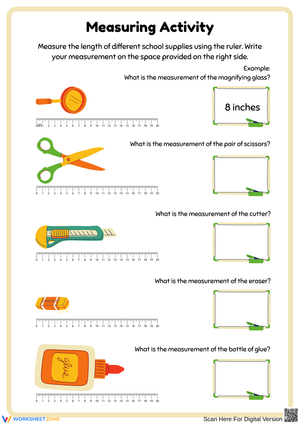
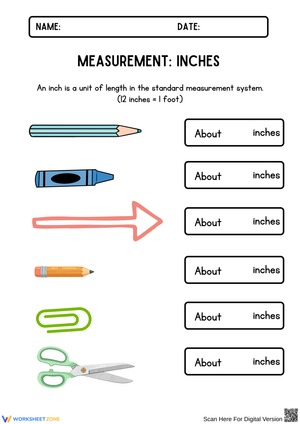
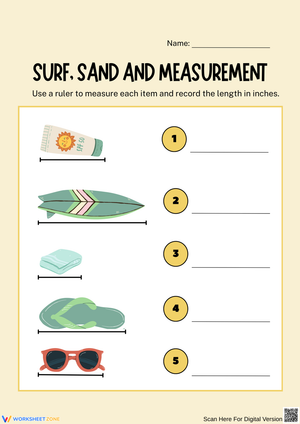
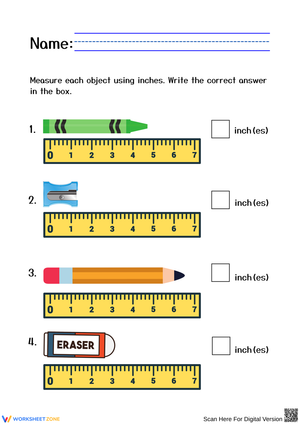
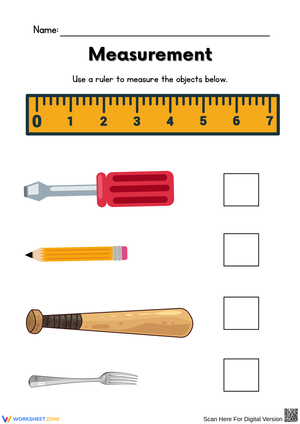
These length and metric units worksheets for 2nd grade cover the two standard metric units second graders are expected to use — centimeters for small objects, meters for larger ones — through a sequence of exercises that begins with ruler reading and builds toward comparison problems and measurement word problems. Each worksheet targets a discrete skill, so a teacher can slot one into a fifteen-minute warm-up block, hand it to a student who missed the lesson, or use it as a quick formative check right before moving to a new concept. The resources come ready to print, which matters when you are pulling something together the night before.
The Specific Skills These Worksheets Build
Metric measurement at the second-grade level is more layered than it first appears. Students are not simply reading numbers off a ruler — they are learning that measurement describes a distance, choosing between two tools with very different scales, and connecting subtraction to the idea of "how much longer." The worksheets address each of those demands separately before combining them.
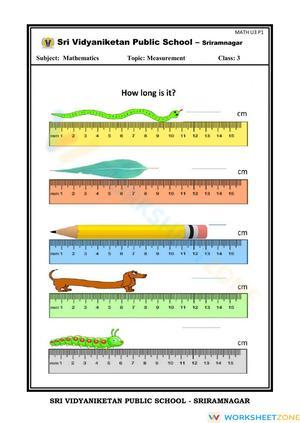
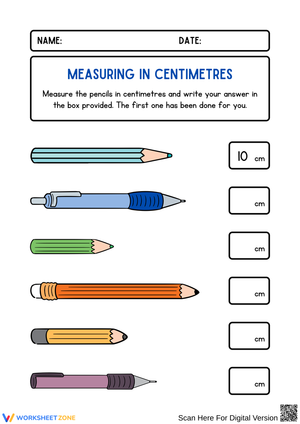
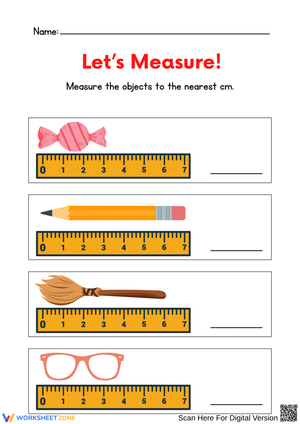
- Reading a centimeter ruler — students mark or read specific measurements on printed ruler images, including measurements that fall between labeled whole-centimeter marks
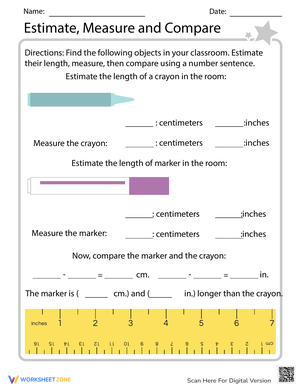
- Estimating before measuring — an estimate column students complete before checking with a ruler builds the internalized sense of what a centimeter and a meter actually look like in the physical world
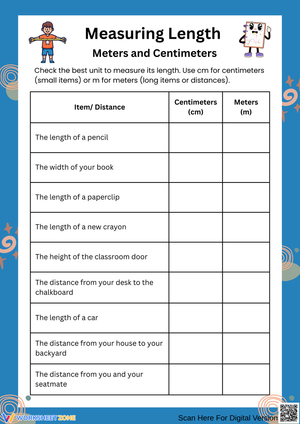
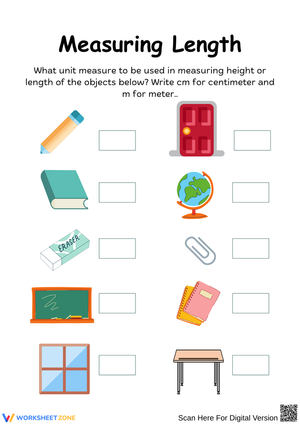
- Choosing between centimeters and meters — students examine pictured objects and decide which unit makes sense, then circle or explain their reasoning
- Comparing two lengths — after measuring two items, students subtract to find the difference and write a comparison sentence in their own words
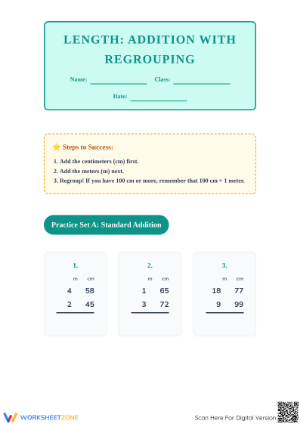
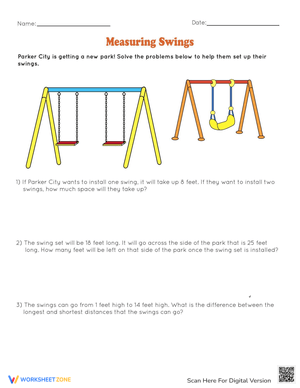
- Solving measurement word problems — story problems present real-world contexts where students identify whether to add or subtract, then label the answer with the correct unit
That last point about unit labels is worth flagging now. Second graders who get the arithmetic right almost always drop the unit from the answer. Building the habit of writing "14 cm" instead of just "14" starts with the worksheet and becomes automatic only through repeated correction over several lessons.
Measurement Mistakes Students Make That Are Worth Catching Early
The single most persistent error in second-grade ruler work is aligning the physical edge of the object with the physical edge of the ruler rather than with the zero line. On most plastic rulers, the zero line sits a few millimeters in from the end, so a student who "lines up the ends" consistently reads measurements that come out slightly too long. What makes this error hard to spot is that it looks right — the object and the ruler both start on the left. Catching it requires watching the alignment in real time, not just checking the recorded number after the fact.
Closely related is the interval-counting problem. Ask a student how long something is, and many will read whatever number the right end of the object lands on — without accounting for where the object started. A broken ruler exercise surfaces this immediately: cut a printed paper ruler at the 3-centimeter mark and ask students to measure a 5-centimeter object with it. The right end of the object lands on 8, but the length is still 5. Students who have been reading endpoints instead of counting intervals get stuck here. That moment of confusion is exactly the right moment to teach the concept, because the cognitive conflict makes the explanation land.
A third pattern shows up in unit-selection exercises. Students learn "cm equals small, m equals big" as a rule and apply it mechanically. Show them a photograph of a swimming pool and many will write "meters" correctly — but when asked to estimate the length, they write 4 or 5 meters, which shows they have no real feel for how long a meter is. A student who writes "5 meters" for a 25-meter pool needs a different conversation than a student who writes "25 meters" and means it. The estimation column on each worksheet surfaces this gap in a way that a correct unit label alone never would.
Building These Worksheets Into Your Week
These work particularly well as Monday warm-ups. After a weekend break, students need a low-stakes re-entry into math before tackling anything procedurally heavier. A ruler-reading or estimation worksheet, eight minutes, and then a quick class review of two or three problems before the day's main lesson — that brief retrieval moment does more for retention than another full lesson on the same skill.
For the estimation and comparison exercises specifically, pairing the printed worksheet with real objects on the desk makes the practice concrete. A length and metric units worksheets for 2nd grade provides the recording structure — labeled columns, a blank for the unit — but the measurement itself should happen against something physical. Lay a pencil, a crayon, and a glue stick on the desk alongside the worksheet. Students estimate on paper first, then measure the actual objects and record. The discrepancy between their estimate and the real measurement is where most of the learning happens.
The word-problem worksheets fit well into a math workshop model as a partner activity. Two students work one problem at a time, each drawing a tape diagram independently before comparing. When their diagrams look different, they have to talk through whose representation matches the problem — and that conversation forces more careful reading than either student would do alone. It also makes the teacher's job easier: disagreements flag exactly which part of the problem language caused the confusion.
Standard Alignment
The worksheets align to three standards from the Common Core State Standards for Mathematics, Measurement and Data domain at Grade 2. 2.MD.A.1 calls for students to measure the length of an object using appropriate tools — rulers, yardsticks, meter sticks — and the ruler-reading and tool-selection exercises address this directly. 2.MD.A.3 covers estimating lengths in standard units, which is the explicit target of the estimation column built into several worksheets throughout the set. 2.MD.A.4 requires students to measure to determine how much longer one object is than another, expressed in the same unit — the comparison and subtraction exercises address this standard exactly. Teachers in non-CCSS states should check their own measurement and data progression, though most Grade 2 standards include comparable benchmarks at the same stage of development.
Differentiating the Set Across a Mixed-Ability Class
Students who are still shaky on ruler reading benefit from having a number line taped to their desk alongside the worksheet. The connection between ruler intervals and number-line intervals is not obvious to all second graders, and making that parallel visible reduces counting errors without removing the thinking the exercise requires.
For students who work through the measurement tasks quickly and accurately, the length and metric units worksheets for 2nd grade comparison exercises extend naturally into a writing task: after finding that one strip is 7 centimeters longer than another, they write two additional word problems using those same measurements. That extension pushes toward the kind of problem construction that appears in later grades without requiring a separate resource or additional prep time.
Students who struggle with word problems often need the language broken down before the math. Having them underline the unit named in the problem, circle the action word ("total," "difference," "how much longer"), and sketch the objects as bar models before writing any numbers — that sequence turns a reading-comprehension barrier into a workable math problem. The worksheets with word problems leave enough white space for this kind of annotation, which is a practical detail that matters more than it sounds when students are working independently.
Frequently Asked Questions
Do these worksheets require physical rulers, or can students work from printed ruler images on the page?
Both formats appear in the set. Some worksheets include printed ruler images scaled to actual centimeters so students measure directly on the paper. Others are recording sheets meant to accompany measurement with a physical ruler or meter stick. Check the product description for each worksheet to see which format it uses before planning whether to gather physical tools.
At what point in a measurement unit should I introduce these worksheets?
Start with the ruler-reading and estimation worksheets during the first two days of instruction, when students are handling physical rulers for the first time. Save the comparison and word-problem worksheets for mid-unit, once students can read a ruler with reasonable accuracy without your guidance. The final worksheet in the set — which combines estimation, measurement, comparison, and unit labeling in a single task — works well as an end-of-unit formative check before any graded assessment.
How do I get students to stop omitting the unit from their answers?
Make it a classroom rule from day one: a number with no unit is not an answer. Return those worksheets unmarked and ask students to find what is missing before you score them. After two or three rounds of that, students start self-checking automatically. The length and metric units worksheets for 2nd grade answer lines include a unit prompt — "___ cm" or "___ m" — on the exercises where omission is most common. That printed cue helps, but the expectation still needs to be stated explicitly on the first day students see a ruler.













 Interactive Worksheet Maker
 Quiz Maker
 Word Search Maker
 Crossword Puzzle Maker
 Word Scramble Generator
 Sentence Scramble Generator
 Handwriting Worksheet Generator
 Name Tracing Generator
 Fill In The Blank Generator