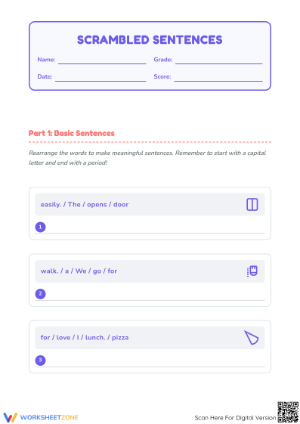
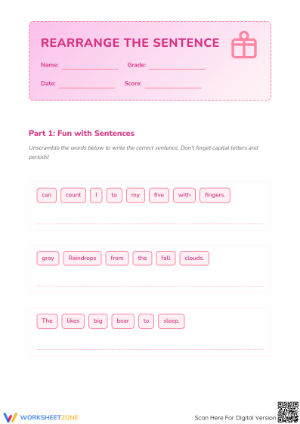
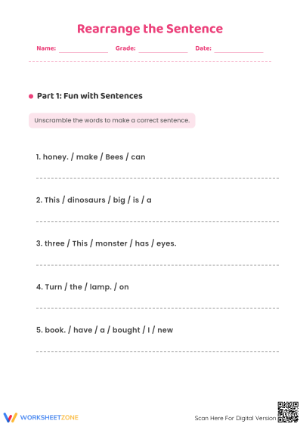
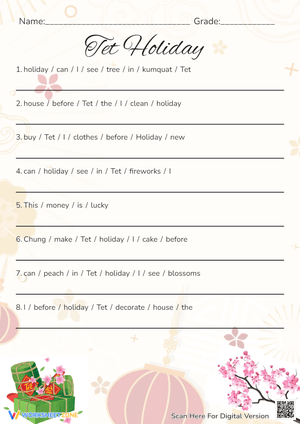
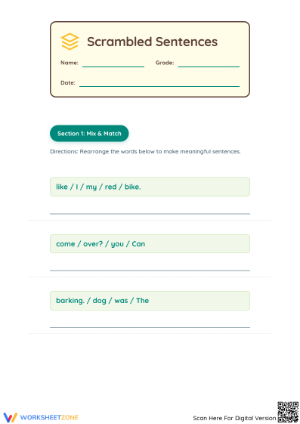
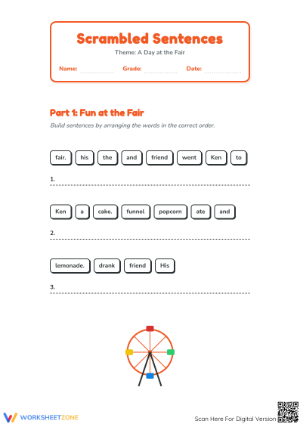
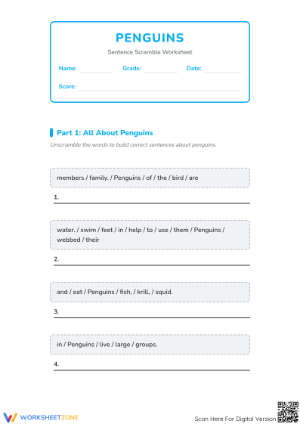
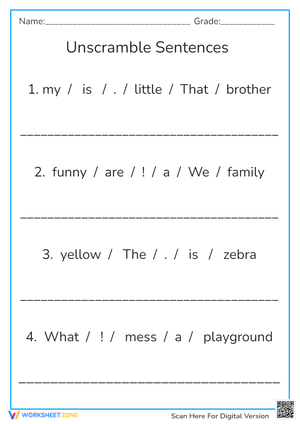
These complete sentences printable worksheets for 2nd grade give teachers a targeted practice sequence for one of the hardest pivots in early composition — the moment students stop treating a phrase like a finished thought and start requiring themselves to answer both "who" and "what happened" before they put down a period. Each worksheet in the set targets the mechanics second graders are expected to control: subject and predicate, opening capitalization, and terminal punctuation. Because recognizing a complete sentence and generating one are genuinely different cognitive tasks, the worksheets keep them separate rather than blurring them together.
The Specific Skills Targeted
The set works across five skill areas. The tasks are deliberately distinct — each worksheet type asks students to do different work with the same underlying concept, which prevents the kind of surface-level pattern-matching that can mask real gaps in understanding.
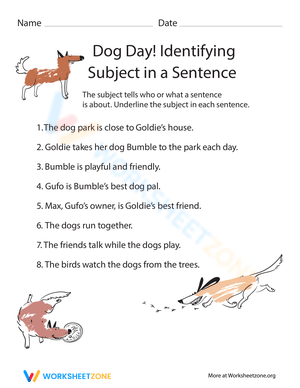
- Subject and predicate identification — students underline the naming part and circle the action part in printed sentences
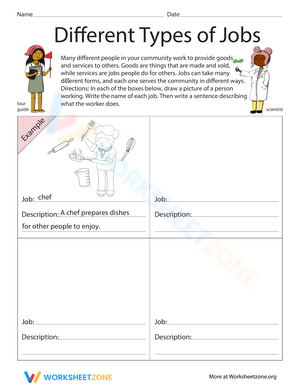
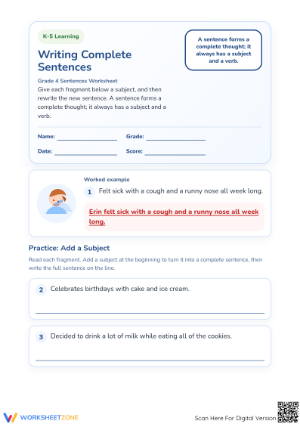
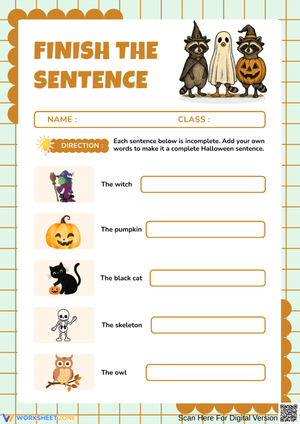
- Fragment correction — students rewrite incomplete thoughts by adding the missing piece, whether that's a subject, a predicate, or both
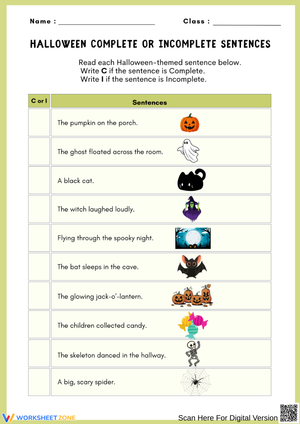
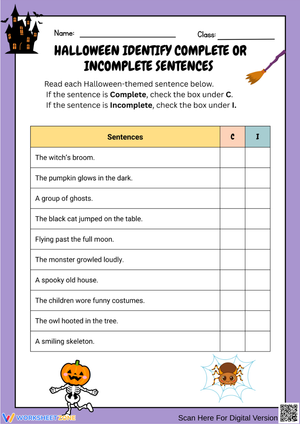
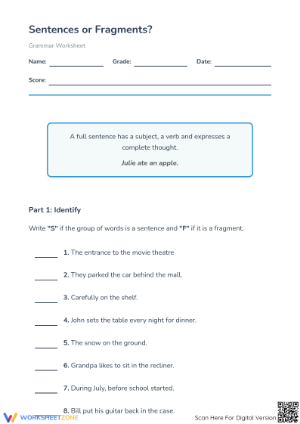
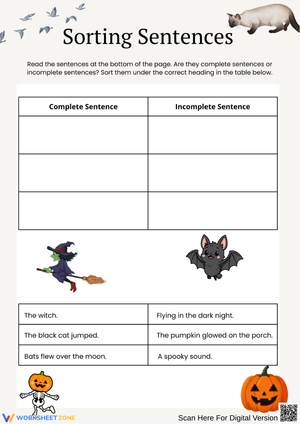
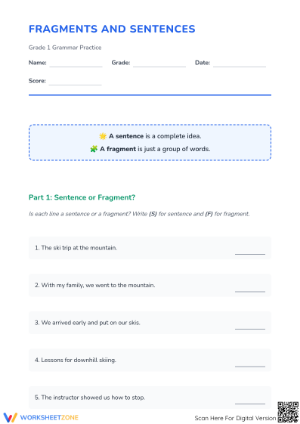
- Sentence vs. fragment sorting — students mark items as complete or incomplete, then explain one of their decisions in a sentence of their own
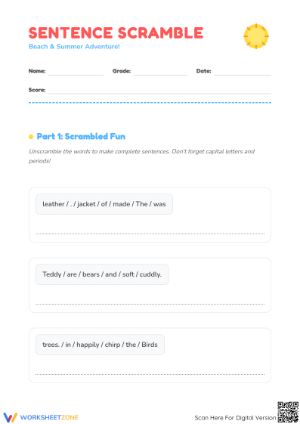
- Capitalization and end punctuation proofreading — students correct short passages by adding missing capitals and selecting the right terminal mark
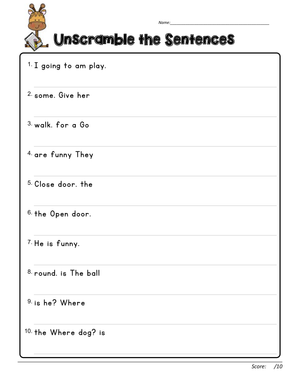
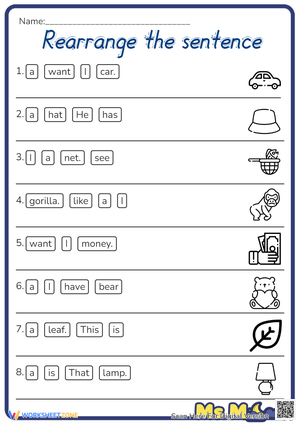
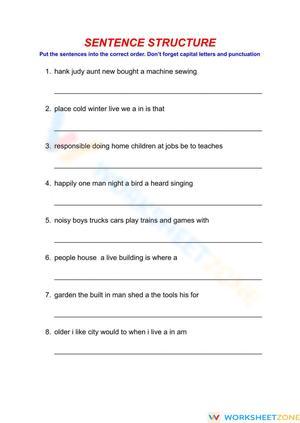
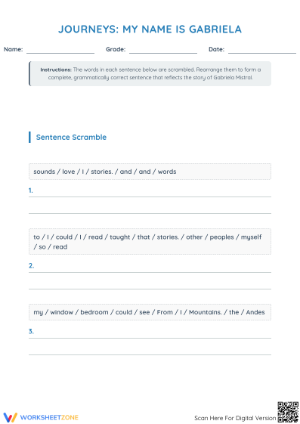
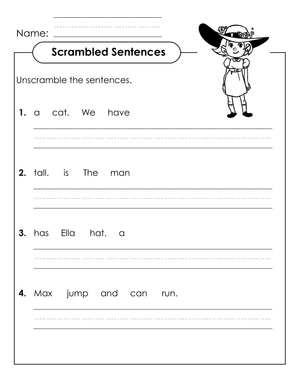
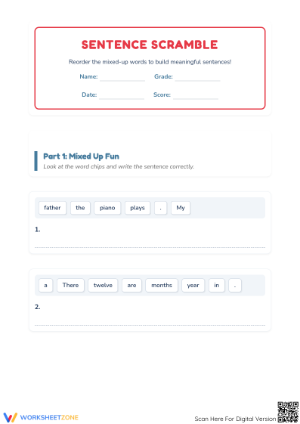
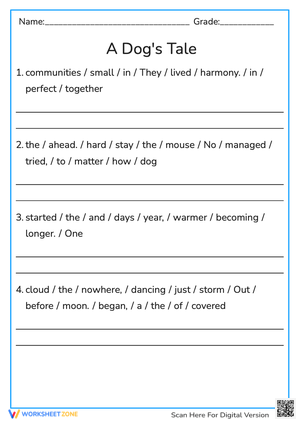
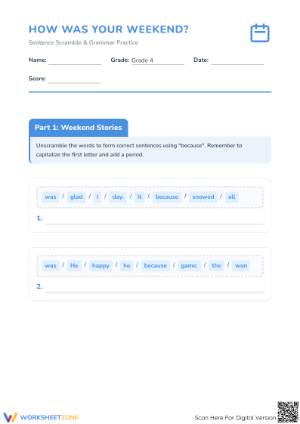
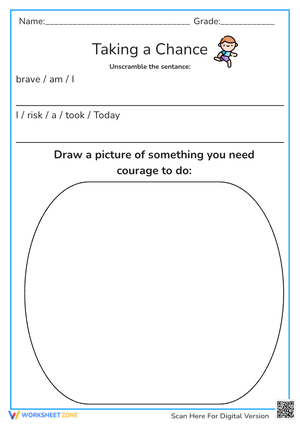
- Sentence combining — students merge two choppy sentences into one using words like and, but, or because
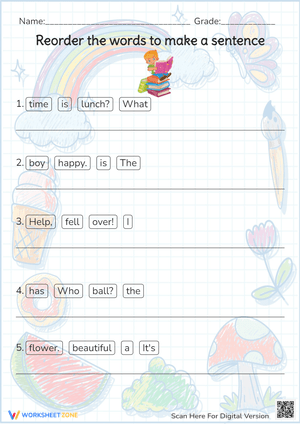
That last task is where students often first see that sentence rules serve communication rather than existing as arbitrary checkboxes. When a student combines "She was cold" and "She forgot her jacket" into "She was cold because she forgot her jacket," the result is self-evidently better — and most seven-year-olds can hear why without being told.
Student Mistakes These Worksheets Surface
The most persistent error at this level isn't the missing period — it's the subordinate clause that students believe is finished. After learning the word "because," many students will write "Because my dog ran away." with a capital letter, a period, and a sense of drama, and consider it complete. They have every visible marker of a sentence except a main clause. The fragment-correction worksheets target this pattern directly: students physically rewrite the incomplete thought by attaching it to a main clause, and the repair makes logical sense in a way that a grammar rule stated aloud rarely does. "Because my dog ran away, I felt sad" is clearly better, and the student can feel the difference.
A second recurring pattern is the subjectless action. "Ran all the way home" feels complete to a seven-year-old because in conversation, shared context fills in who ran. Nobody at the lunch table needs to ask. The sorting worksheets make that missing subject visible as an absence rather than an abstract rule — students are forced to ask who ran, and once they start asking that question automatically during sorting tasks, the habit begins to transfer into their own drafts.
Fitting These Worksheets Into Your Instructional Week
These work best when they follow direct instruction rather than deliver it. A ten-minute whole-group lesson on subjects and predicates — anchored to sentences pulled from a current read-aloud — sets up a worksheet as genuine practice rather than a cold introduction. After that, a single worksheet in a literacy center gives teachers about four minutes of scanning time at the end of the rotation to spot who understood the lesson and who is still circling random words. The complete sentences printable worksheets for 2nd grade lend themselves naturally to the Monday warm-up slot as well: a Friday lesson on fragments becomes a five-question review the following Monday morning, which is a low-stakes check on whether the concept held over the weekend.
The combining worksheets work well later in the week, after students have had several days of identification practice. That timing positions combining as a synthesis task — students apply the subject-predicate logic they have been practicing all week under slightly more demanding conditions. Introduced too early, sentence combining creates unnecessary cognitive load before the foundational concepts are solid.
Standard Alignment
These worksheets address CCSS.ELA-Literacy.L.2.1f, which requires students to produce, expand, and rearrange complete simple and compound sentences. In classroom terms, this standard typically lands mid-year, after phonics and spelling instruction have stabilized enough that students can shift attention to sentence-level structure. The subject-predicate and fragment worksheets address the "produce and expand" expectations; the combining worksheets address "rearrange." Teachers who run a January writing benchmark often find that L.2.1f data from these worksheets predicts how students will perform on the open-response portion of that assessment — students who can consistently correct fragments tend to write in cleaner, more complete sentences when given an independent writing prompt.
Adapting Each Worksheet for Mixed-Ability Classrooms
For students who are not yet secure on the concept, the subject-predicate identification worksheets work best when paired with a two-column graphic organizer — one column labeled "Who?" and one labeled "What happened?" — before students tackle the worksheet independently. That step-by-step format gives students a concrete entry point rather than staring at a full sentence with no starting place. The complete sentences printable worksheets for 2nd grade are also appropriate for advanced first-grade writers, particularly the sorting and identification worksheets, which require recognition rather than production and are therefore less demanding for younger students still developing writing fluency.
For students who have already mastered fragments and capitalization, the combining worksheets are where meaningful differentiation happens. Assign those students three-sentence combining tasks instead of two, or ask them to write their own fragments for a partner to repair. That peer-editing extension pushes the skill toward application and keeps high-readiness students doing substantive work rather than reviewing concepts they have already internalized.
Frequently Asked Questions
Do these worksheets cover run-on sentences, or just fragments?
The primary focus is fragment identification and correction, which is where second-grade instruction is anchored under L.2.1f. Run-ons appear at the edges — the sentence-combining worksheets indirectly show students why two ideas sometimes need a connecting word rather than simply being jammed together — but run-on correction as a standalone skill is typically a third-grade focus. Using these worksheets to address run-ons is possible, but they are not built for it.
Which worksheet should I assign first?
Start with the sorting worksheets. Sorting is a receptive task — students identify rather than produce — which gives you a clean read on prior knowledge before students have to write anything at all. If most of the class sorts accurately, move directly to the fragment-correction worksheets. If a significant portion of students mark "Because she was tired." as complete, the subject-predicate identification worksheets are the right starting point before correction work begins.
Can these double as formative assessment?
Yes, and for many teachers that becomes one of the most practical uses for this set. A completed sorting worksheet takes about three minutes to scan for patterns. If four or five students are consistently marking subordinate clauses as complete sentences, that tells you exactly what needs reteaching before the class moves on. The complete sentences printable worksheets for 2nd grade give you fast, specific diagnostic information — missing subject, missing predicate, or punctuation confusion — rather than a vague sense that some students did not get the lesson.