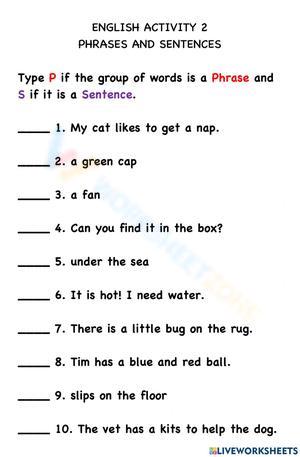
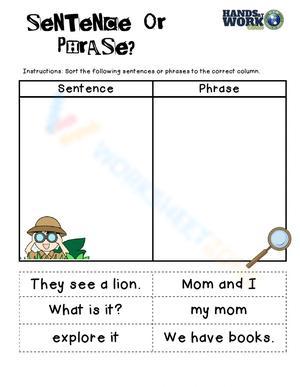
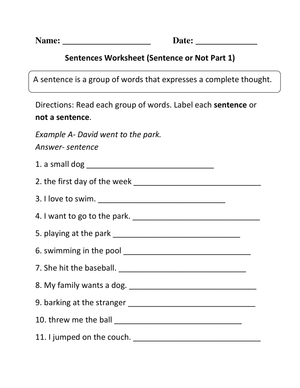
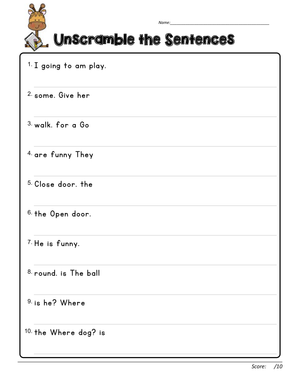
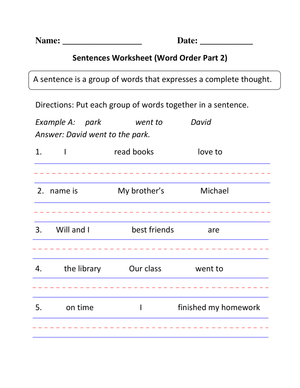
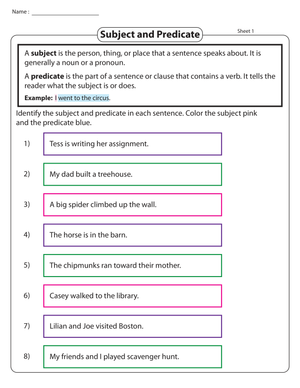
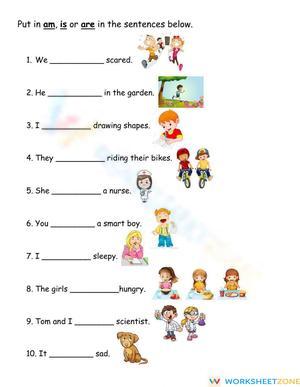
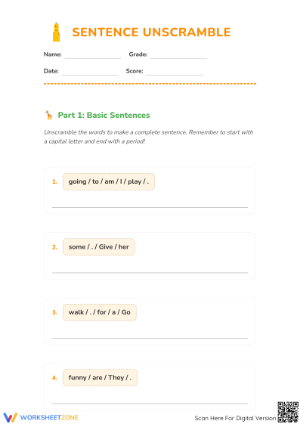
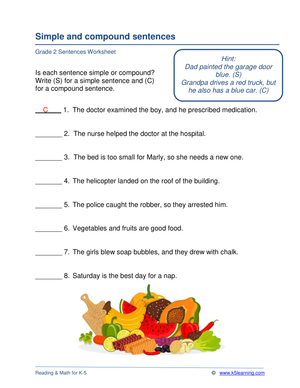
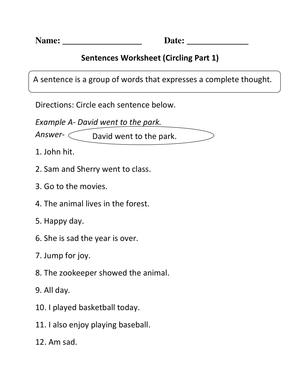
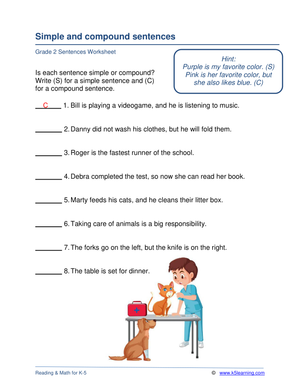
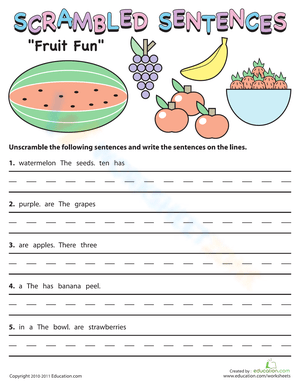
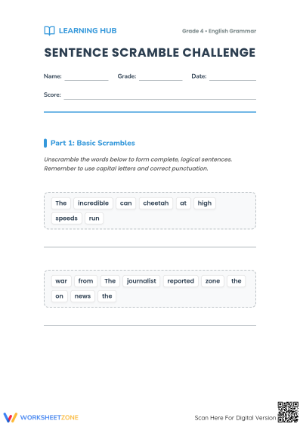
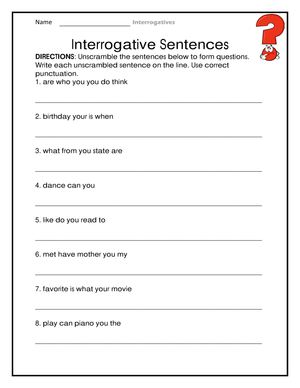
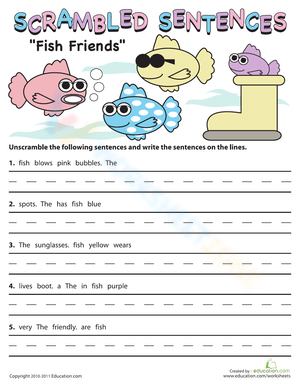
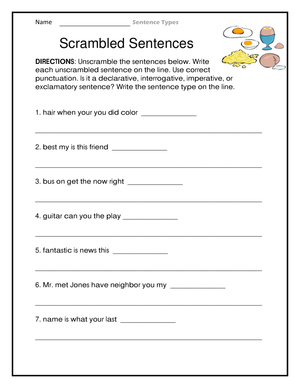
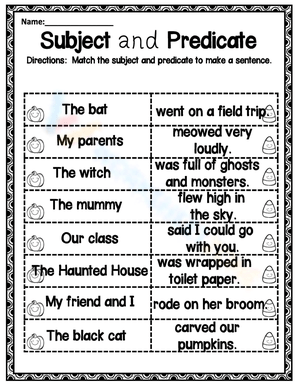
These 2nd grade sentence structure worksheets give teachers a direct path through the four connected skills in L.2.1.F — producing, expanding, and rearranging simple and compound sentences — with each worksheet focused on one exercise type rather than mixing tasks. Students underline, rewrite, combine, and correct across the set, working through subject-predicate identification, sentence expansion with adjectives and adverbs, compound sentence construction, and fix-it mechanics. The range of exercise formats makes selective assignment straightforward based on where individual students are actually struggling.
What Students Practice Across the Set
Each worksheet concentrates on one of four skill areas:
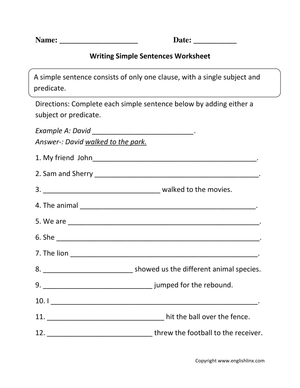
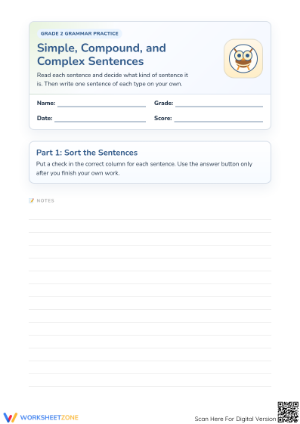
- Subject and predicate identification: Students mark the subject with one underline and the predicate with two, making the sentence's structure visible before they attempt to manipulate it.
- Sentence expansion: Starting from a kernel sentence, students respond to guided questions — What kind? Where? How? — adding adjectives and adverbs one step at a time before writing the full expanded version.
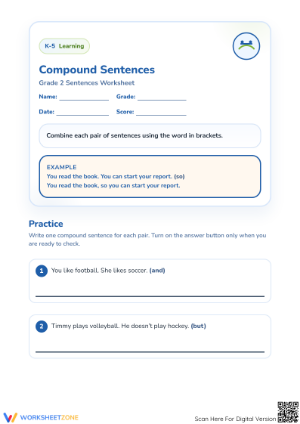
- Compound sentence construction: Students first locate the two simple sentences inside compound examples, then practice joining pairs using and, but, or, and so, with each conjunction treated as distinct rather than interchangeable.
- Fix-it mechanics: Students rewrite sentences with realistic errors — missing proper noun capitals, absent or misplaced commas before coordinating conjunctions, and end punctuation problems.
The ordering reflects a real dependency. Students who cannot locate a predicate in a simple sentence will struggle to find where one clause ends and the next begins in a compound sentence. Identification work comes first because skipping it creates confusion at every stage that follows.
Student Error Patterns That Surface Quickly With This Work
The fragment problem runs deeper than it looks. Students who correctly write "The dog barked" will still submit "Because I was hungry." as a complete sentence — the capital letter and period feel like completeness to them, regardless of whether a subject and predicate are actually present. When a student underlines "because I was hungry" as the predicate in an identification exercise, that tells you immediately the concept of a complete thought hasn't transferred yet, and fix-it exercises alone won't resolve it.
Run-on sentences take a different form at this grade. Second graders who have just learned about coordinating conjunctions often treat "and" as an unlimited connector: "I went home and I ate dinner and my mom watched TV and the dog barked and we went to bed." They've absorbed that "and" joins ideas, so they use it to join all of them. The compound sentence exercises address this by requiring students to find the seam between exactly two joined sentences — not add more clauses to an existing chain.
Comma placement generates a specific transfer error worth watching. Students who practice "comma before the conjunction" correctly — writing "I like apples, but I don't like oranges" — will sometimes apply the same rule to compound predicates: "She ran, and jumped." That's a different construction, and the fix-it exercises include both types so students encounter the distinction in practice rather than inferring it on their own later.
Standard Alignment
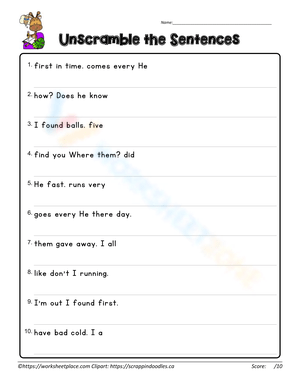
CCSS.ELA-Literacy.L.2.1.F requires students to produce, expand, and rearrange complete simple and compound sentences. In most second-grade pacing guides, this standard lands in the second half of the year, after students are writing independently and teachers can shift attention from getting complete thoughts down to shaping how those thoughts are constructed. The skill progression in the set mirrors that placement — identification and expansion first, then compound construction, with mechanics woven throughout rather than saved for the end.
The fix-it exercises also address L.2.2, covering capitalization and punctuation conventions including proper noun capitals and comma use. Practicing those mechanics inside sentence-level tasks puts the rules in a context where students are more likely to carry them into independent writing than if they met the same rules as isolated drills.
Where These Worksheets Fit in Your Writing Block
The most reliable placement is at the front end of writing workshop — ten minutes of sentence practice before students move into drafting or revising their own work. A sentence-expansion exercise right before independent writing puts a concrete model in front of students while the skill is still fresh. That pairing between the structured exercise and the open-ended writing that follows is where transfer actually happens.
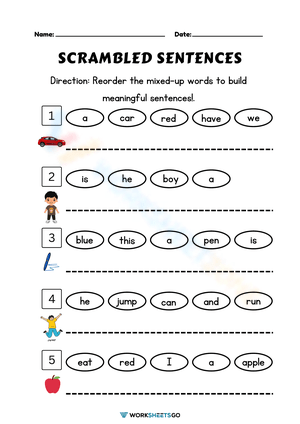
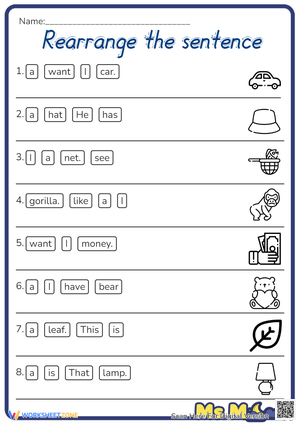
Literacy center rotation is another strong fit. One group works on compound sentence exercises at a center while you pull a small group for fragment review at the table. These 2nd grade sentence structure worksheets are organized so you can assign them selectively — fix-it exercises for students who already write complete sentences and need mechanics attention; expansion exercises for students who still produce short, bare-bones sentences and need to develop detail.
For the 8–10 minutes before students leave for specials — when starting something new makes no sense — a subject-predicate identification exercise fits cleanly. Students mark, finish, and you've covered real grammar without cutting into writing time.
Tailoring the Exercises for Students at Different Levels
Students who are still working on basic sentence completeness need direct, sentence-level practice with identification before they move into expansion or compound construction. Start them there, and pair any fix-it work with a brief verbal explanation of why each error breaks the sentence. Oral processing before written correction reduces the frustration that comes from marking problems students cannot yet see on their own.
Students who move through the core exercises quickly can take the compound sentence work further by reversing clause order — writing "She packed her bag, but she forgot her lunch" and then rewriting it with the clauses flipped — and discussing how the emphasis shifts. That kind of sentence-level play sits just beyond L.2.1.F but builds the syntactic awareness that distinguishes strong writers in third grade.
Frequently Asked Questions
When is the right time to introduce compound sentences?
The clearest readiness signal is consistent, fragment-free writing in independent work. If students are still producing fragments, introducing compound sentences adds a new layer before the foundation is solid. Once students write simple sentences reliably — even short ones — you can start showing them how to join two related ideas. Most pacing guides place this in late winter or spring, but individual readiness matters more than the calendar date.
How do I explain the difference between a compound sentence and a compound predicate to second graders?
Put two examples side by side: "She ran and jumped" has one subject doing two things — no comma, compound predicate. "She ran, and he jumped" has two different subjects — comma before and, compound sentence. Ask students: "Who is doing the second action — is it the same person or a different one?" That question becomes a self-editing move students can apply in their own writing by the end of the year.
Can students who struggle with reading work through these exercises independently?
The 2nd grade sentence structure worksheets use short, simple sentences as their base material, so the reading demand is low. Students who struggle with decoding can usually access the grammar task with minimal support — reading the kernel sentence aloud before they begin is typically enough. The grammar focus and the reading demand don't compete here the way they would in a passage-based activity.
How do I help students carry sentence skills into their own writing?
At the end of the grammar lesson, ask students to open their writing notebook and find one sentence to expand or one place to join two short sentences. Three minutes of application in their own draft does more for transfer than five more minutes of practice exercises. The 2nd grade sentence structure worksheets handle the pattern introduction and repetition — transfer happens when students go looking for those same patterns in their own work.












 Interactive Worksheet Maker
 Quiz Maker
 Word Search Maker
 Crossword Puzzle Maker
 Word Scramble Generator
 Sentence Scramble Generator
 Handwriting Worksheet Generator
 Name Tracing Generator
 Fill In The Blank Generator