




























Views
Downloads
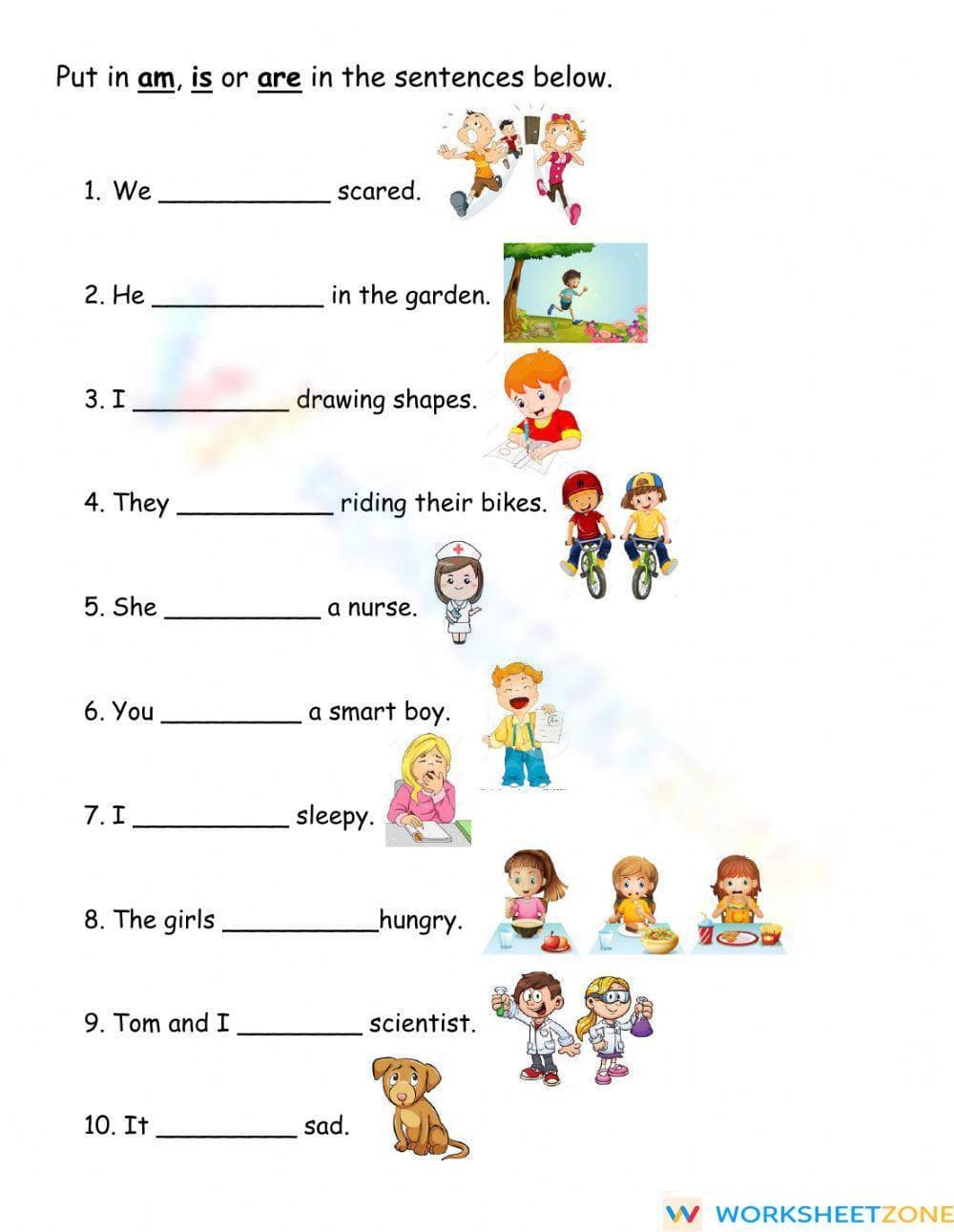

Printable Am Is Are Verb Agreement Worksheet | Grade 1

Paste this activity's link or code into your existing LMS (Google Classroom, Canvas, Teams, Schoology, Moodle, etc.).
Students can open and work on the activity right away, with no student login required.
You'll still be able to track student progress and results from your teacher account.
This Grade 1 verb agreement worksheet helps students master the foundational "to be" verbs: am, is, and are. By matching pronouns and subjects with the correct verb form across ten illustrated sentences, learners build the grammatical accuracy necessary for fluent writing and speaking. This resource provides immediate practice in subject-verb agreement for primary ELA students.
At a Glance
- Grade: 1 · Subject: English Language Arts
- Standard:
CCSS.ELA-LITERACY.L.1.1.C— Use singular and plural nouns with matching verbs in basic sentences- Skill Focus: Subject-Verb Agreement (am/is/are)
- Format: 1 page · 10 problems · Answer key included · PDF
- Best For: Independent grammar practice and daily warm-ups
- Time: 10–15 minutes
What's Inside
Inside this single-page PDF, you will find ten fill-in-the-blank sentences paired with colorful, engaging illustrations that provide visual context for each scenario. The worksheet covers singular and plural subjects, including "I," "He," "She," "You," "We," "They," "The girls," and "Tom and I." A comprehensive answer key is included for quick grading or student self-correction.
Zero-Prep Workflow
This resource is designed for a streamlined, zero-prep classroom experience. First, simply print the number of copies needed for your class in under one minute. Second, distribute the worksheets during your grammar block or as a morning work activity, requiring only a pencil from the students. Finally, review the ten items as a whole class in less than five minutes using the provided answer key.
Standards Alignment
This worksheet is primarily aligned with CCSS.ELA-LITERACY.L.1.1.C: "Use singular and plural nouns with matching verbs in basic sentences." It specifically targets the irregular forms of the verb "to be" which are critical for early literacy development. This standard code can be copied directly into lesson plans, IEP goals, or district curriculum mapping tools to ensure instructional compliance.
How to Use It
Use this worksheet as a formative assessment during or after a direct instruction lesson on linking verbs. As students work, circulate and observe if they correctly identify plural subjects like "The girls" or compound subjects like "Tom and I," which often challenge early learners. This activity typically takes 10 to 15 minutes to complete, making it an ideal exit ticket.
Who It's For
This resource is perfect for first-grade students or Kindergarteners ready for advanced grammar, as well as second graders needing a quick review. It includes visual scaffolds through illustrations, making it accessible for English Language Learners (ELLs). Pair this with a short reading passage or a verb anchor chart to reinforce the concept during small-group instruction.
Mastering the auxiliary and linking verbs "am," "is," and "are" is a pivotal step in developing syntactic awareness according to RAND AIRS 2024. This worksheet targets CCSS.ELA-LITERACY.L.1.1.C by requiring students to identify the relationship between subjects and their corresponding verb forms in ten distinct contexts. Research indicates that structured, repetitive practice with common verbs significantly reduces errors in early student writing and improves overall sentence structure. By utilizing visual cues alongside text-based tasks, this resource supports the gradual release of responsibility from guided to independent practice. The integration of singular, plural, and compound subjects ensures that students encounter a variety of grammatical challenges within a single page. This focused approach aligns with evidence-based literacy practices that emphasize the importance of mastering foundational grammar conventions early in the primary grades to support later academic success in both reading comprehension and formal writing.


