


























Views
Downloads
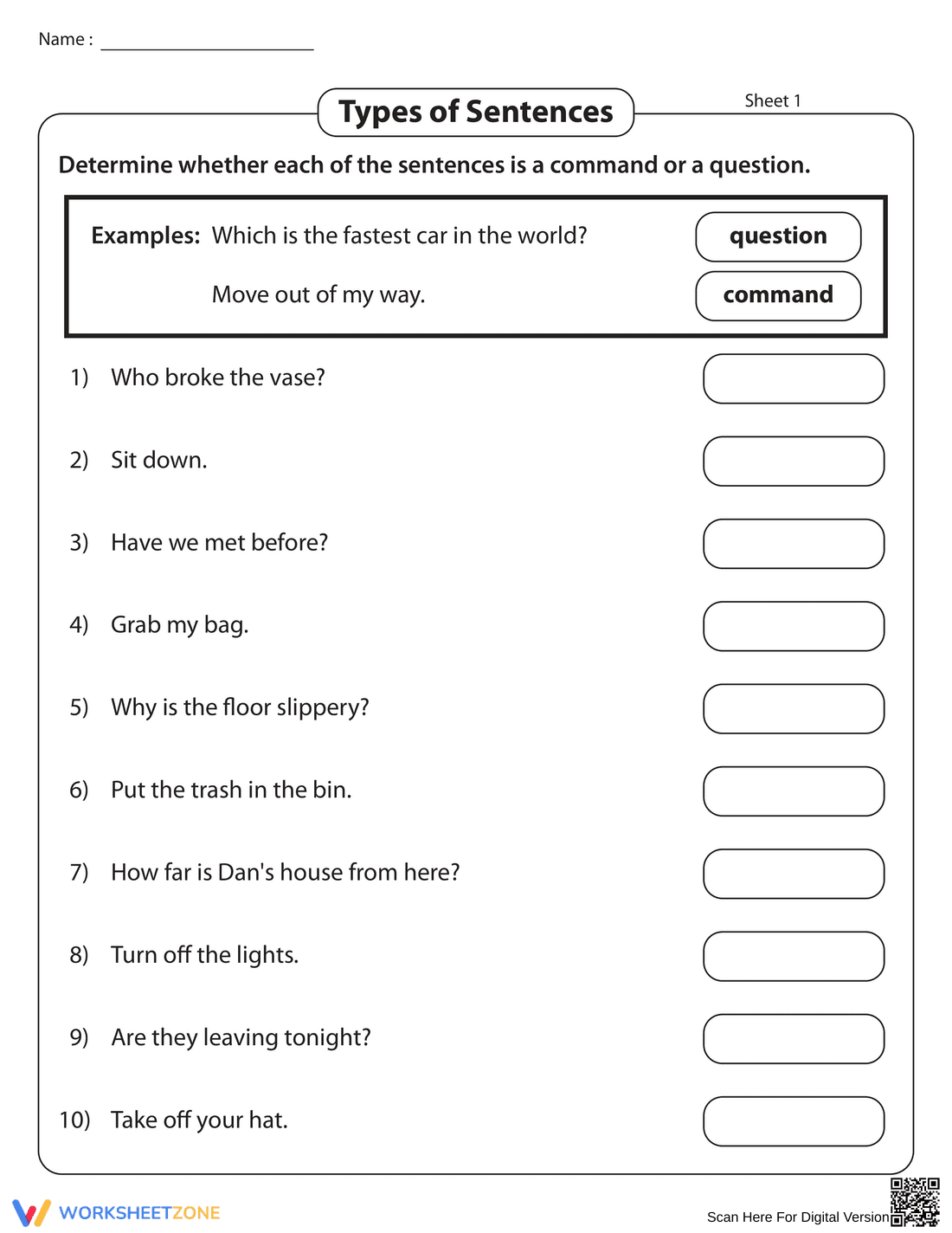

Essential Command or Question Worksheet | Grade 2 ELA
Paste this activity's link or code into your existing LMS (Google Classroom, Canvas, Teams, Schoology, Moodle, etc.).
Students can open and work on the activity right away, with no student login required.
You'll still be able to track student progress and results from your teacher account.
This Grade 2 ELA worksheet helps students master the distinction between commands and questions. By identifying the functional purpose of ten unique sentences, learners build fundamental grammar skills necessary for effective writing and reading comprehension. This resource provides clear examples and structured practice to ensure students can accurately categorize imperative and interrogative sentence structures in any context.
At a Glance
- Grade: 2 · Subject: ELA Sentences
- Standard:
CCSS.ELA-LITERACY.L.1.1.J— Produce and expand complete simple and compound interrogative and imperative sentences- Skill Focus: Command vs. Question Identification
- Format: 1 page · 10 problems · Answer key included · PDF
- Best For: Independent practice or grammar centers
- Time: 10–15 minutes
What's Inside
This single-page PDF features a clean, student-friendly layout designed for immediate use. An example box clearly demonstrates how to identify a question versus a command using punctuation and word order cues. Following the examples, ten numbered sentences challenge students to determine the sentence type and write their answer in the provided oval blanks. The worksheet includes a mix of everyday commands and common questions to reflect real-world language usage.
Zero-Prep Workflow
This resource is designed for maximum efficiency in the classroom or at home. Simply print the single-page document in less than thirty seconds and distribute it to your class. Students can begin working immediately thanks to the self-explanatory instructions and clear examples provided at the top of the page. Reviewing the ten items with the included answer key takes less than two minutes during a whole-group check or individual conference.
Standards Alignment
The primary focus of this activity is CCSS.ELA-LITERACY.L.1.1.J, which requires students to produce and expand complete simple and compound declarative, interrogative, imperative, and exclamatory sentences. Mastery of identifying these sentence types is a critical prerequisite for achieving this standard. This standard code can be copied directly into lesson plans, IEP goals, or district curriculum mapping tools to track student progress toward grammar proficiency.
How to Use It
Assign this worksheet as a quick check for understanding immediately following a lesson on sentence types. It serves as an excellent formative assessment; observing if students rely solely on punctuation or if they recognize the imperative tone of a command provides valuable insight into their linguistic awareness. Alternatively, use it as a reliable sub-plan activity that requires no additional teacher setup. Students should complete the ten tasks in approximately fifteen minutes.
Who It's For
This practice sheet is ideal for second-grade students who are refining their understanding of punctuation and sentence function. It also supports first-grade students ready for more complex sentence structures or third-graders requiring a targeted grammar review. For students needing more support, pair this worksheet with a visual anchor chart that highlights the key differences between commands and questions, such as the use of question marks versus periods.
According to research, the ability to distinguish between sentence functions like commands and questions is a foundational literacy skill that directly impacts a student's reading fluency and written expression. When students recognize the intent behind a sentence structure, they improve their prosody during oral reading and gain better control over their own communicative goals in writing. This worksheet aligns with CCSS.ELA-LITERACY.L.1.1.J by providing the specific identification practice needed to move from recognition to production. Consistent practice with interrogative and imperative sentences helps bridge the gap between simple grammar recognition and the more complex syntactic transformations required in higher elementary grades. This data-driven approach supports evidence-based instruction in English Language Arts classrooms. The resource allows for quick evidence gathering of student mastery regarding sentence types, facilitating targeted interventions where necessary for developing writers.


