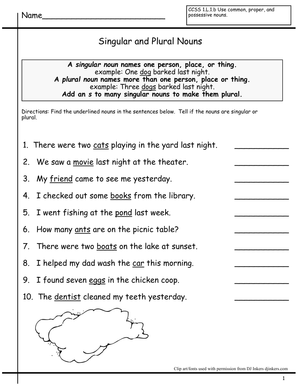
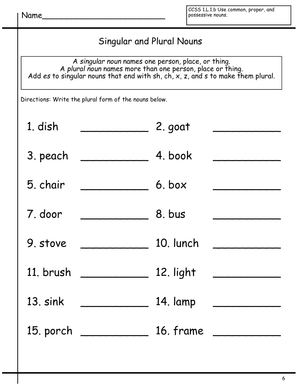
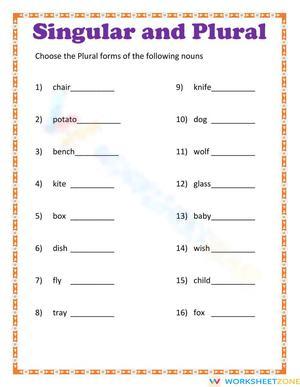
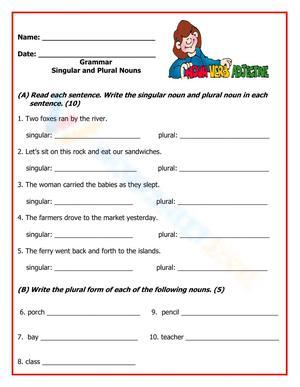
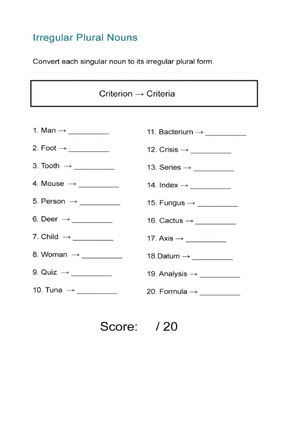
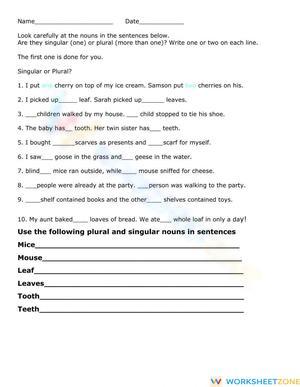
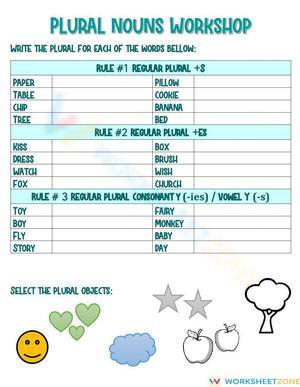
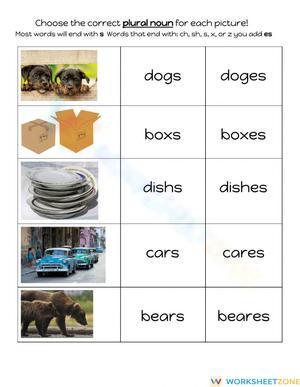
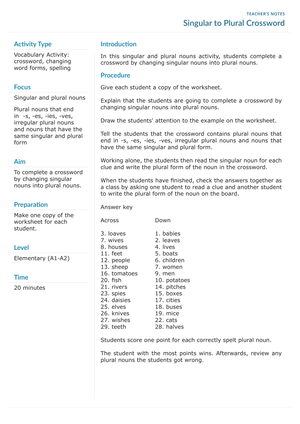
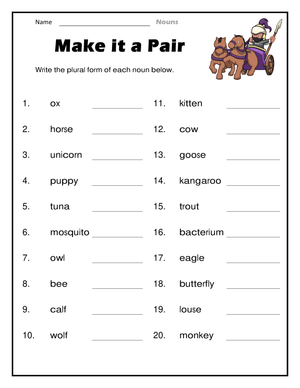
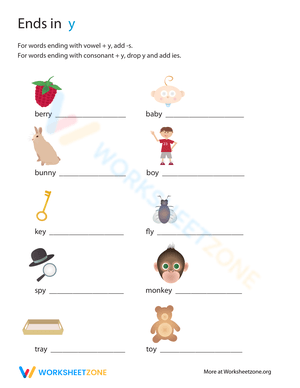
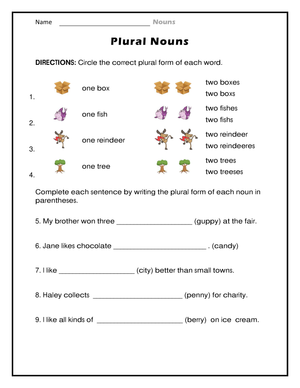
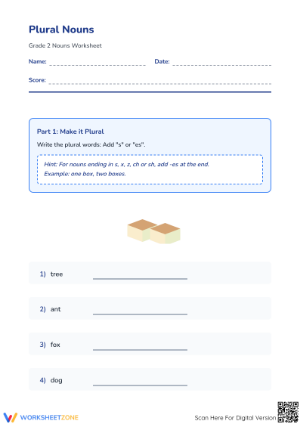
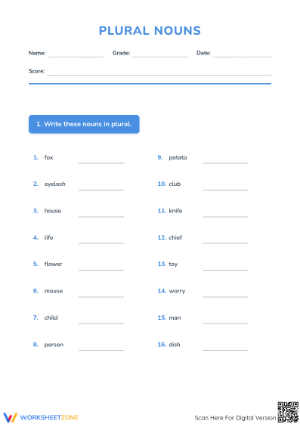
These singular and plural nouns pdf worksheets for 2nd grade give teachers a set of print-ready resources that moves students through all three rule categories second graders are expected to control — standard -s and -es endings, the consonant-y-to-ies conversion, and the irregular forms that require memorization rather than logic. The set spans isolated-rule practice all the way to sentence-level rewriting, so there is something useful at the front of the unit and at the end of it.
The Specific Skills Targeted
Each worksheet isolates one rule category cleanly, which matters because mixing rule types on the same worksheet tends to produce guessing rather than rule application. The full set covers:
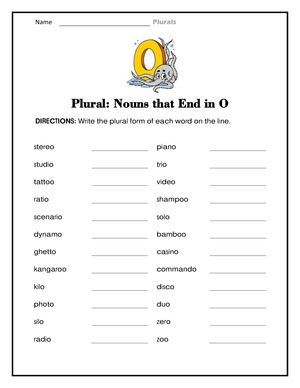
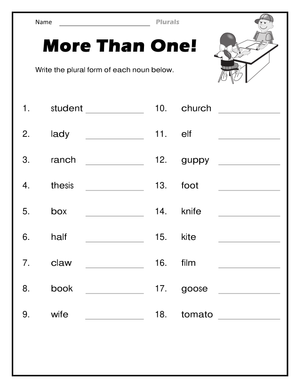
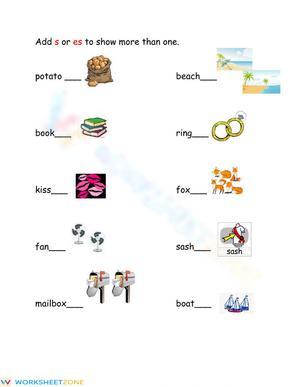
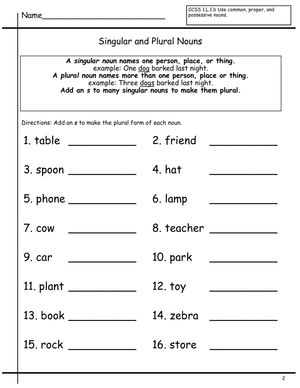
- Standard -s plurals — high-frequency regular nouns that second graders should pluralize automatically by mid-year
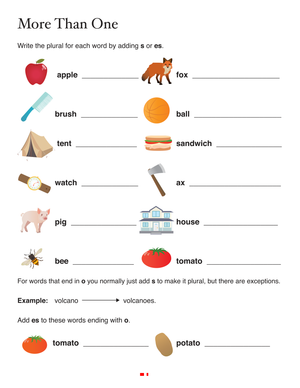
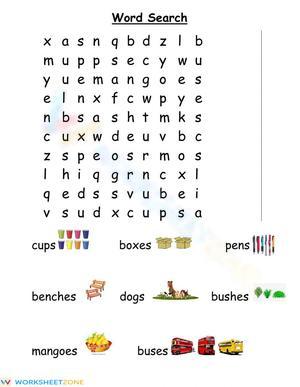
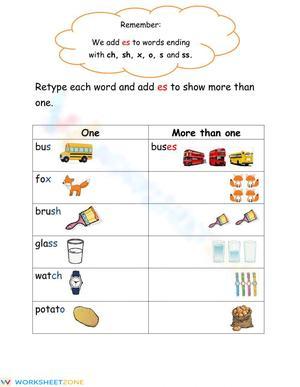
- -es endings for words ending in s, x, z, ch, and sh, with practice items that prompt students to say the plural aloud before writing it
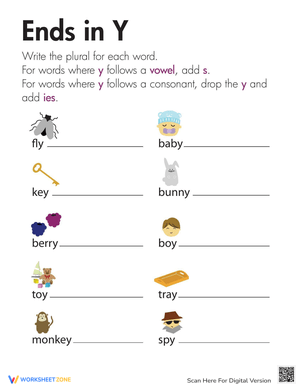
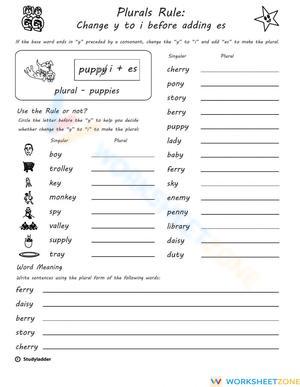
- The y-rule, both branches — consonant-plus-y words (puppy to puppies) and vowel-plus-y words (boy to boys) presented as a sorting task so students see the contrast directly
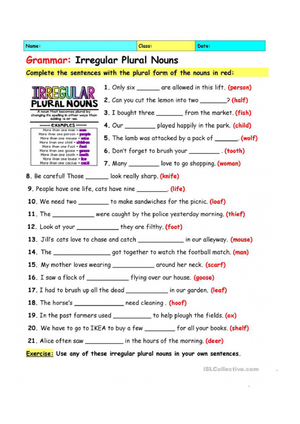
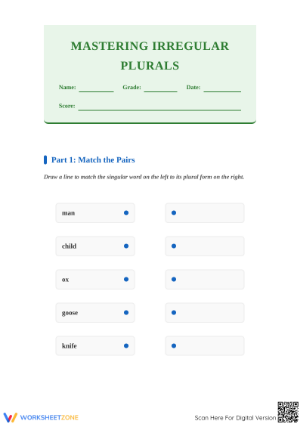
- Frequently occurring irregular plurals — child/children, tooth/teeth, foot/feet, mouse/mice, goose/geese, and the zero-change forms (sheep, deer, fish)
- Sentence transformation — students rewrite a full sentence using the plural form of the underlined noun, which surfaces subject-verb agreement issues that isolated fill-in tasks don't reveal
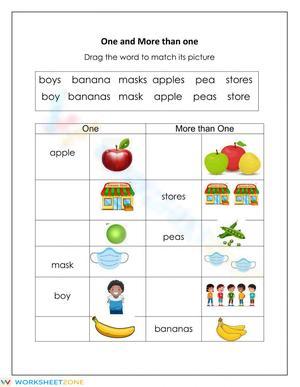
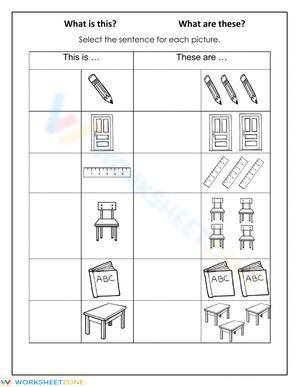
The picture-support worksheets pair each noun with a small illustration — one image showing a single object, another showing several. That visual contrast is particularly useful for the leaf/leaves and knife/knives group, where the spelling change is counterintuitive and students need the image to anchor the word's meaning before they think about how to spell it.
Errors Students Make That These Worksheets Help You Catch
The most reliable error pattern in second-grade plural work is confident over-application of the -s rule to irregular nouns. Students who have genuinely internalized "add s to make it plural" write "mouses," "foots," and "childs" without hesitation — and because those forms are phonetically plausible, students won't catch the error when they read their writing back to themselves. These are not careless mistakes; they are the predictable result of a rule working exactly as taught, applied to the wrong words. The irregular plural worksheets create the friction students need to recognize that some words live entirely outside the rule.
The y-rule generates a different class of error. Students who hear "change y to ies" as a universal instruction will write "toies," "boies," and "keies" — applying the rule to vowel-plus-y words that only need an -s. The sorting worksheets address this directly by requiring students to examine the letter before the y before committing to a spelling, rather than pattern-matching from the word's ending alone.
A subtler problem shows up with the -es rule. Students who write "boxs" or "bushs" usually don't notice the error because they are not saying the word aloud as they write. Having students whisper the plural form before writing — listening for whether a second syllable appears — catches a significant number of these before they land on paper. The -es worksheets include a pronunciation prompt step for exactly this reason.
Standard Alignment
These resources directly address CCSS ELA-Literacy L.2.1b, which requires students to form and use frequently occurring irregular plural nouns. The standard's language — "frequently occurring" — is doing real work: the expectation isn't that students catalog every irregular form in English, but that they reliably control the ones they encounter in grade-level reading and writing. The singular and plural nouns pdf worksheets for 2nd grade in this set are built around exactly those high-frequency words, which means practice time goes toward the forms students will actually need rather than obscure vocabulary that satisfies a checklist without improving fluency.
The standard also sits within the broader L.2.1 cluster covering noun types, verb tenses, and sentence structure. Plural noun mastery supports the subject-verb agreement work that arrives in the same unit — students who can't reliably form plural nouns can't make reliable agreement decisions, which is why the sentence-transformation worksheets appear alongside isolated-rule practice rather than at the end as an afterthought.
Fitting These Worksheets Into the Week Without Losing Momentum
The strongest approach when working with singular and plural nouns pdf worksheets for 2nd grade is to introduce each rule category explicitly first, then assign the matching worksheet as immediate consolidation practice — not as homework sent home the same day. Students who go home with a y-rule worksheet before the rule has been rehearsed in class come back the next morning with half the items completed and a parent's frustration note attached. Use each worksheet the same day the rule is taught, while the instruction is still fresh enough to support independent work.
For literacy centers, the sorting worksheets work well as a paired activity. Two students working through a cut-and-paste sort talk about the words more than a student working alone, and that conversation produces useful informal assessment data when you are circulating. The sentence-transformation worksheets are better assigned individually, since they require independent writing decisions that group work tends to short-circuit.
A brief worksheet used as an exit check at the end of a grammar block — six to eight items, no more — gives clear formative data without eating into writing time. If more than four or five students in a group miss the same item type, that is a signal to revisit before advancing through the sequence. One technique worth building into the exit check: have students place a hand under their chin while saying the plural aloud, feeling for a second syllable that signals an -es ending. Students who use that physical cue make noticeably fewer -es errors on the written line.
Adjusting These Worksheets for a Range of Learners
Students who are still consolidating basic -s plurals from first grade can use the regular-ending worksheets as deliberate review — which they need — rather than new instruction. Moving them directly into the -es rule before the -s rule is automatic tends to produce confusion rather than growth; the second rule feels arbitrary when the foundational one isn't yet solid. Pair these students with picture-supported worksheets that reduce the vocabulary load so the cognitive work stays on the spelling rule, not on decoding unfamiliar nouns.
Students who have the standard rules firmly in place benefit most from the sentence-transformation worksheets and the full irregular plural set, particularly the zero-change words — sheep, deer, fish — which require a different kind of attention altogether. Students have to resist the habit of adding any ending at all, which is genuinely hard for students whose instinct is to do something visible to signal a plural. A straightforward extension for these students is to write two original sentences using irregular plural nouns from the word bank after completing the worksheet, which moves the skill from recognition into production.
For students who process more slowly in writing tasks, allowing them to complete alternate items — odds or evens — on a longer worksheet preserves the practice benefit without the fatigue that comes from mechanically grinding through thirty identical items. Quality of attention on fifteen items beats exhausted completion of thirty every time.
Frequently Asked Questions
Which irregular plurals should second graders actually know by the end of the year?
The words that appear most often in grade-level reading and writing — and the ones L.2.1b has in mind — are child/children, man/men, woman/women, tooth/teeth, foot/feet, mouse/mice, and goose/geese. Students should also control the zero-change forms: sheep, deer, and fish. The singular and plural nouns pdf worksheets for 2nd grade in this set concentrate practice on those specific words rather than pulling in uncommon irregular forms that students won't encounter until third grade or later.
How do I explain the -es rule without making it feel like an arbitrary exception?
The most effective framing is phonetic. Have students try saying "boxs" or "churchs" aloud and listen for the problem — the word is nearly unsayable. When they hear why the -es is there, the ending starts to feel like a solution rather than an exception. Students who understand the reasoning behind the spelling tend to apply it more reliably than students who have only memorized a list of letter combinations that trigger it.
When during the year should irregular plurals be introduced?
Most second-grade teachers introduce regular -s plurals in late September or early October, move through -es and the y-rule across October, and reach irregular plurals in November before the first major writing assessment. Irregular plurals need more time than rule-based forms because they depend on memory rather than rule application — students need repeated encounters over several weeks, not a single lesson. Spacing the practice worksheets across multiple weeks, rather than running the full irregular-plural unit back-to-back, produces noticeably better retention by the time December assessments arrive.












 Interactive Worksheet Maker
 Quiz Maker
 Word Search Maker
 Crossword Puzzle Maker
 Word Scramble Generator
 Sentence Scramble Generator
 Handwriting Worksheet Generator
 Name Tracing Generator
 Fill In The Blank Generator