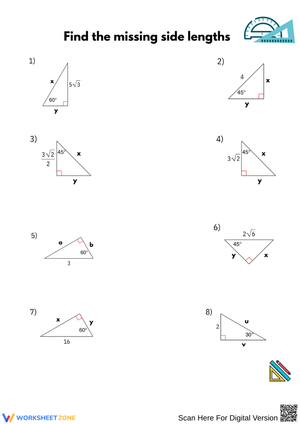
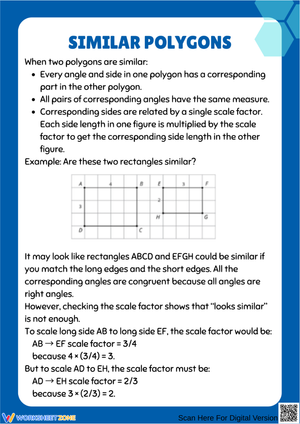
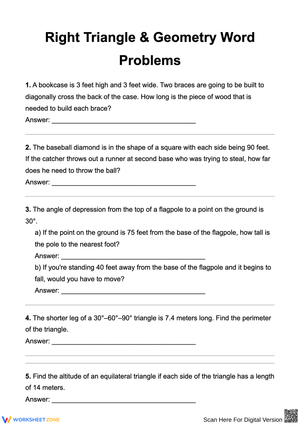
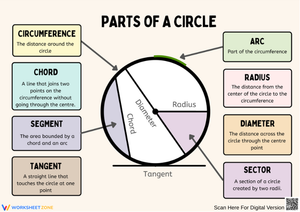
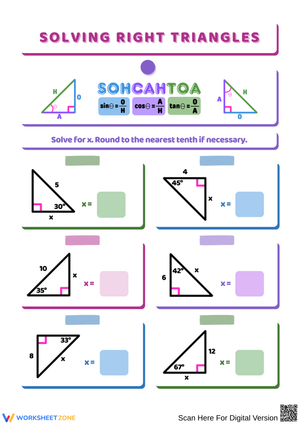
These 10th grade shapes printable worksheets give teachers a focused, classroom-tested path through the most demanding content of the high school geometry sequence — formal proofs, circle theorems, surface area and volume, and coordinate geometry all in a printable format students can write on directly. Grade 10 is the year students stop describing shapes and start proving claims about them, and that cognitive shift is where the bulk of the struggle surfaces. This set is built around that challenge.
What's Inside the Set
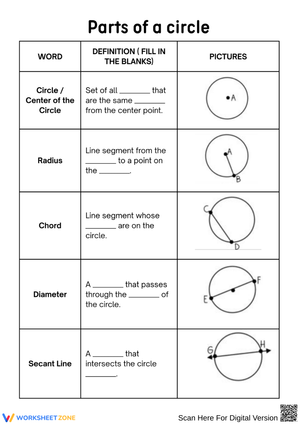
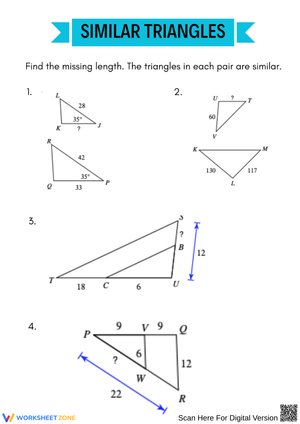
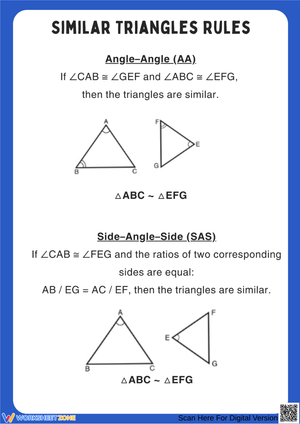
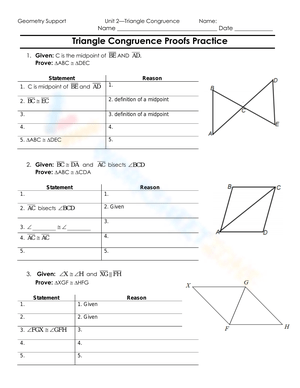
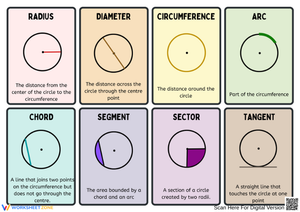
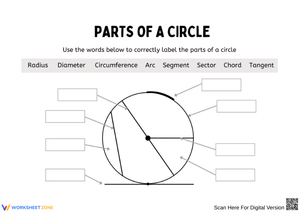
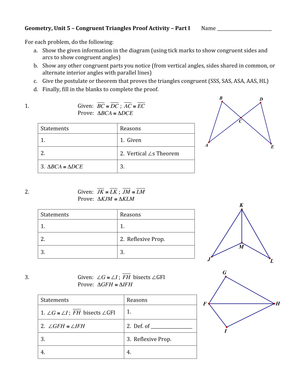
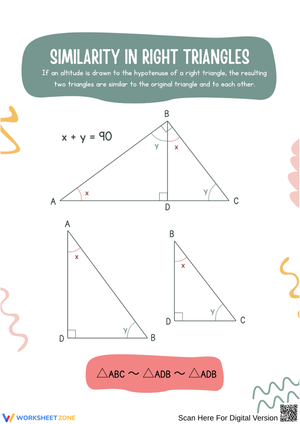
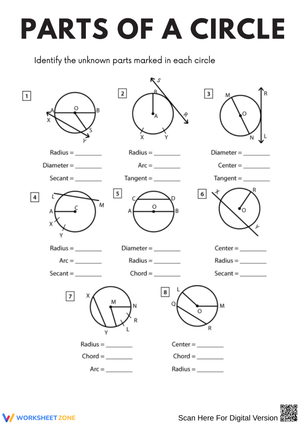
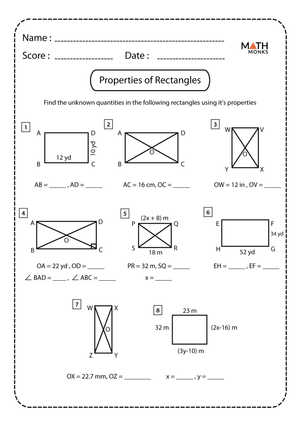
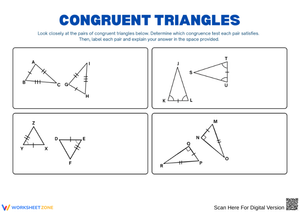
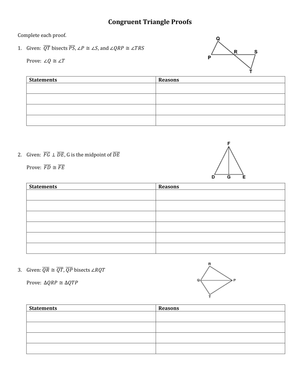
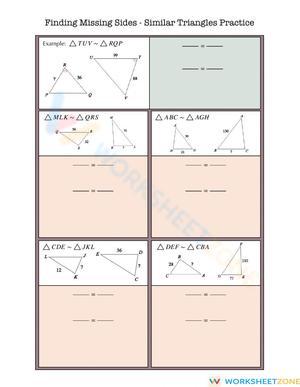
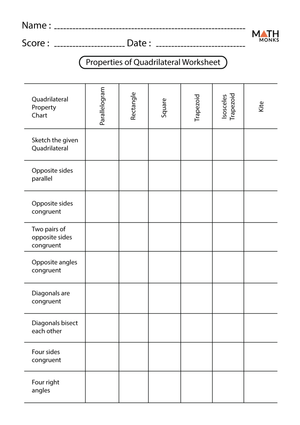
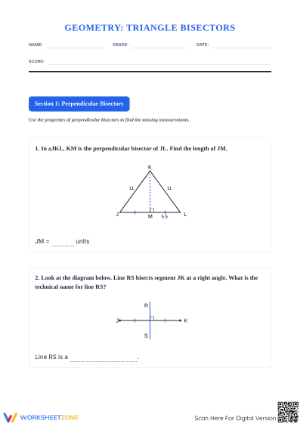
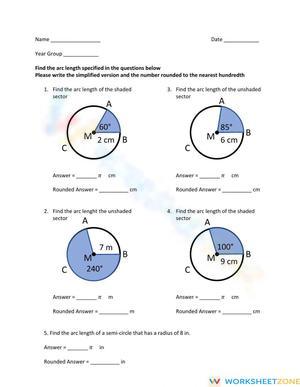
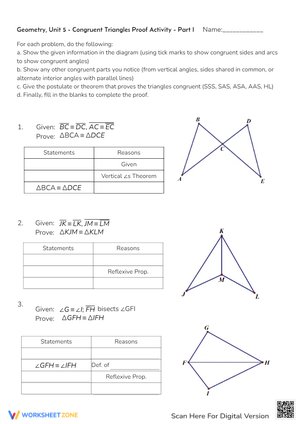
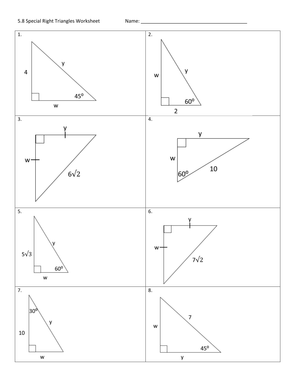
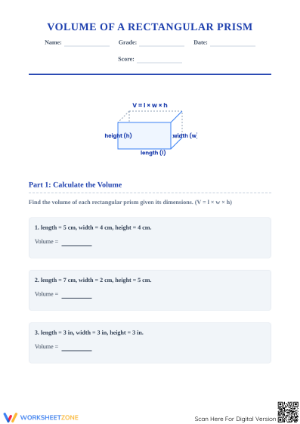
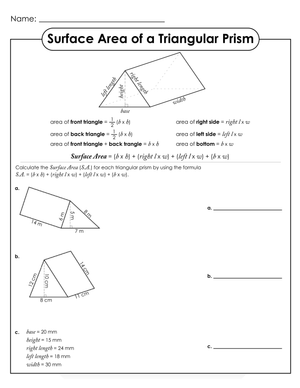
Each worksheet targets one specific skill within four major content clusters: triangle congruence and similarity proofs (including SSS, SAS, ASA, AAS, and HL for right triangles), quadrilateral classification and property arguments, circle relationships (central and inscribed angles, chords, arc length, sector area, and tangent-secant intersections), and 3D solid measurement including composite figures. Within each cluster, problems move from applying a single theorem to multi-step reasoning — students work through structured proof frames before they are asked to build a proof from a blank page.
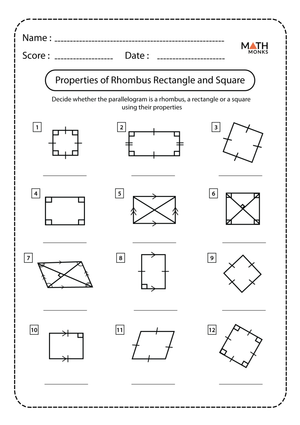
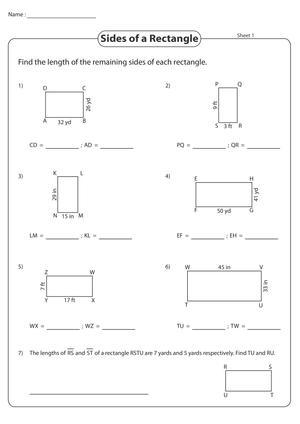
The coordinate geometry worksheets bind algebra and geometry by asking students to verify the properties of shapes on the Cartesian plane. A typical problem gives four coordinate pairs and asks students to determine whether the figure is a rectangle, a rhombus, or merely a parallelogram — a task that requires computing side lengths with the distance formula and checking adjacent slopes for perpendicularity, not just reading the diagram by eye.
Common Proof Errors and Conceptual Gaps Worth Watching For
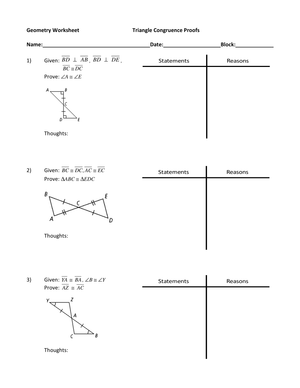
The most persistent error in formal two-column proofs is circular logic — students write the conclusion they are trying to prove as one of the early steps. A student attempting to prove triangle ABC ≅ triangle DEF will list "AB ≅ DE" in step two simply because the diagram looks symmetrical, with no given or theorem cited to support it. This appears even in students who handle calculations cleanly. The introductory proof worksheets address this directly by pre-filling the conclusion row so students must work backward through the logical chain rather than drift forward toward what they already believe is true.
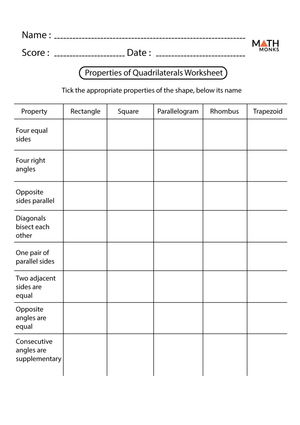
On circle theorem problems, the recurring error is applying the inscribed angle relationship in the wrong direction. Students know a factor of one-half is involved but flip it — they double an inscribed angle to find a central angle when the problem requires halving. This reversal surfaces most often when the inscribed angle is the unknown rather than the given. The quadrilateral hierarchy creates a separate sticking point: students who accept that every square is a rectangle still resist accepting that every square is also a rhombus, because they have mentally locked "rhombus" to the tilted diamond shape from middle school diagrams.
How to Build These Worksheets Into Your Lesson Plans
The most reliable use pattern runs on a gradual release cycle. Start with a brief direct instruction segment — ten to fifteen minutes on the relevant theorem or formula — then move immediately into a guided worksheet where students work through structured proof frames or worked-example sequences. That guided pass surfaces confusion before it calcifies into a habit. The independent worksheet follows once students demonstrate they understand the reasoning sequence, not just the procedure.
These 10th grade shapes printable worksheets also function well as formative exit tickets during the last eight minutes of class. A two- or three-problem worksheet targeting that day's theorem produces immediate data on who is ready to advance and who needs a second approach before the unit continues. Color-coding is worth teaching as an annotation habit early in the year: students use distinct colors to mark congruent sides, parallel lines, and related angles on the same diagram. When the thought process is visible on the page, both peer review and teacher feedback become faster and more precise.
Adjusting the Worksheets for a Range of Learners
Students still building confidence with deductive logic benefit from worksheets where one column of the two-column proof is pre-populated — either the statements or the reasons, not both. Reducing the notation burden at the outset lets them concentrate on the logical sequence itself. These students also make more progress working one congruence theorem per worksheet before encountering mixed-theorem practice, and having the relevant theorem printed at the top of the page removes the retrieval demand that causes many of them to stall before the first step.
Students who have mastered the standard problems are ready for tasks that ask them to select the appropriate theorem, explain why an alternative approach would fail, or write a coordinate proof and then evaluate whether a classical Euclidean proof would be more or less efficient for the same claim. That comparison forces genuine engagement with the structure of geometric argument rather than procedure-following. These 10th grade shapes printable worksheets, used selectively across both groups, give teachers enough range to challenge the strongest students without building a separate assignment from scratch.
Standard Alignment
These worksheets address the Common Core State Standards for High School Geometry across five domains. HSG-CO.C (prove geometric theorems) and HSG-SRT.B (prove theorems involving similarity) carry the first-semester proof work, with the triangle congruence and quadrilateral worksheets mapping directly to those codes. HSG-C.A (understand and apply theorems about circles) anchors the second cluster, and HSG-GMD.A (explain and apply volume formulas) covers the 3D measurement work. HSG-GPE.B (prove geometric theorems algebraically using coordinates) runs through both halves of the year, since coordinate verification tasks appear in both the congruence unit and the circle unit. In most pacing guides, CO.C and SRT.B dominate the fall semester while C.A and GMD.A take over in the spring, after students have enough proof fluency to handle the more layered circle arguments.
Frequently Asked Questions
Which topics require the most repetition before students are ready for assessments?
Triangle congruence proofs and circle theorems demand the most practice because both involve multi-step logic chains where an early error invalidates everything downstream. Coordinate geometry and 3D measurement tend to transfer more quickly once students have the formulas in hand; the main challenge there is reading composite-solid diagrams accurately, not the calculation itself.
Do the worksheets include answer keys for proof problems?
Yes. Each worksheet includes a complete answer key. For two-column proof problems, the key shows all statements and reasons in sequence. Where multiple valid proof paths exist, the key notes the most common alternative so teachers can recognize correct work that differs from the primary solution.
Are these appropriate for both on-level and honors geometry courses?
These 10th grade shapes printable worksheets are written to the standard high school geometry sequence. Honors teachers can assign mixed-theorem worksheets earlier in each unit and prioritize the extension problems; on-level courses benefit most from single-theorem worksheets and structured proof frames before those mixed-review tasks appear.













 Interactive Worksheet Maker
 Quiz Maker
 Word Search Maker
 Crossword Puzzle Maker
 Word Scramble Generator
 Sentence Scramble Generator
 Handwriting Worksheet Generator
 Name Tracing Generator
 Fill In The Blank Generator