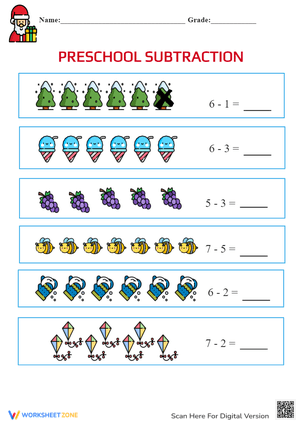
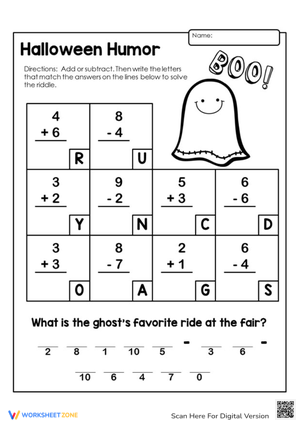
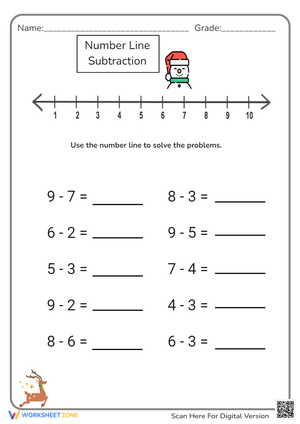
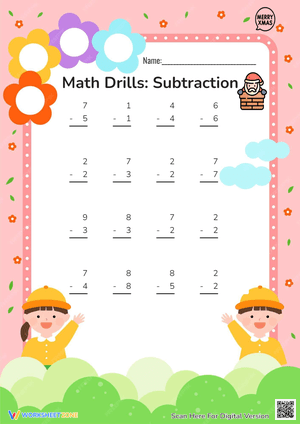
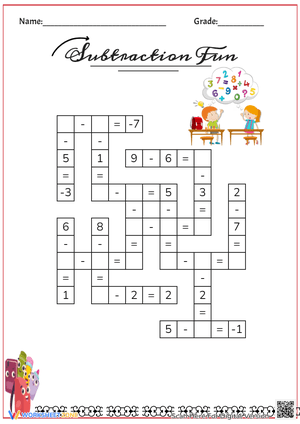
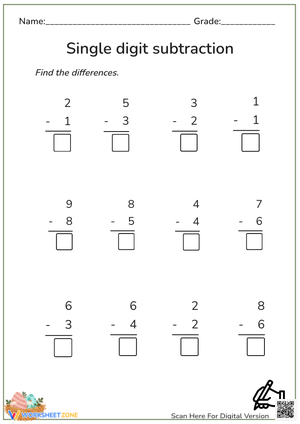
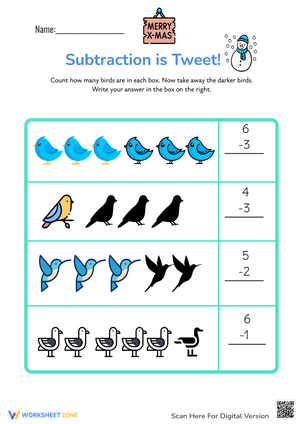
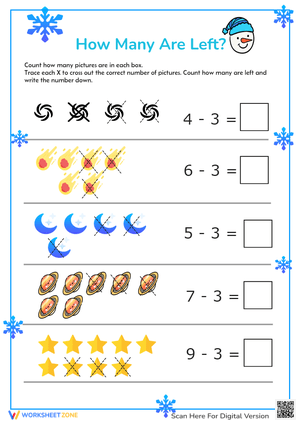
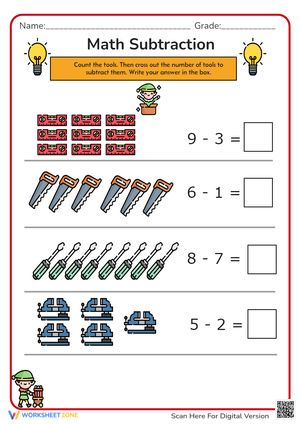
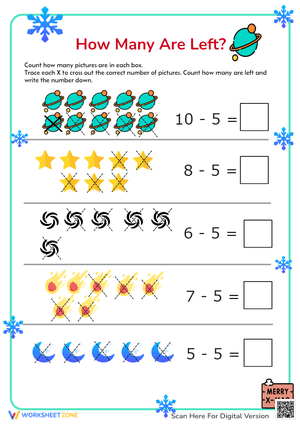
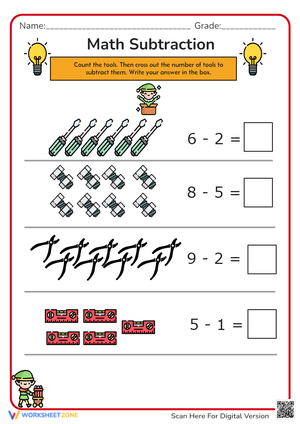
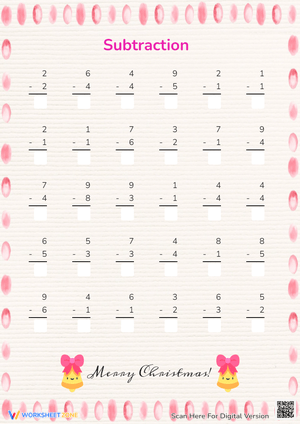
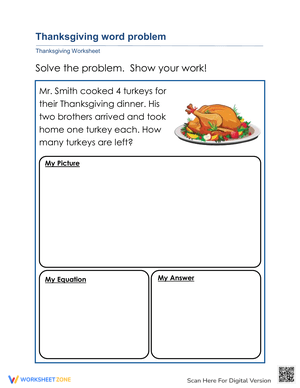
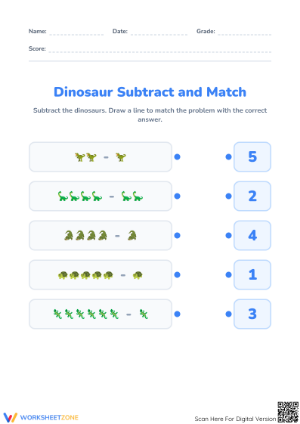
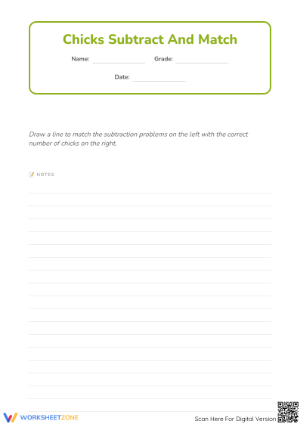
These 1st grade single digit subtraction worksheets resources give teachers a set of print-ready practice pages that span the full first-grade subtraction arc — from picture-based removal tasks within 10 to horizontal and vertical fact practice within 20. Each worksheet targets a specific point in that progression, making them practical tools for matching practice to where a student actually sits in instruction rather than working through a generic pile.
Skills These Worksheets Build
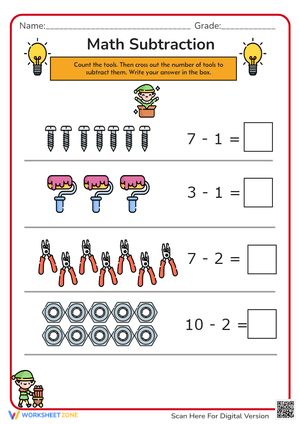
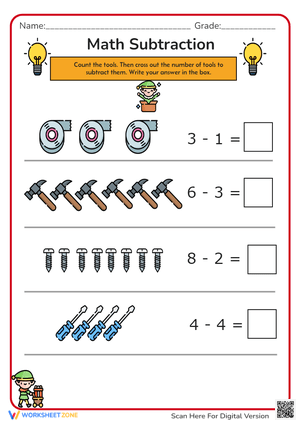
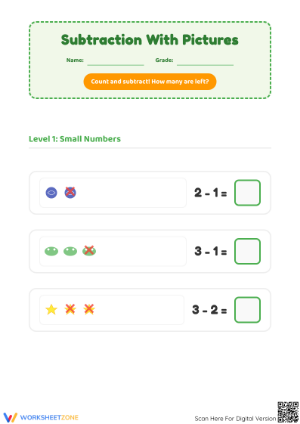
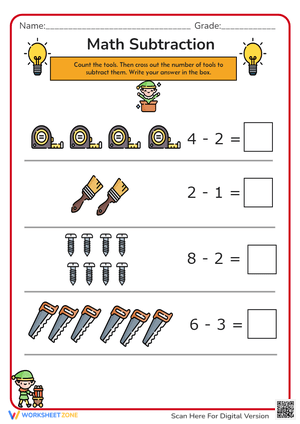
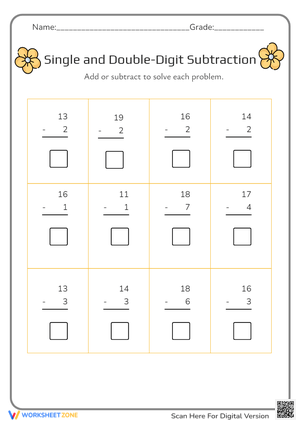
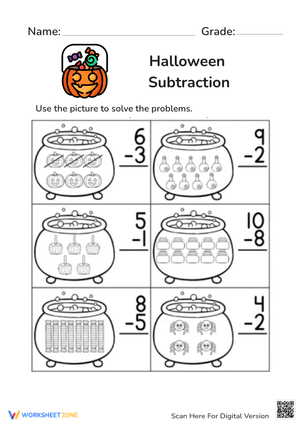
The set moves through the distinct layers Grade 1 math requires before students can call subtraction facts fluent. Early worksheets present picture subtraction: students count a group of objects, cross out the number removed, and write what remains. That crossing-out action externalizes the mental move students need to eventually internalize. Later worksheets remove the pictures entirely, placing equations in both horizontal and vertical formats — the flexibility students need when the same fact appears differently on a subsequent assessment.
- Picture subtraction within 10: objects drawn on the page; students cross out and record the difference
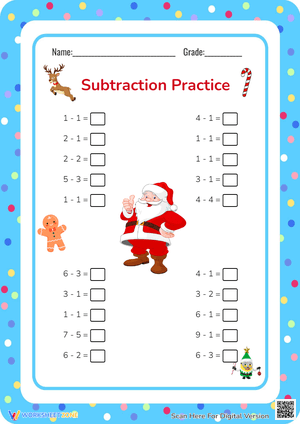
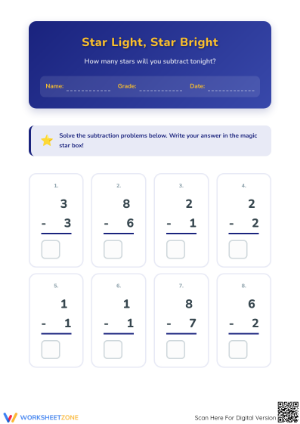
- Equation practice within 10: horizontal and vertical formats with facts presented in varied order
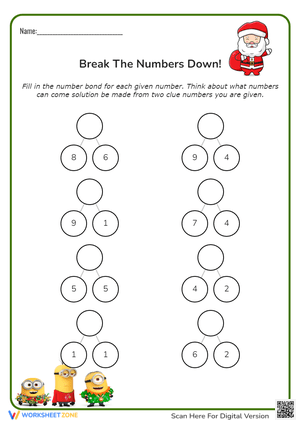
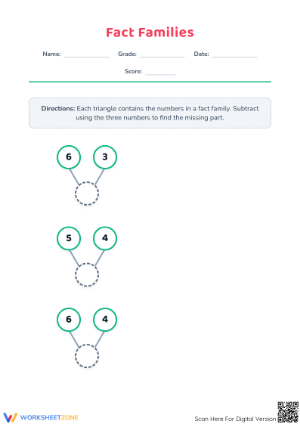
- Number bond tasks: whole and one part given; students find the missing part through subtraction
- Fact family pages: connect subtraction to its related addition, reducing rote memorization demands
- Within 20 practice: introduced after students show consistent accuracy on smaller facts
- Mixed review: combines problem types so students cannot rely on format cues alone
Why This Format Works for Grade 1 at This Stage
First grade sits at a precise developmental moment: students are moving from counting physical objects to trusting the written equation. Cognitive load research is clear that novice learners process fewer elements simultaneously, so worksheets that keep formatting clean — large numerals, minimal reading demands, ample writing space — reduce the mental overhead that crowds out the actual math. The progression from pictures to equations mirrors the concrete-representational-abstract path that Grade 1 instruction already uses with manipulatives and math drawings. A worksheet that follows this sequence reinforces the classroom lesson rather than introducing a new mental framework mid-unit.
Fact family practice earns its place here for a specific reason: first graders often treat addition and subtraction as entirely separate operations, memorizing each fact in isolation. When a worksheet asks a student to write all four equations in a family — 6 + 3 = 9, 3 + 6 = 9, 9 − 6 = 3, 9 − 3 = 6 — it turns four separate memory items into one connected structure. That is a meaningful reduction in memory load for a six-year-old.
Frequent Student Errors These Worksheets Surface
The most persistent error in first-grade subtraction is order reversal: a student who correctly solves 9 − 6 will also solve 6 − 9 as 3, subtracting the smaller number from the larger regardless of which is written first. The minus sign has not yet stabilized as a directional instruction. These worksheets surface that pattern quickly because mixed-order equation pages prevent students from applying a "big minus small" strategy blindly — and that is precisely where a teacher needs to intervene with a visual model before the habit calcifies.
A second pattern is the zero problem. Students who understand removal confidently will write 7 − 0 = 0 because "subtraction makes it go away." They have overgeneralized the removal idea to mean the result is always diminished. Similarly, 0 − 0 sometimes produces 1. These are not careless mistakes; they reflect an incomplete mental model of zero's behavior in operations. A brief whole-class debrief over a single worksheet problem — asking a student to model 7 − 0 with counters on a whiteboard — corrects this faster than any re-explanation alone.
Building These Worksheets Into Your Lesson Plans
In a typical Grade 1 math block, the individual pages in a 1st grade single digit subtraction worksheets set earn different roles on different days. On introduction days, use a picture subtraction page as a shared activity — work two or three problems aloud before releasing students to finish independently. This is the "we try together, you try alone" moment that separates guided instruction from independent practice. On subsequent days, that same worksheet type moves to a math center, placed in a tub with ten-frame tiles or small counters so students have a concrete tool when they need one.
The short equation pages deserve a separate mention. A half-page of ten bare equations, assigned on a Thursday, tells you which students are ready to move from within-10 to within-20 work before you commit to Monday's lesson plan. That is formative data a worksheet generates without any additional assessment preparation. Some teachers organize pages into three labeled folders — visual pages for guided instruction, mixed-format pages for centers and homework, short equation pages for quick progress checks — which makes retrieval fast during both planning periods and substitute coverage.
Standard Alignment
These worksheets align directly to CCSS.MATH.CONTENT.1.OA.C.6, which requires students to add and subtract within 20 while demonstrating fluency within 10. Picture subtraction and equation-only pages address the fluency-within-10 target; within-20 pages address the broader range the standard includes. Fact family worksheets connect to 1.OA.B.4, which asks students to understand subtraction as an unknown-addend problem — a relationship the fact family format makes visible in a way isolated drill practice does not. In classroom terms, these pages fit best during the core instruction period and in center rotations once initial concept work is complete.
Differentiating Across the Range of Learners in Your Class
For students still counting every object individually and holding no facts in memory, the picture subtraction pages within 10 are the right entry point. Pair those worksheets with physical counters — not as an option, but as a required tool — so students build accurate counting habits before attempting mental calculation. The goal at this stage is accuracy, not automaticity.
Students showing consistent accuracy within 10 are ready for equation-only pages and fact family work. Introducing within-20 problems for this group adds range without changing the skill category. For students who have already internalized the single-digit facts and finish within-10 pages with few errors, mixed-review and within-20 pages provide real challenge. The 1st grade single digit subtraction worksheets set supports all three of these groups without requiring separate materials for each instructional level.
Frequently Asked Questions
Should first graders practice subtraction with timed or untimed pages?
For most Grade 1 students, untimed practice produces more useful work. Timed formats in early fact learning tend to generate anxiety that disrupts performance, making it harder to tell whether errors reflect a knowledge gap or a stress response. Reserve timed review for students who have already demonstrated consistent accuracy and are building speed — not for students who are still securing understanding.
My students pass the picture pages but freeze on equations. What is happening?
This is one of the clearest diagnostic signals these worksheets provide. The student understands removal as a physical action but has not connected that action to the symbolic equation. The correction is not more equation practice alone — it is bridging work: show students a picture problem and ask them to write the matching equation before solving it. Once they build that translation habit, the equation format stops feeling like a different task entirely.
When should I move students from within-10 to within-20 worksheets?
When a student solves at least eight out of ten within-10 equation problems correctly across two or three separate sessions, they are ready for within-20 exposure. One correct session is not enough — look for consistency across days. Moving too early means students revert to counting strategies on larger numbers and lose ground on the smaller facts they had nearly consolidated.
Do these worksheets work for small-group intervention?
The picture subtraction and number bond pages are particularly effective in pull-small intervention settings because the visual format keeps cognitive demand focused on the operation itself rather than on decoding directions. Using 1st grade single digit subtraction worksheets pages in a small group, with a teacher modeling and students working problems aloud before writing, produces faster accuracy gains than independent center work for students who are significantly behind grade level.













 Interactive Worksheet Maker
 Quiz Maker
 Word Search Maker
 Crossword Puzzle Maker
 Word Scramble Generator
 Sentence Scramble Generator
 Handwriting Worksheet Generator
 Name Tracing Generator
 Fill In The Blank Generator