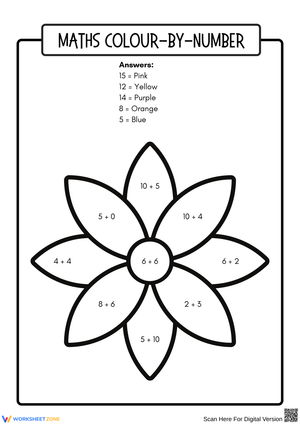
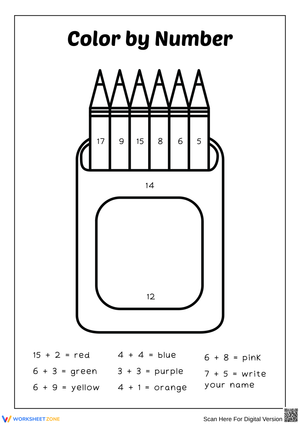
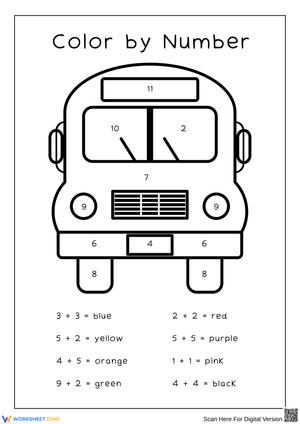
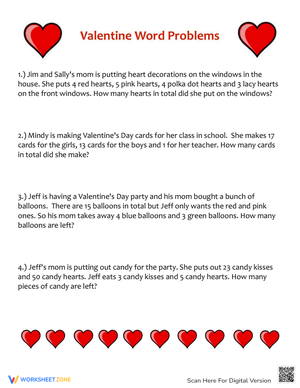
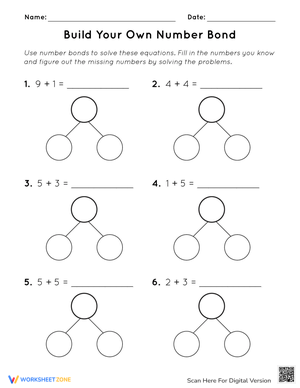
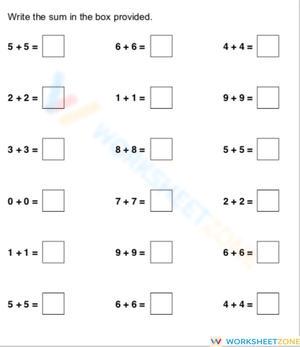
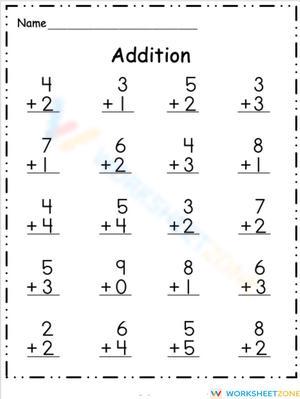
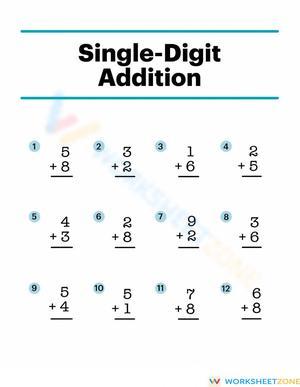
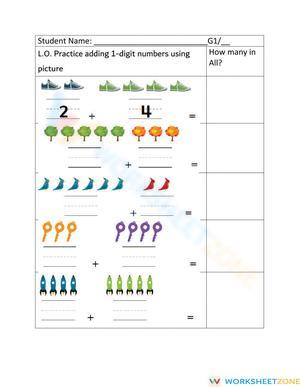
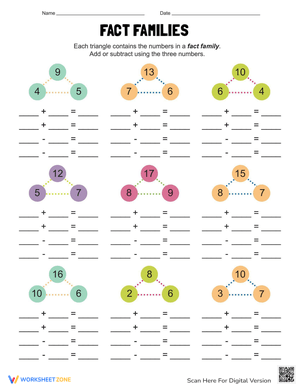
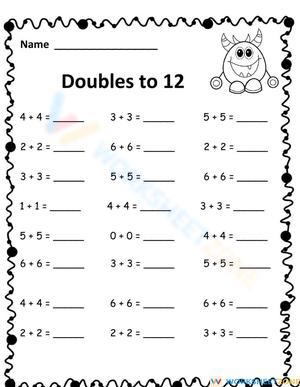
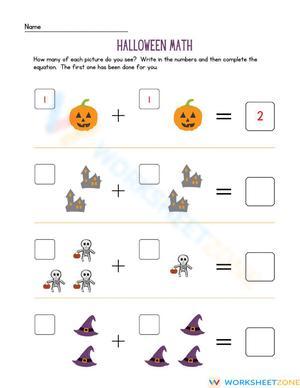
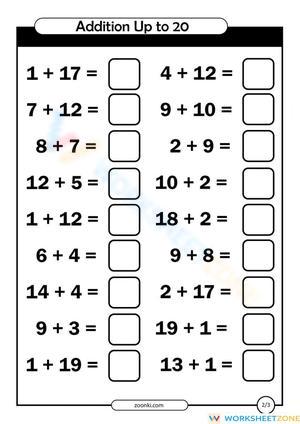
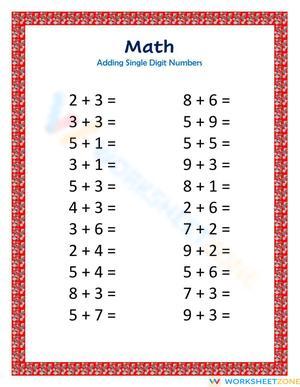
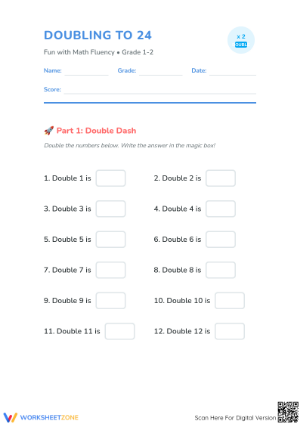
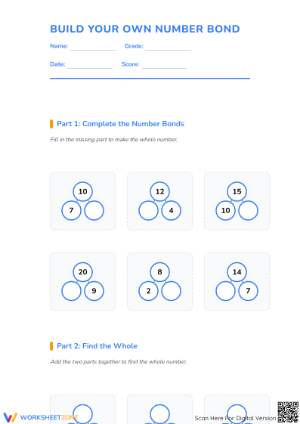
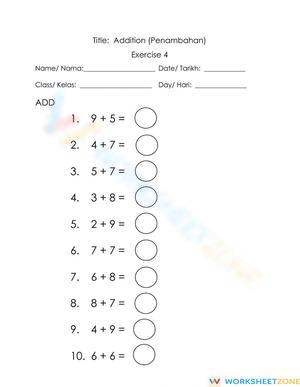
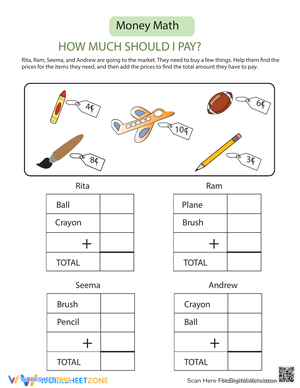
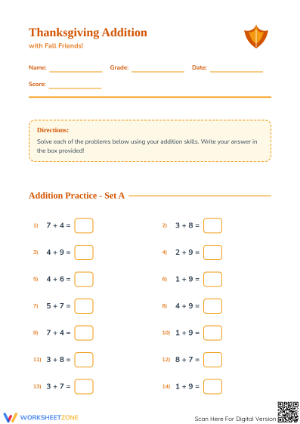
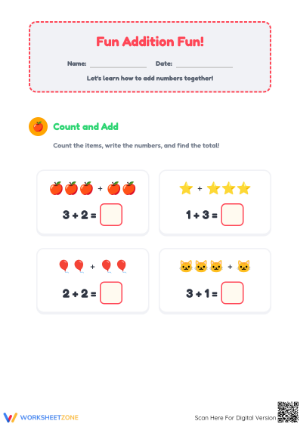
These addition within 20 worksheets for 1st grade give teachers a strategy-focused practice set built around the three mental moves first graders need before they can stop counting on their fingers: making ten, using doubles, and counting on from the larger addend. The collection targets the conceptual territory where early arithmetic instruction most often stalls — the teens — and gives students repeated, varied exposure to each strategy before asking them to work without visual support.
The Skills Each Worksheet Targets
Each worksheet isolates one strategy or pairs two complementary ones, keeping the cognitive focus narrow enough that students build genuine understanding rather than performing procedures they haven't yet internalized. The skills covered across the set include:
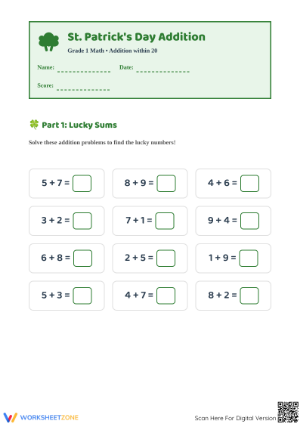
- Making ten: Students decompose one addend to bridge to ten, then add the remainder. On a problem like 8 + 6, they mark the 6 as 2 + 4, combine 8 and 2 to reach 10, then add 4 to land on 14. Each worksheet in this category requires students to show the decomposition, not just write the answer.
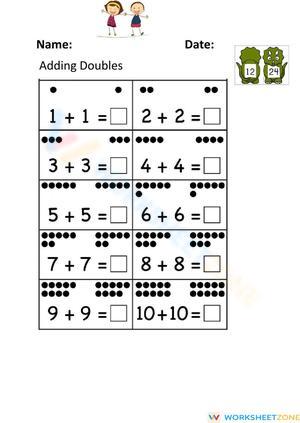
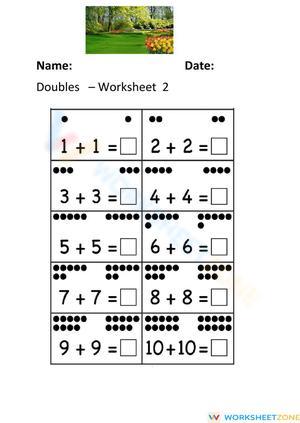
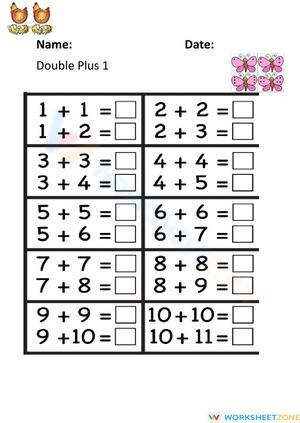
- Doubles and near-doubles: Students identify a known doubles fact — 7 + 7 = 14 — and use it as an anchor to solve 7 + 8 by adding one more. Placing both problem types on the same worksheet makes the structural relationship between them explicit.
- Counting on from the larger addend: Students circle the greater number, then draw forward hops from it. Worksheets that require students to identify which addend is larger before drawing any hops prevent the left-to-right default that leads to errors.
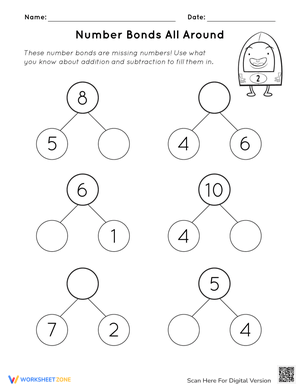
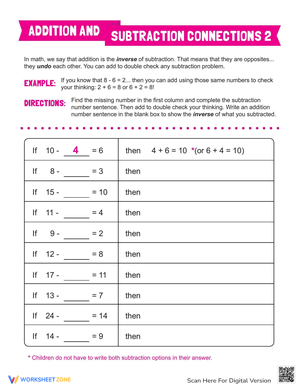
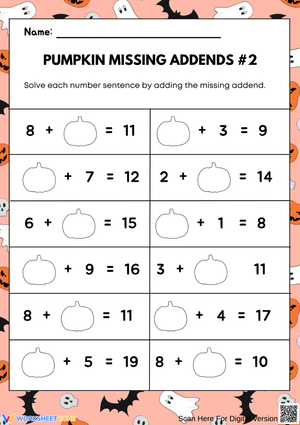
- Missing addends: Students determine what must be added to a given number to reach a target sum, which demands understanding addition and subtraction as inverse operations — a conceptual relationship that 1.OA.C.6 specifically names.
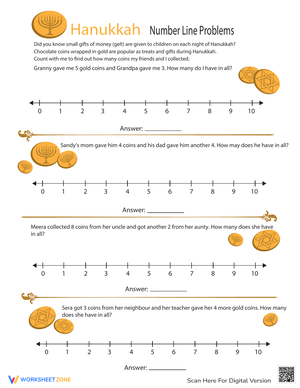
- Annotated ten-frames and number lines: Students fill frames, draw hops, and label jumps before writing the symbolic equation, preserving the concrete-to-representational-to-abstract sequence that builds durable understanding.
Why This Representational Format Fits First Grade
First graders arrive in the teens range having already built fluency with sums to 10. What they haven't built is the habit of applying the same decomposition logic at a larger scale. The difficulty isn't the arithmetic — it's the working memory demand of tracking two quantities while executing a three-step procedure. Worksheets that display a ten-frame beside the equation reduce that demand by externalizing the middle step: students fill the frame, see ten completed visually, then write the remaining units and the final sum. The visual carries the process until the procedure is automatic enough to run without it. That movement — represent it, annotate it, solve it without the model — is exactly how these pages advance students toward genuine fluency rather than fragile memorization.
Frequent Errors Worth Anticipating Before You Teach
The most consistent mistake in the teens range is counting on from the smaller addend. A student given 13 + 5 starts at 5 and counts forward thirteen times — arriving at 18 by persistence and sometimes arriving at 17 by losing track. A related error surfaces during making ten: students who correctly split 6 into 4 + 2 when solving 8 + 6 will then add the 4 to the 6 instead of to the 8, producing 10 + 2 = 12 rather than the correct 10 + 4 = 14. Both results look plausible on the surface; only requiring students to show their decomposition steps makes the process — and the error — visible before it becomes a fixed habit.
A subtler pattern emerges with near-doubles. Students who know 8 + 8 = 16 reliably answer 8 + 9 as 17, then turn around and answer 9 + 8 as 16 — treating each ordered pair as a distinct memorized fact rather than understanding that the commutative property makes them identical. Catching this early prevents the same confusion from compounding when double-digit addition arrives later in the year.
Standard Alignment
This set of addition within 20 worksheets for 1st grade aligns directly with CCSS.MATH.CONTENT.1.OA.C.6, which requires first graders to add and subtract within 20 and demonstrate fluency for addition and subtraction within 10. The standard specifically names making ten, decomposing a number leading to a ten, using the relationship between addition and subtraction, and using equivalent but simpler known sums — each of which corresponds to a distinct worksheet type in this collection. In classroom terms, 1.OA.C.6 sits at the center of the first-grade math year. Teachers typically introduce it in the fall as a strategic extension of kindergarten fluency work and return to it through spring, when the same strategies reappear inside two-digit addition contexts.
Fitting These Worksheets Into Your Instructional Week
Addition within 20 worksheets for 1st grade fit naturally into the short, repeated-practice windows that define early elementary schedules. A single worksheet used as Monday morning work — completed during the transition after morning meeting — reactivates fact knowledge before the formal math block begins. Strategy-specific worksheets work especially well in small groups: six students at the back table, all working through a making-ten page while the teacher circulates and marks who is still counting every dot versus who is beginning to recognize a completed ten at a glance. That distinction tells you more about a student's readiness than most exit tickets.
At centers, pairing a worksheet with physical manipulatives deepens the work considerably. Students who fill in a ten-frame on paper while simultaneously moving two-color counters onto a physical mat are doing the representational and concrete work at the same time. The moment a student pushes the counters aside and finishes the page without them is a genuine instructional milestone worth recording. For homework, the visual models on these pages give families a legible picture of the strategy being practiced, which reduces the recurring frustration of parents who have no idea how their child is supposed to be solving the problem.
Adjusting the Work for a Range of Learners
Students who need more support work from worksheets that include fully labeled ten-frames and number lines with tick marks already in place; they fill in the models and write the equation. Students approaching fluency use worksheets with partially drawn models — a blank number line with only the starting number marked, or a ten-frame with only the first addend filled in — so they construct the representation themselves before solving. Students who are already fluent within 10 and need extension work best with missing-addend problems in the teens or with two-step addition chains like 5 + 5 + 7, which require applying a doubles strategy and then a counting-on strategy in sequence.
One honest limitation: the ten-frame format frustrates students who process math more effectively through verbal explanation than visual annotation. For those students, pairing a worksheet with a brief oral retelling — "tell me how you moved the dots before you wrote the answer" — keeps the task accessible and gives the teacher richer process data than the written work alone provides.
Frequently Asked Questions
Can these worksheets replace manipulatives when introducing a new strategy?
They shouldn't be used that way. When students first encounter making ten, physical counters and a real ten-frame mat let them experience moving objects before drawing them. Addition within 20 worksheets for 1st grade belong at the representational stage — after the hands-on introduction and before students are ready to work entirely in their heads. Used in that sequence, the worksheets accelerate internalization rather than replacing the concrete groundwork that makes the strategy stick.
How many problems per session is appropriate for first graders?
Eight to twelve targeted problems is the practical ceiling for a focused strategy session. Beyond that, first graders tend to shift into mechanical completion mode rather than deliberate thinking — and a shorter worksheet finished with full attention produces more durable learning than a longer one finished at half-effort.
What should I do when a student has memorized the sums but can't explain the strategy?
Ask them to annotate a ten-frame or draw number line hops for a problem they already know the answer to. Students who can solve 9 + 4 automatically but cannot show a decomposition to ten have a retrieval system that won't transfer reliably when sums appear in unfamiliar contexts — embedded in a word problem, presented vertically, or combined with a subtraction step. The annotation requirement makes the strategy visible and independently verifiable.













 Interactive Worksheet Maker
 Quiz Maker
 Word Search Maker
 Crossword Puzzle Maker
 Word Scramble Generator
 Sentence Scramble Generator
 Handwriting Worksheet Generator
 Name Tracing Generator
 Fill In The Blank Generator