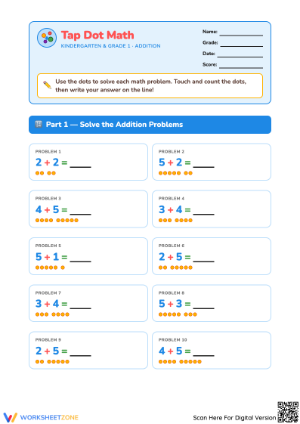
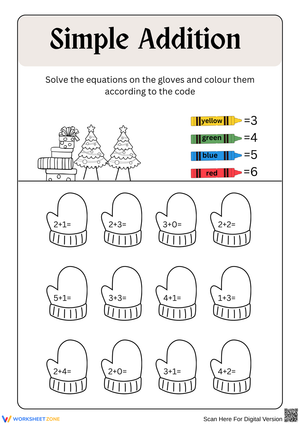
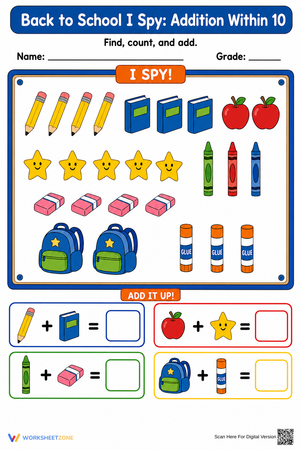
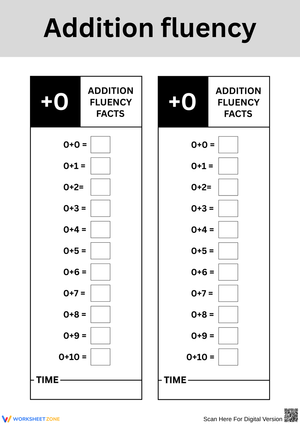
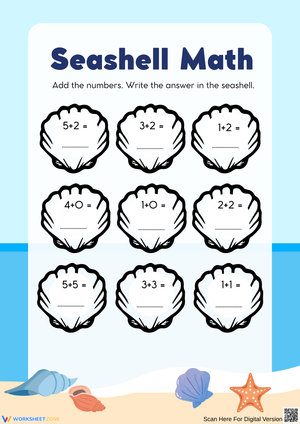
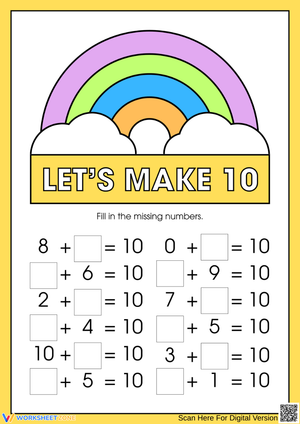
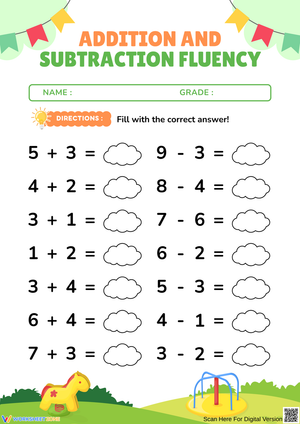
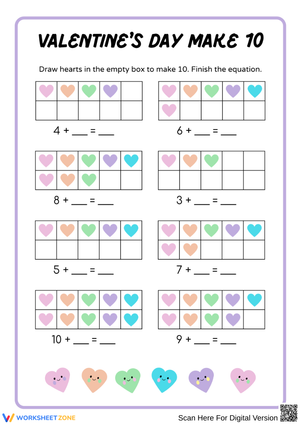
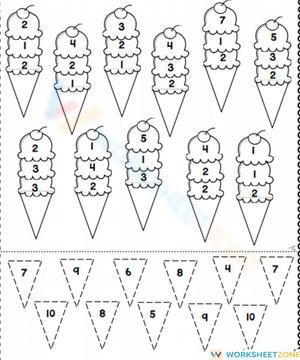
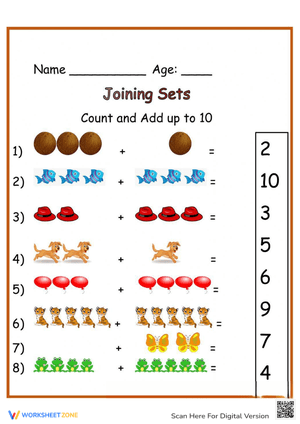
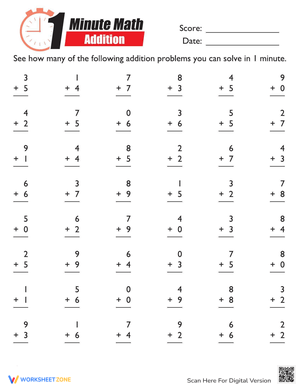
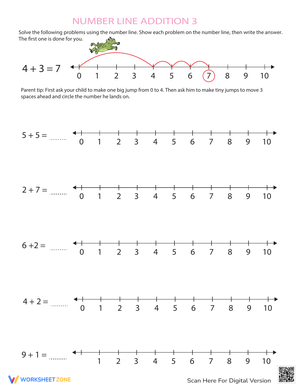
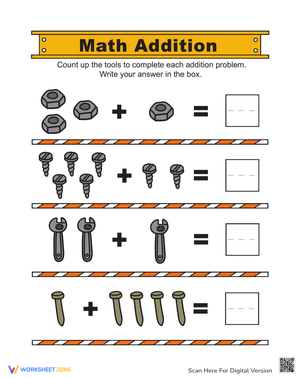
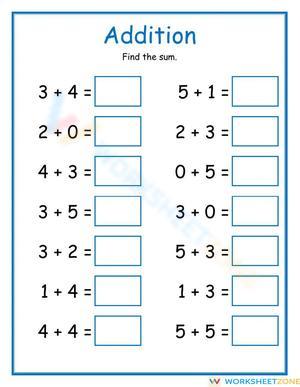
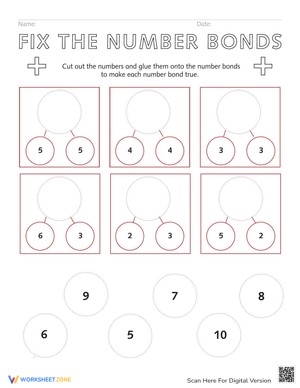
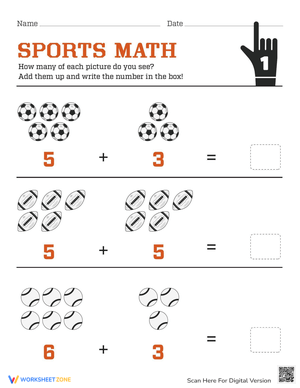
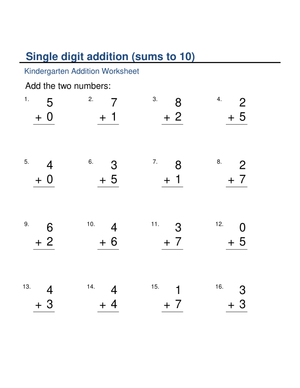
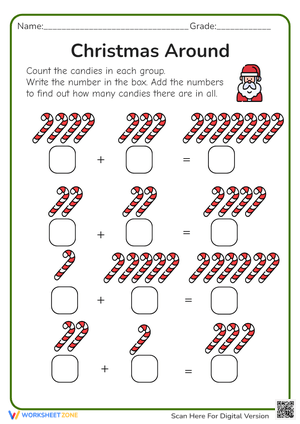
These 1st grade addition within 10 printable worksheets give teachers a ready-made set of standalone practice materials built around the specific fluency demands of the first-grade year — ten frames, number bonds, equation drills, and word problems, each worksheet formatted for immediate classroom use. The set covers every addition combination through ten, with enough format variety to carry repeated practice through a full unit without the tasks feeling identical each session.
The Specific Skills Each Worksheet Targets
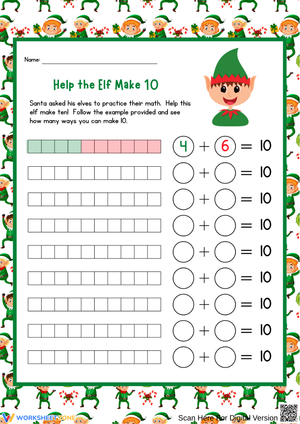
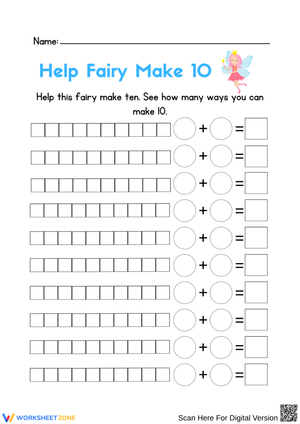
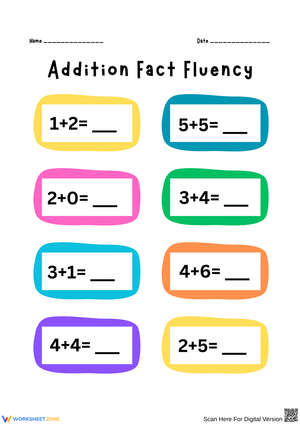
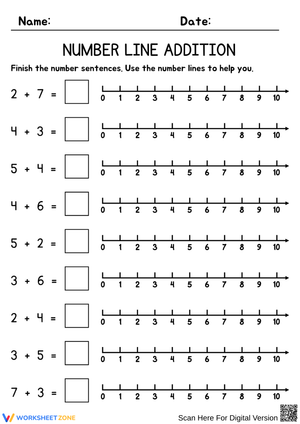
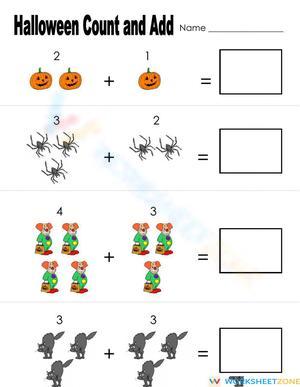
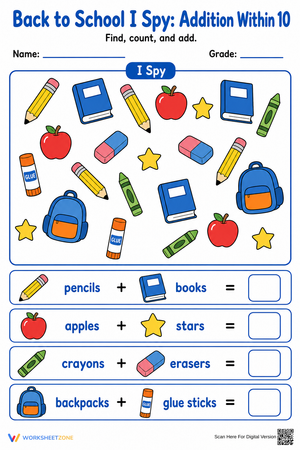
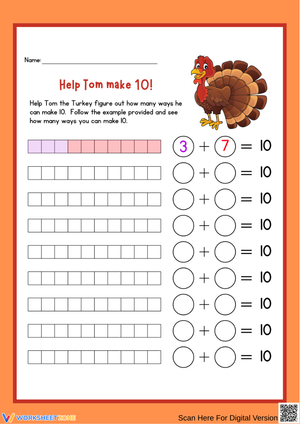
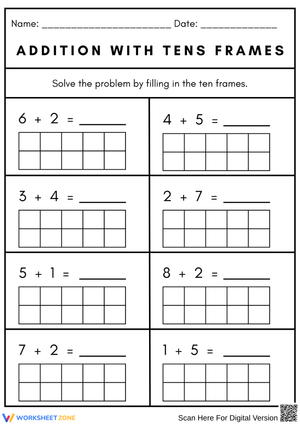
Each worksheet focuses on one clear task. Some ask students to complete equations using a ten-frame model, marking dots to represent each addend before recording the sum in writing. Others present number bonds with a missing part, asking students to reason about what amount combines with the given number to reach the stated whole. Several worksheets use a number line format, requiring students to mark a starting point and count forward to find the total. Fluency drills strip away all visual support and present rows of bare equations, pushing recall rather than modeling strategy. Word problem worksheets place the math in a brief story context — combining groups, finding how many altogether — so students practice identifying the operation before solving, rather than treating addition as a mechanical procedure.
Why Fluency at This Stage Is Harder Than It Looks
First graders arrive knowing how to count. The cognitive leap from counting to adding is where most confusion concentrates during this unit. A child who accurately counts eight objects can still struggle to hold two addends in working memory simultaneously, identify the larger one, count on from it, and record the answer — particularly when all of those steps are happening during an independent task without teacher support nearby. Automaticity with addition facts within ten frees that working memory for the more demanding work ahead: adding multiples of ten, composing and decomposing numbers to add across decade boundaries, and eventually regrouping in two-digit problems. The worksheets in this set build automaticity incrementally, beginning with visual models and moving toward abstract equation work as students demonstrate confidence with each format.
Errors Worth Watching For and Correcting Early
The most predictable error in this unit is the counting-all mistake. Rather than counting on from the larger addend, many students count both addends from one. On paper, the answer is usually right — which is exactly why the error is easy to miss. Watch for consistent finger movement on pages where students should have moved past that strategy. A more diagnostic error surfaces on zero equations: students who write 6 + 0 = 7 are applying a rote expectation that addition always increases the value. This misconception appears often enough in first-grade work to deserve a class discussion before students encounter zero addends on a worksheet, not after.
Number bond worksheets reveal a third pattern. Students who solve 4 + 3 = ___ confidently often freeze when the same relationship is presented as 4 + ___ = 7. The shift from a missing sum to a missing addend is a genuine conceptual move, not just a formatting change. When a student misses that format consistently, it signals they have memorized answer-getting procedures without building an underlying understanding of part-part-whole. Returning to physical two-color counters sorted into the sections of a number bond mat resolves this faster than additional written practice alone.
Standard Alignment
The primary standard addressed across this set is CCSS.MATH.CONTENT.1.OA.C.6, which requires first graders to add and subtract within 20 while demonstrating fluency for addition and subtraction within 10. Instructionally, this standard falls in the middle-to-late portion of the first-grade year in most curriculum maps — after students build counting-on strategies and basic number sense, but before they move into two-digit addition. Operations and algebraic thinking is a major cluster for grade one according to Achieve the Core, meaning it receives the greatest instructional time in the year and carries the most weight in assessment design. The equation drills, number bond work, and ten-frame tasks in these 1st grade addition within 10 printable worksheets map directly to the fluency expectations of 1.OA.C.6.
Working These Worksheets Into Your Week
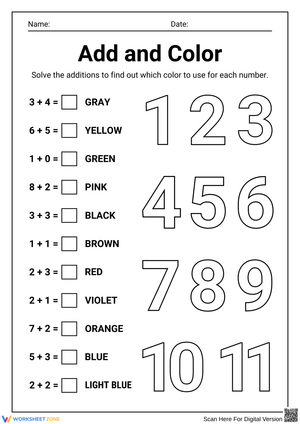
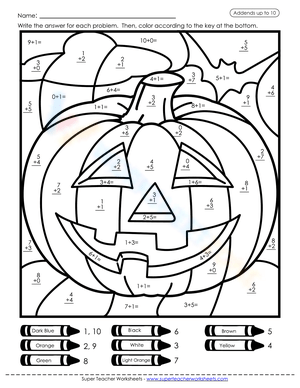
The ten-frame and number bond worksheets work well during the five to seven minutes at the start of a math block before the main lesson launches. They are concrete enough that students begin immediately without reminders, and they activate the specific mental processes the rest of the lesson will use. For math centers, the cut-and-paste and color-by-number formats hold attention without requiring teacher presence — model the format whole-group before releasing it into rotation, and students complete it independently from that point forward. Fluency drills belong at the end of a unit, not the beginning; assigned too early, they produce anxiety rather than evidence of growth.
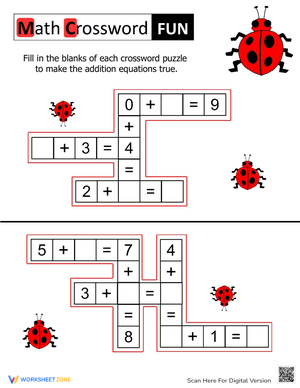
These 1st grade addition within 10 printable worksheets also work for homework when selected deliberately. At this grade, homework should reinforce rather than extend — send home only formats the class has already practiced in school. A number bond page or a short equation sheet is accessible enough for a parent and child to finish together in under ten minutes, which keeps the experience positive and prevents an unfamiliar format from derailing the evening. Keep the puzzle-based pages for early finishers during independent work time; they are sufficiently self-directing that students stay on task without adult check-ins.
Adjusting the Set for a Range of Learners
Students still relying on counting-all strategies benefit most from the ten-frame worksheets, where the visual structure directs attention toward groups rather than individual tallies. Placing a plastic sleeve over the worksheet so students can set two-color counters directly on the printed frame gives them a concrete step before any pencil touches paper — a physical representation of the equation before they commit to writing the sum. For students who have internalized the basic facts and are ready for extension, the word problem worksheets offer the most traction: ask those students to write a second equation representing the same story in reversed order, which builds understanding of the commutative property in context rather than as an abstract rule to memorize.
For students reading below grade level, word problems present a secondary barrier that has nothing to do with addition. Reading the problem aloud once before students begin removes that obstacle without altering the math demand at all. On fluency drills, reducing the number of equations in a session — rather than the difficulty of the facts themselves — maintains appropriate cognitive demand without changing what is being asked mathematically. More time on the same skill, not a different skill, is the right adjustment at this stage.
Frequently Asked Questions
How do these worksheets fit alongside manipulative-based instruction?
Printed practice works best after students have had hands-on time building the concept with physical objects. Once a student can construct an addition combination with counters, a worksheet reinforces that understanding in recorded form. Teachers who introduce addition within ten through printed materials before any concrete work typically see higher error rates and more counting-all behavior than those who sequence manipulatives first. The visual formats in this set — ten frames and number bonds — bridge the gap between concrete and abstract, but they are not a substitute for the hands-on phase.
How often should fluency practice happen at this grade level?
Short and frequent beats long and occasional. Five to eight minutes of targeted fact practice daily produces better retention than a longer session twice a week, because spaced retrieval consolidates memory more effectively than massed practice. The fluency drills in this set are sized for exactly that window — enough problems to push recall without running so long that students begin guessing to finish. Daily use during morning work or as a math block opener is the most reliable path to meeting the 1.OA.C.6 fluency benchmark by year's end.
Are these appropriate for kindergarteners who are ahead or second graders who need review?
The ten-frame and number bond worksheets translate cleanly to a strong kindergartener working with sums through ten. For second graders who missed fluency foundations, the 1st grade addition within 10 printable worksheets that present bare equation drills are the fastest diagnostic: a student who moves through those accurately and quickly has the foundation in place; a student who counts on fingers for every problem needs direct strategy instruction before two-digit addition work begins. The visual-format worksheets give those students the guided practice structure they need to close the gap without signaling that the work belongs to a lower grade level.
Can completed worksheets serve as assessment evidence?
Fluency drills double as informal assessments. Used without a timer, they show which facts a student retrieves automatically and which ones require extended processing — visible in the uneven pace of answers across the page. Used with a short time window, they reveal class-wide fluency development. Review them as student work rather than scored papers: consistent errors on sums of eight and nine, for instance, point to a specific gap worth targeting in small-group instruction. A collection of these pages across a unit gives you concrete documentation for parent conferences — more useful, in most cases, than a single summative score.













 Interactive Worksheet Maker
 Quiz Maker
 Word Search Maker
 Crossword Puzzle Maker
 Word Scramble Generator
 Sentence Scramble Generator
 Handwriting Worksheet Generator
 Name Tracing Generator
 Fill In The Blank Generator