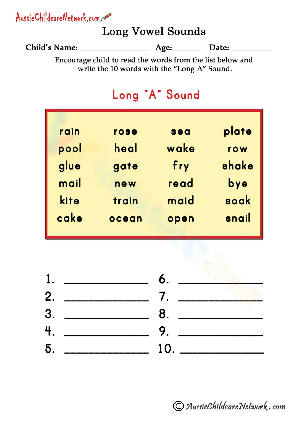
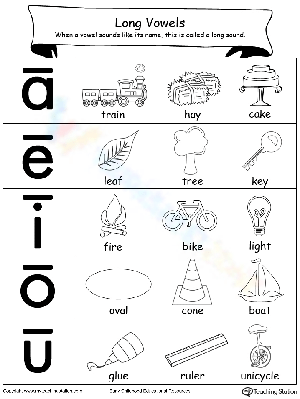
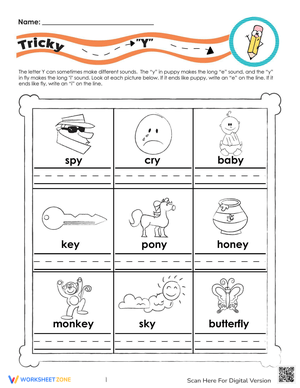
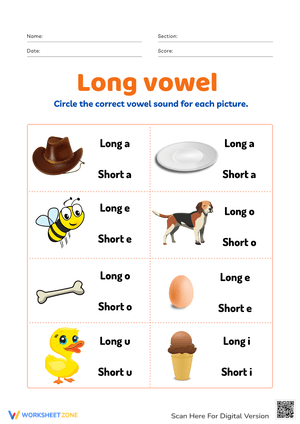
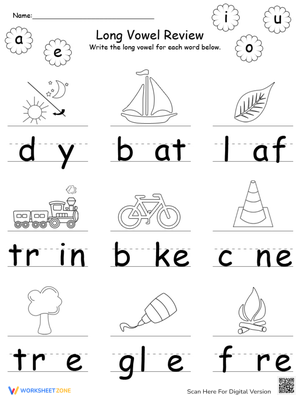
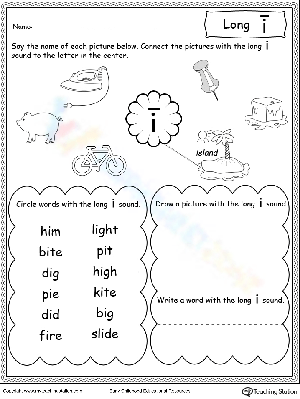
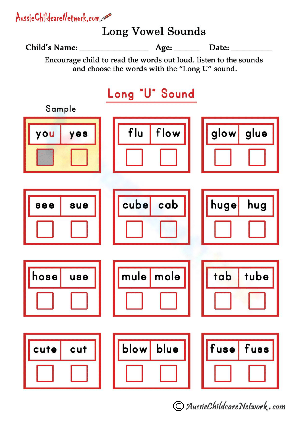
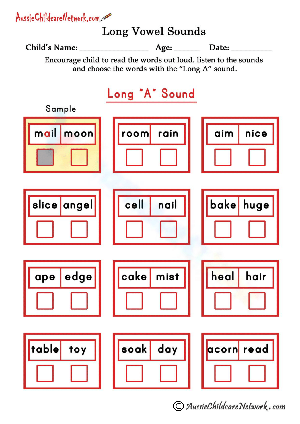
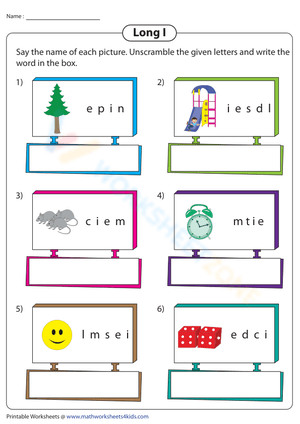
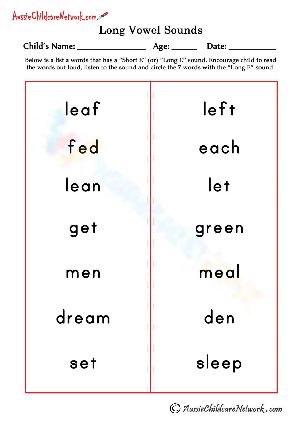
These 1st grade long vowels printable worksheets cover the three core phonics patterns first graders encounter once they've moved past CVC words: the silent-e transformation, vowel teams, and open syllables. Each worksheet targets a distinct pattern so teachers can match the activity to exactly where a student sits in the phonics sequence.
The Patterns Inside Each Worksheet
The set follows the progression most phonics programs use. Silent-e worksheets open the sequence — students work with minimal pairs like cap/cape and hop/hope, marking the silent letter and naming the vowel sound they hear. Vowel team worksheets then address specific digraphs grouped by sound: ai and ay together, ee and ea together, oa and ow together. Open-syllable practice rounds out the set, asking students to read and sort words like he, go, and me, where no spelling marker signals the long vowel — the syllable structure does that work on its own.
Formats across the worksheets include five distinct activity types:
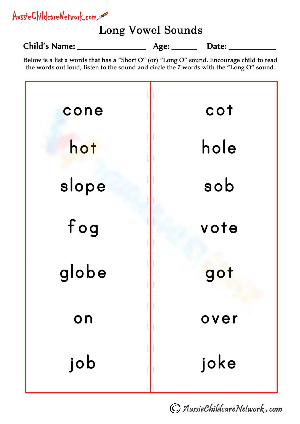
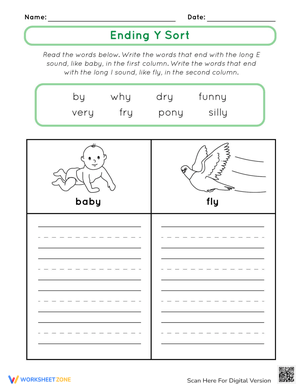
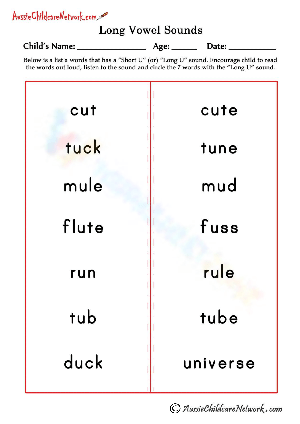
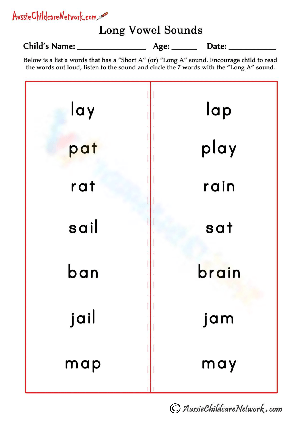
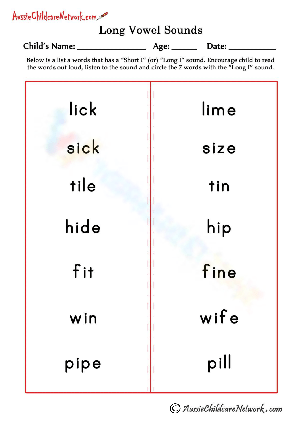
- Word sorts: Students separate CVC short-vowel cards from CVCe long-vowel cards, building the contrast before they can fully articulate the rule.
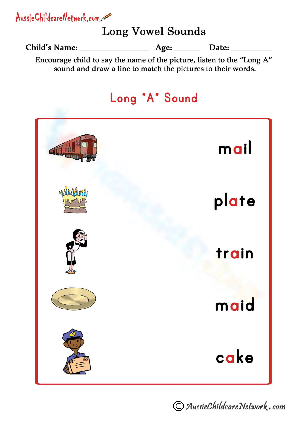
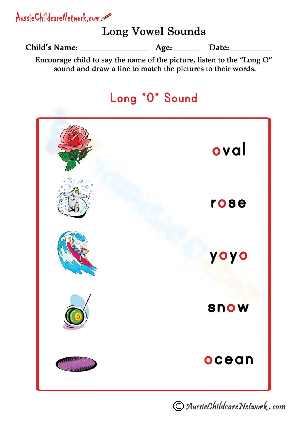
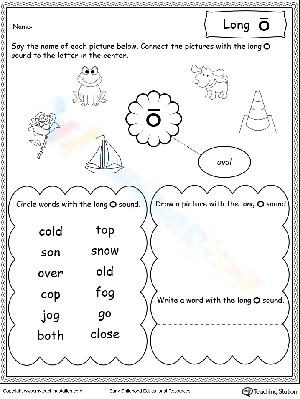
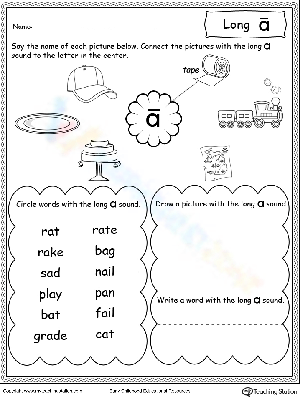
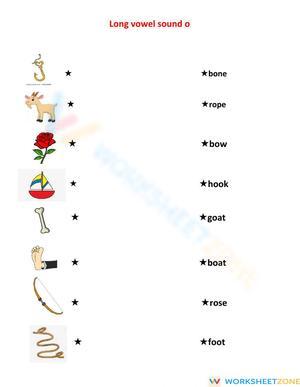
- Vowel team matching: Students draw lines from pictures to the correct digraph column — a train to ai, a tray to ay.
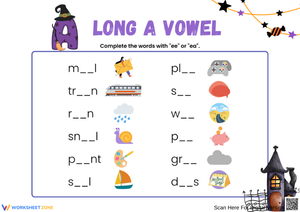
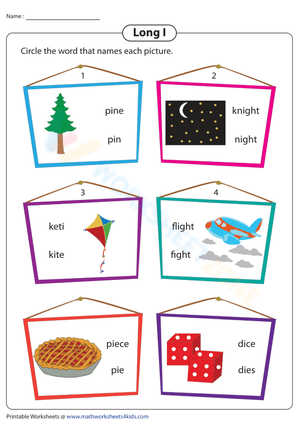
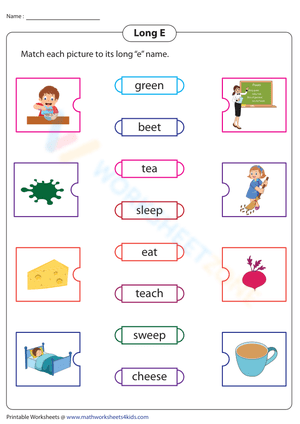
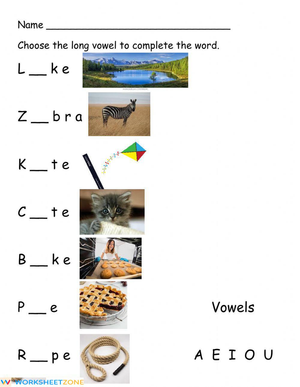
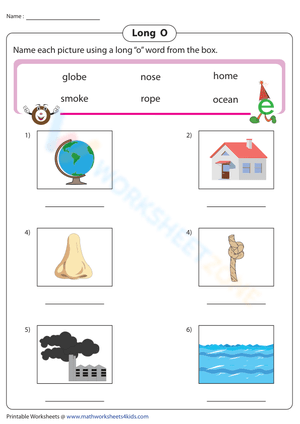
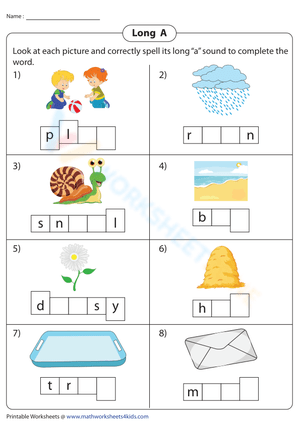
- Picture-word identification: Students look at an image and circle the correct spelling from two options, targeting recognition without requiring production.
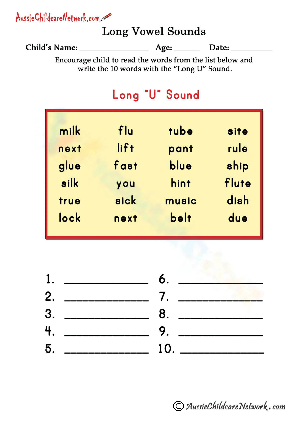
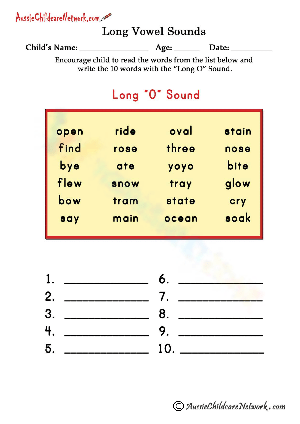
- Fill-in-the-blank sentences: Students select from a word bank to complete sentences, moving the phonics pattern into a reading-in-context task.
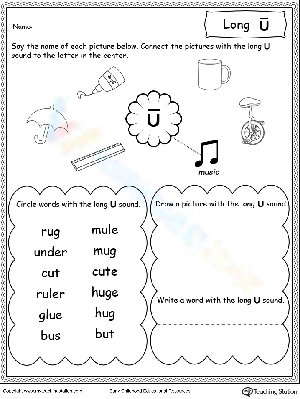
- Cut-and-paste sorting: Students cut out picture cards and paste them under the matching vowel pattern heading — a format that benefits students who need some movement built into an otherwise desk-bound practice block.
Error Patterns That Show Up in Student Work
The most consistent error in silent-e practice is over-generalization. A student who successfully learns that adding e to cap makes cape will often start writing sete for set and flope for flop — attaching a silent e to words that don't call for one. Word sort tasks that mix CVCe and CVC words force a judgment call on every item rather than letting students apply the rule automatically, and that's exactly where the over-generalization gets exposed and corrected.
Vowel team errors follow a different pattern. Students learn that ai and ay both say the long-a sound and then apply them interchangeably: rayn instead of rain, playie instead of play. The positional rule — ai in the middle of a word, ay at the end — is one of the most teachable distributional patterns in English phonics, and worksheets that sort words by position rather than by sound alone make that rule concrete. The same logic applies to oa versus ow, though that pair is less consistent and worth flagging explicitly when it comes up.
One error that worksheets can't fully prevent: first graders who internalize ea as always making a long-e sound will stall on bread, head, and sweat. The fill-in-the-blank sentences occasionally surface words like these. Marking them explicitly during debrief — "this one breaks the pattern; here's why" — turns the exception into a teaching moment instead of a source of confusion about whether the rule works at all.
Fitting These Worksheets Into Your Phonics Block
The strongest slot for these activities is the independent practice segment immediately following direct instruction — the 8 to 10 minutes after the teacher has modeled the pattern on the board and run two or three shared examples with the class. Students who have just watched a word sort demonstrated are primed to execute it alone, which means the worksheet functions as a transfer activity rather than a cold exercise. These 1st grade long vowels printable worksheets also rotate cleanly through literacy centers: set one format at the phonics station each Monday and the center runs itself for the week without requiring new teacher setup.
For small-group work, pulling a pattern-specific worksheet gives the group a shared focus and produces visible evidence of where individual students are. A student who writes rayn in the blank is telling you exactly where the next lesson needs to go — no separate diagnostic required.
Standard Alignment
These worksheets align directly to CCSS ELA-Literacy RF.1.3c, which requires first graders to know final-e and common vowel team conventions for representing long vowel sounds. This standard sits at the center of first-grade phonics instruction — it is what most foundational reading assessments in Grade 1 measure, and it is what the bulk of a phonics sequence between October and May is building toward. Using these worksheets as formative practice across multiple pattern introductions gives teachers documented evidence of progress toward RF.1.3c without requiring separate assessment design. Open-syllable work also connects to RF.1.3d, which addresses the principle that every syllable must contain a vowel sound.
Meeting Different Readers Within the Same Phonics Unit
Students who are still shaky on short vowels get the most from CVCe worksheets that present minimal pairs side by side. Seeing hat and hate in the same exercise, with pictures to confirm meaning, gives them the contrast without requiring them to hold both patterns in working memory simultaneously. For these students, limit the word bank to four to six items and draw a box around the silent e before distributing the worksheet — that single visual cue reduces the processing load enough for many students to work independently.
On-level students work through single-pattern worksheets first, then advance to mixed-pattern tasks that ask them to identify which pattern a word uses — not just how it sounds. That discrimination work is what consolidates learning across the full long vowel unit.
Students reading above grade level are ready for two-syllable words containing long vowel patterns: raincoat, compete, robot. Extending the word lists in this direction keeps advanced readers in the same instructional content without pushing them outside first-grade phonics scope. A simple annotation in the answer key flagging extension items lets teachers run one worksheet across all three groups without preparing separate materials.
Frequently Asked Questions
Which long vowel pattern should I introduce first in 1st grade?
Silent-e (CVCe) is the standard entry point because it follows a single, consistent rule students can state and apply. Once students are solid on CVCe words, move to vowel teams — starting with ai/ay and ee/ea because they appear in high-frequency words students encounter early in decodable texts. Open syllables are typically woven in throughout the year as students encounter them in reading rather than introduced in one concentrated block.
How often should first graders practice long vowel patterns in a given week?
Two to three worksheets per week on the current target pattern gives most students enough repetition to consolidate the spelling-sound correspondence. Rotating the activity format — word sort one day, fill-in-the-blank the next — maintains engagement while keeping the cognitive focus on the phonics pattern itself rather than on decoding a new set of directions.
Can I use these worksheets with students who are still working on short vowels?
Yes — selectively. The CVCe worksheets that pair each short-vowel word with its long-vowel counterpart serve double duty: they review short vowels while introducing the contrast. A student who isn't yet secure on short vowels often benefits from seeing both patterns in one exercise rather than meeting long vowels in isolation. These 1st grade long vowels printable worksheets are built so that each worksheet stands alone, meaning a teacher can assign a single CVCe activity to one student without requiring the full set.
What do I do when a student confuses the two spellings within a vowel team pair?
Confusion between ai and ay — or oa and ow — almost always resolves when instruction shifts from sound to position. Ask the student to point to where in the word the vowel team sits: the middle or the end. For the ai/ay pair, position is a reliable guide without exception. Running a word sort that groups words by final position rather than by sound is the most direct intervention. These 1st grade long vowels printable worksheets include that position-based sorting format as a standalone task, so it can be pulled for any student who needs it without requiring a full re-teach of the unit.












 Interactive Worksheet Maker
 Quiz Maker
 Word Search Maker
 Crossword Puzzle Maker
 Word Scramble Generator
 Sentence Scramble Generator
 Handwriting Worksheet Generator
 Name Tracing Generator
 Fill In The Blank Generator