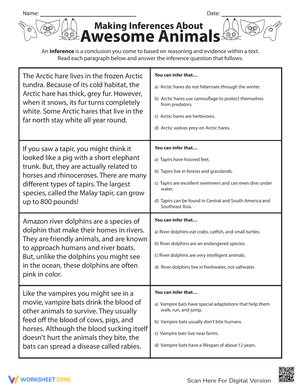
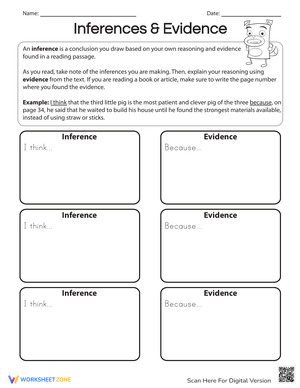
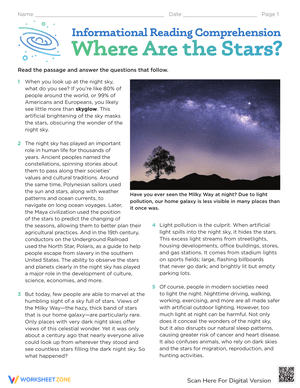
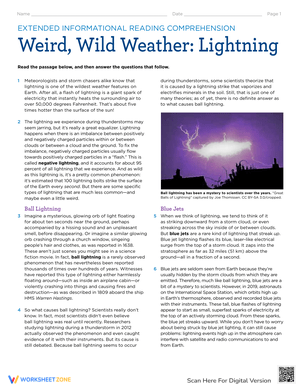
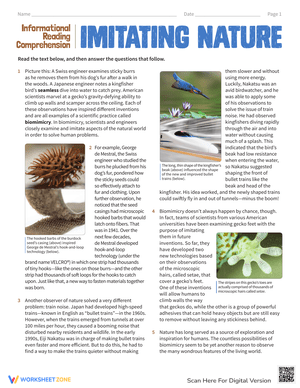
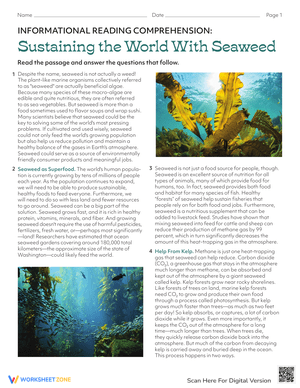
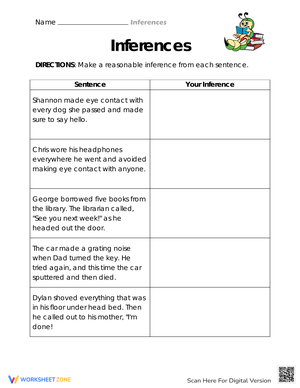
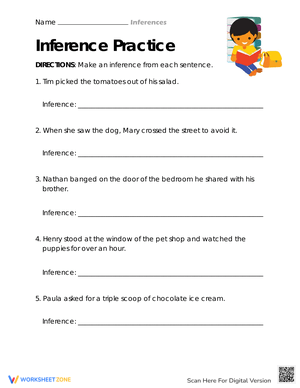
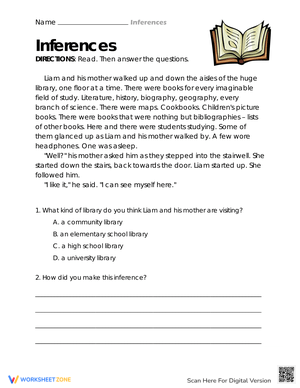
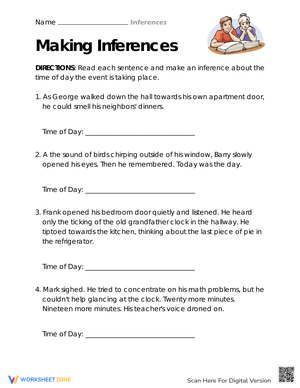
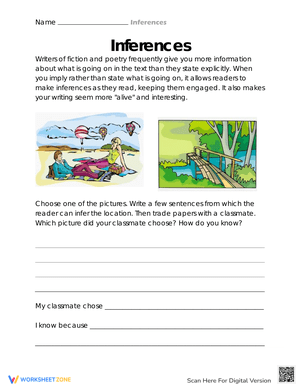
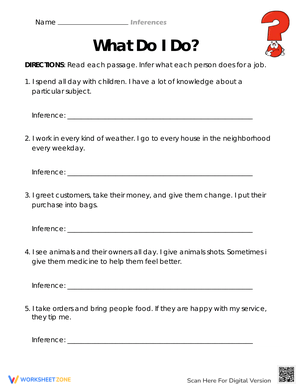
These making inferences in nonfiction worksheets give middle school reading teachers a structured set of practice materials built around the specific reasoning demands of informational text. Each worksheet pairs a short passage from science, history, or social studies with evidence-based prompts that move students past surface-level recall. The passages run short enough to use in a 15-minute warm-up block or as targeted follow-up after direct instruction, and each worksheet stands alone, so teachers pull individual ones to match whatever unit is already running.
What Students Practice in the Set
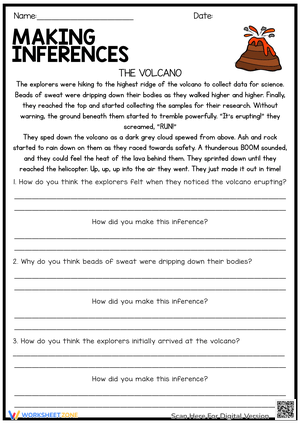
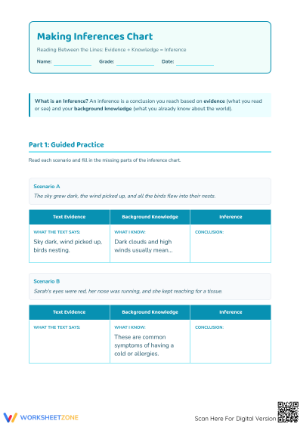
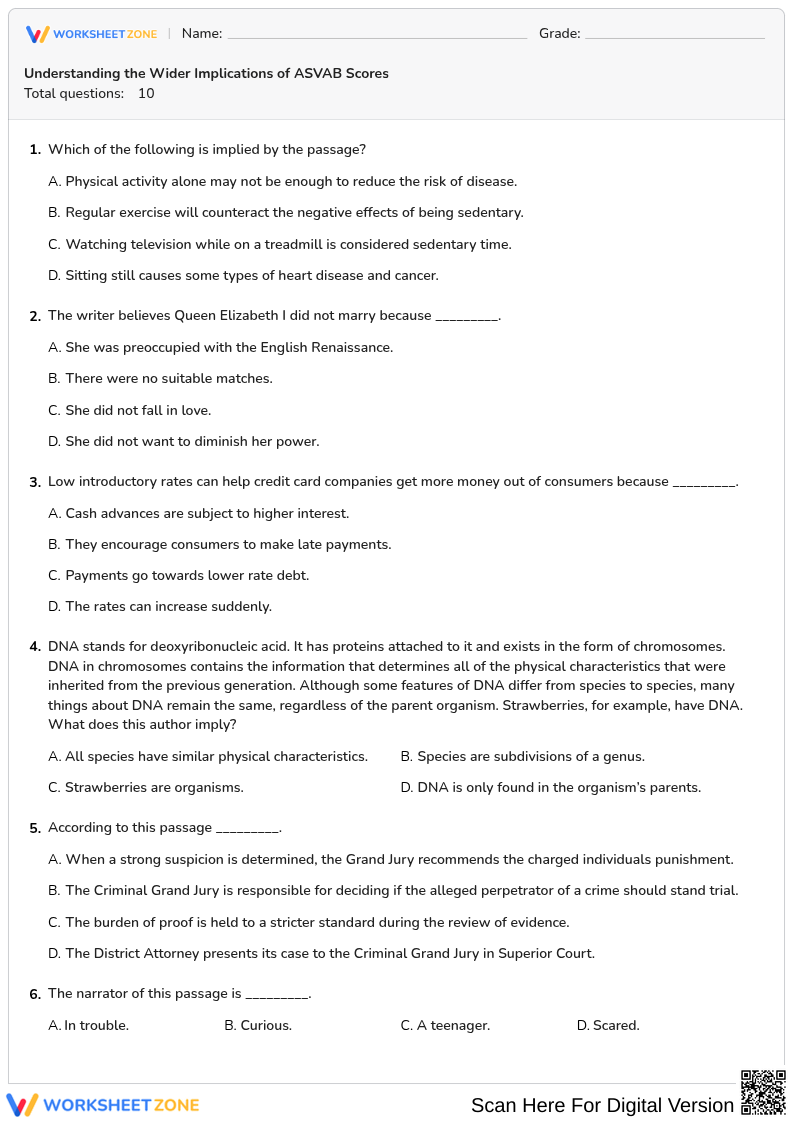
The core task across most worksheets follows a three-part sequence: students identify a specific text clue, record the prior knowledge they are connecting it to, and then write a stated inference that links the two. That order is deliberate. The most persistent shortcut students take is to write a conclusion first and then search backward through the text for something that loosely supports it. Forcing the steps in sequence breaks that habit. Several worksheets also ask students to annotate for cause-and-effect signal language — words like consequently, as a result, and therefore — because those connective phrases mark exactly the logical gap where an inference lives.
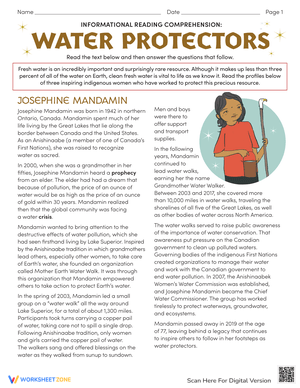
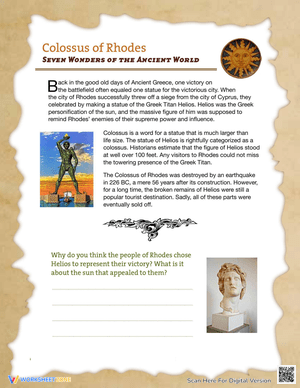
The set draws from multiple nonfiction text types. Some worksheets use science passages where the inference involves a relationship between data points — a passage about ocean salinity levels, for example, that implies something about fish migration patterns without stating it directly. Others use historical accounts or brief primary sources where students must infer motivation or consequence from limited first-person information. A handful push students toward author intent: what did this writer choose not to include, and what does that omission suggest?
Mistakes Students Make That These Worksheets Help You Catch
The most stubborn misconception in grades 6–8 nonfiction inference work is that a reasonable-sounding conclusion is automatically a valid inference. Students write things like "The scientist was proud of her discovery" after reading a factual lab report with no emotional language anywhere in it. They are carrying over fiction inference habits — reading emotional subtext into neutral prose — and no one has explicitly told them that nonfiction usually strips that subtext out. The prompts on these worksheets ask students to name the specific sentence or phrase from the text that anchors their inference, which forces them to confront this habit directly rather than just having it corrected in red pen.
A second pattern worth watching: students infer too broadly. When a passage explains that a specific fern species grows only above 2,000 meters elevation and then names a mountain range in that region, a careful student infers that the fern likely grows there. An overreaching student infers that the mountain range must have a cold climate, a fragile ecosystem, and limited human settlement — none of which the passage supports. Nonfiction inference is a targeted act, and the worksheets are built to reward precision over scope. Reviewing a few completed worksheets side by side quickly shows which students have that distinction down and which ones still need guided practice.
Building These Worksheets Into Your Lesson Plans
The most reliable placement is as a Monday warm-up that re-engages students with the week's reading focus before new instruction begins. Each worksheet takes most students 10–12 minutes, which leaves time for a quick pair-share before the lesson proper. Teachers who use them this way find that the structured evidence prompt reduces the minutes students spend staring at a blank page — there is a clear first move written into the task, so students start writing immediately instead of waiting for direction.
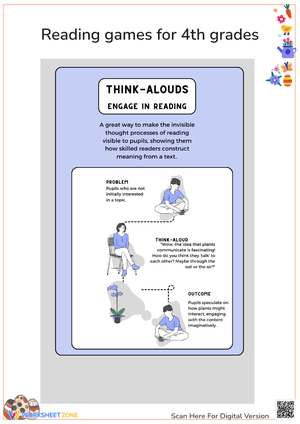
These worksheets also work well inserted directly after a think-aloud. When a teacher models the inference process using a passage on the document camera — pointing out signal language, naming the background knowledge she is applying — and then immediately hands students a worksheet with a similar passage type, the transfer is far cleaner than if the practice comes the next day. For making inferences in nonfiction worksheets, that proximity between model and practice matters: students genuinely find nonfiction inference unfamiliar, and the demonstrated mental move needs to be fresh. Teachers using a gradual-release structure can assign the worksheet as the independent portion of the same lesson block, then use student work to guide the next day's small-group conversation.
Standard Alignment
These worksheets address CCSS.ELA-LITERACY.RI.6.1 through RI.8.1, which require students to cite textual evidence to support both explicit understanding and inferences drawn from informational text. The grade-band progression matters here. RI.6.1 expects students to cite evidence in support of inferences; RI.7.1 adds the expectation of multiple pieces of evidence; RI.8.1 asks students to identify where the text leaves something genuinely uncertain or open to interpretation. The set spans that full range. Teachers in grade 6 will use the science and social studies passages as primary assignments; teachers in grade 8 will find the author-intent and perspective worksheets more directly relevant to their standard's demands. Several worksheets in the set also connect to RI.6.6 / RI.7.6 / RI.8.6, which address point of view and purpose in informational texts, particularly where students are asked to evaluate what an author chose to include or leave out.
Adjusting the Set for Different Student Levels
For students who freeze when faced with an open-ended inference prompt, the three-column graphic organizer built into several worksheets — Text Evidence, Prior Knowledge, My Inference — provides enough structure to get writing started. If that is still too open, narrow the task further: have the student underline every cause-and-effect signal word in the passage and read those annotations aloud before attempting anything written. That oral step often surfaces a connection the student could not reach on the page. For students working above grade level, remove the column headers and the sentence starters entirely, and ask them to write a short paragraph arguing for one of two possible inferences the text could support — and explaining why the evidence favors the one they chose over the other.
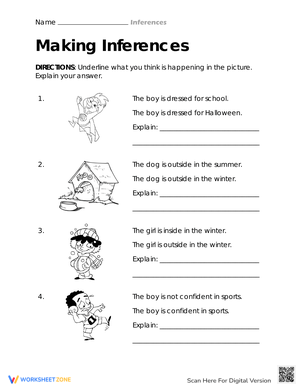
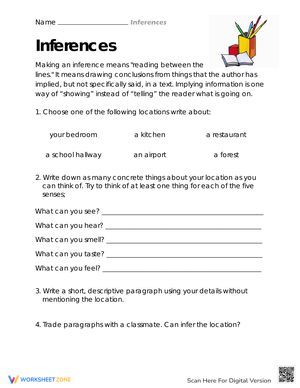
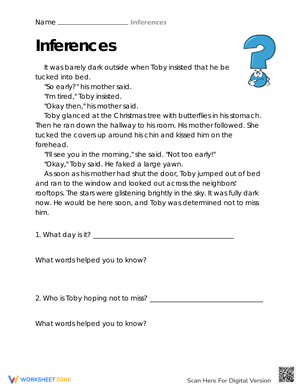
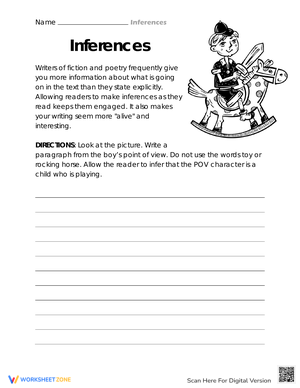
English language learners benefit most from the worksheets that include a short glossary of domain-specific terms in the passage header. Without that support, a student reading a passage about geological stratification may spend most of their processing effort decoding vocabulary rather than reasoning about what the text implies. Pairing the worksheet with a related diagram or photograph also helps: students can form an initial inference from the image, then test it against the text. Making inferences in nonfiction worksheets that include visual anchors move more reliably across mixed-ability classrooms than text-only formats, particularly when a class includes students at multiple reading levels working through the same passage.
Frequently Asked Questions
Is this set appropriate for 6th grade, or is it written for older middle schoolers?
The set spans grades 6–8 in passage complexity and question depth. The science and social studies passages with visible signal language and shorter text work well in 6th grade. The primary source worksheets and the author-intent tasks are better suited to 7th or 8th grade, where students have more practice reading complex informational text independently. Most teachers use the set selectively rather than moving through every worksheet in order.
How do these worksheets fit alongside a textbook or a full informational unit?
They work best as supplementary practice rather than as a replacement for the reading students do inside a unit. The passages are self-contained and short, which makes them useful for isolated skill practice, but they are not substitutes for the sustained reading of a longer chapter or article. Teachers typically assign one or two worksheets per week during an informational reading unit — one at the start of the week to activate the skill, one mid-week or at the end to check whether students are applying it to longer texts on their own.
Can students use these worksheets if they have no formal experience with nonfiction inference instruction?
The worksheets assume students understand the basic distinction between what a text states and what it implies, but they do not assume deep prior practice with informational texts specifically. The built-in evidence prompt provides enough direction for students in the early stages of this work. For a class encountering nonfiction inference for the first time, one teacher-led think-aloud on a short passage before assigning the first worksheet closes that gap efficiently. Making inferences in nonfiction worksheets are most effective as guided or independent practice — not as the initial introduction to the concept.












 Interactive Worksheet Maker
 Quiz Maker
 Word Search Maker
 Crossword Puzzle Maker
 Word Scramble Generator
 Sentence Scramble Generator
 Handwriting Worksheet Generator
 Name Tracing Generator
 Fill In The Blank Generator