


























Views
Downloads
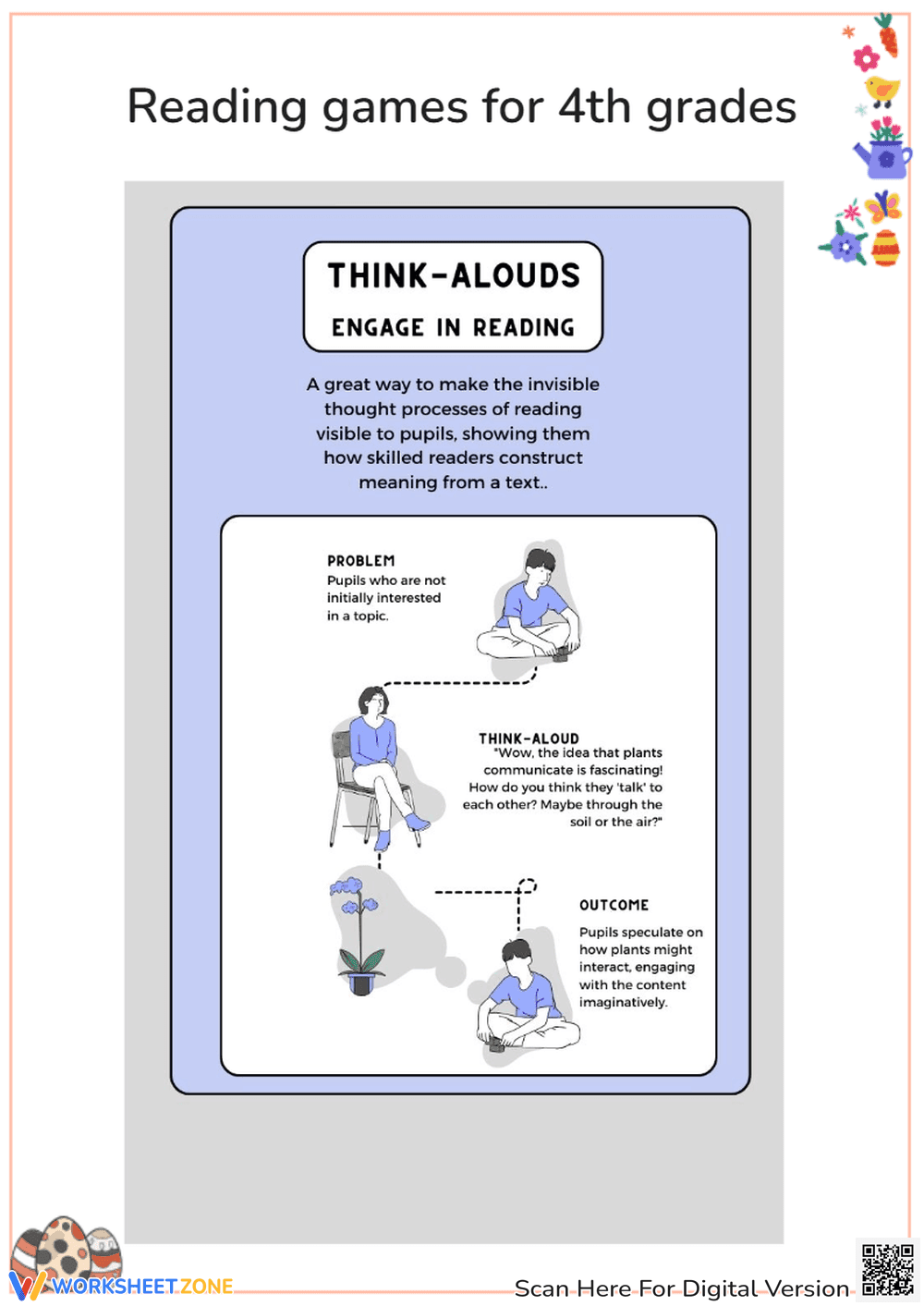

Grade 4 Think-Alouds — Printable No-Prep Guide
Paste this activity's link or code into your existing LMS (Google Classroom, Canvas, Teams, Schoology, Moodle, etc.).
Students can open and work on the activity right away, with no student login required.
You'll still be able to track student progress and results from your teacher account.
This Grade 4 reading comprehension guide teaches students how to use think-aloud strategies to monitor understanding. By making cognitive processes visible, this resource helps readers actively construct meaning and make inferences. Students learn to self-monitor, ask questions, and engage deeply with informational texts.
At a Glance
- Grade: Grade 4 · Subject: Reading
- Standard:
CCSS.ELA-LITERACY.RI.4.1— Refer to details to explain text and draw inferences- Skill Focus: Metacognitive reading strategies
- Format: 1 page · 1 strategy guide · No key · PDF
- Best For: Introducing active reading strategies
- Time: 10–15 minutes
This single-page anchor chart features a step-by-step visual workflow illustrating the think-aloud process. It breaks the strategy into three components: identifying a problem, executing a verbalized think-aloud, and achieving a positive outcome. The layout uses a concrete plant communication example to model active questioning.
Zero-Prep Classroom Workflow
This resource requires zero advance preparation. Teachers can implement it using this simple workflow:
- Print (1 minute): Print a copy to project or distribute to students.
- Distribute (30 seconds): Hand out the guide or post it digitally.
- Review (5 minutes): Read the modeled plant communication example together.
With under 2 minutes of prep, this guide is perfect for emergency sub plans.
Standards Alignment
This guide supports `CCSS.ELA-LITERACY.RI.4.1` by teaching students to refer to details when explaining texts and drawing inferences. It also aligns with `CCSS.ELA-LITERACY.RF.4.4.C` regarding self-correction. Both standard codes can be copied directly into lesson plans, IEP goals, or district curriculum mapping tools.
How to Use It
Use this guide during direct instruction to introduce metacognitive strategies before independent reading. Alternatively, use it in small-group reading sessions. Observe if students identify text details that trigger questions as a formative assessment. The introductory lesson takes 10 to 15 minutes to complete.
Who It's For
This resource is ideal for fourth-grade students, English language learners, and students receiving reading intervention. It pairs naturally with a short informational science passage, allowing students to immediately apply the modeled think-aloud strategy to new text.
This instructional guide targets `CCSS.ELA-LITERACY.RI.4.1` by teaching fourth-grade students the plain-English skill of verbalizing internal thought processes to monitor comprehension and draw text-based inferences. According to research by Fisher & Frey (2014) on the gradual release of responsibility, modeling metacognitive strategies through structured think-alouds is a critical step in moving students from dependent reading to independent text analysis. By externalizing the invisible steps of comprehension—such as questioning, predicting, and connecting details—this resource provides a concrete framework that helps educators scaffold complex reading tasks. The visual layout ensures that students understand how to identify a reading roadblock, apply a cognitive strategy, and reach a successful comprehension outcome. This evidence-based approach supports diverse learners in developing the self-regulation skills necessary for mastering grade-level informational texts.


