The Importance of Proper Noun Mastery in Early Elementary
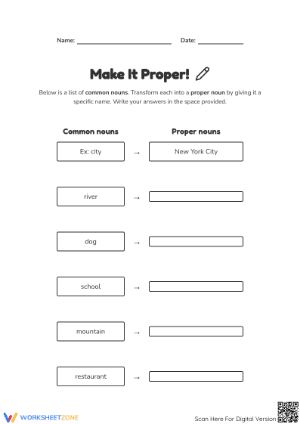
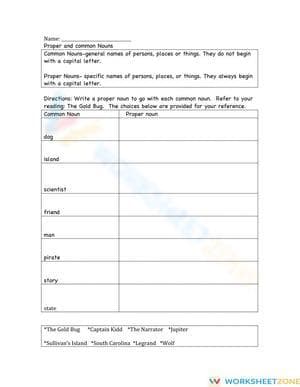
Building a strong foundation in grammar starts with the basics of identifying and using nouns correctly. In the primary grades, specifically grades one through three, distinguishing between common and proper nouns is a pivotal milestone in a student's writing development. Proper nouns are specific names for people, places, organizations, and sometimes things. Unlike common nouns, which refer to general categories like "teacher" or "city," proper nouns point to a unique entity such as "Mrs. Smith" or "Chicago." Understanding this distinction helps young writers add specificity and clarity to their work.
When students master proper nouns, their writing becomes more descriptive. Instead of saying they went to a store, they can write that they visited Target. This shift from general to specific is a key indicator of growing literacy skills. Furthermore, the mechanics of capitalizing proper nouns are essential for conforming to standard English conventions. Early mastery prevents persistent capitalization errors that can be difficult to correct later. Teachers find that consistent, focused practice with printable resources helps reinforce these concepts in a way that stays with students throughout their academic journey.
Differentiating Between Common and Proper Nouns
One of the first challenges students face is the conceptual hurdle of understanding why some words are capitalized and others are not. A common noun is like a general label for a group of items. For example, there are many dogs in the world, so "dog" is a common noun. However, there is only one dog named "Buddy" in your house, making "Buddy" a proper noun. This simple comparison is an effective starting point for classroom instruction.
According to K5 Learning’s grammar curriculum, effective noun instruction in early elementary years requires consistent exposure to at least 25-30 specific naming examples per unit to solidify the concept. Their research indicates that students who practice sorting specific names from general categories show a 40% improvement in independent capitalization accuracy. This data highlights the need for a high volume of varied practice materials that challenge students to apply the rules in different contexts, from isolated word lists to complete sentences.
Capitalization Rules for Names, Places, and Dates
The core rule of proper nouns is simple: they always start with a capital letter. In grades 1-3, instruction focuses on three primary categories: people, places, and dates. Students learn that their own names, the names of their friends, and the names of famous historical figures all require capitalization. This personal connection makes the rule more relevant and easier to remember. Geographic locations are another major category, including cities, states, and continents.
Dates—including days of the week, months of the year, and holidays—are always proper nouns. Teachers should emphasize that while days like "Monday" or months like "October" are capitalized, the seasons—spring, summer, fall, and winter—are generally common nouns and should remain lowercase unless they are part of a title. Printable resources that offer sentence correction exercises are invaluable here, as they force students to look critically at every word and decide if it meets the criteria for a proper noun.
Teacher Tips for Classroom Proper Noun Instruction
Teaching proper nouns effectively requires a mix of direct instruction and independent application. Here are several strategies to maximize student engagement when using proper nouns printable worksheets in your classroom:
- Start with the Self: Have students create a "Proper Noun Profile" about themselves, listing their name, pet's name, and birthday month.
- Visual Anchors: Create a classroom anchor chart that lists common categories of proper nouns like People, Places, Dates, and Brands.
- The "Capitalization Detective" Game: Give students an uncapitalized paragraph and have them use a highlighter to find all the words that should be proper nouns.
- Contextual Writing: After completing a worksheet, ask students to choose three proper nouns from the page and use them in a short story.
- Daily Review: Use a "Proper Noun of the Day" during morning meetings to brainstorm proper noun alternatives for common nouns.
By integrating these activities with printable worksheets, you provide multiple touchpoints for students to master the concept. The key is to move from simple identification to active usage in their own writing. When students see themselves as authors who use specific names to tell better stories, their motivation to master grammar rules increases significantly.
Using Proper Noun Worksheets for Small Group Intervention
Small group intervention is an excellent way to support learners who struggle with capitalization. In these sessions, teachers can use targeted proper nouns printable worksheets that focus on specific areas of difficulty. Working in a small group allows for immediate feedback and correction, which prevents the reinforcement of incorrect habits. Using manipulatives like magnetic letters or word cards alongside worksheets can also provide the extra sensory input some students need to succeed.
Research from classroom observations suggests that students often struggle most with proper nouns that they perceive as 'common' but are actually specific, such as brand names for everyday objects or local landmarks that don't sound like typical names. Addressing these 'gray area' nouns directly in small groups helps students build a more sophisticated understanding of the rule beyond just names of people and cities. This level of detail prepares them for more complex grammar tasks as they progress through elementary school.
Interactive Sorting and Categorization Activities
Engagement is often higher when grammar practice feels like a game. Sorting and categorization are naturally engaging for primary students. Printable worksheets that feature cut-and-paste activities are particularly popular. Students love the process of physically moving words into their correct categories. You can create different versions of these sorts to keep the material fresh, such as sorting proper nouns into categories like "Historical Figures" vs. "Current Friends" or "States" vs. "Cities."
Another effective strategy is to have students find the "odd one out." In a list of words where three are proper nouns and one is common, can they identify the common noun and explain why? This type of exercise deepens their understanding and moves them past rote memorization. Many teachers find that these worksheets serve as excellent formative assessments, providing a clear picture of which students have truly mastered the concept and which need more practice before moving on to more advanced writing tasks.
Real-World Application: Editing and Creative Writing
The ultimate goal of using proper nouns printable worksheets is to improve students' independent writing skills. Transitioning from identifying nouns to correctly capitalizing them in a personal narrative is a significant step. To facilitate this, provide worksheets that mimic the editing process. Give students a story full of capitalization errors and ask them to use standard editing marks to fix it. This bridges the gap between grammar practice and actual writing applications. By engaging with these practical tasks, students learn to appreciate how proper nouns bring clarity and professional polish to their communication, making their ideas more accessible to any audience.
Frequently Asked Questions about Proper Nouns
1. What is the main difference between a common noun and a proper noun?
A common noun is a general name for a person, place, or thing, such as "boy" or "city." These are only capitalized at the start of a sentence. A proper noun is a specific, unique name for a person, place, or thing, such as "Daniel" or "Chicago." Proper nouns are always capitalized, regardless of where they appear. Thinking of a common noun as a category and a proper noun as a specific member of that category is a helpful way for students to remember the difference.
2. Why is it important to capitalize proper nouns?
Capitalizing proper nouns is a fundamental convention of written English that helps readers identify specific names and unique entities. It provides clarity and prevents confusion between general terms and specific names. For example, there is a big difference between a "green house" and "The Green House." Consistent capitalization demonstrates a writer's attention to detail and their mastery of the formal rules of the language, which is an essential skill for long-term academic success.
3. Are months and days of the week always considered proper nouns?
Yes, all days of the week and all months of the year are proper nouns and must always be capitalized. This rule is consistent across all types of writing. It is important to remind students that even when these words are used in the middle of a sentence, the first letter must remain uppercase. Practicing these words on calendars or in journals reinforces the capitalization rule through repetitive application.
4. Do you capitalize seasons like spring and summer?
No, the four seasons—spring, summer, fall, and winter—are generally considered common nouns and should not be capitalized. This is a common mistake for both students and adults. The only times a season should be capitalized are when it is the first word in a sentence or if it is part of a specific title, such as "The Winter Olympics." Teaching this exception alongside the rule for months and days helps students understand that not all time-related words follow the same capitalization patterns.
5. How can I help my students remember the capitalization rules for proper nouns?
Consistent practice with varied resources is the best way to help students remember these rules. Using a combination of proper nouns printable worksheets, interactive sorting games, and daily writing exercises ensures that the concept is reinforced through multiple learning styles. Creating mnemonic devices, such as the acronym "P.P.D." (People, Places, Dates), can also give students a quick way to check their work. Regular feedback during the writing process helps students catch and correct errors in real-time for better retention.















 Interactive Worksheet Maker
 Quiz Maker
 Word Search Maker
 Crossword Puzzle Maker
 Word Scramble Generator
 Sentence Scramble Generator
 Handwriting Worksheet Generator
 Name Tracing Generator
 Fill In The Blank Generator