




























Views
Downloads

Printable Grade 1 Proper Nouns Zoo Story Worksheet

Paste this activity's link or code into your existing LMS (Google Classroom, Canvas, Teams, Schoology, Moodle, etc.).
Students can open and work on the activity right away, with no student login required.
You'll still be able to track student progress and results from your teacher account.
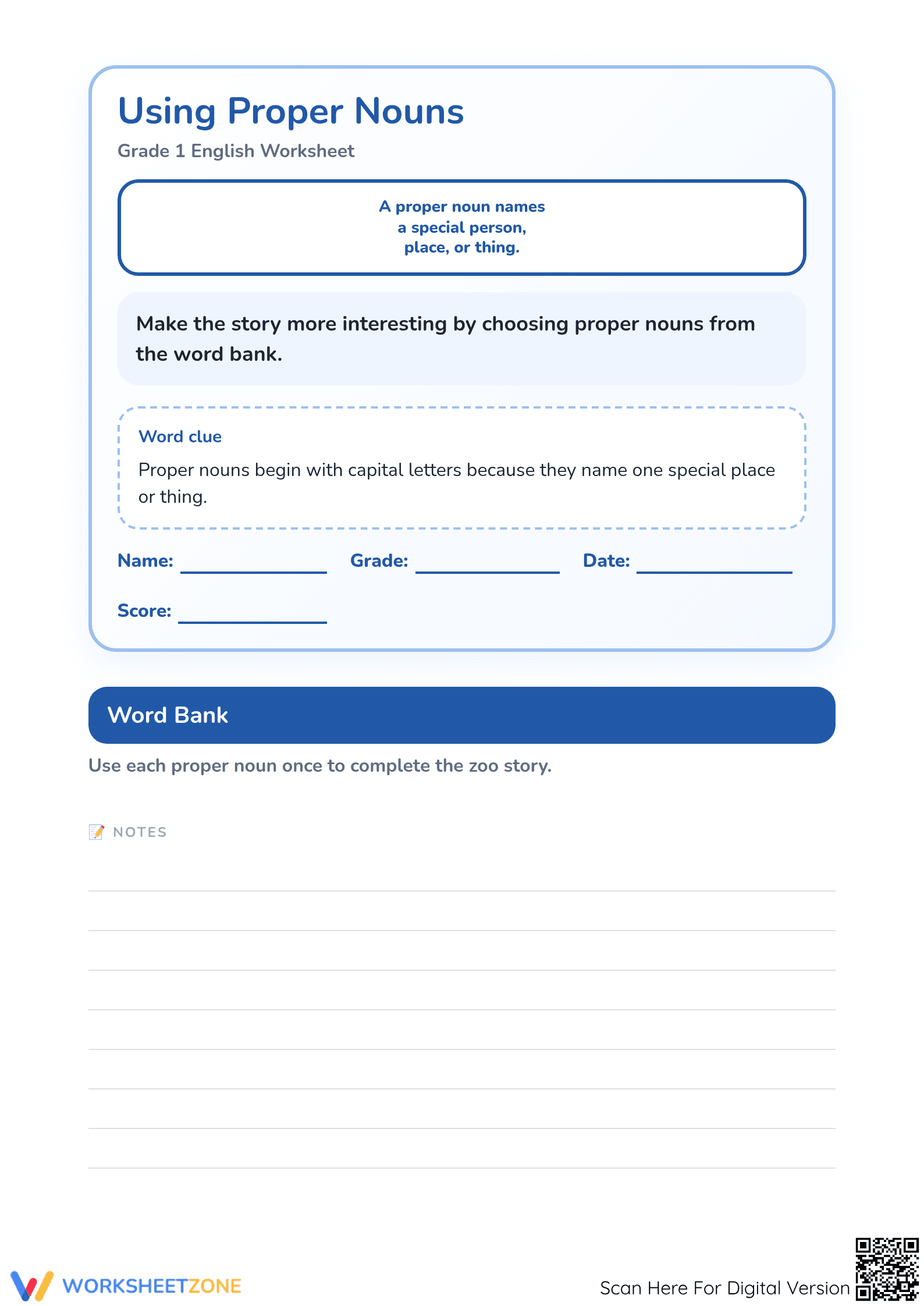
Mastery of proper nouns is essential for early writers to distinguish specific entities from general categories. This Grade 1 ELA worksheet provides a cohesive zoo-themed narrative where students apply capitalization rules to specific locations and attractions. By completing the 10-task exercise, learners solidify their understanding of lexical word classes and formal writing conventions.
At a Glance
- Grade: Grade 1 · Subject: English Language Arts (ELA)
- Standard:
CCSS.ELA-LITERACY.L.1.1.B— Use common, proper, and possessive nouns in sentences- Skill Focus: Proper Noun Capitalization
- Format: 4 pages · 10 problems · Answer key included · PDF
- Best For: Independent practice or small group literacy centers
- Time: 15–20 minutes
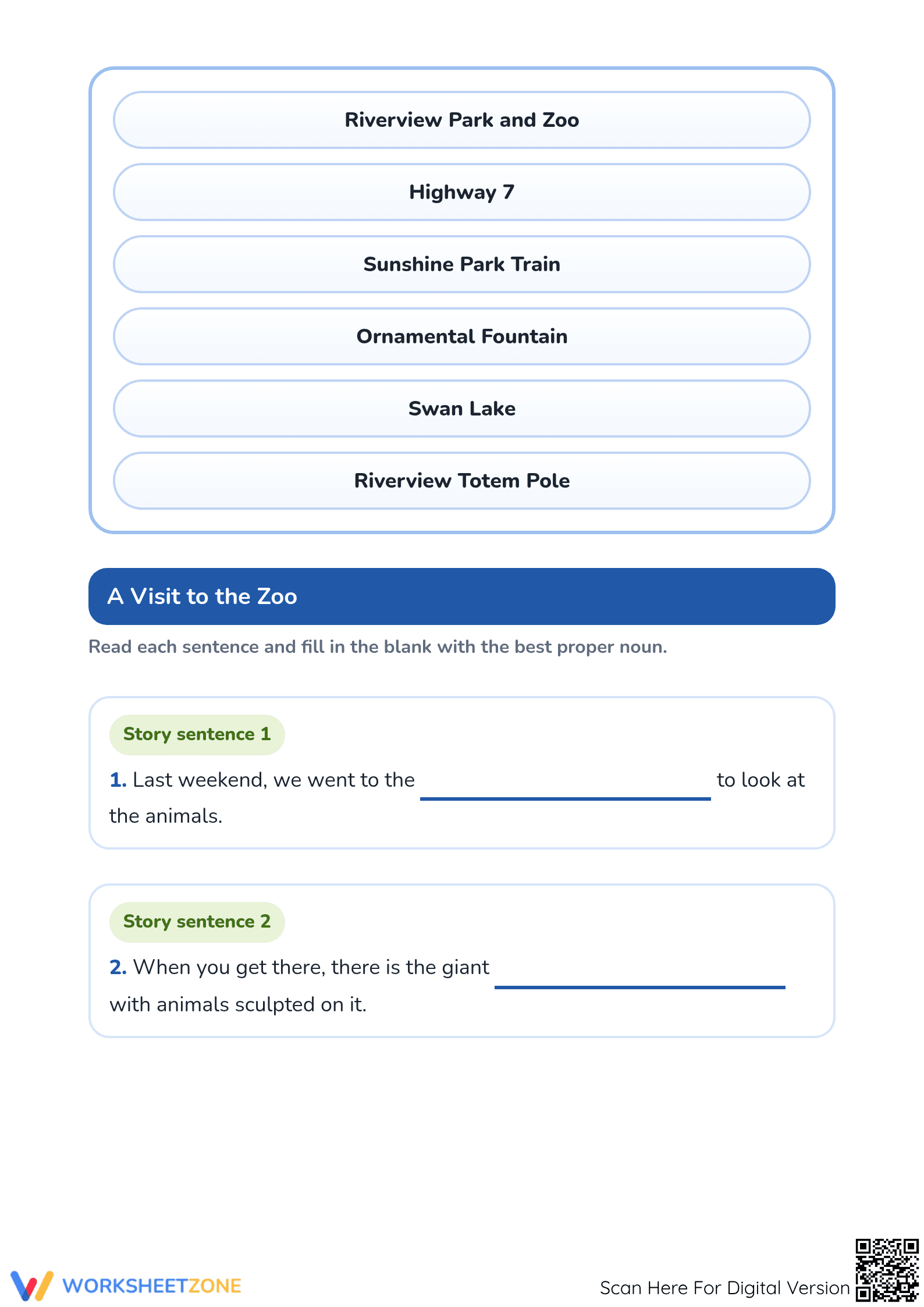
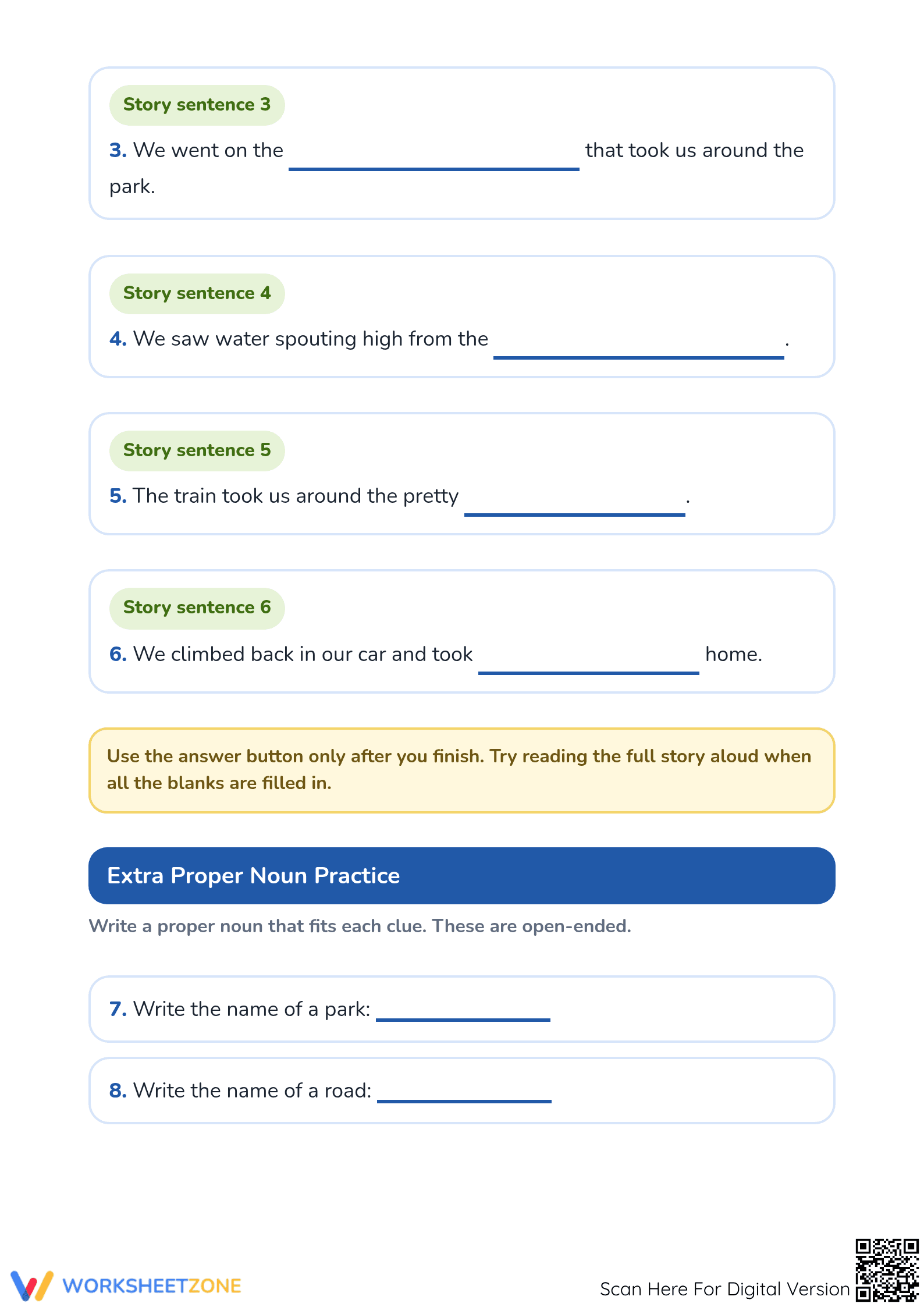
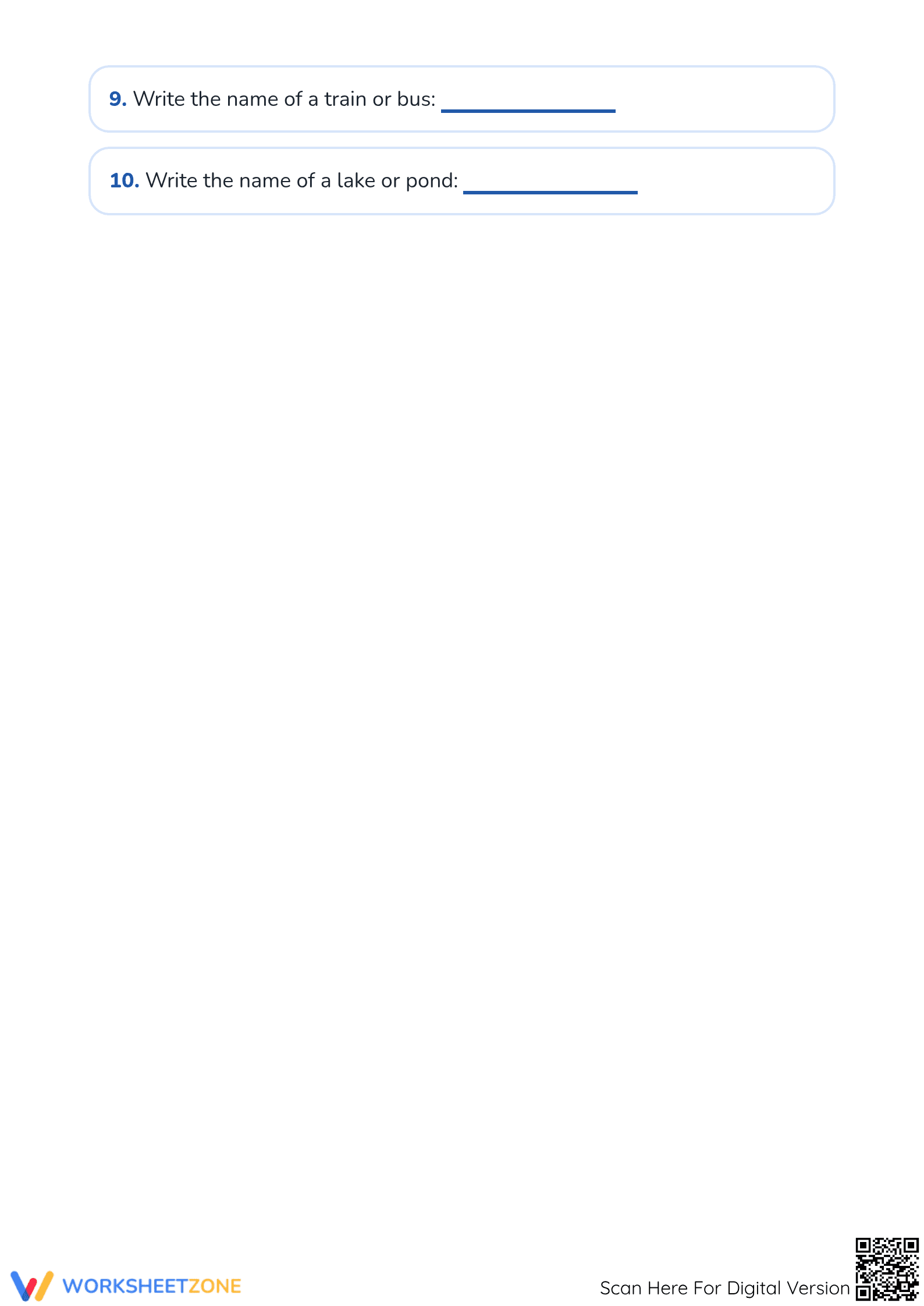
The PDF contains 4 pages of content, including a mini-anchor chart definition that serves as a permanent reference for young learners. The primary activity is a 6-sentence "A Visit to the Zoo" story where students select proper nouns from a word bank. Additionally, 4 open-ended questions challenge students to generate their own capitalized names for parks, roads, and transportation. A full answer key is provided for immediate feedback.
Zero-Prep Workflow
- Print (30 seconds): Select the 4-page PDF and send it to your printer.
- Distribute (30 seconds): Hand out copies to students; the word bank and story context ensure self-direction.
- Review (1 minute): Use the included answer key to check work or project the digital version for a whole-class review.
Total teacher preparation time is under 2 minutes, making this an ideal solution for sub plans or morning work routines.
Standards Alignment
This resource is explicitly aligned with `CCSS.ELA-LITERACY.L.1.1.B`, which requires students to "Use common, proper, and possessive nouns." By focusing on the capitalization of specific names like "Swan Lake" and "Highway 7," students practice the mechanics of standard English conventions. This standard code can be copied directly into lesson plans, IEP goals, or district curriculum mapping tools.
How to Use It
During guided instruction, use the "Word Clue" section on the first page to facilitate a short discussion on why proper nouns need capital letters before students start the story. As a formative assessment, observe students during the "Extra Proper Noun Practice" section to see if they can independently generate capitalized names without the support of the word bank. Expect most Grade 1 learners to complete the entire set within a 20-minute block.
Who It's For
This worksheet is designed for Grade 1 students who are ready to tackle the nuance of specific naming conventions. It is also suitable for English Language Learners (ELL) who need contextualized practice with capitalization. Pair this resource with a shared reading of a zoo-themed informational text to reinforce the vocabulary and capitalization rules naturally in a real-world context.
The instruction of proper nouns within a narrative context, such as the zoo story provided here, aligns with research by Fisher & Frey (2014) regarding the importance of scaffolding language conventions within meaningful literacy activities. By moving from a supported word bank activity to open-ended generation, this worksheet follows a gradual release of responsibility model. Specifically targeting `CCSS.ELA-LITERACY.L.1.1.B`, the material ensures that Grade 1 learners recognize that proper nouns name one special place or thing and must begin with capital letters. This structured approach to lexical word classes helps prevent the capitalization confusion often seen in early primary writing. Educational data suggests that early mastery of these conventions correlates with higher writing proficiency in later grades. This 4-page printable resource serves as an essential tool for teachers seeking evidence-based practice materials that are ready for immediate implementation.


