




























Views
Downloads

Proper Nouns Sorting Worksheet | Printable Grade 1 ELA

Paste this activity's link or code into your existing LMS (Google Classroom, Canvas, Teams, Schoology, Moodle, etc.).
Students can open and work on the activity right away, with no student login required.
You'll still be able to track student progress and results from your teacher account.
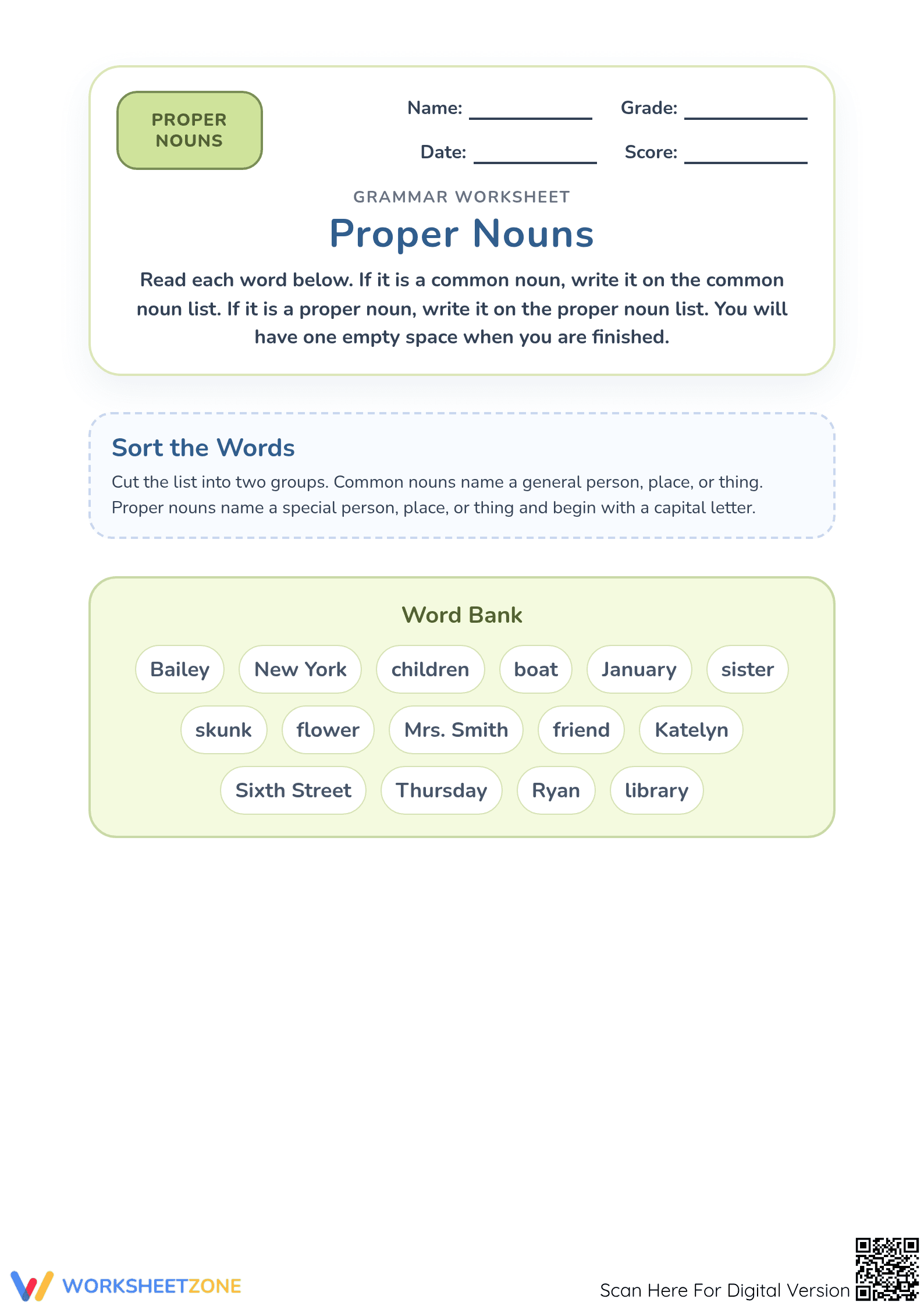
This Grade 1 grammar worksheet provides essential practice in distinguishing between common and proper nouns. By engaging with a structured sorting activity, students learn to identify specific names of people, places, and months that require capitalization. This resource ensures learners build a strong foundation in lexical word classes and standard English conventions.
At a Glance
- Grade: 1 · Subject: English Language Arts (ELA)
- Standard:
CCSS.ELA-LITERACY.L.1.1.B— Use common and proper nouns correctly in writing and identification tasks.- Skill Focus: Proper Noun Capitalization
- Format: 2 pages · 15 problems · Answer key included · PDF
- Best For: Literacy centers and morning work practice
- Time: 10–15 minutes
What's Inside
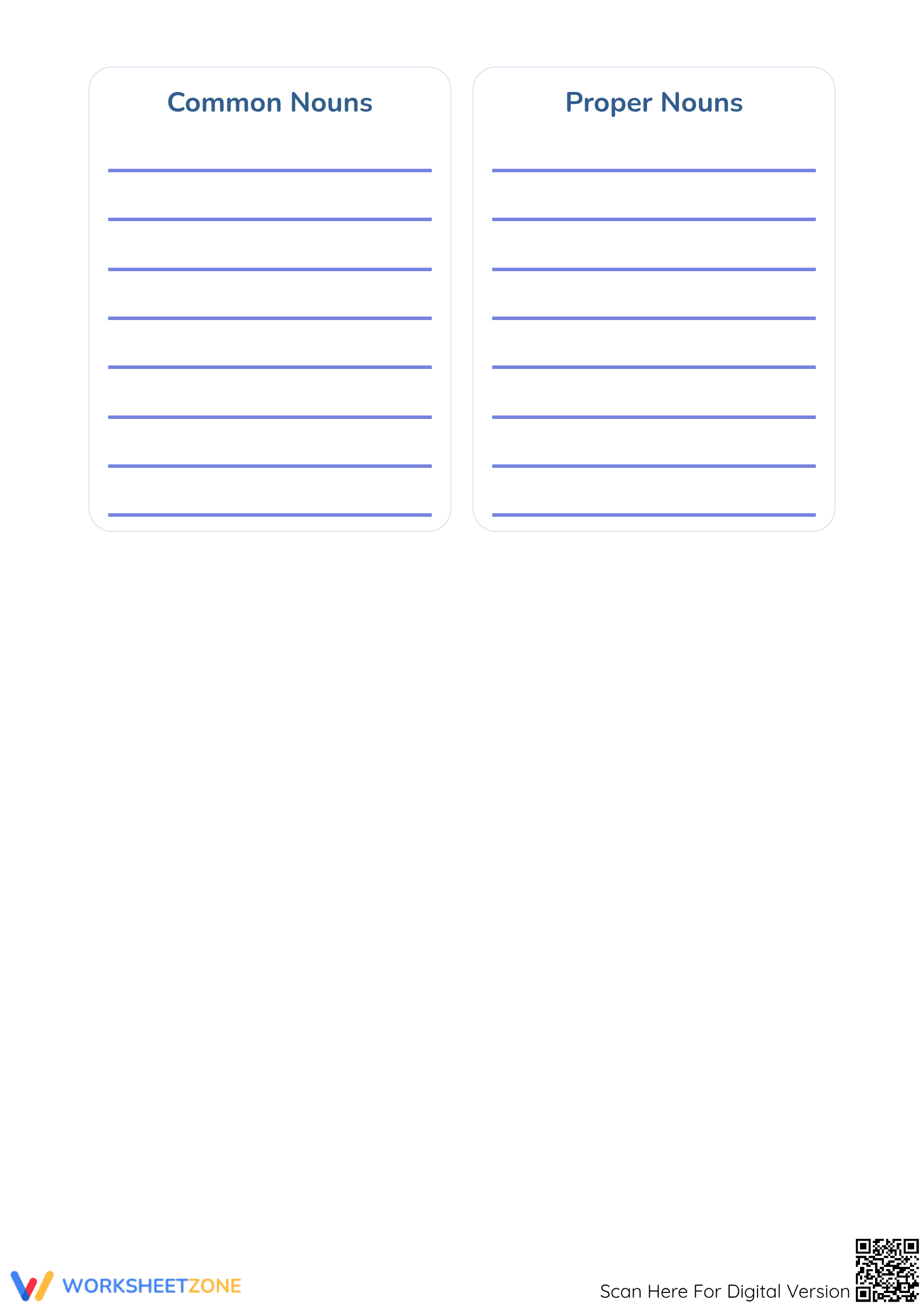
The PDF package includes two dedicated pages designed for immediate classroom use. The first page features a word bank containing 15 diverse nouns, ranging from names like Ryan and Katelyn to places like New York and Sixth Street. The second page provides two clear columns for sorting, alongside a comprehensive answer key for quick teacher or peer grading.
Skill Progression
- Guided practice: The word bank provides initial visual cues, such as capital letters, to help students identify proper nouns with teacher support.
- Supported practice: Students categorize 15 distinct items, including days of the week and specific people, reinforcing the "specific vs. general" rule.
- Independent practice: The sorting task requires students to rewrite words correctly, solidifying their understanding of proper noun conventions without scaffolds.
This worksheet follows a gradual release of responsibility model, moving students from recognition to independent categorization.
Standards Alignment
This resource is specifically aligned to CCSS.ELA-LITERACY.L.1.1.B, which requires students to use common, proper, and possessive nouns. Additionally, it supports CCSS.ELA-LITERACY.L.1.2.A by focusing on the capitalization of dates and names of people. Both standard codes can be copied directly into lesson plans, IEP goals, or district curriculum mapping tools.
How to Use It
Use this worksheet during a whole-group grammar lesson to model the difference between general categories and specific names. It also works perfectly as a formative assessment check; observe if students correctly identify "January" or "Thursday" as proper nouns to gauge their mastery of temporal capitalization. Expected completion time is 12 minutes.
Who It's For
This activity is designed for Grade 1 students, but serves as an excellent review for Grade 2 learners needing reinforcement. It is ideal for English Language Learners who are learning the specific capitalization rules of English. Pair this with a proper noun anchor chart or a short reading passage for a complete grammar unit.
The CCSS.ELA-LITERACY.L.1.1.B standard emphasizes the fundamental shift from general noun recognition to the specific identification of proper nouns. Research by Fisher & Frey (2014) highlights that categorization tasks, like this sorting worksheet, are critical for cognitive development in early literacy. By distinguishing between general entities and specific names, students develop the mental frameworks necessary for advanced writing and reading comprehension. This worksheet focuses on the plain-English skill of identifying and correctly capitalizing people, places, and dates. Scientific analysis of similar instructional tools suggests that tactile sorting reinforces memory retention better than passive reading alone. Providing structured word banks allows students to focus on the linguistic rule of capitalization rather than spelling hurdles. This approach aligns with evidence-based practices that prioritize clear, explicit instruction in grammar fundamentals for primary grade learners. These exercises ensure that foundational capitalization habits are established early, preventing common errors in later academic writing stages.


