Welcome to our comprehensive guide on foundational grammar skills and printable resources. When students can confidently identify and correctly capitalize different types of nouns, their writing instantly becomes clearer and more professional. Our carefully designed common and proper nouns worksheets collection provides teachers and parents with ready-to-use resources to reinforce these essential grammar lessons. Whether you are introducing the concept for the first time or providing remedial practice for struggling writers, these printable resources offer structured, engaging activities. By consistently practicing these skills, students move from simple identification tasks to applying proper capitalization rules in their own creative writing. Let us explore how to effectively teach this topic and discover the variety of exercises available to support your classroom instruction.
Why Is Distinguishing Between Common and Proper Nouns Important?
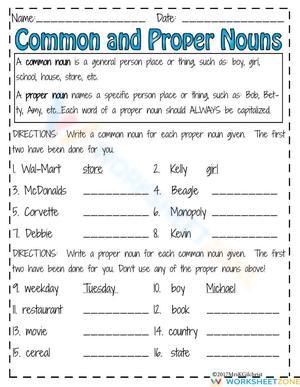
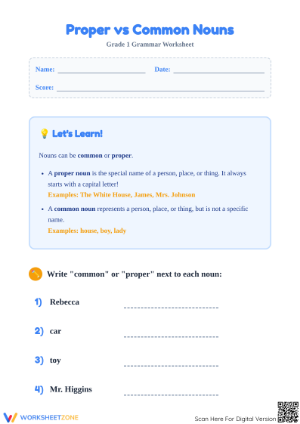
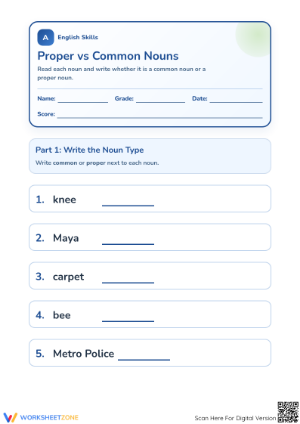
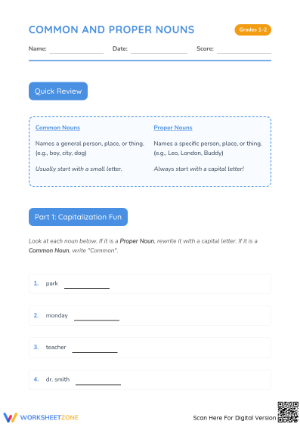
Understanding the difference between a general category and a specific name is a fundamental literacy skill aligned with early education standards. Recognizing that a common noun names a general person, place, thing, or idea provides students with the vocabulary to describe the world around them. Examples include words like girl, city, or book. Conversely, knowing that a proper noun names a specific person, place, thing, or idea is essential for written communication. These specific nouns always begin with a capital letter, as seen in examples like Sarah, Paris, or specific book titles.
When students fail to grasp this distinction, their writing often suffers from inconsistent capitalization, which can confuse readers. Early mastery of noun categorization prevents these ingrained errors. As students progress to higher grades, this foundational knowledge supports more complex grammar concepts. It aids in identifying possessive nouns and understanding sentence structure, ultimately leading to stronger reading comprehension and writing proficiency.
Core Grammar Rules: What Defines a Common or Proper Noun?
Before exploring the practice materials, it is helpful to review the core rules that govern noun usage. A common noun refers to non-specific items and is only capitalized when it appears at the very beginning of a sentence. For example, words like teacher, school, and holiday are common nouns. Proper nouns, however, require capitalization regardless of their position within a sentence because they designate specific entities.
Proper nouns encompass a wide variety of categories. They include the specific names of people, individual geographical locations such as countries, cities, and states, as well as days of the week and months of the year. Additionally, holidays and brand names are classified as proper nouns.
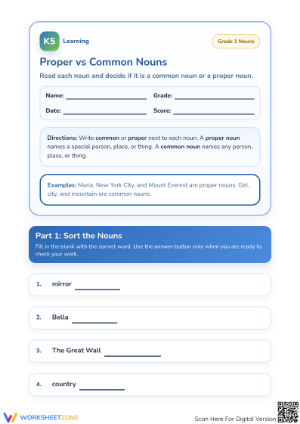
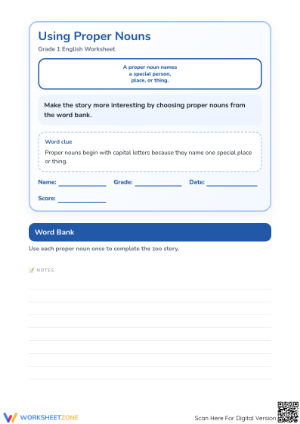
According to K5 Learning's grammar framework, students must learn that proper nouns name specific people, places, or things and always require a capital letter, whereas common nouns only receive capitalization at the beginning of a sentence. This simple rule forms the basis of all subsequent capitalization exercises and is heavily emphasized throughout our printable worksheets.
Engaging Activity Types in Our Common and Proper Nouns worksheets
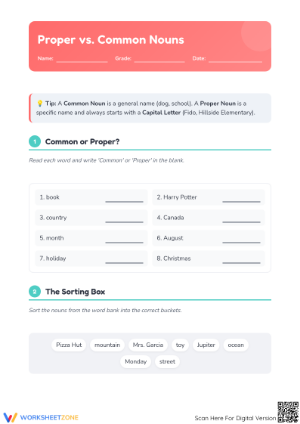
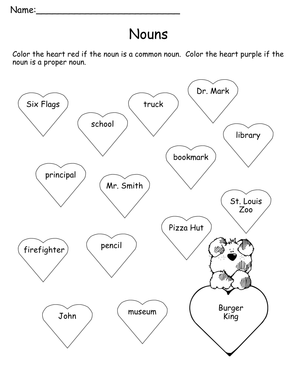
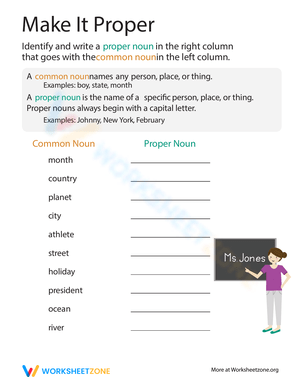
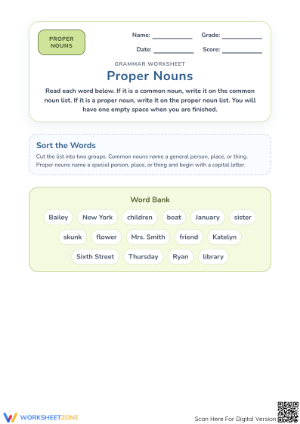
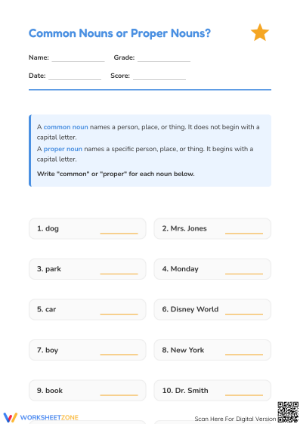
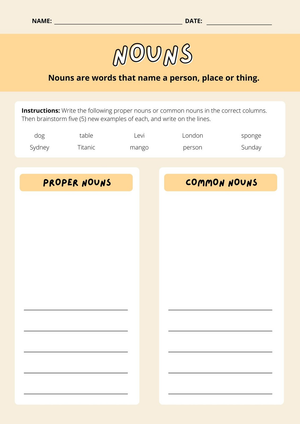
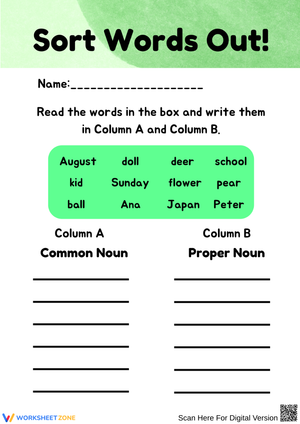
Our printable resources feature a diverse range of activities designed to keep students engaged while they learn. One popular format is the sorting activity, where students categorize a mixed list of words into distinct Common and Proper columns. This visual organization helps reinforce the conceptual differences between the two noun types.
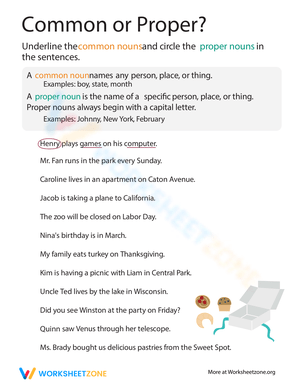
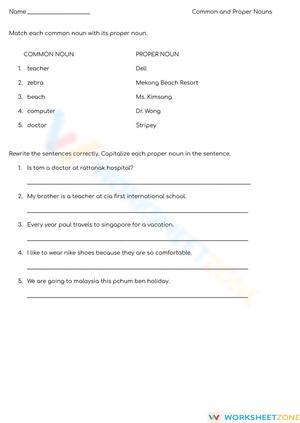
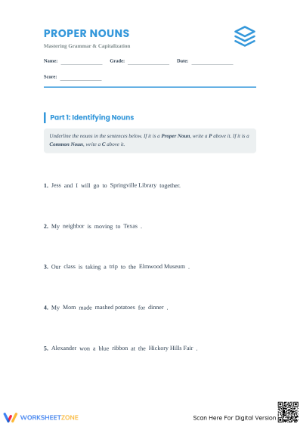
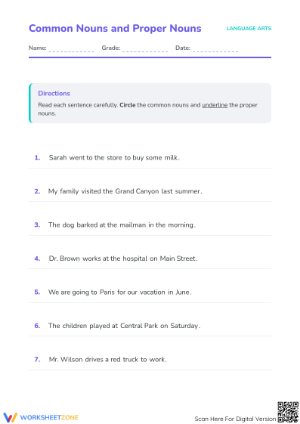
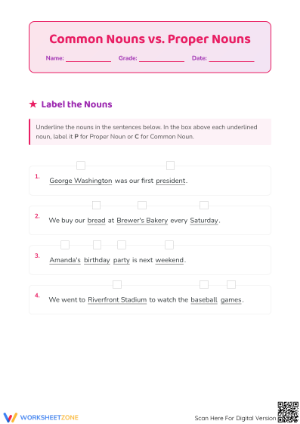
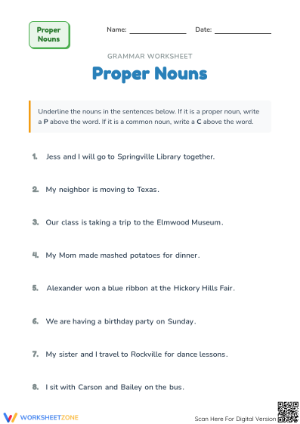
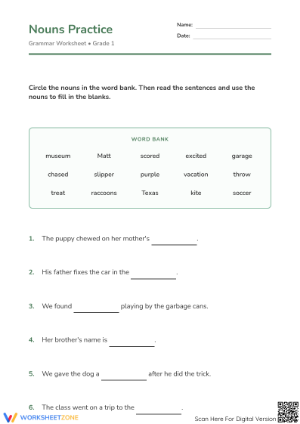
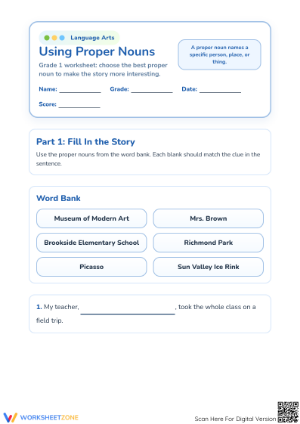
Another effective exercise involves sentence correction tasks. In these worksheets, students read sentences containing capitalization errors and must identify and correctly capitalize the proper nouns while leaving the common nouns lowercase. Additionally, we provide find and circle tasks embedded within short, engaging stories. Students act as grammar detectives, locating all the nouns within the context of a narrative. Finally, creative writing prompts challenge students to compose short paragraphs using a specified number of common and proper nouns, ensuring they can apply their knowledge in original compositions.
Teacher Tips
When introducing the concept of nouns, start with tangible examples from the students' immediate environment. Ask them to identify common nouns in the classroom, such as a desk, whiteboard, or teacher. Then, brainstorm the corresponding proper nouns with the class, pointing out specific names like Mr. Smith's desk or the exact name of the teacher.
Many teachers find that creating a physical Noun Wall in the classroom significantly boosts retention. By having students write common nouns on standard index cards and proper nouns on brightly colored, star-shaped cards, teachers create a continuous visual reminder that proper nouns require special attention and capitalization, reducing recurring errors in daily writing assignments by up to forty percent.
Always review the directions for each printable worksheet as a class before assigning it for independent practice. Encourage students to highlight or underline proper nouns in their reading materials, bridging the gap between grammar exercises and reading comprehension. Regular, brief review sessions are more effective than infrequent, lengthy grammar drills.
Integrating Grammar Practice into Daily Writing Routines
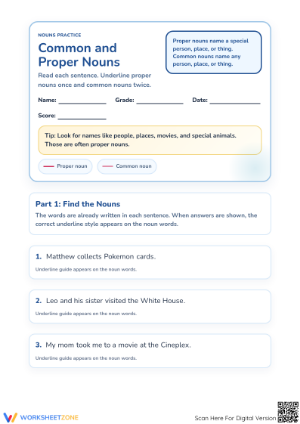
Grammar instruction should never exist in a vacuum. To maximize the effectiveness of our common and proper nouns worksheets downloads, integrate the concepts directly into daily writing routines. During morning journal time, challenge students to include at least three proper nouns and three common nouns in their entries. Ask them to underline each type in a different color to visually demonstrate their understanding.
When reviewing student drafts during the writing process, conduct targeted mini-lessons on capitalization. If a student consistently forgets to capitalize the days of the week or names of specific locations, provide them with a targeted practice sheet from our collection. By connecting the isolated grammar exercises to their own creative or expository writing, students understand the practical application of the rules. Consistent application of noun rules in everyday writing tasks solidifies understanding far better than standalone worksheets alone.
Evaluating Student Mastery of Noun Capitalization
Assessment is an essential component of any grammar unit. While our worksheets provide excellent formative assessment opportunities, teachers should also evaluate student mastery through various other methods. Monitor their progress by reviewing their independent writing assignments, checking specifically for the correct capitalization of proper nouns and the appropriate use of lowercase letters for common nouns in the middle of sentences.
You can use a rubric that specifically scores capitalization accuracy. Additionally, peer review sessions can be highly effective. Have students swap papers and act as editors, specifically looking for common and proper noun errors. This not only helps the writer but also reinforces the editing student's understanding of the rules. Varied assessment methods, combining direct worksheet grading with holistic writing evaluation, provide the most accurate picture of a student's grammar proficiency.
Expanding Grammar Knowledge Beyond Basic Nouns
Once students have firmly grasped the distinction between common and proper nouns, they are well-prepared to tackle more advanced grammatical concepts. The next logical step in the curriculum often involves introducing singular and plural nouns, teaching the spelling rules for forming plurals. Following that, teachers can introduce possessive nouns, which require an understanding of both plurality and ownership, often indicated by an apostrophe.
Understanding common and proper nouns also lays the groundwork for learning about pronouns. Students will learn how pronouns can replace proper nouns to avoid repetition in their writing. By mastering the foundational concepts presented in our printable resources, students build the confidence and knowledge necessary to navigate these more complex grammatical structures, ultimately becoming more sophisticated and articulate communicators.
Frequently Asked Questions
1. What is the difference between a common and a proper noun?
A common noun names a general person, place, thing, or idea, such as a dog or a city. A proper noun names a specific person, place, or thing, such as Rover or London, and must always begin with a capital letter.
2. When should I capitalize a noun?
You should always capitalize a proper noun, regardless of where it appears in a sentence. A common noun should only be capitalized if it is the very first word in a sentence or part of a title.
3. Are days of the week and months considered proper nouns?
Yes, days of the week, like Monday or Friday, and months of the year, like January or August, are specific names for periods of time and are classified as proper nouns requiring capitalization.
4. Is the word mom a proper noun?
The word mom can act as both. It is a proper noun when used as a name, for example, Can I go, Mom? It is a common noun when used generally or with a possessive pronoun, such as My mom is here.












 Interactive Worksheet Maker
 Quiz Maker
 Word Search Maker
 Crossword Puzzle Maker
 Word Scramble Generator
 Sentence Scramble Generator
 Handwriting Worksheet Generator
 Name Tracing Generator
 Fill In The Blank Generator