




























Views
Downloads

Printable Proper Nouns Worksheet | Grade 1 ELA Mastery

Paste this activity's link or code into your existing LMS (Google Classroom, Canvas, Teams, Schoology, Moodle, etc.).
Students can open and work on the activity right away, with no student login required.
You'll still be able to track student progress and results from your teacher account.
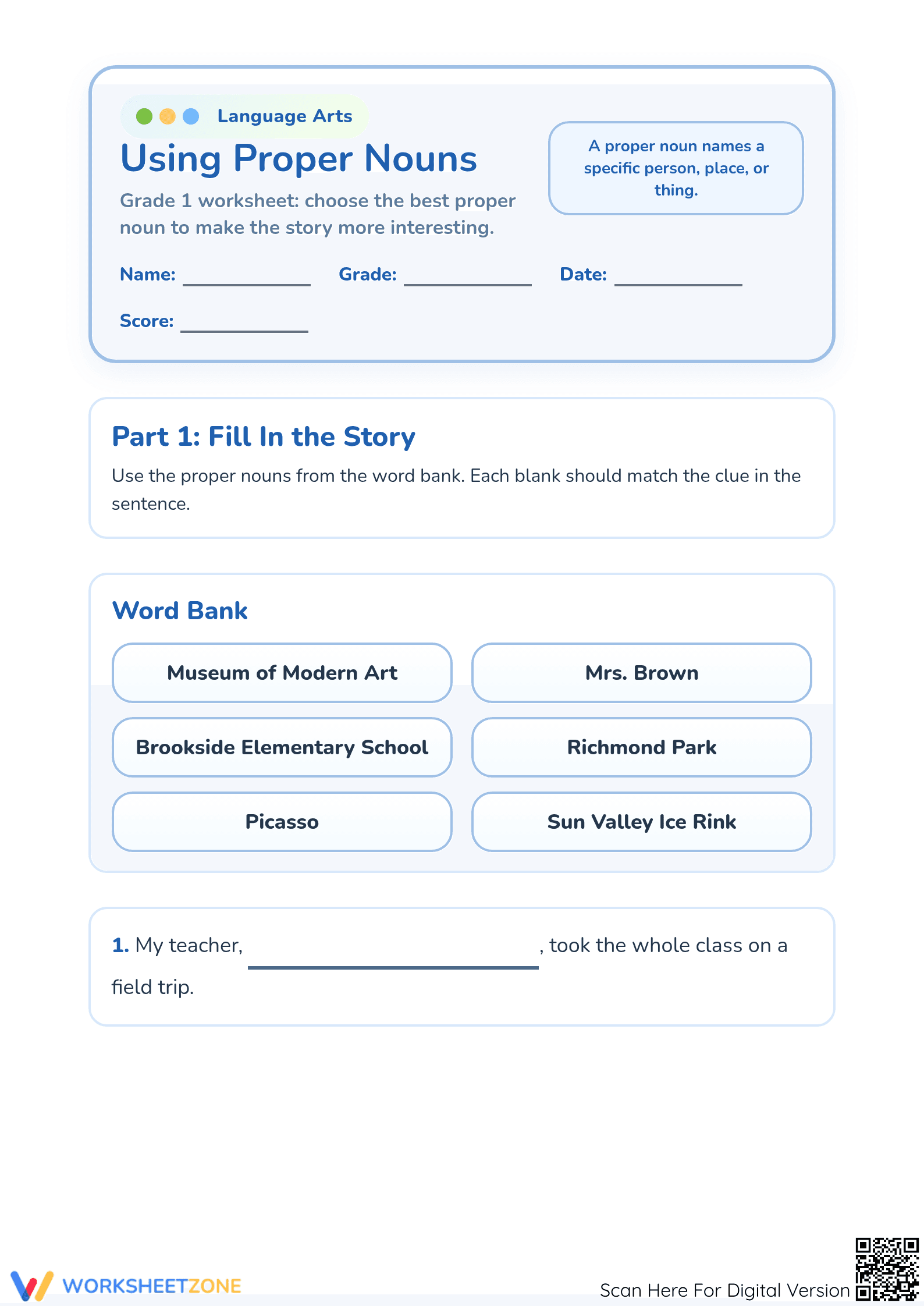
This Grade 1 proper nouns worksheet helps young learners distinguish between general categories and specific names through interactive storytelling and identification tasks. Students practice applying capitalization rules to people, places, and things, ensuring they develop the foundational grammar skills necessary for clear writing and reading comprehension. It provides immediate application of lexical concepts.
At a Glance
- Grade: 1 · Subject: English Language Arts
- Standard:
L.1.1.B— Use common and proper nouns correctly in sentences and phrases- Skill Focus: Proper Noun Identification
- Format: 3 pages · 10 problems · Answer key included · PDF
- Best For: Small group grammar instruction
- Time: 15–20 minutes
What's Inside
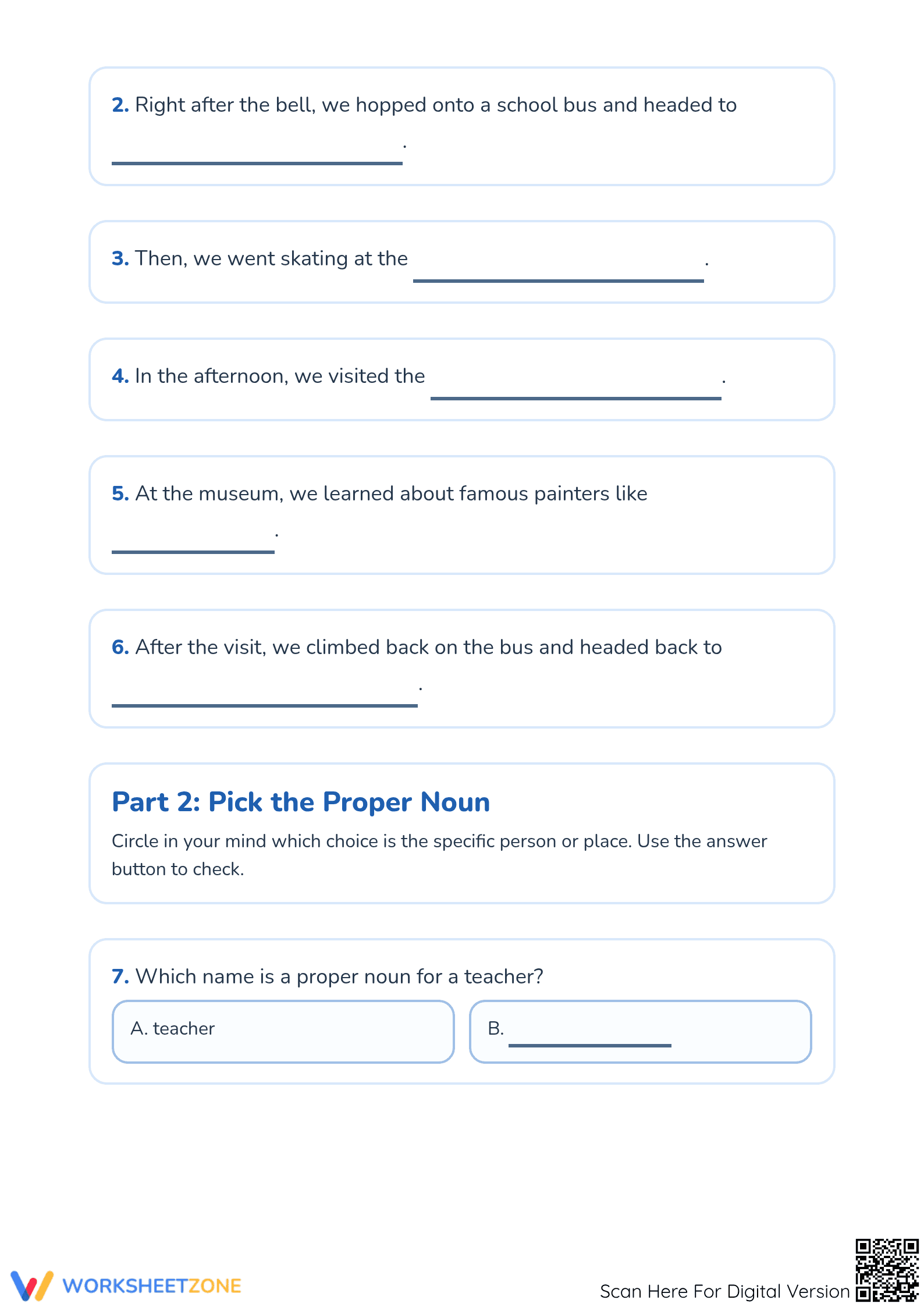
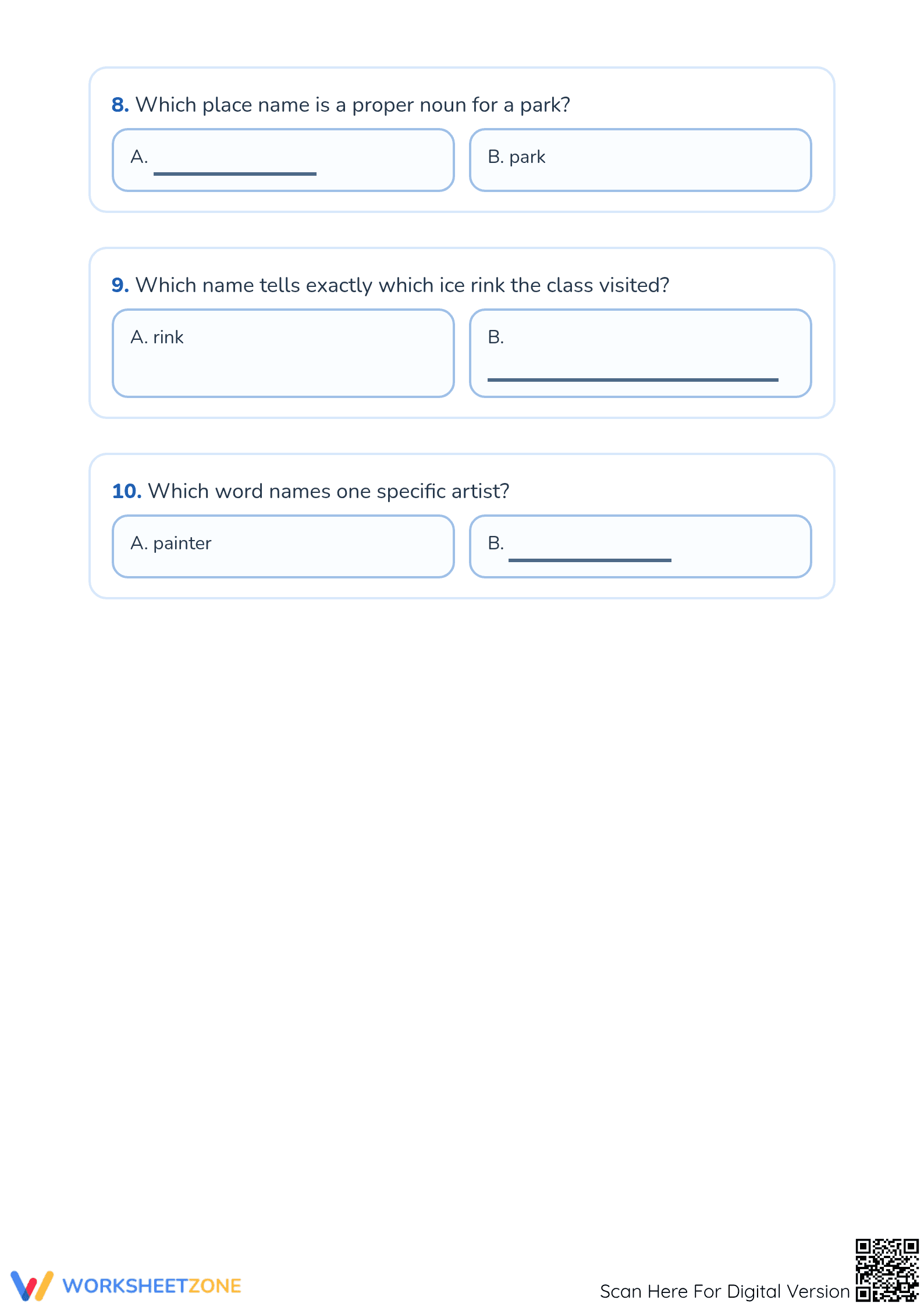
The resource is divided into two distinct pedagogical phases across three printable pages. Part 1 features a cloze-style narrative where students select specific names from a word bank to complete a field trip story. Part 2 transitions to conceptual identification, asking students to differentiate between common and proper noun pairs. A full answer key is provided for rapid grading.
Skill Progression
- Guided Practice: Students use a word bank with six specific names, matching clues like "teacher" to "Mrs. Brown" within a narrative structure.
- Supported Practice: Learners identify and apply proper nouns within the context of a school field trip story to build reading-to-writing connections.
- Independent Practice: The final section features multiple-choice items where students recognize specific artists and places without visual word bank support.
This gradual release model follows an "I Do, We Do, You Do" approach to ensure students master the nuances of capitalization and naming conventions.
Standards Alignment
This resource is directly aligned to CCSS.ELA-LITERACY.L.1.1.B, which requires Grade 1 students to "Use common, proper, and possessive nouns." By focusing on the capitalization of specific names, the worksheet also supports conventions of standard English. This standard code can be copied directly into lesson plans, IEP goals, or district curriculum mapping tools.
How to Use It
Use this worksheet during the "You Do" phase of a capitalization lesson. After modeling how specific places like "Richmond Park" are capitalized, distribute the pages for practice. For a formative assessment, observe students during Part 2; struggling with capitalized options indicates a need for an anchor chart review on specific naming. The expected completion time is 18 minutes.
Who It's For
This tool is designed for first-grade students or second-grade learners requiring remediation in basic grammar conventions. It works well when paired with a "Common vs. Proper" sorting activity or a shared reading passage where students highlight capitalized names. English Language Learners will benefit from the clear clues provided in the Part 1 narrative.
According to the NAEP framework, early mastery of grammar conventions like proper noun usage is a significant predictor of future writing fluency. This worksheet addresses standard L.1.1.B by moving students from simple recognition into context-based application. Research from Fisher & Frey (2014) highlights that the gradual release of responsibility—moving from word-bank supported tasks to independent identification—is essential for internalizing linguistic rules. By providing 10 structured problems requiring students to distinguish between common categories and specific identities, this resource ensures Grade 1 learners do more than just capitalize letters; they learn to categorize the world through language. The 3-page format allows for pacing that prevents cognitive overload while maintaining engagement with lexical material. This evidence-based approach makes it a reliable tool for any foundational ELA curriculum, supporting long-term retention of capitalization rules and syntactic structures.


