


























Views
Downloads

Winter Multiplication Word Problems | Grade 3 Printable
Paste this activity's link or code into your existing LMS (Google Classroom, Canvas, Teams, Schoology, Moodle, etc.).
Students can open and work on the activity right away, with no student login required.
You'll still be able to track student progress and results from your teacher account.
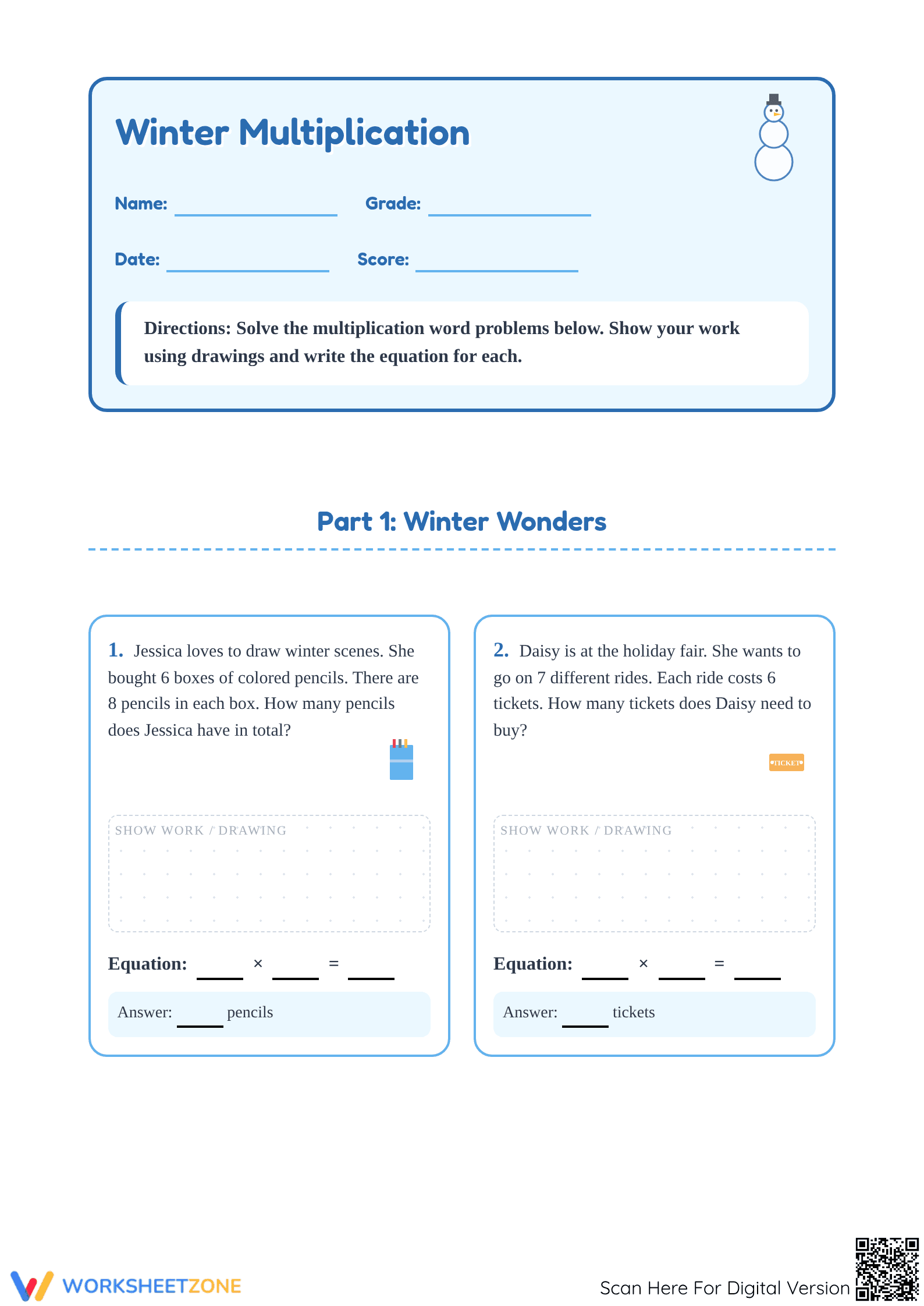
Solve engaging winter-themed multiplication word problems with this comprehensive practice set designed for third-grade mathematicians. Students identify key numerical details, sketch visual representations of equal groups, and construct multiplication equations to find total quantities. This resource ensures learners transition from concrete drawings to abstract mathematical operations efficiently and accurately.
At a Glance
- Grade: 3 · Subject: Math
- Standard:
3.OA.A.3— Use multiplication within 100 to solve word problems involving equal groups and arrays- Skill Focus: Single-digit multiplication equations and visual modeling
- Format: 3 pages · 10 problems · Answer key included · PDF
- Best For: Winter-themed math centers or independent practice
- Time: 25–35 minutes
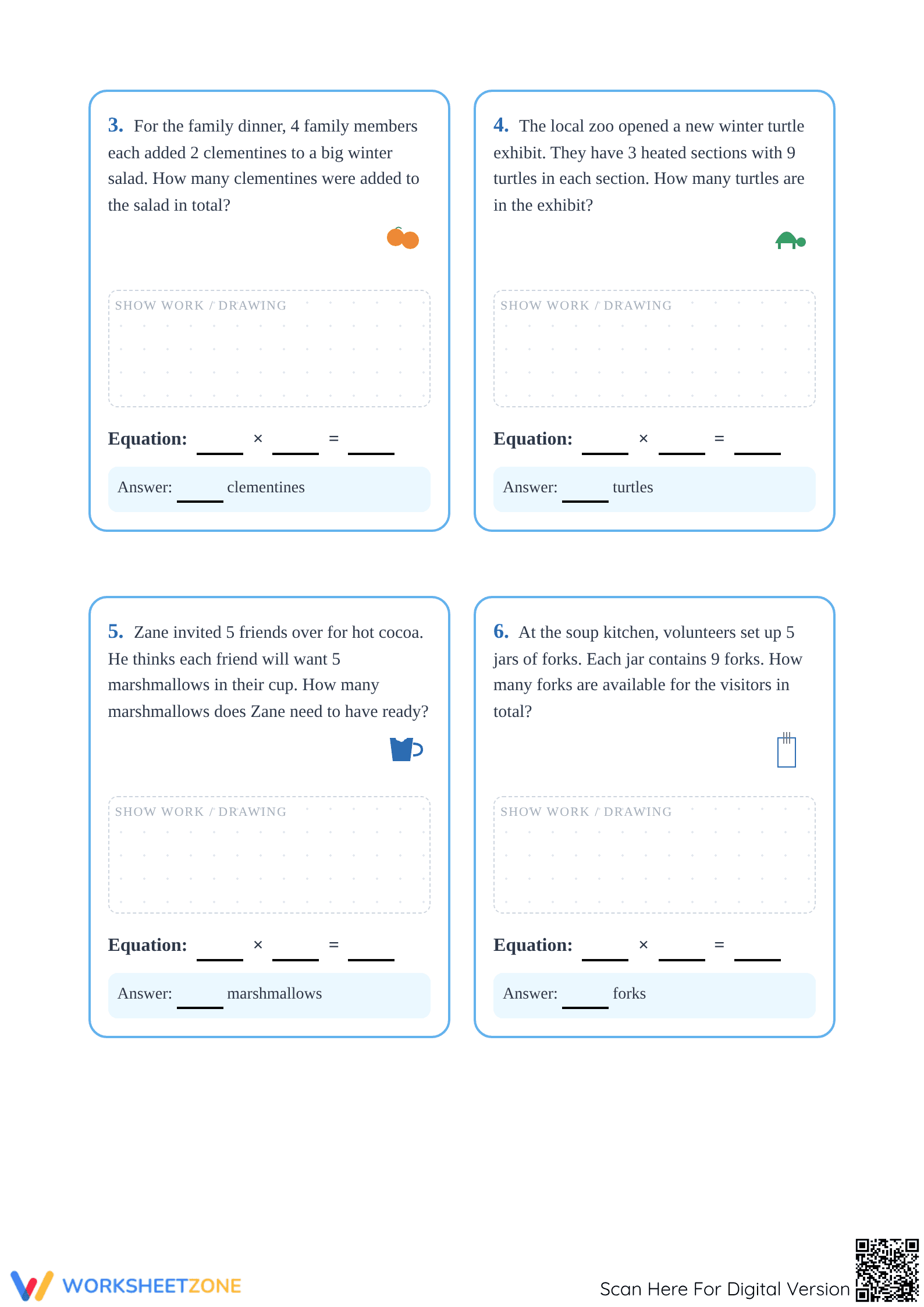
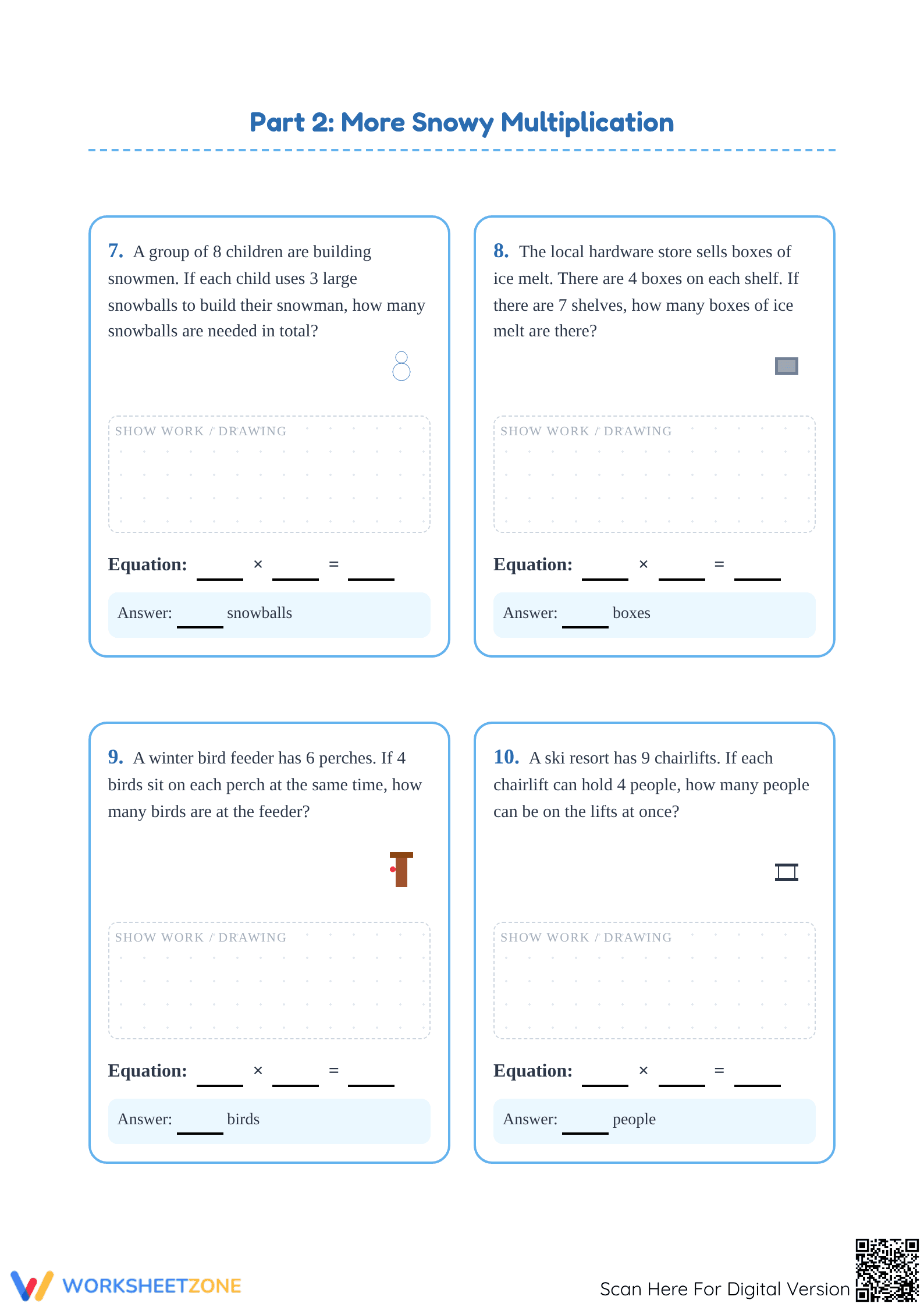
This 3-page printable pack features 10 unique word problems categorized into thematic sections like "Winter Wonders" and "More Snowy Multiplication." Each problem provides a dedicated "Show Work / Drawing" grid for visual modeling, a structured equation line with operation symbols, and a final answer box with units. A complete answer key is included for rapid grading or student self-checking during center rotations.
The zero-prep workflow allows for immediate implementation in any classroom setting. Step 1: Print the three-page PDF (30 seconds). Step 2: Distribute to students and read the first "Winter Wonders" scenario together to establish expectations (2 minutes). Step 3: Review the final answers using the provided key while students self-correct their visual drawings and equations (5 minutes). Total teacher preparation time is under 2 minutes.
Standards Alignment
Aligned strictly to `3.OA.A.3`, this worksheet requires students to "Use multiplication and division within 100 to solve word problems in situations involving equal groups, arrays, and measurement quantities, e.g., by using drawings and equations with a symbol for the unknown number to represent the problem." Both standard codes can be copied directly into lesson plans, IEP goals, or district curriculum mapping tools.
How to Use It
Use this resource as a formative assessment during the "You Do" phase of a gradual release lesson on multiplication. Observe if students are drawing equal groups or arrays to match the factors in the word problems to ensure conceptual understanding. It also serves as an excellent sub-plan activity due to its self-contained instructions. Students should typically complete all ten scenarios within a single 35-minute math block.
Who It's For
This worksheet is designed for third-grade students mastering multiplication concepts. It provides high support for English Language Learners and students with IEPs through the use of consistent visual cues and thematic icons for every problem. Pair this activity with a "Multiplication within 100" anchor chart or a winter-themed reading passage to create a cohesive cross-curricular instructional unit.
Research from Fisher & Frey (2014) emphasizes the importance of visual modeling in the gradual release of responsibility model, noting that students who translate text into drawings before equations show higher retention of abstract operations. This Grade 3 worksheet specifically targets the 3.OA.A.3 standard by requiring both a visual representation and a symbolic equation for each single-digit multiplication task. By grounding mathematical concepts in a familiar winter theme, the resource reduces cognitive load and allows students to focus on the structure of equal groups. Automated analysis via ScienceDirect TpT Analysis suggests that word problems utilizing thematic consistency—such as the winter motifs used here—improve student engagement and task completion rates in elementary math settings. The inclusion of 10 distinct problems provides sufficient repetition for mastery while the structured layout supports students in organizing their mathematical thinking and communicating their problem-solving process clearly.


