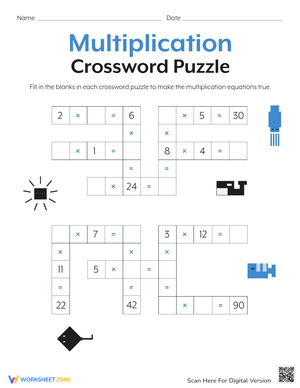
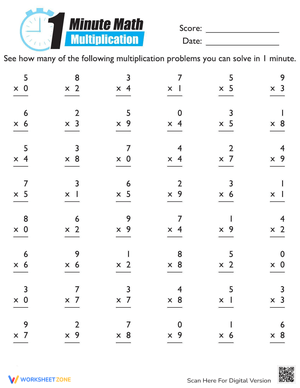
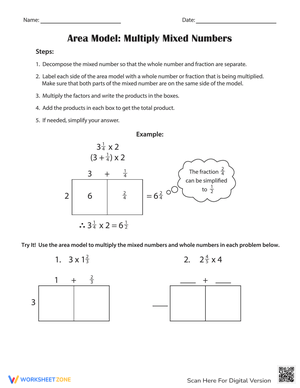
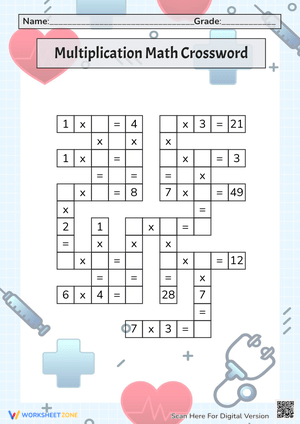
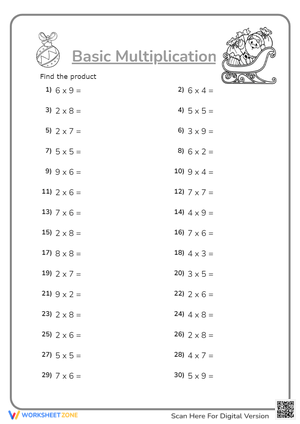
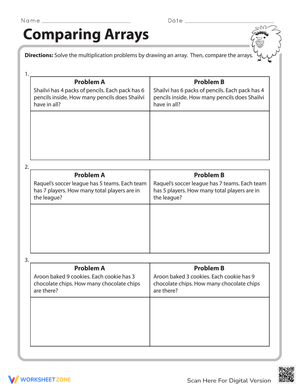
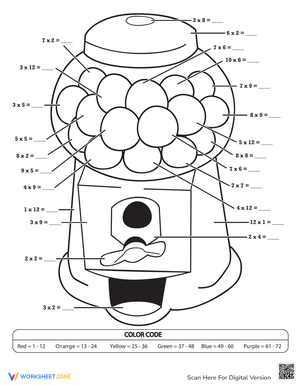
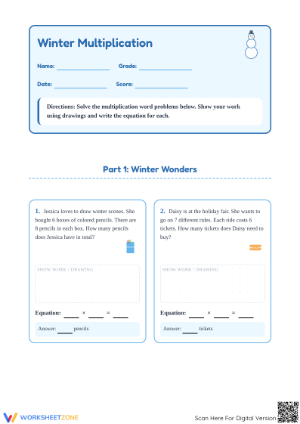
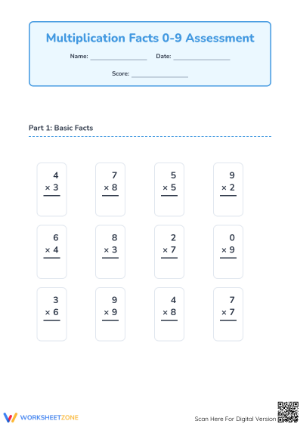
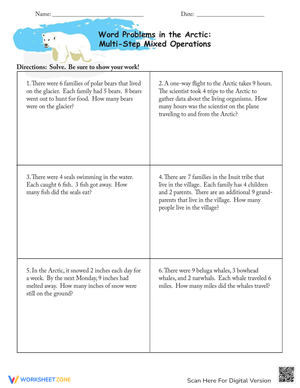
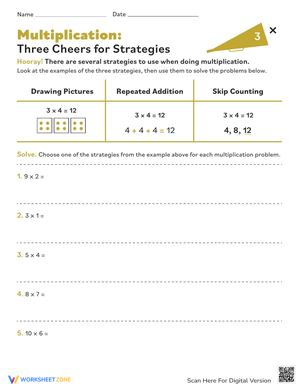
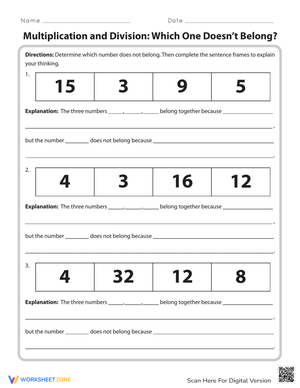
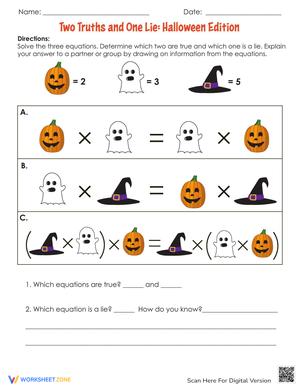
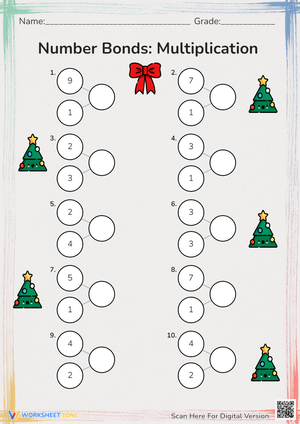
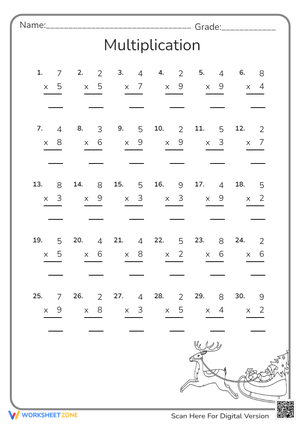
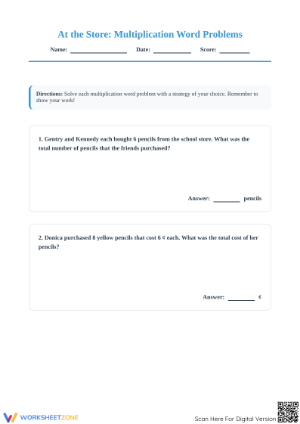
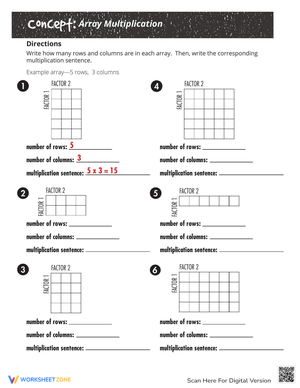
These one digit multiplication worksheets give third-grade teachers a structured, printable set designed to move students from skip-counting familiarity toward genuine fact fluency — the kind where a student sees 7 × 8 and recalls the answer rather than reconstructs it. Each worksheet targets a specific skill within single-digit multiplication, so teachers can assign them in sequence or pull individual worksheets to address exactly what a class or small group needs.
The Specific Skills Targeted
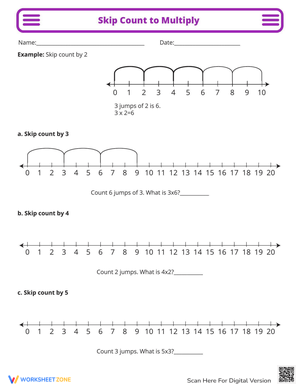
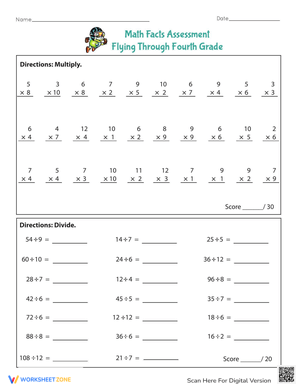
The set covers the full range of single-digit multiplication work that 3rd grade instruction requires. Fact families are addressed in a deliberate order: the 2s, 5s, and 10s appear earliest, since students already have skip-counting footholds there. The 3s and 4s follow, using doubling as a bridge strategy. The 6s, 7s, 8s, and 9s receive their own focused worksheets, where students practice pattern-based reasoning — the nines trick, the symmetry of the 6 × 8 / 8 × 6 relationship — before moving to mixed-fact review.
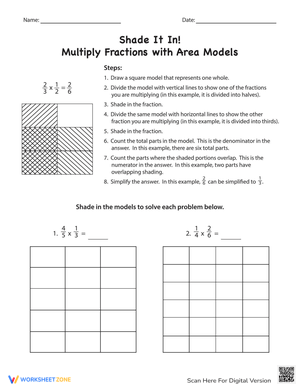
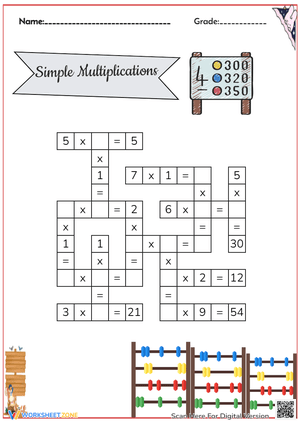
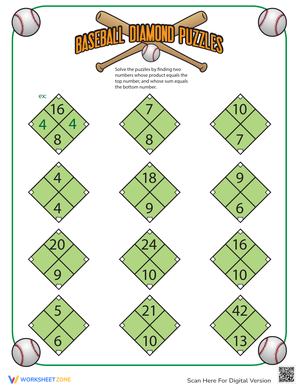
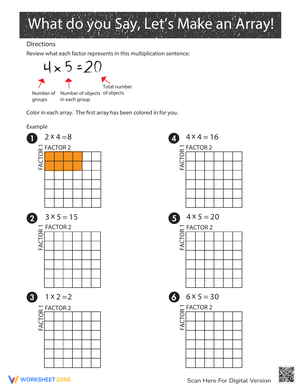
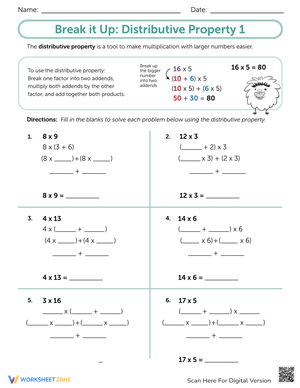
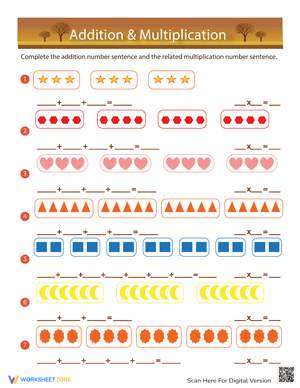
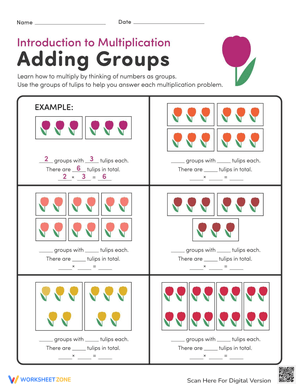
Beyond straight recall, the set includes array-labeling worksheets, missing-factor problems, and equation-matching exercises where students connect a written product to the correct array. This variety keeps practice from collapsing into rote recitation and gives teachers a clearer picture of whether students understand what multiplication means or have simply memorized an isolated string of answers.
Why This Format Works for Multiplication at This Stage
Third grade is when multiplication stops being a preview concept and becomes a formal expectation. The cognitive challenge isn't grasping what multiplication means — most students have done enough repeated addition and array work by spring of second grade to hold that idea. The challenge is building automaticity without abandoning understanding. A worksheet that presents only naked equations (6 × 4 = ___) pushes speed at the cost of meaning. One that presents only arrays pushes meaning at the cost of fluency. These worksheets sequence the two deliberately: arrays and visual models appear heavily in early worksheets and fade across the set, so students are prompted to retrieve from memory rather than reconstruct from a picture. This mirrors the gradual release of scaffolding that cognitive load research recommends — reduce the support incrementally as the skill strengthens, don't remove it all at once.
Common Student Errors Worth Watching For
The error pattern teachers see most consistently isn't random — it clusters around the facts students learned last and practiced least. The 6s and 8s produce the highest error rates in actual student work, and the confusion is usually cross-family contamination: a student who has the 6s mostly solid will write 6 × 7 = 48 because 6 × 8 = 48 is the stronger memory trace. This is different from a student who simply hasn't practiced — it's a student whose memories are competing. The focused single-family worksheets address this directly by creating deliberate contrast: a worksheet that places 6 × 7 and 6 × 8 near each other in the same column, without jumbling in unrelated facts, helps students sort the two rather than blur them.
A second common error appears in missing-factor problems. Students who can answer 6 × ___ = 42 correctly will often reverse the logic and write 7 × 6 = 48 on the next line — they retrieve the answer to the first problem but don't recheck it against the second. This happens because they're retrieving by anchor fact (they memorized 6s, not 7s) and the answer feels plausible. Watching for this pattern in marked worksheets is a faster diagnostic than any oral quiz.
Building These Worksheets Into Your Lesson Plans
The most reliable use of these worksheets is as a daily warm-up during the first 8–10 minutes of math, before direct instruction begins. At that moment students are seated, attention is settling, and a short, familiar task does real retrieval work without competing with new content. A single-family worksheet takes most students 6–8 minutes — long enough to be productive, short enough to leave the bulk of the period for lesson work.
For teachers running guided math rotations, one worksheet per center visit works well as an independent station. Because each worksheet is self-contained, students don't need to remember what came before, and the teacher doesn't need to spend rotation transitions re-explaining tasks. The mixed-review worksheets are particularly useful here — they function as a low-stakes formative check that the teacher can scan during the transition back to whole group. Friday's review block is another strong placement: students who finished the week's fact-family focus work through a cumulative sheet while the teacher conducts end-of-week conferences or addresses gaps from the week's data.
Adjusting the Worksheets for a Range of Learners
Students who are still building conceptual footing benefit from using a printed multiplication chart alongside the worksheet — not to copy answers, but to check their own work after completing a row. This keeps accuracy intact while the memory is forming, and it avoids the counterproductive loop where a student practices and reinforces wrong answers. For students who have mastered all single-digit facts, the missing-factor worksheets shift the cognitive demand meaningfully: instead of recalling a product, students must reason backward, which strengthens the fact network rather than just rehearsing it.
For students with processing or working memory challenges, reducing the number of problems per sitting — assigning half a worksheet at a time — preserves accuracy without creating the panic that comes from looking at a full page of equations. Accuracy at a smaller volume beats rushing through a full sheet with a 60% error rate. That's a tradeoff worth making explicitly, and it's one these worksheets support because each is a standalone resource rather than part of a sequenced packet where skipping half would break continuity.
Standard Alignment
These worksheets align directly to CCSS.MATH.CONTENT.3.OA.C.7, which requires students to fluently multiply and divide within 100 and to know from memory all products of two one-digit numbers by the end of third grade. In classroom terms, this standard sits at the end of a progression: 3.OA.A.1 establishes what multiplication means, 3.OA.B.5 addresses properties, and 3.OA.C.7 is the fluency target the whole unit builds toward. These worksheets are most useful in the second half of that progression — after concept introduction, during the extended practice phase that turns accurate-but-slow recall into automatic retrieval. Teachers in states using TEKS rather than Common Core will find these align with TEKS 3.4F, which similarly requires recall of multiplication facts through 10 × 10.
Frequently Asked Questions
When in third grade should I introduce these worksheets?
After students have had direct instruction on what multiplication represents — through arrays, equal groups, and repeated addition — and can solve single-digit facts accurately with some think time. Introducing worksheet practice before conceptual understanding is established produces students who memorize without comprehension, which tends to break down by the time fractions and multi-digit multiplication arrive in 4th grade. Most teachers find mid-fall of 3rd grade is the right entry point, with fluency practice extending through spring.
Should I use timed practice with these worksheets?
Timed practice belongs in the routine, but only after accuracy is established. The research-supported sequence is accuracy first, then speed. Untimed worksheets during initial learning let students apply strategies and self-correct without anxiety. Once a student is consistently accurate on a fact family untimed, short fluency sprints — 2 minutes on a focused sheet — help them shift from effortful retrieval to automatic recall. Using timed practice too early, before accuracy is solid, mostly builds confidence in wrong answers.
How do these worksheets fit alongside other multiplication resources I already use?
These one digit multiplication worksheets function as the independent practice component in a larger instructional sequence. They work alongside games, manipulatives, and fact-card routines rather than replacing them. Typically, a new fact family gets introduced through a hands-on or visual lesson, reinforced with a game or partner activity, and then consolidated through worksheet practice — which is where deliberate individual retrieval happens. Teachers who use these only as homework often find the practice doesn't stick as well, because without a warm-up or debrief the retrieval practice is isolated from the instructional sequence.













 Interactive Worksheet Maker
 Quiz Maker
 Word Search Maker
 Crossword Puzzle Maker
 Word Scramble Generator
 Sentence Scramble Generator
 Handwriting Worksheet Generator
 Name Tracing Generator
 Fill In The Blank Generator