


























Views
Downloads
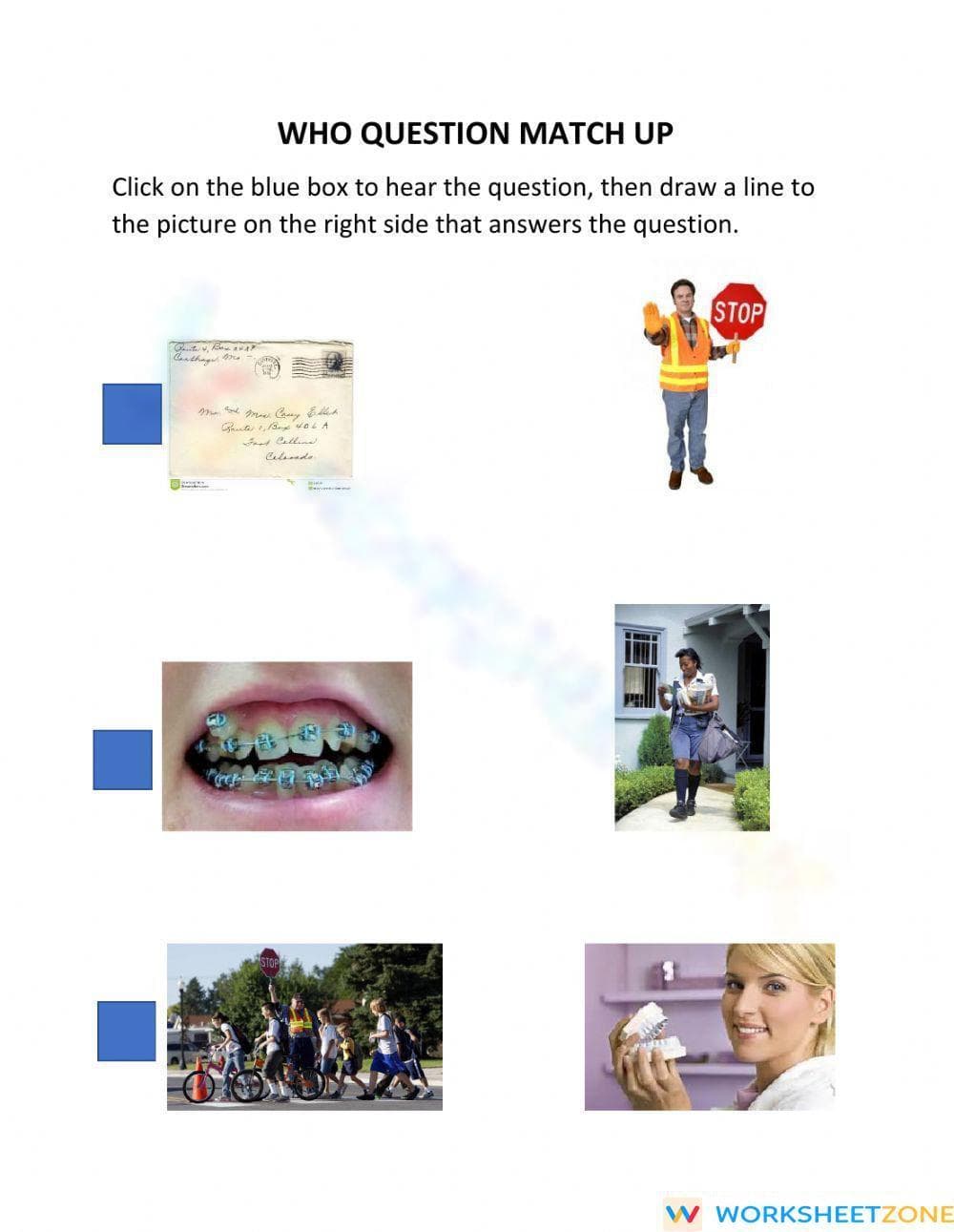
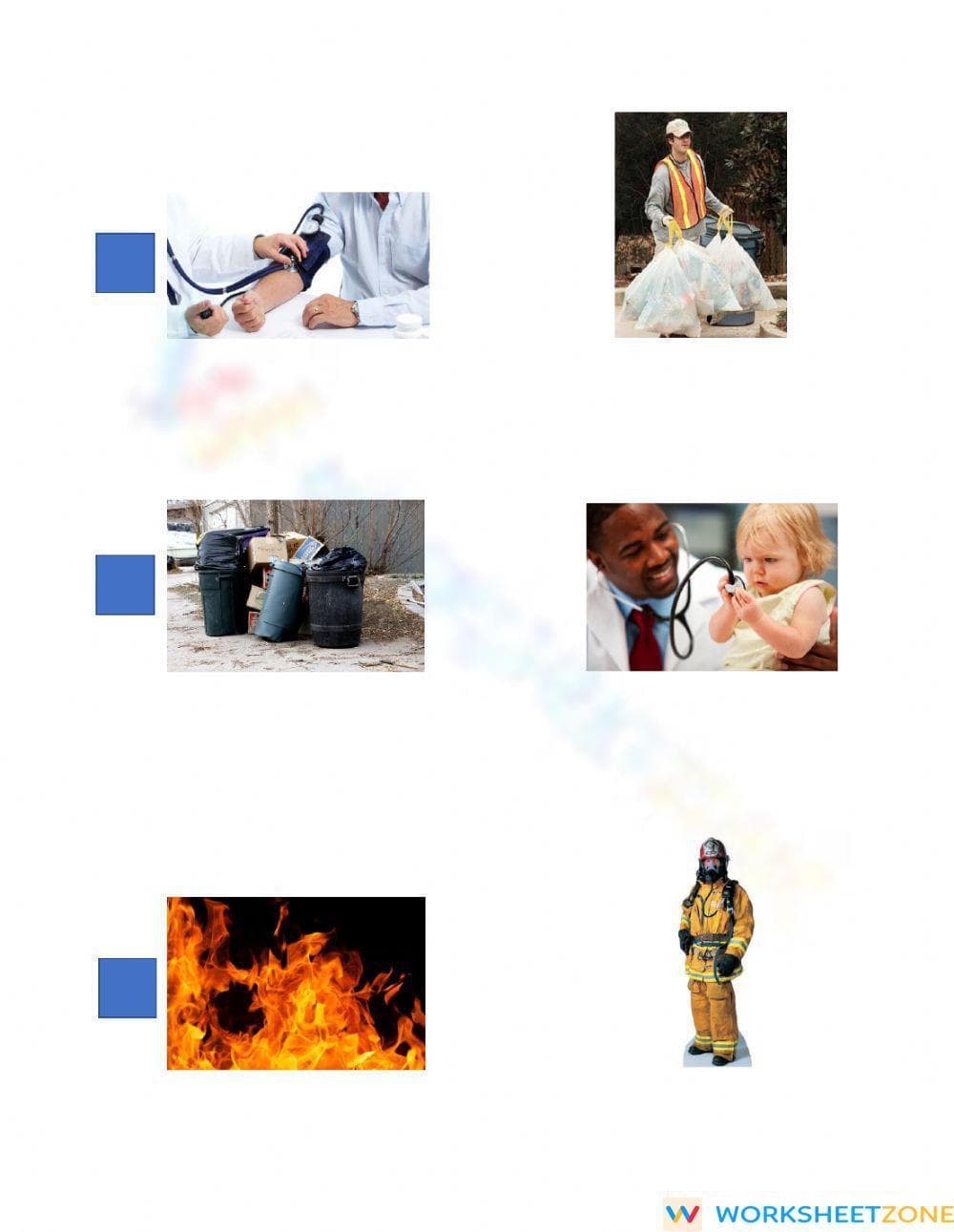
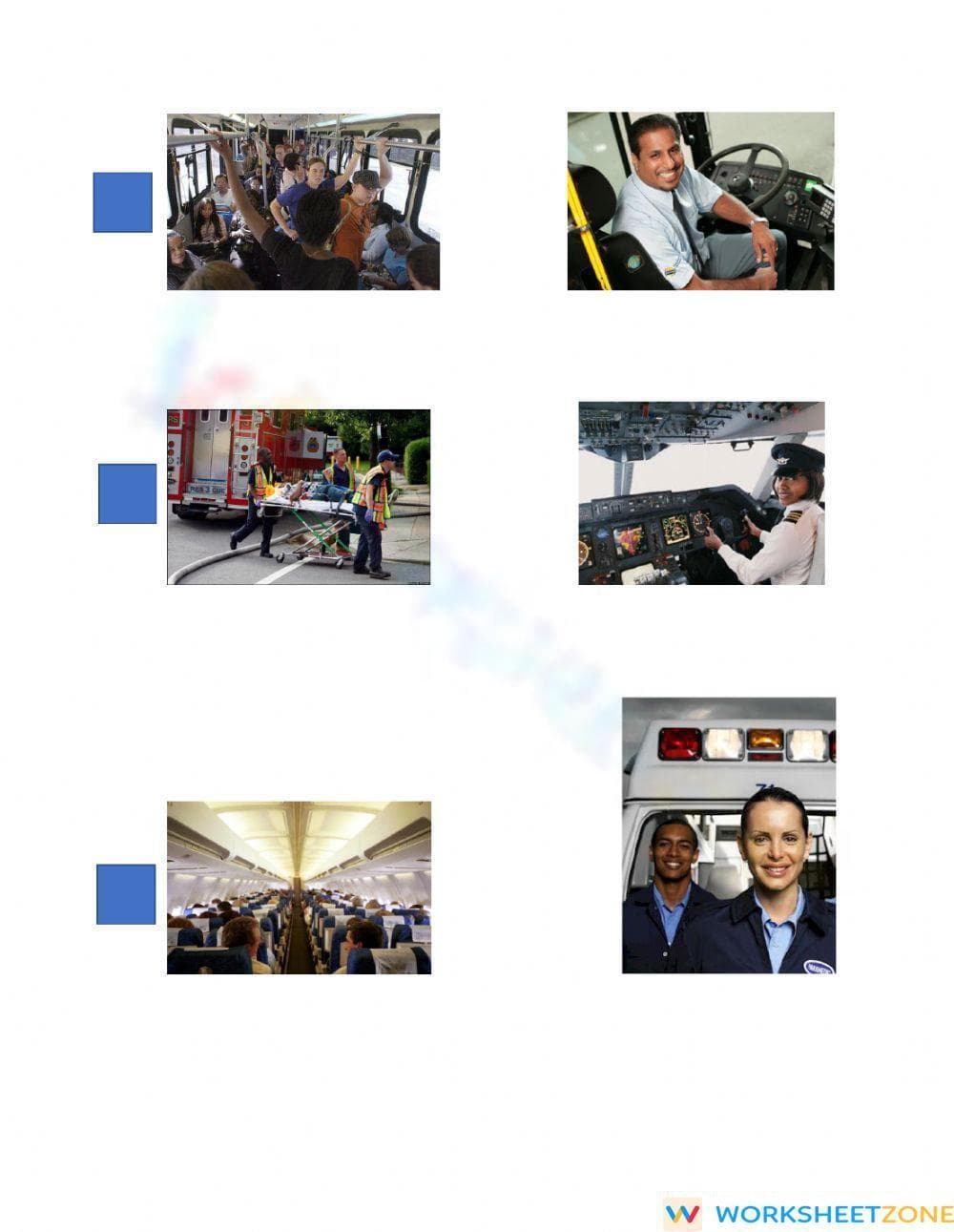

Essential Who Question Match Up | Grade 1 ELA Worksheet
Paste this activity's link or code into your existing LMS (Google Classroom, Canvas, Teams, Schoology, Moodle, etc.).
Students can open and work on the activity right away, with no student login required.
You'll still be able to track student progress and results from your teacher account.
This Essential Who Question Match Up worksheet provides a structured, interactive experience for Grade 1 students to master interrogative listening and reading. By matching oral or written questions to vivid photographic representations of community helpers, learners build the auditory processing skills required for early literacy success.
At a Glance
- Grade: 1 · Subject: ELA
- Standard:
CCSS.ELA-LITERACY.RI.1.1— Ask and answer questions about key details like who, what, and where- Skill Focus: Interrogative Identification
- Format: 3 pages · 9 problems · Answer key included · PDF
- Best For: Community helper units and auditory practice
- Time: 10–15 minutes
This zero-prep resource contains 3 distinct pages, each featuring three Who question tasks. Students interact with blue audio triggers to hear a professional question prompt before drawing connections to high-quality photographs on the right side. The worksheet includes clear visual cues for professions such as firefighters, dentists, and bus drivers, ensuring it is both engaging and accessible for emerging readers.
To implement this resource, follow the Zero-Prep Workflow: First, Print the desired pages in under 10 seconds. Next, Distribute the sheets for immediate independent or guided center work. Finally, Review using the built-in visual answers for a 30-second peer or teacher check. Total teacher prep time is under 2 minutes, making this an ideal solution for substitute folders or morning work.
This resource is directly aligned with `CCSS.ELA-LITERACY.RI.1.1`, which requires students to ask and answer questions about key details in a text or oral prompt. By focusing specifically on the Who element of interrogatives, the worksheet provides targeted practice in identifying the subject of a real-world scenario. This standard code can be copied directly into lesson plans, IEP goals, or district curriculum mapping tools.
For the best results, use this during a direct instruction unit on community helpers. After introducing a profession, have students complete the corresponding match-up to reinforce the connection between the title and the worker's tools. For formative assessment, observe if students hesitate; difficulty identifying the firefighter in task 6 may indicate a need for targeted vocabulary support. Completion usually takes 12 minutes.
Designed for Grade 1 students, this worksheet is also highly effective for ESL/ELL learners and Special Education students who benefit from visual scaffolding. It pairs naturally with informational passages about community roles or anchor charts depicting local heroes. The use of real-world photography ensures that students can relate the academic task to people they see in their own neighborhoods.
Standard `CCSS.ELA-LITERACY.RI.1.1` emphasizes the foundational importance of identifying key details such as who to establish reading comprehension. Research from `RAND AIRS 2024` indicates that multi-modal learning combining auditory prompts with visual photographic evidence significantly increases retention rates for Tier 2 vocabulary in early elementary learners. By isolating the Who question, this worksheet provides the repetition necessary for students to internalize the relationship between agents and their specific societal functions. This targeted approach mirrors the gradual release model supported by `Fisher & Frey (2014)`, moving from hearing a prompt to identifying a complex visual answer. Educational audits from `EdReports 2024` consistently highlight that standards-aligned materials which bridge the gap between abstract questions and concrete images are critical for closing the achievement gap in Title I literacy settings.


