




























Views
Downloads
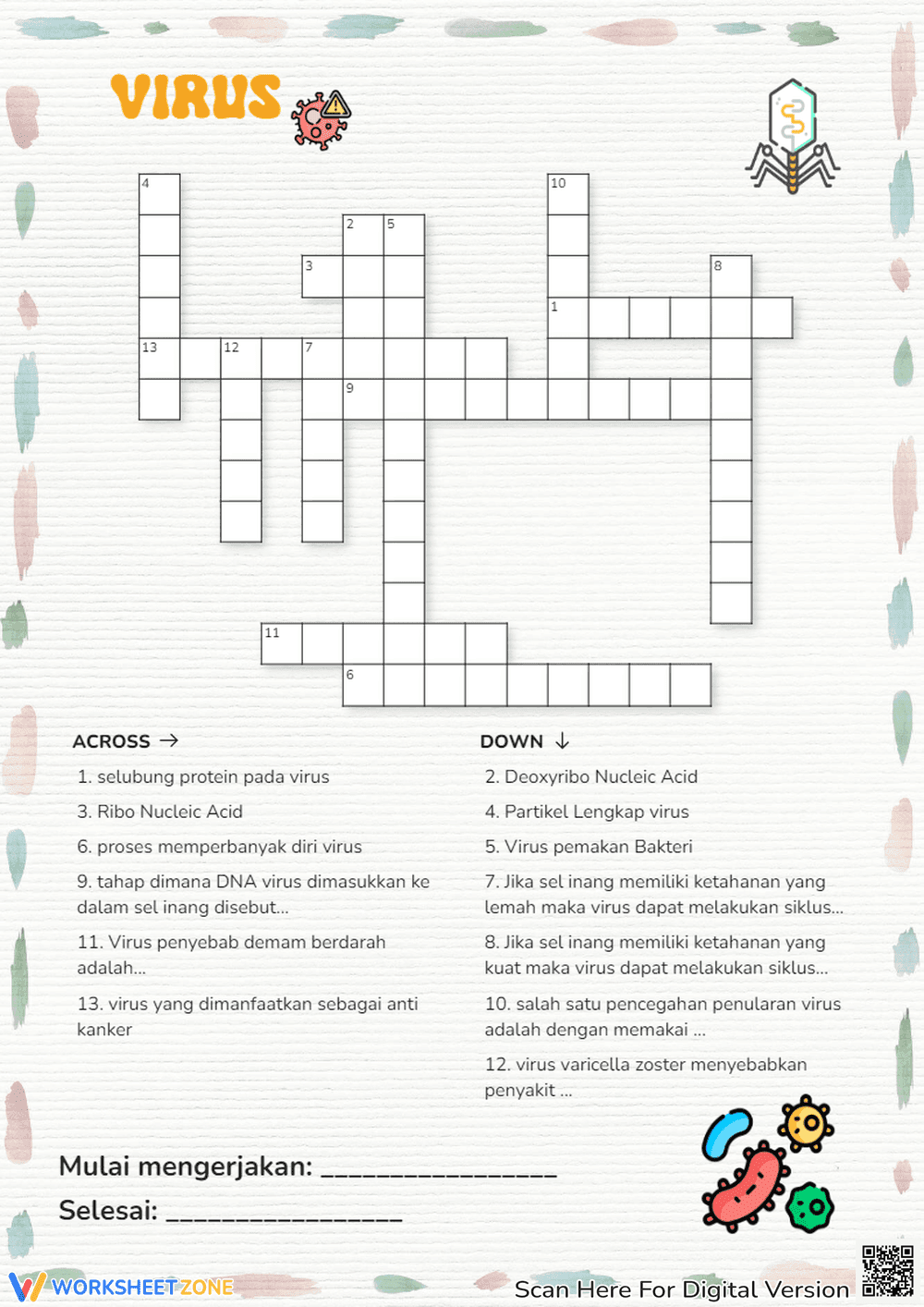

Virus Life Cycle Worksheet | Grade 10 Science Essential

Paste this activity's link or code into your existing LMS (Google Classroom, Canvas, Teams, Schoology, Moodle, etc.).
Students can open and work on the activity right away, with no student login required.
You'll still be able to track student progress and results from your teacher account.
This Grade 10 Science worksheet provides a focused review of viral biology through a structured crossword puzzle. Students identify key components like protein coats and nucleic acids while distinguishing between replication cycles. It serves as an effective vocabulary reinforcement tool that ensures learners master the fundamental terminology required for high school biology assessments.
At a Glance
- Grade: 10 · Subject: Science
- Standard:
HS-LS1-1— Identify the structure and function of biological entities and their genetic material.- Skill Focus: Viral Structure and Replication
- Format: 1 page · 13 problems · Answer key included · PDF
- Best For: Vocabulary review and formative assessment
- Time: 15–20 minutes
The resource features a comprehensive 13-clue crossword puzzle designed to test student knowledge of viral anatomy and life cycles. It includes specific prompts regarding DNA/RNA, bacteriophages, and the lytic versus lysogenic pathways. The single-page PDF format is optimized for quick printing, and the layout includes dedicated spaces for students to record their start and finish times to track their own processing speed.
This worksheet is designed for immediate classroom implementation with a total teacher prep time of under 2 minutes. Simply print the required number of copies (30 seconds), distribute them to students as a bell-ringer or exit ticket (30 seconds), and use the included answer key for a rapid whole-class review (1 minute). Its self-contained nature makes it an ideal choice for emergency sub plans or as a quiet activity during lab transitions.
This activity aligns with `HS-LS1-1`, which requires students to understand the relationship between biological structures and their functions. By identifying the protein shell and genetic material of viruses, students build the foundational knowledge necessary to explain how these entities interact with host cells. This standard code can be copied directly into lesson plans, IEP goals, or district curriculum mapping tools.
Use this worksheet during the Elaborate phase of a lesson cycle to reinforce technical vocabulary after a lecture on viral replication. It also functions well as a formative assessment tool; observe which students struggle with the distinction between lytic and lysogenic cycles to inform small-group intervention. Most Grade 10 students will complete the 13 tasks within 15 to 20 minutes, making it a perfect fit for a standard class period.
This resource is tailored for Grade 10 biology students, including those in honors or college-prep tracks. The crossword format provides a low-stakes environment for English Language Learners (ELLs) to practice scientific terminology. It pairs naturally with a diagram of a bacteriophage or a video animation of the viral infection process to provide a multi-modal learning experience for diverse learners.
According to the RAND AIRS 2024 report, structured vocabulary activities like crosswords significantly improve the retention of complex scientific terms in secondary education. This HS-LS1-1 worksheet targets the specific skill of identifying viral components and replication stages, which is a critical component of the Grade 10 life science curriculum. By engaging with 13 distinct clues, students move beyond rote memorization toward a functional understanding of how viruses operate at a cellular level. Research from Fisher & Frey (2014) emphasizes that such focused practice helps bridge the gap between initial exposure and long-term mastery. This resource provides the necessary scaffolding for students to succeed in more advanced biological inquiries, ensuring they are prepared for standardized state assessments and future coursework in microbiology or health sciences.


