


























Views
Downloads

Trace the Letter D Worksheet | Essential Grade K Phonics
Paste this activity's link or code into your existing LMS (Google Classroom, Canvas, Teams, Schoology, Moodle, etc.).
Students can open and work on the activity right away, with no student login required.
You'll still be able to track student progress and results from your teacher account.
This comprehensive Grade K phonics worksheet provides a structured path for students to master the letter D through multi-sensory tracing and visual recognition. By combining fine motor practice with phonemic awareness, students move from tactile discovery to independent letter formation and vocabulary association. This resource ensures students build the foundational muscle memory required for fluent handwriting and early literacy success.
At a Glance
- Grade: Kindergarten · Subject: ELA
- Standard:
L.K.1.A— Print many upper- and lowercase letters of the alphabet accurately- Skill Focus: Letter D formation and recognition
- Format: 3 pages · 32 problems · Answer key included · PDF
- Best For: Morning work or literacy centers
- Time: 15–20 minutes
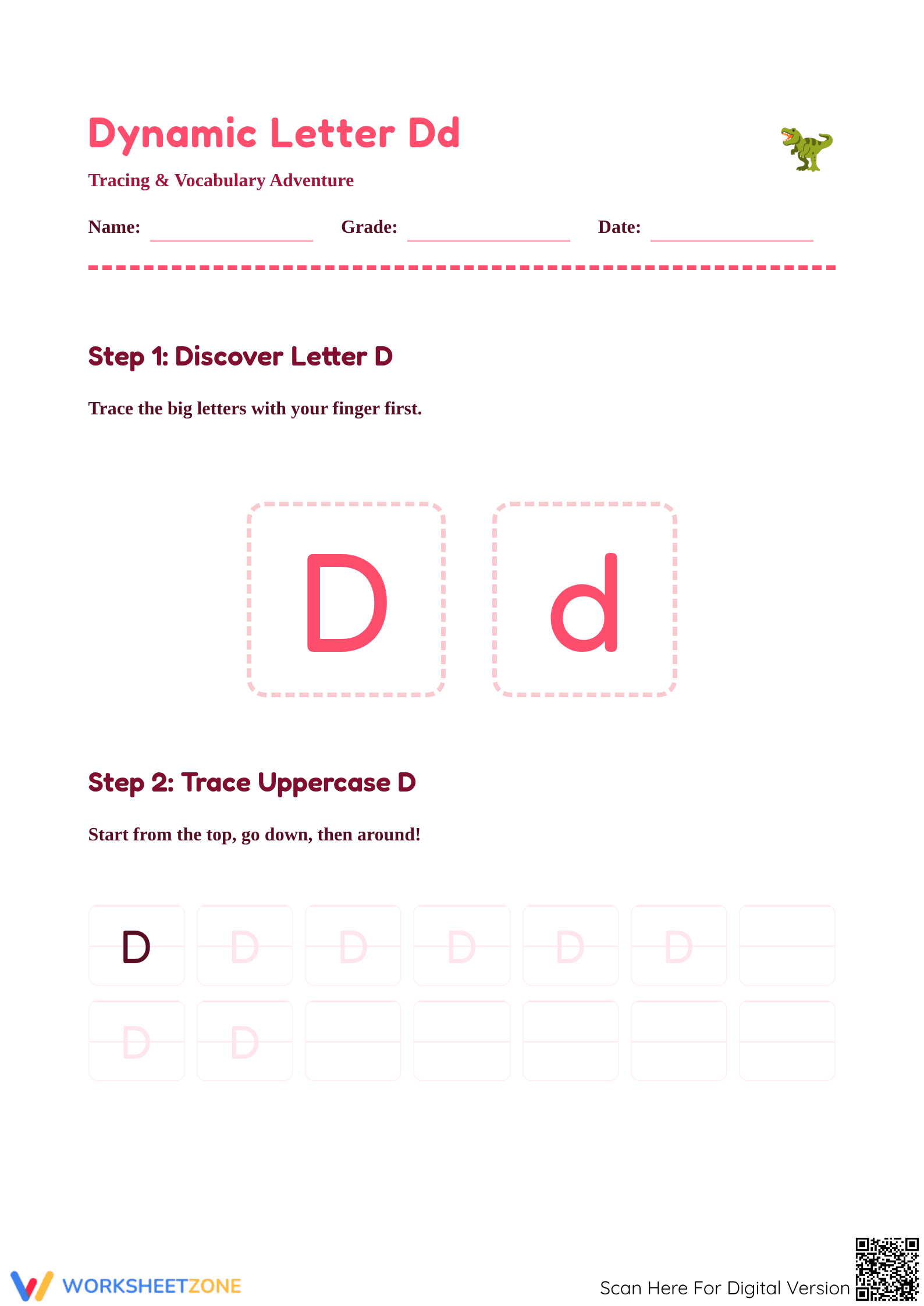
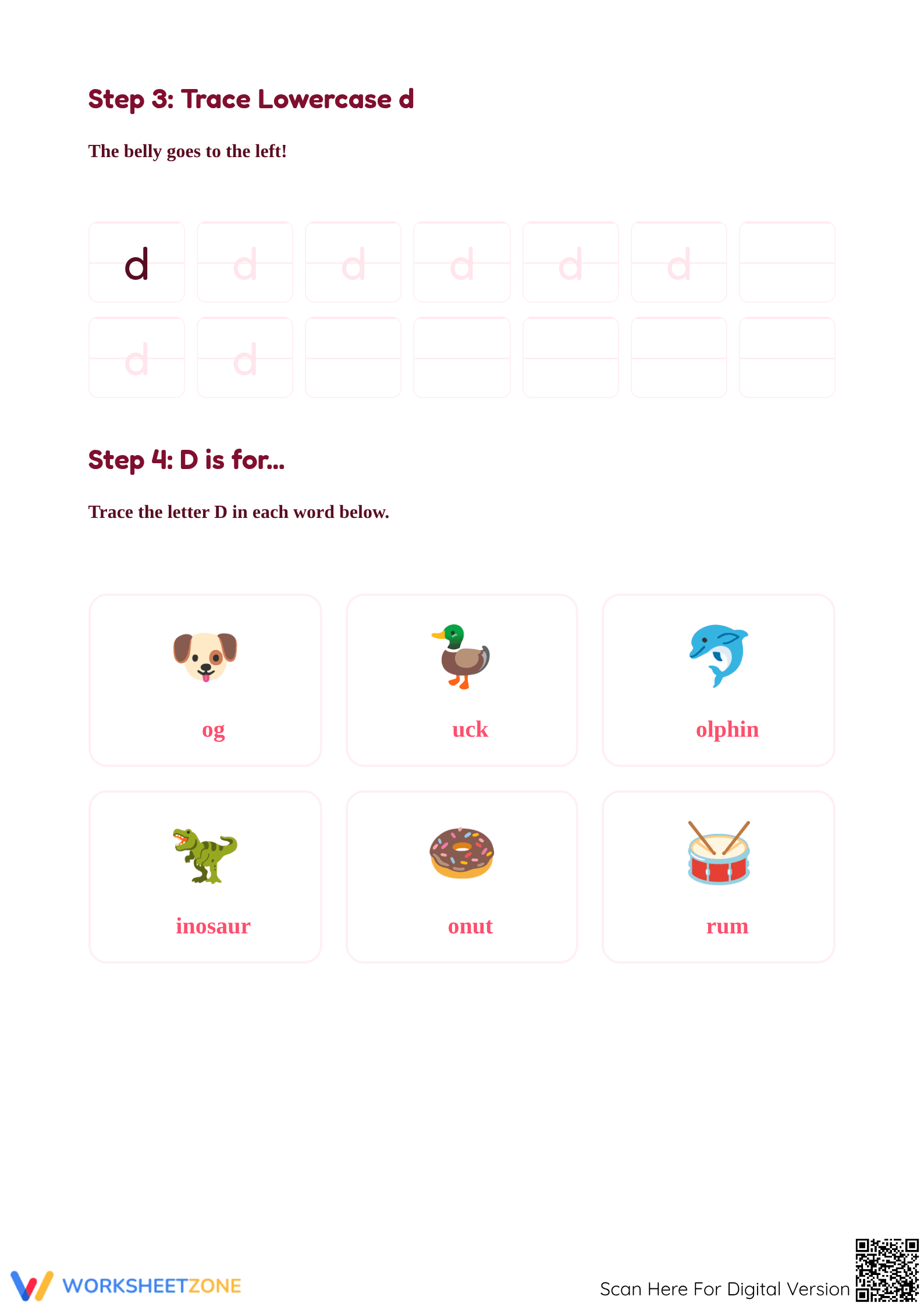
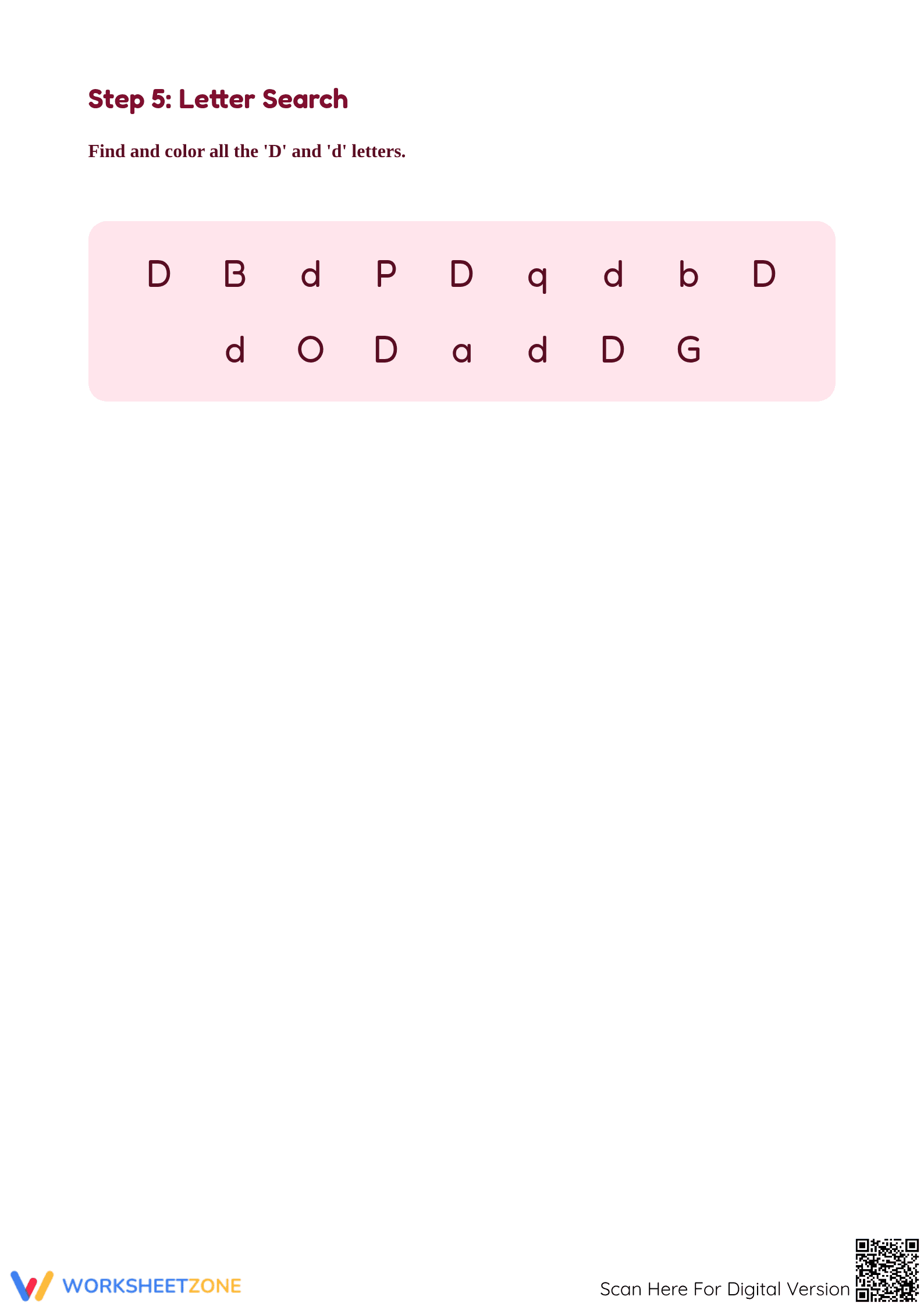
Inside this 3-page PDF, you will find a logical progression of five distinct steps. The first page introduces the "Dynamic Letter Dd" with large-format tactile tracing and a dedicated section for uppercase formation. The second page focuses on lowercase "d" and connects the letter to six high-frequency vocabulary words including dog, duck, and dinosaur. The final page features a letter search activity to sharpen visual discrimination between similar-looking characters.
This resource is designed for a zero-prep workflow to save valuable instructional time. First, print the three-page set for your class, which takes less than 60 seconds. Second, distribute the packets during your phonics block; the clear "Step 1 through Step 5" headings allow students to work with minimal teacher intervention. Finally, review the work using the provided answer key or by scanning the QR code for a digital version, completing the entire cycle in under 2 minutes of prep.
This worksheet is strictly aligned to CCSS.ELA-LITERACY.L.K.1.A, which requires students to print many upper- and lowercase letters. It also supports CCSS.ELA-LITERACY.RF.K.1.D by helping students recognize and name all upper- and lowercase letters of the alphabet. Both standard codes can be copied directly into lesson plans, IEP goals, or district curriculum mapping tools to ensure compliance with state and national frameworks.
To maximize the impact of this worksheet, use it during the "Guided Practice" phase of your direct instruction. As students work through the vocabulary tracing on page two, circulate the room to observe their pencil grip and stroke direction. This serves as an excellent formative assessment tool to identify students who may need additional support with letter reversals or fine motor control. Expect most students to complete the full packet within 20 minutes.
This resource is ideal for Kindergarten students beginning their phonics journey, as well as Grade 1 students requiring remedial handwriting support. It pairs naturally with an alphabet anchor chart or a read-aloud featuring "D" words. The inclusion of an answer key makes it a reliable option for substitute teacher folders or independent homework assignments that parents can easily verify.
Research by Fisher & Frey (2014) emphasizes that the gradual release of responsibility is vital for early literacy, moving from teacher-led modeling to independent student application. This worksheet follows that evidence-based trajectory by starting with finger-tracing and moving toward independent production. By isolating the letter D across 32 specific tasks, the resource provides the repetitive exposure necessary for long-term retention. According to the 2024 NAEP frameworks, early mastery of letter-sound correspondence is one of the strongest predictors of later reading comprehension. This worksheet addresses that need by integrating phonemic awareness with mechanical writing skills. The structured layout reduces cognitive load, allowing young learners to focus entirely on the standard L.K.1.A requirements. Educators can confidently use this tool as a primary evidence source for student portfolios or progress monitoring in early childhood ELA settings.


