




























Views
Downloads

Tone and Mood Poetry Worksheet | Essential Grade 7 ELA

Paste this activity's link or code into your existing LMS (Google Classroom, Canvas, Teams, Schoology, Moodle, etc.).
Students can open and work on the activity right away, with no student login required.
You'll still be able to track student progress and results from your teacher account.
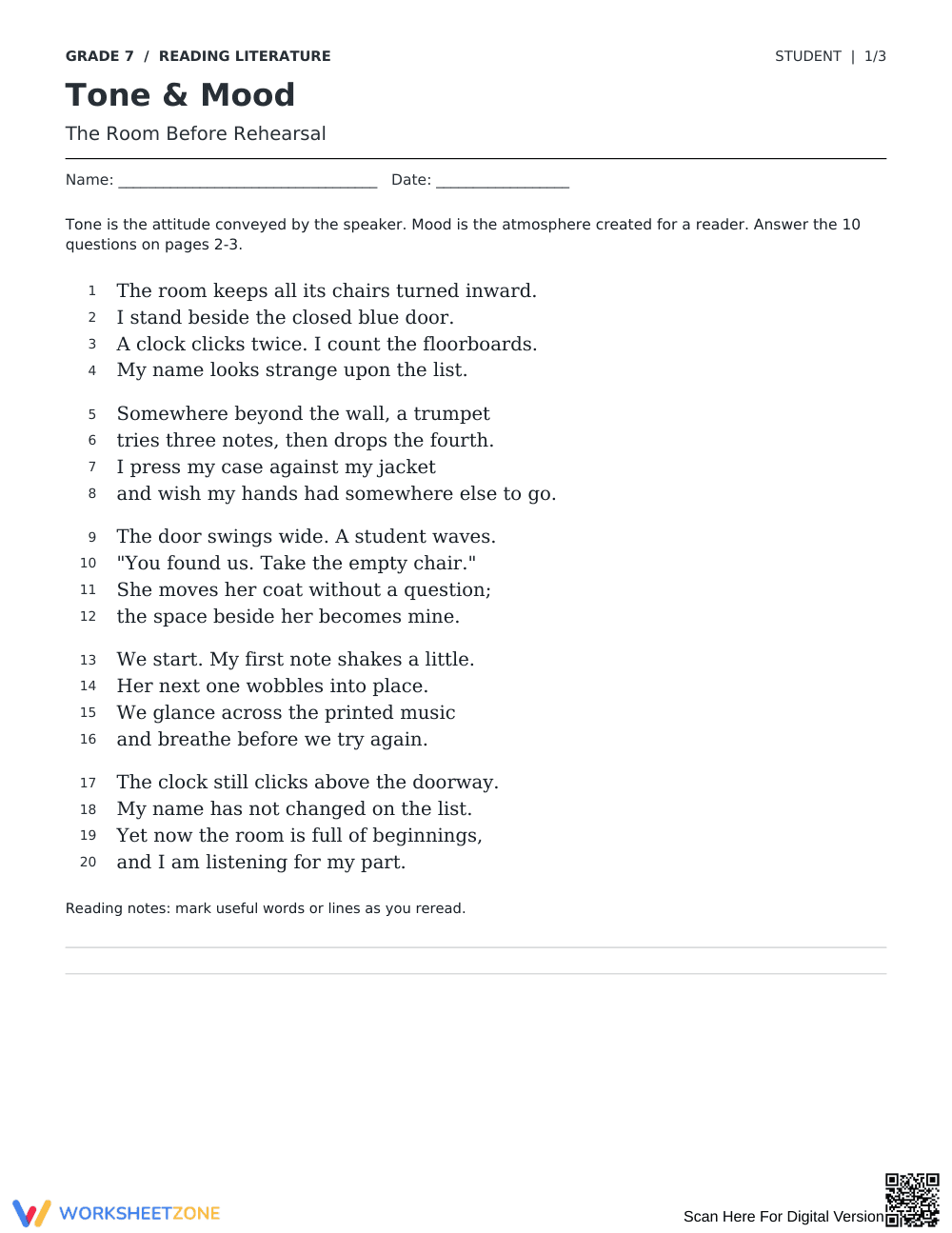
This Grade 7 reading literature worksheet guides students in analyzing tone and mood through the 20-line poem "The Room Before Rehearsal." Learners identify emotional shifts, interpret descriptive details, and cite line evidence to evaluate how word choice establishes atmospheric perspective.
At a Glance
- Grade: Grade 7 · Subject: English
- Standard:
CCSS.ELA-LITERACY.RL.7.4— Analyze how word choice shapes tone and mood in poetry- Skill Focus: Tone and mood analysis
- Format: 3 student pages · 10 questions · Answer key · PDF
- Best For: Close reading, practice, or assessment
- Time: 25–35 minutes
What's Inside
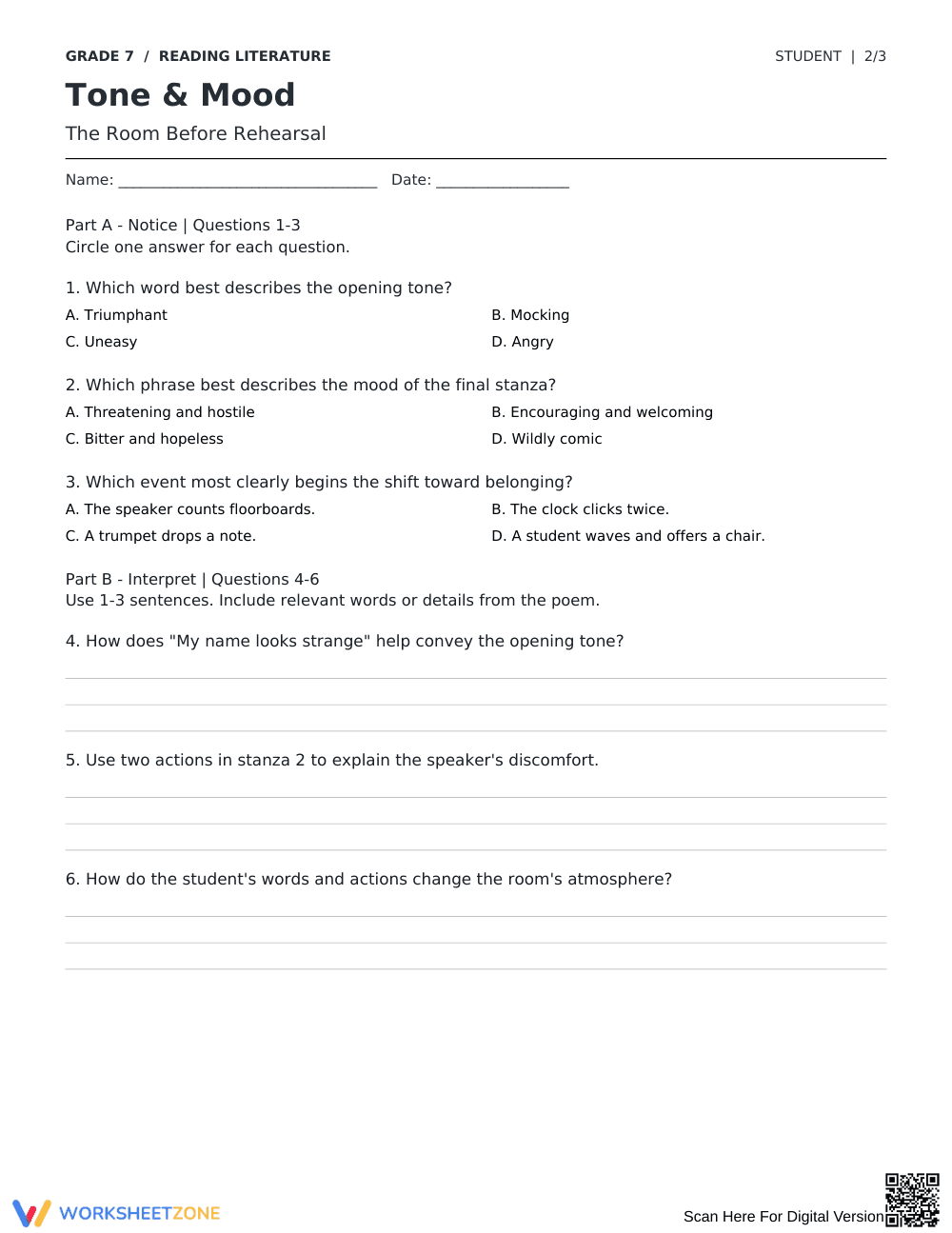
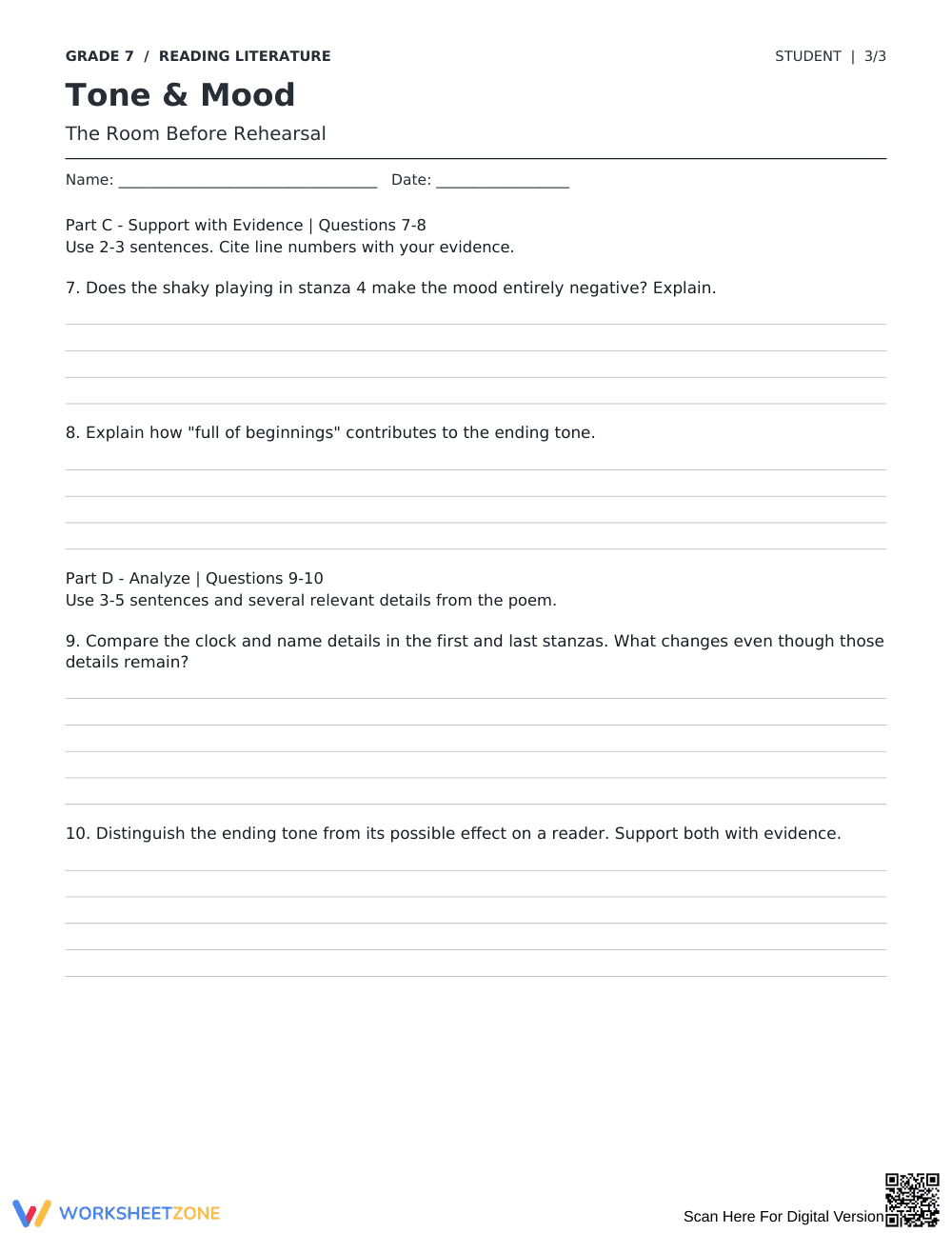
The 3-page student packet contains the complete poem with note-taking space, followed by 10 scaffolded questions organized into four tiers: multiple-choice identification, short interpretation, line-cited evidence, and extended comparative analysis. A 2-page answer key provides full model responses, line citations, and a 30-point scoring breakdown.
Skill Progression
- Guided practice (Questions 1–3): Multiple-choice items prompt students to identify the opening tone, ending mood, and narrative shift.
- Supported practice (Questions 4–8): Constructed-response prompts ask learners to interpret specific phrases and cite stanza line numbers.
- Independent practice (Questions 9–10): Extended response questions require students to compare recurring motifs and distinguish tone from mood.
This structure follows the gradual release model, guiding learners from basic identification to deep analysis.
Standards Alignment
This worksheet aligns with CCSS.ELA-LITERACY.RL.7.4 to analyze how word choice impacts tone and mood in poetry. It also supports CCSS.ELA-LITERACY.RL.7.1 by requiring textual evidence citations. Both standard codes can be copied directly into lesson plans, IEP goals, or district curriculum mapping tools.
How to Use It
Use this 25-to-35-minute activity after direct instruction on the difference between tone and mood. As students work, check Question 10 to formatively evaluate if they distinguish speaker attitude from reader atmosphere. The packet also functions well as an independent post-lesson check or paired close-reading review.
Who It's For
This printable is designed for Grade 7 literature students developing poetry analysis skills. Line numbers and note space scaffold developing readers, while multi-sentence comparison prompts challenge advanced students. Pair this worksheet with an anchor chart defining tone and mood terminology.
Aligned to CCSS.ELA-LITERACY.RL.7.4, this Grade 7 reading literature worksheet builds mastery in analyzing how poetic word choice establishes tone and mood. According to foundational educational research by Fisher & Frey (2014), structured close reading paired with scaffolded text-dependent questions significantly enhances middle school students' capacity to interpret complex literary craft. The 10-task progression moves systematically from identifying emotional shifts in a 20-line narrative poem to writing rigorous, text-supported comparative explanations. Students learn to distinguish the speaker's internal attitude from the overall atmospheric impact on the reader, reinforcing essential evidence citation skills under CCSS.ELA-LITERACY.RL.7.1. By embedding line-by-line annotation space and clear response criteria, this resource equips educators with a reliable formative assessment instrument that documents student growth toward grade-level standards across 25 to 35 minutes of focused classroom instruction and independent practice.


