




























Views
Downloads

Text Evidence Worksheet | Grade 7 Reading Printable

Paste this activity's link or code into your existing LMS (Google Classroom, Canvas, Teams, Schoology, Moodle, etc.).
Students can open and work on the activity right away, with no student login required.
You'll still be able to track student progress and results from your teacher account.
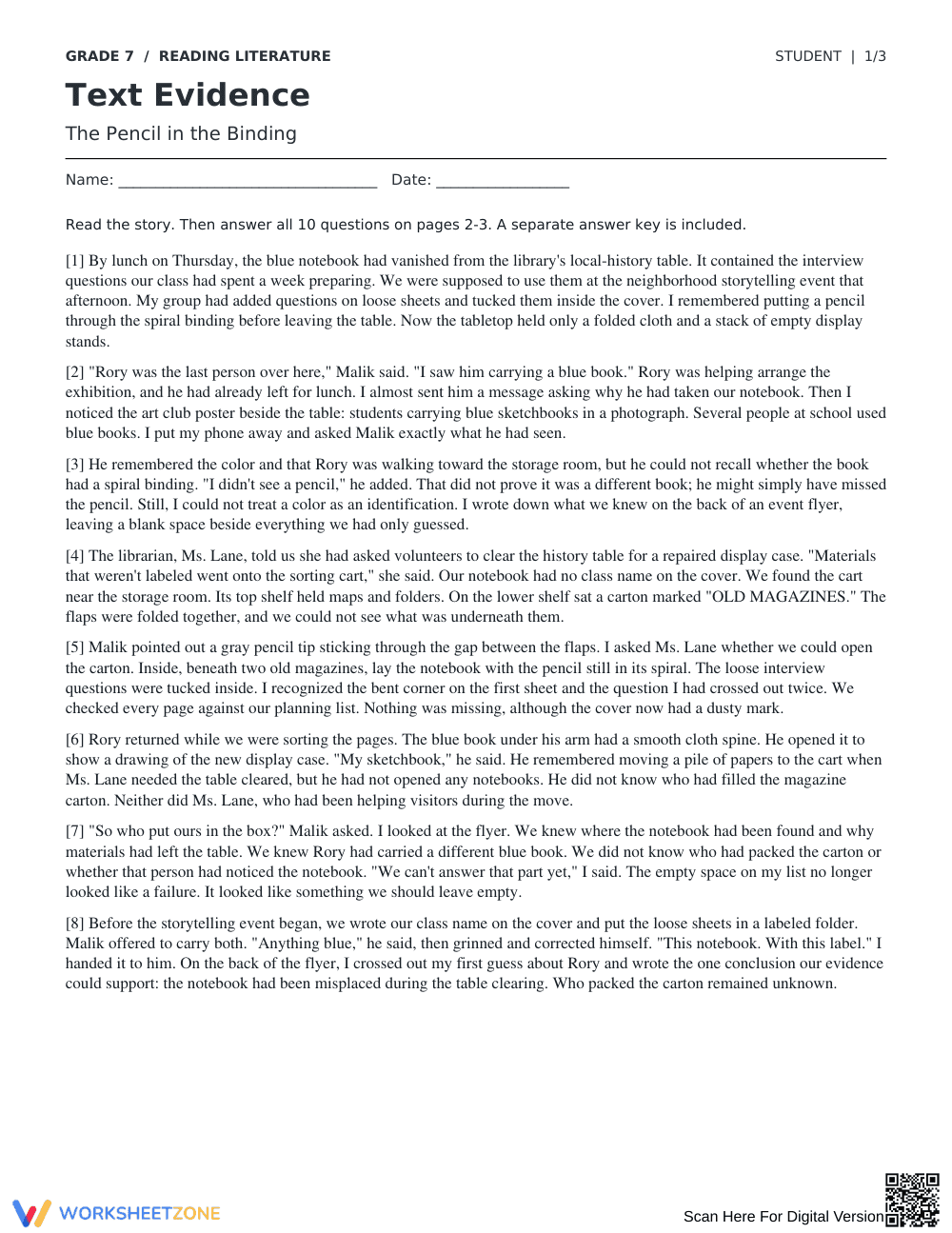
This printable reading literature worksheet strengthens middle school students' ability to locate, cite, and evaluate textual evidence from an original narrative. Students read a multi-paragraph mystery text and complete targeted questions that require specific story details, helping them distinguish factual observations from unverified inferences with measurable accuracy.
At a Glance
- Grade: 7 · Subject: English
- Standard:
CCSS.ELA-LITERACY.RL.7.1— Cite several pieces of textual evidence to support explicit analysis and inferences- Skill Focus: Citing textual evidence and evaluating claims
- Format: 3 pages · 10 problems · Answer key included · PDF
- Best For: Reading comprehension and evidence-based analysis practice
- Time: 35–45 minutes
What's Inside
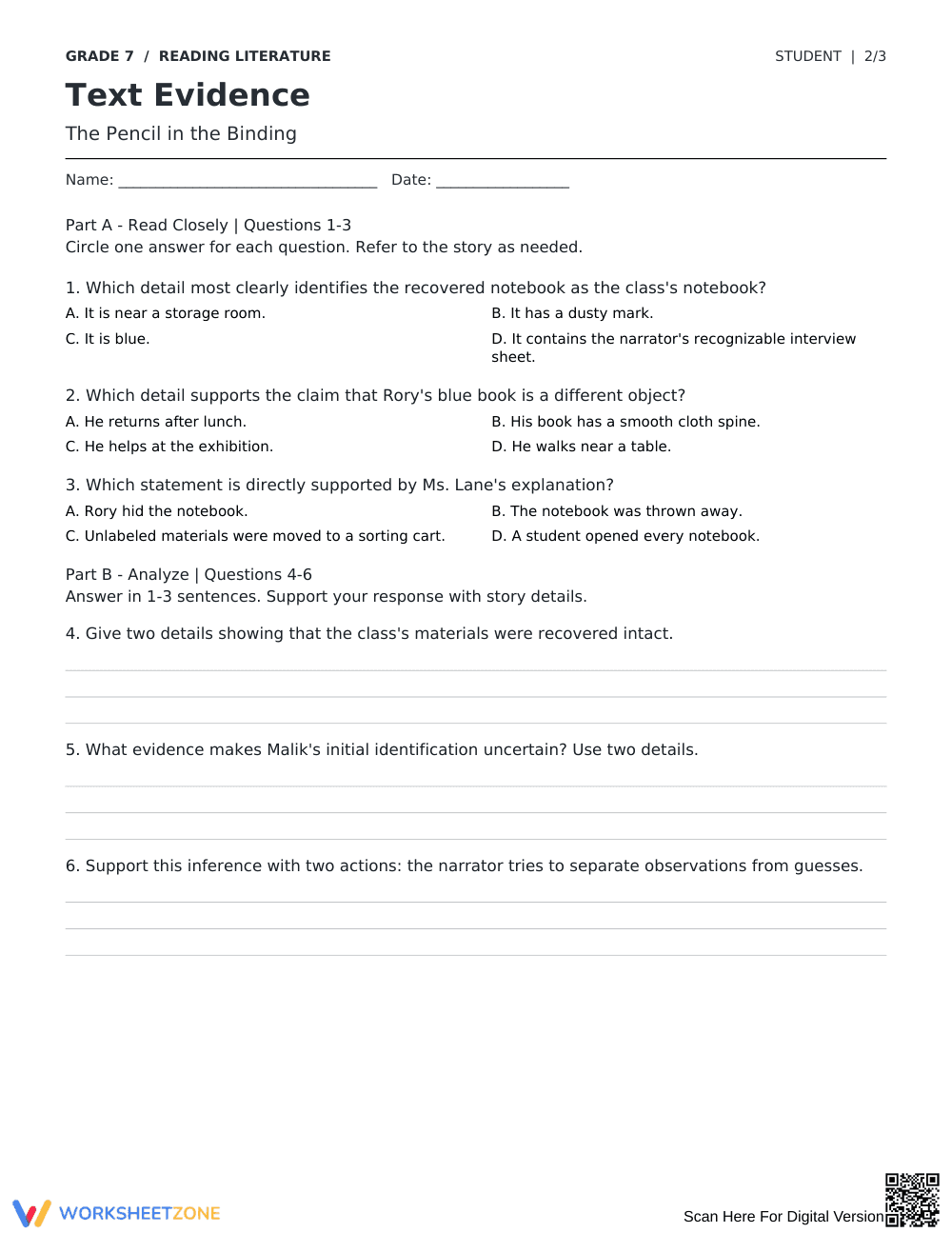
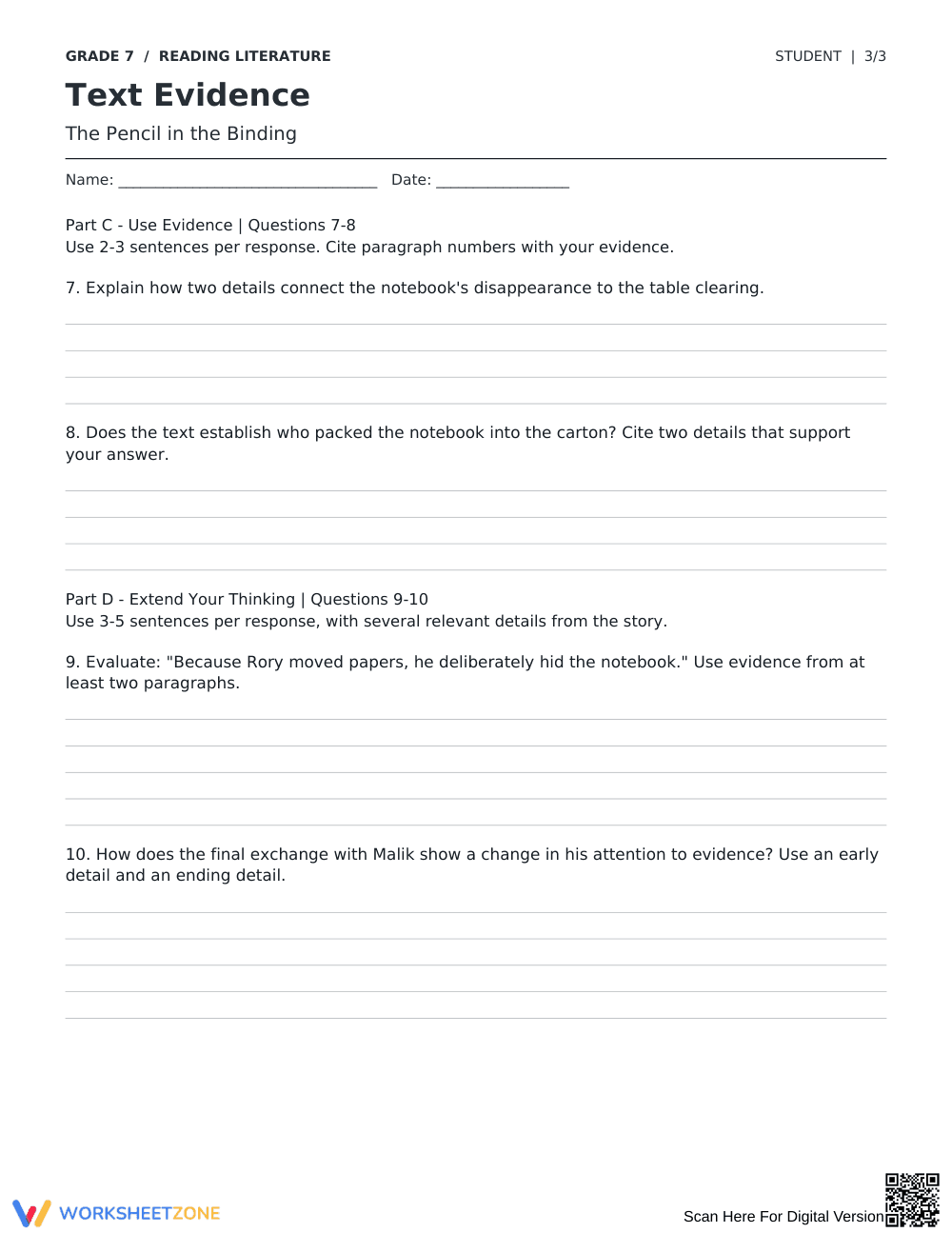
The resource includes an 8-paragraph narrative passage, "The Pencil in the Binding," accompanied by 10 progressive items divided into four distinct sections: multiple-choice identification, short-response analysis, paragraph-cited textual evidence, and extended evaluative thinking. A comprehensive 2-page answer key provides complete model responses, exact paragraph citations for every question, and a 30-point scoring rubric.
Skill Progression
- Guided practice (Questions 1–3): Multiple-choice items prompt students to identify clear, concrete details and explicit statements directly from the story.
- Supported practice (Questions 4–8): Short-response questions require students to produce 1–3 sentences citing two specific details and referencing exact paragraph numbers.
- Independent practice (Questions 9–10): Extended-response prompts challenge learners to evaluate complex claims across multiple paragraphs and synthesize character developments in 3–5 sentences.
This structured sequence reflects the gradual release of responsibility model, ensuring students master foundational detail identification before moving into complex evaluative writing.
Standards Alignment
Primary Standard: `CCSS.ELA-LITERACY.RL.7.1` — Cite several pieces of textual evidence to support analysis of what the text says explicitly as well as inferences drawn from the text. Both standard codes can be copied directly into lesson plans, IEP goals, or district curriculum mapping tools.
How to Use It
Use this resource directly after a mini-lesson on distinguishing evidence from inference. Alternatively, assign it as an independent assessment station during small-group reading rotations. During independent work, check whether students cite paragraph numbers accurately or rely on vague recollections. Expect completion within 35 to 45 minutes.
Who It's For
Designed for Grade 7 general education, co-taught, and intervention English language arts classrooms. Struggling readers benefit from paragraph chunking and reading aloud, while advanced students can write extended counter-arguments. Pair this resource with an anchor chart on claim-evidence-reasoning structures.
Textual analysis in secondary reading demands that learners systematically separate direct textual observations from speculative assumptions. According to Fisher & Frey (2014), explicit instruction in close reading and evidence collection significantly improves comprehension and academic discourse across diverse student cohorts. This 3-page printable Grade 7 literature resource aligns directly with standard CCSS.ELA-LITERACY.RL.7.1, providing 10 rigorously scaffolded prompts that guide students through close reading, evidence citation, and critical claim evaluation. By requiring specific paragraph citations and multi-sentence justifications, the worksheet establishes verifiable evidence-based thinking habits essential for state assessments and advanced analytical writing.


