


























Views
Downloads

Printable Telling Time Worksheet | Grade 2 Essential Math
Paste this activity's link or code into your existing LMS (Google Classroom, Canvas, Teams, Schoology, Moodle, etc.).
Students can open and work on the activity right away, with no student login required.
You'll still be able to track student progress and results from your teacher account.
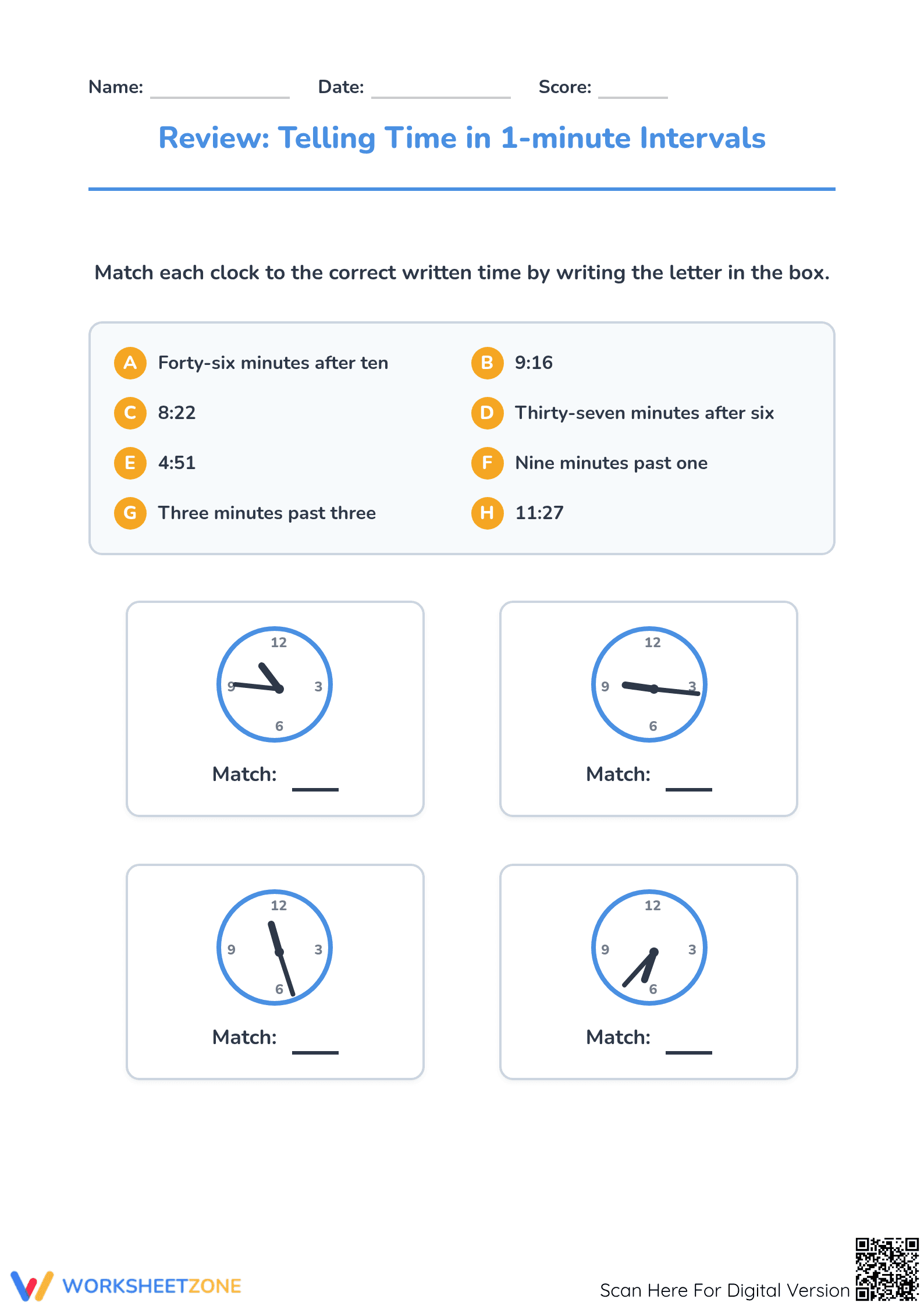
This Grade 2 Telling Time worksheet provides essential practice for students learning to read analog clocks with precision. By matching clocks to specific written times like 11:27 and 8:22, learners move beyond five-minute increments to master one-minute intervals. This resource develops the accuracy needed for real-world time management.
At a Glance
- Grade: 2 · Subject: Math
- Standard:
CCSS.MATH.CONTENT.3.MD.A.1— Tell and write time to the nearest minute and measure time intervals- Skill Focus: Analog Clock Reading (1-Minute Intervals)
- Format: 2 pages · 8 problems · Answer key included · PDF
- Best For: Advanced second grade practice or third grade review
- Time: 15–20 minutes
What's Inside
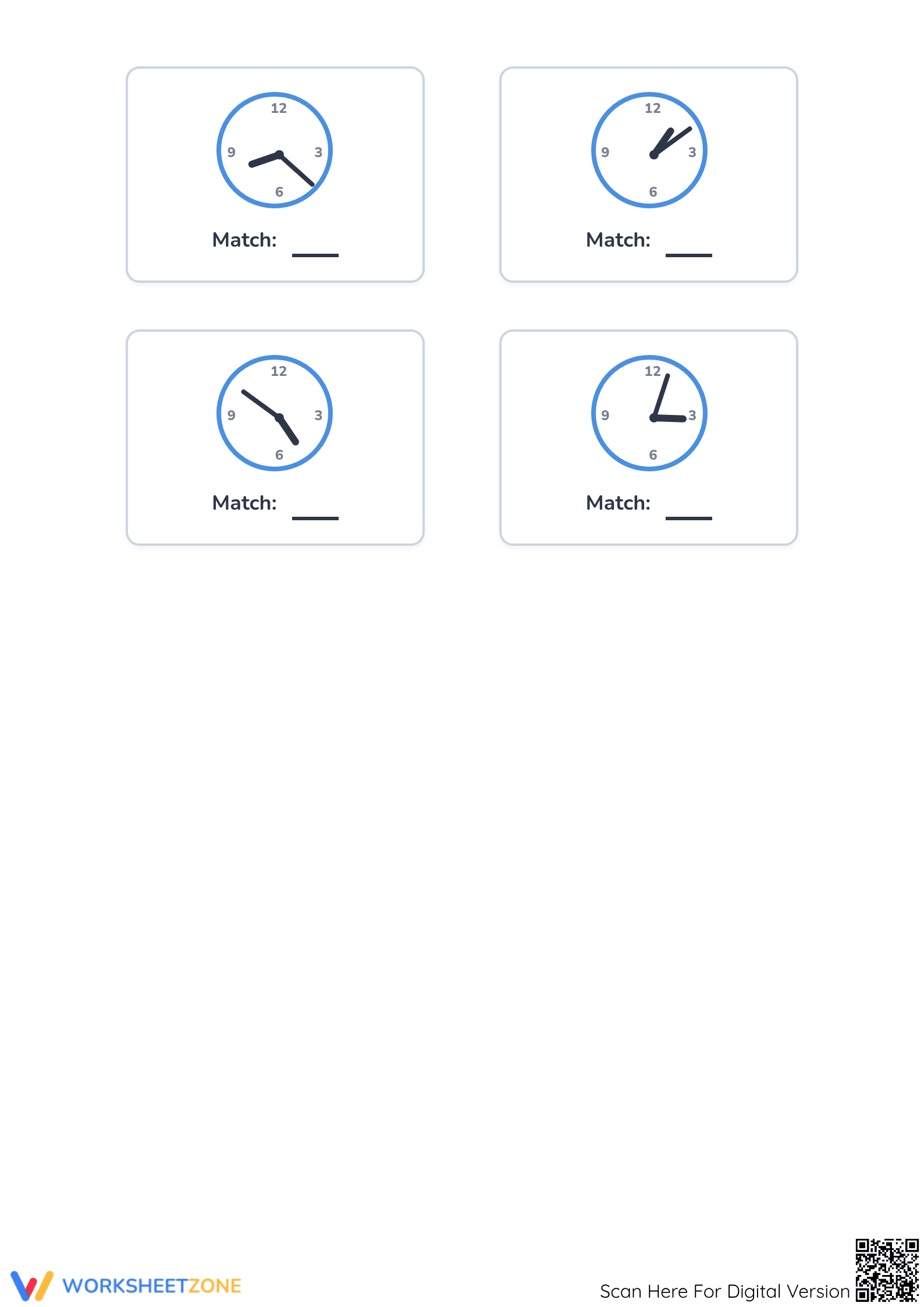
This packet includes two pages of clock-face matching activities. The first page presents four analog clocks alongside a bank of eight possible times, requiring students to carefully analyze the hour and minute hand positions. The second page continues the sequence, bringing the total to eight unique matching tasks. A comprehensive answer key is included for immediate feedback and grading.
Zero-Prep Workflow
Teachers can implement this activity in three simple steps. First, print the two-page PDF (approximately 30 seconds). Second, distribute the copies to students for independent or small-group work (under 1 minute). Third, use the provided answer key for rapid checking or peer-grading (under 2 minutes). Minimal teacher preparation makes this an ideal resource for busy classrooms or sudden sub plans.
Standards Alignment
The primary alignment for this resource is `CCSS.MATH.CONTENT.3.MD.A.1`: "Tell and write time to the nearest minute and measure time intervals in minutes." While this is a third-grade standard, it serves as an excellent challenge or enrichment goal for second graders who have already mastered `CCSS.MATH.CONTENT.2.MD.C.7`. Both standard codes can be copied directly into lesson plans, IEP goals, or district curriculum mapping tools.
How to Use It
Use this worksheet as a formative assessment after teaching the basics of the clock face. It works best during the independent practice phase of a lesson or as a quiet morning work activity. Observe students as they differentiate between the hour and minute hand positions. Expect students to complete all eight matches within 15 to 20 minutes.
Who It's For
This resource is designed for Grade 2 students ready for advanced time-telling challenges and Grade 3 students requiring remedial support. It is particularly useful for students who struggle with the conceptual leap from counting by fives to identifying individual minutes. Pair this worksheet with an interactive clock model or a "Time to the Minute" anchor chart for maximum instructional impact.
Mastering time to the nearest minute is a critical milestone that bridges measurement and data skills with real-world functional literacy. Research from the RAND AIRS 2024 report indicates that students who achieve early proficiency in precise analog clock reading demonstrate stronger proportional reasoning when later introduced to fractions and number lines. By requiring students to reconcile written verbal phrases like "forty-six minutes after ten" with visual representations, this worksheet reinforces the multi-modal encoding of temporal data. Aligned to standard 3.MD.A.1, these 8 tasks force discrimination between subtle minute hand placements. This type of high-utility practice is essential for building the cognitive stamina required for multi-step measurement tasks. Educators can use these printable pages to satisfy data collection requirements for IEP goals focused on functional math skills and time management.


