


























Views
Downloads

Stag Beetle Life Cycle Worksheet | Essential Science
Paste this activity's link or code into your existing LMS (Google Classroom, Canvas, Teams, Schoology, Moodle, etc.).
Students can open and work on the activity right away, with no student login required.
You'll still be able to track student progress and results from your teacher account.
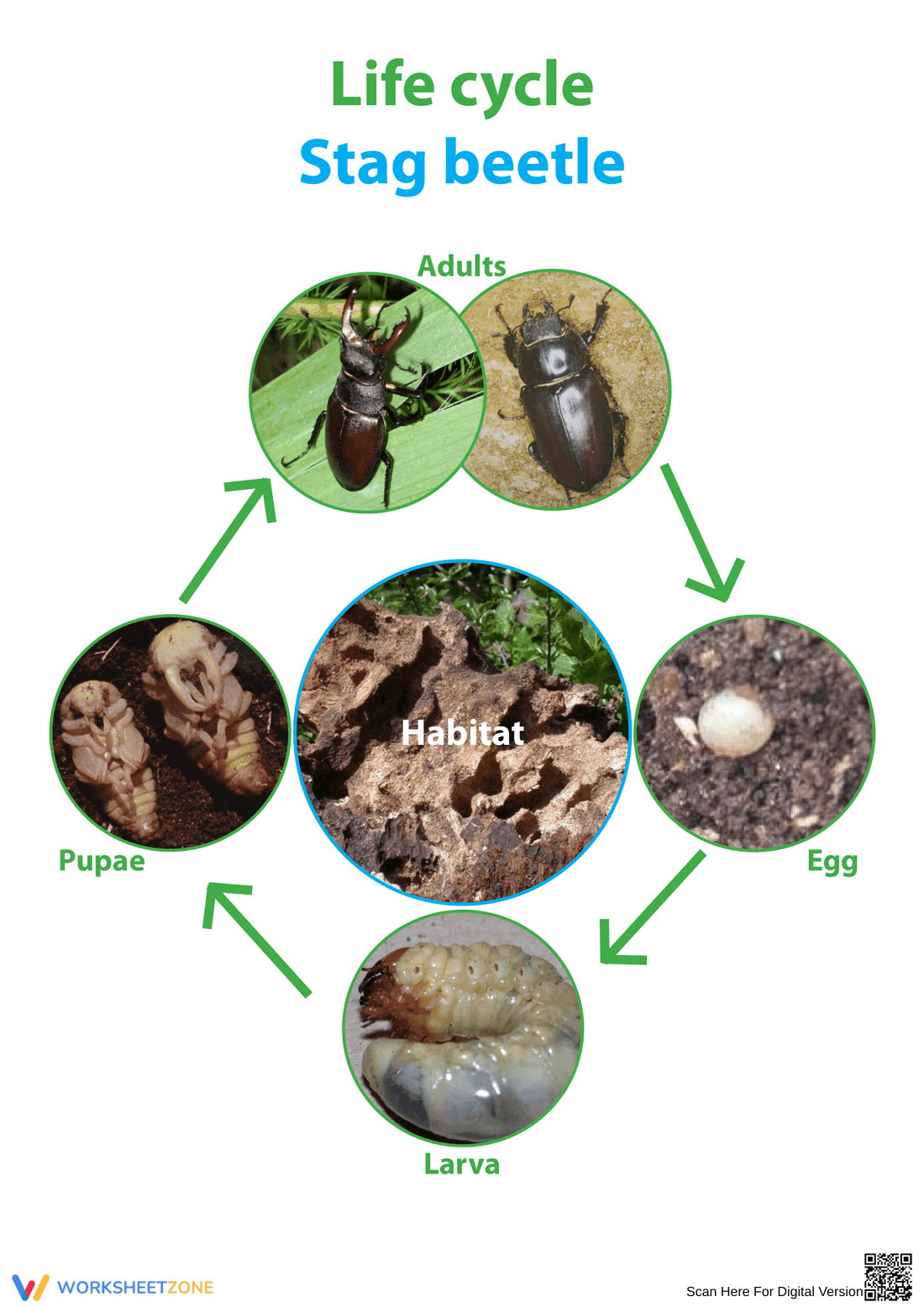
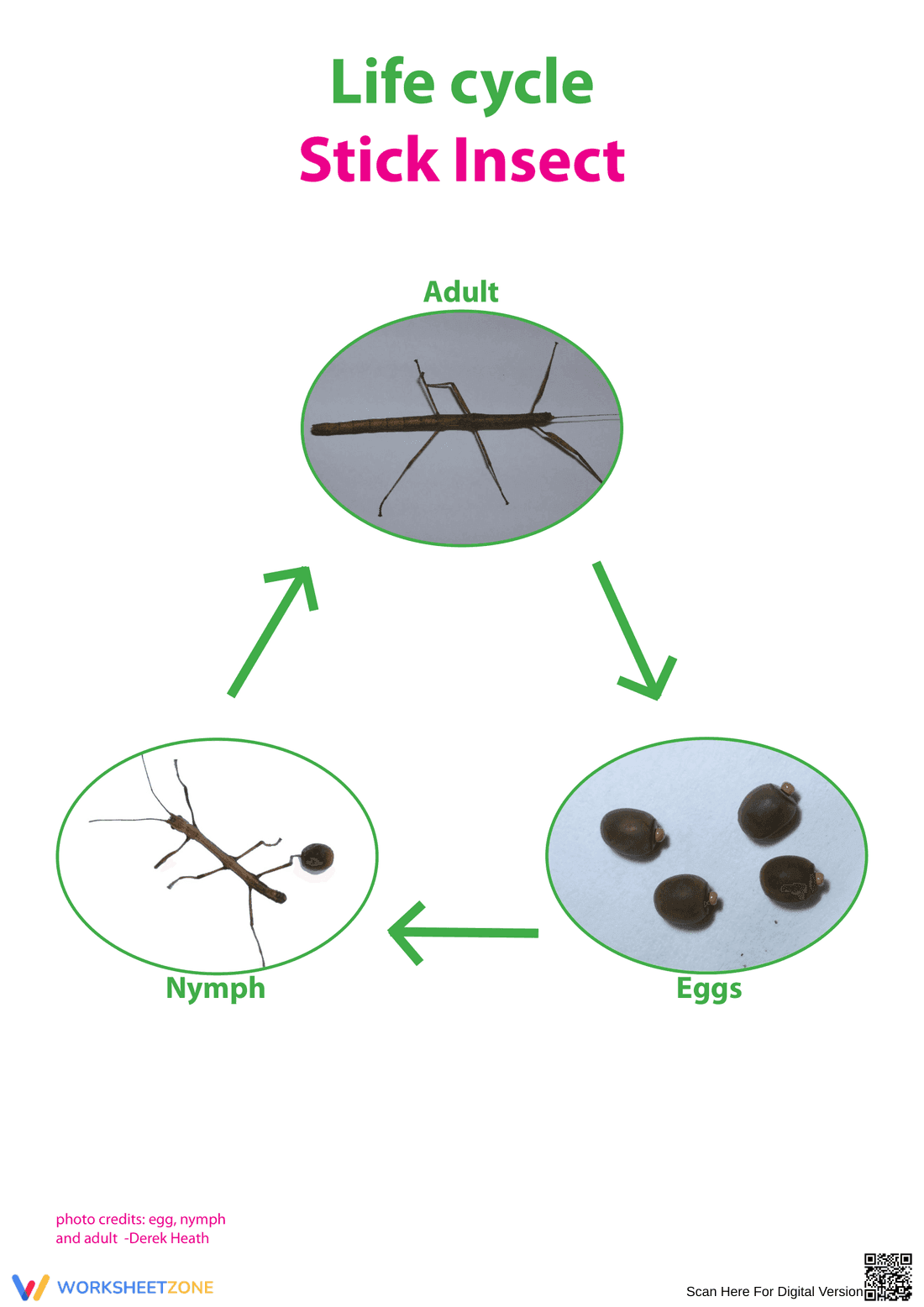
This comprehensive life cycle resource helps students visualize and sequence the biological development of the stag beetle, stick insect, and comma butterfly. By engaging with high-quality photographic evidence, learners identify specific stages of metamorphosis and the environmental factors necessary for survival. It provides a clear path toward understanding animal growth and reproduction.
At a Glance
- Grade: 6-8 · Subject: Biology
- Standard:
MS-LS1-5— Construct a scientific explanation based on evidence for how environmental and genetic factors influence growth- Skill Focus: Metamorphosis and Life Cycle Sequencing
- Format: 6 pages · 15 problems · Answer key included · PDF
- Best For: Independent practice or interactive science notebooks
- Time: 30–45 minutes
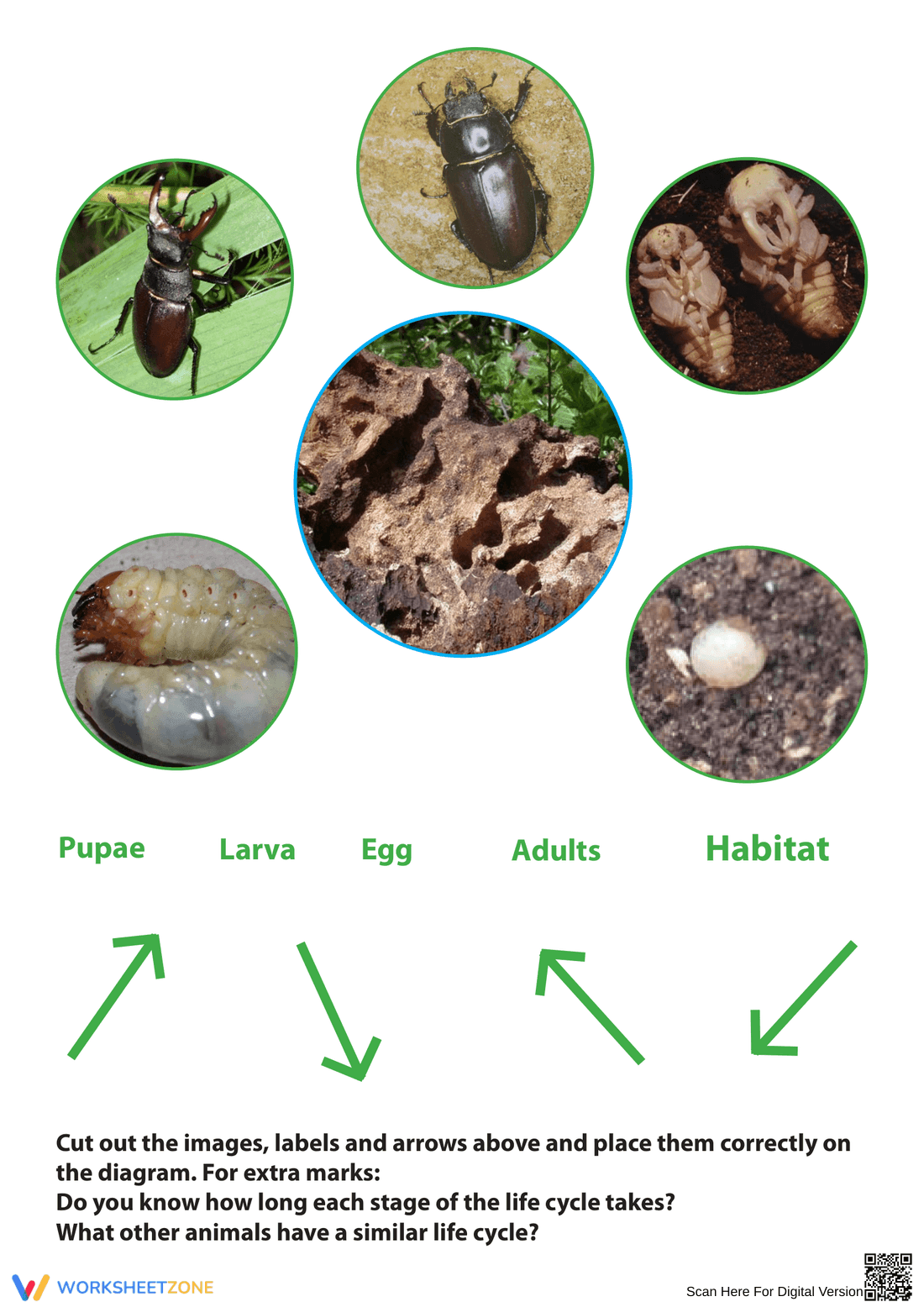
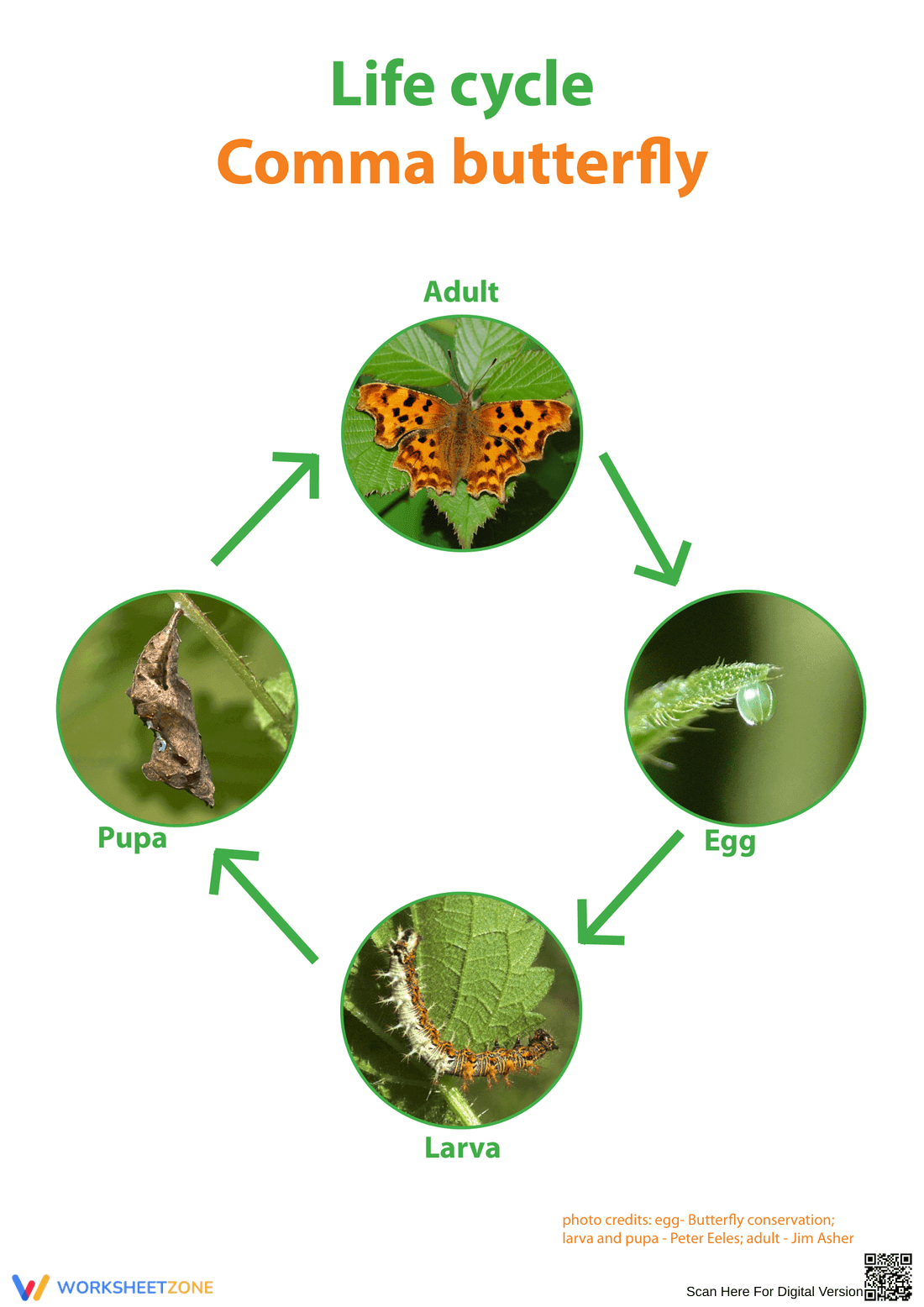
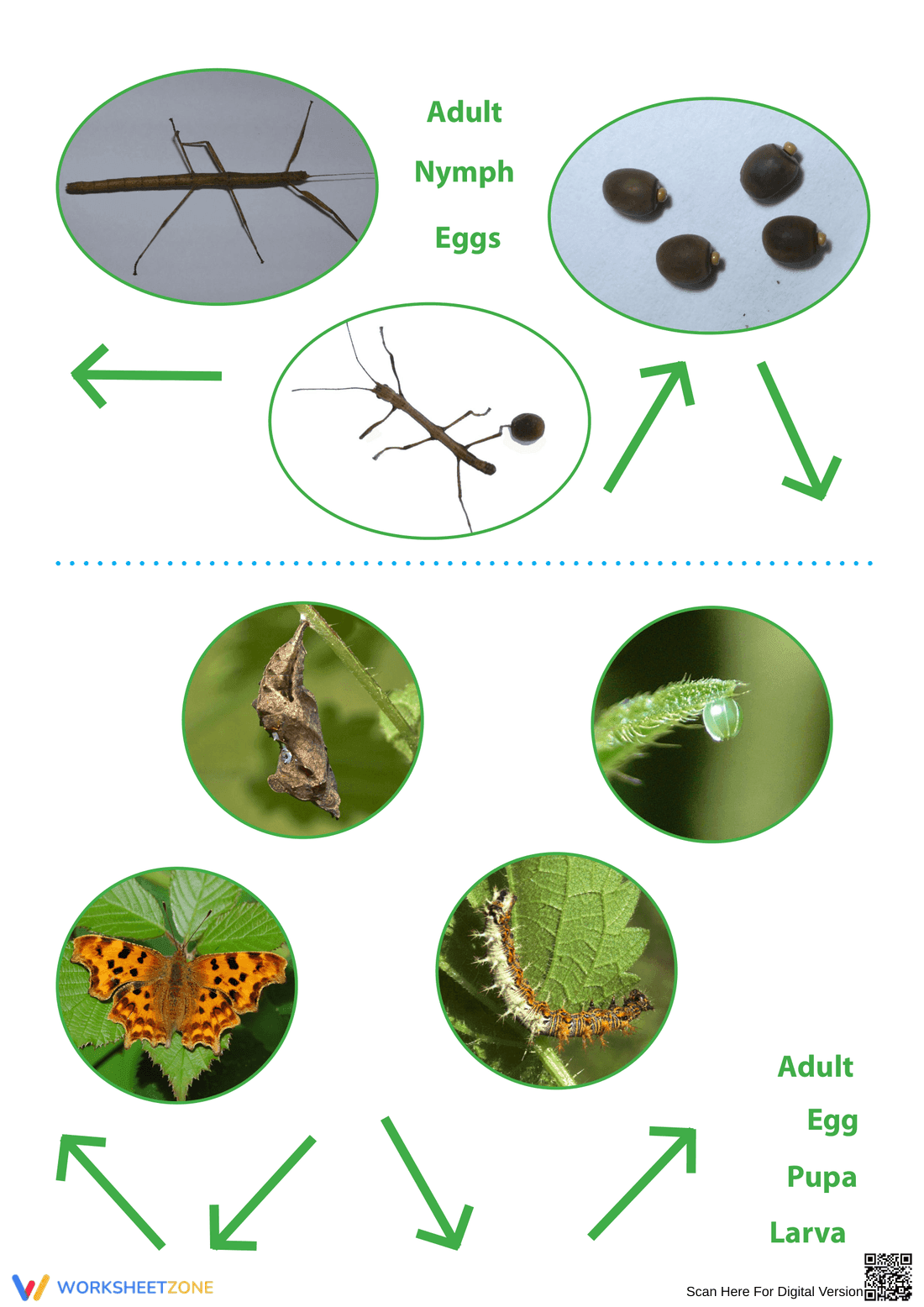
What's Inside: The packet contains six detailed pages featuring three distinct insects. Students work with a primary stag beetle diagram, a cut-and-paste sequencing activity, and a blank template for assessment. Additionally, the set includes comparative life cycle diagrams for the stick insect and comma butterfly, allowing students to observe differences between complete and incomplete metamorphosis using real-world imagery.
This resource is designed for a zero-prep classroom workflow. Step 1: Print the required insect pages for your class (30 seconds). Step 2: Distribute the sheets to students along with scissors and glue (1 minute). Step 3: Review the completed diagrams using the provided answer key or the reference posters included in the file (5 minutes). Total teacher preparation time is under two minutes, making it an ideal sub plan or last-minute lab activity.
Standards Alignment: This resource is primarily aligned to `MS-LS1-5`, requiring students to analyze how organisms change as they grow. It also supports `MS-LS1-4` by highlighting specialized structures like the stag beetle's mandibles and the comma butterfly's pupa. Both standard codes can be copied directly into lesson plans, IEP goals, or district curriculum mapping tools.
How to Use It: Use this as a formative assessment after a lecture on insect metamorphosis. Have students work in pairs to cut and arrange the stag beetle stages before gluing them down. For a challenge, ask students to compare the "nymph" stage of the stick insect to the "larva" stage of the beetle to identify which undergoes complete metamorphosis. Expected completion time is approximately 35 minutes.
Who It's For: This is designed for middle school life science students, including English Language Learners who benefit from the visual photographic cues. It pairs naturally with an anchor chart on metamorphosis or a live classroom insect observation kit. The clear labels and arrows provide necessary scaffolding for students with diverse learning needs.
According to the RAND AIRS 2024 report, visual sequencing tasks in science education significantly improve long-term retention of biological processes among middle school learners. This worksheet utilizes high-resolution imagery to bridge the gap between abstract concepts and observable reality. By requiring students to physically manipulate the stages of the stag beetle life cycle, the activity reinforces the standard MS-LS1-5, which focuses on how environmental factors and genetic information influence the growth of organisms. Research from Fisher & Frey (2014) suggests that such scaffolded, interactive tasks are essential for developing scientific literacy and mastery of complex systems. The inclusion of multiple insect species allows for comparative analysis, a higher-order thinking skill that prepares students for more advanced biological studies. This resource provides the necessary evidence-based practice to ensure students can accurately describe the progression from egg to adult in various insect orders.


