


























Views
Downloads
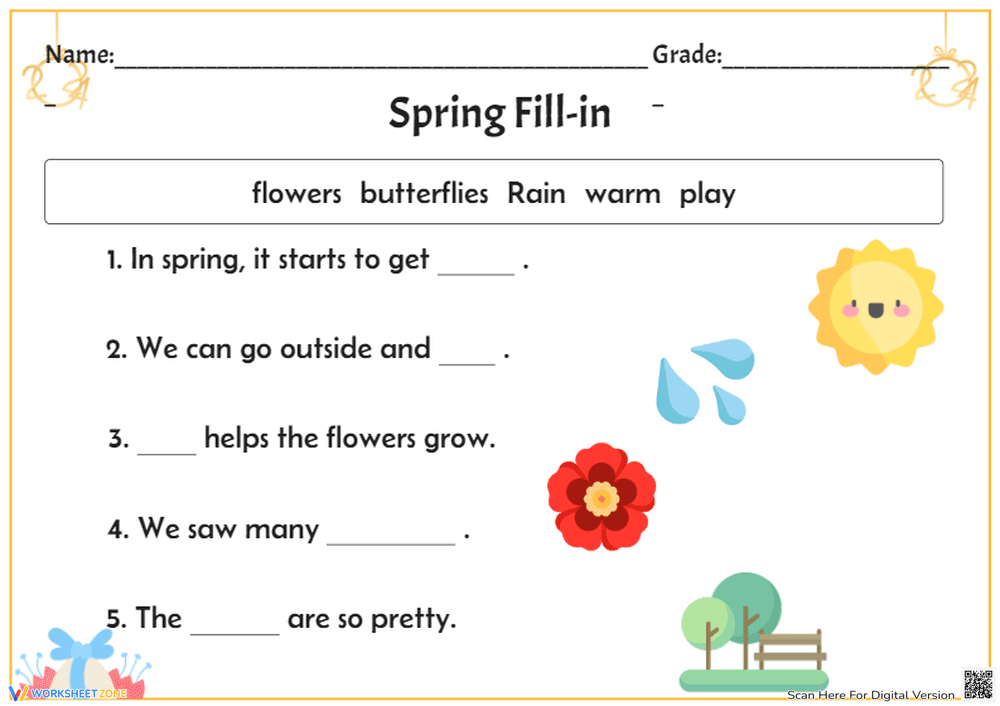

Spring Vocabulary Worksheet | Grade 1-3 Essential
Paste this activity's link or code into your existing LMS (Google Classroom, Canvas, Teams, Schoology, Moodle, etc.).
Students can open and work on the activity right away, with no student login required.
You'll still be able to track student progress and results from your teacher account.
This Grade 1-3 Spring vocabulary worksheet helps students master context clues through seasonal sentence completion. By selecting the correct terms from a word bank, learners demonstrate their understanding of seasonal changes and descriptive language. It provides a quick, effective way to reinforce literacy skills while celebrating the arrival of spring.
At a Glance
- Grade: 1-3 · Subject: ELA
- Standard:
CCSS.ELA-LITERACY.L.1.6— Use words and phrases acquired through conversations, reading and being read to- Skill Focus: Vocabulary in context
- Format: 1 page · 5 problems · Answer key included · PDF
- Best For: Morning work or seasonal literacy centers
- Time: 10–15 minutes
What's Inside: This single-page PDF features five targeted sentence-completion tasks. A clear word bank containing seasonal terms like "butterflies" and "flowers" supports student success. The layout includes cheerful spring-themed illustrations to maintain engagement, and the simple structure ensures students can work independently without constant teacher intervention.
Zero-Prep Workflow: This resource is designed for immediate classroom implementation. First, print the single-page PDF (30 seconds). Second, distribute the sheets to students and explain the word bank (1 minute). Third, review the five completed sentences as a whole group to check for comprehension (5 minutes). Total teacher preparation time is under two minutes, making it an ideal choice for sub plans or transition periods.
Standards Alignment: The primary standard addressed is `CCSS.ELA-LITERACY.L.1.6`, which requires students to use words and phrases acquired through reading and responding to texts. It also supports vocabulary acquisition by asking students to identify words in a text that suggest feelings or appeal to the senses. Both standard codes can be copied directly into lesson plans, IEP goals, or district curriculum mapping tools.
How to Use It: Use this worksheet as a warm-up activity during the first week of spring to assess prior knowledge of seasonal vocabulary. Alternatively, assign it as a formative assessment after a read-aloud about nature to see if students can apply new terms in context. Expected completion time is 10 to 15 minutes, allowing it to fit into tight instructional blocks.
Who It's For: This resource is ideal for first through third-grade students, including English Language Learners who benefit from the visual cues and word bank support. It pairs naturally with a spring-themed anchor chart or a classroom weather observation log to deepen the connection between vocabulary and real-world experiences.
According to the RAND AIRS 2024 report, the integration of seasonal themes into literacy instruction significantly increases student engagement and retention of Tier 2 vocabulary words. This worksheet targets CCSS.ELA-LITERACY.L.1.6 by requiring students to select appropriate nouns and adjectives to complete thematic sentences. By utilizing a word bank, the resource provides the necessary scaffolding for early elementary learners to practice context-clue application without the cognitive load of open-ended spelling. Research from Fisher & Frey (2014) emphasizes that fill-in-the-blank tasks, when used as part of a gradual release of responsibility, help bridge the gap between word recognition and active usage. This 5-task printable offers a structured environment for students to demonstrate mastery of spring-related terminology in a concise, classroom-ready format that fits easily into any literacy block or emergency sub plan.


