


























Views
Downloads
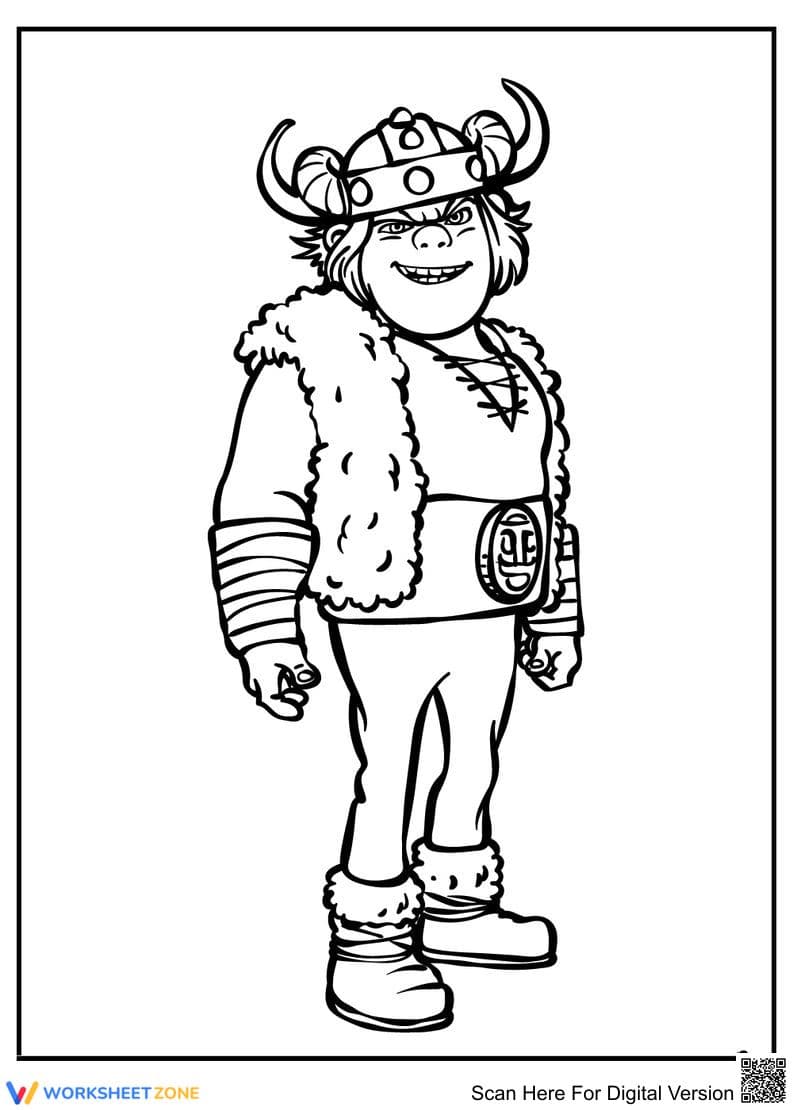

Snotlout Coloring Page | Essential Grade K-2 Printable
Paste this activity's link or code into your existing LMS (Google Classroom, Canvas, Teams, Schoology, Moodle, etc.).
Students can open and work on the activity right away, with no student login required.
You'll still be able to track student progress and results from your teacher account.
This Snotlout coloring worksheet provides a high-interest creative outlet for students to practice fine motor control and color application. By engaging with a familiar character from the How To Train Your Dragon series, learners develop the hand-eye coordination necessary for early writing tasks. This printable page serves as an effective bridge between artistic expression and foundational literacy skills.
At a Glance
- Grade: K-2 · Subject: Arts & English
- Standard:
CCSS.ELA-LITERACY.SL.K.5— Add drawings to descriptions to provide additional detail.- Skill Focus: Fine motor development
- Format: 1 page · 1 task · Answer key N/A · PDF
- Best For: Morning work or early finishers
- Time: 15–20 minutes
Inside this resource, you will find a single-page, high-resolution line drawing of Snotlout. The illustration features clear, bold outlines to assist younger students in staying within the lines, while providing enough detail for older elementary students to experiment with shading and texture. The PDF format ensures a crisp print every time, making it a reliable addition to any classroom art center or character study unit.
The zero-prep workflow for this worksheet is designed for maximum efficiency. First, print the single-page PDF (30 seconds). Second, distribute the page along with crayons, markers, or colored pencils to your students (1 minute). Third, review the completed work to observe pencil grip and spatial awareness (30 seconds). Total teacher preparation time is under 2 minutes, making this an ideal solution for unexpected schedule changes or sub plans.
This activity aligns with CCSS.ELA-LITERACY.SL.K.5, which encourages students to use visual displays to enhance their communication and descriptions. While primarily an artistic task, the focus on detail and character representation supports the development of visual literacy. Both standard codes can be copied directly into lesson plans, IEP goals, or district curriculum mapping tools to document fine motor and creative progress.
Use this worksheet during a character study unit to help students visualize specific traits. Alternatively, assign it as a formative assessment for fine motor control during the first weeks of school. Observe how students handle their coloring tools and their ability to follow the complex lines of the character's armor and helmet. Completion typically takes 15 to 20 minutes depending on the medium used.
This resource is designed for Preschool through Grade 2 students, though it remains popular for older fans of the franchise. It is particularly effective for students requiring occupational therapy support or those who benefit from high-interest visual tasks. Pair this worksheet with a character description chart or a read-aloud session to deepen the connection between the visual art and the narrative.
Research from Fisher & Frey (2014) emphasizes the importance of visual representation in the gradual release of responsibility model, noting that artistic engagement can lower the affective filter for young learners. This Snotlout coloring page utilizes high-interest media to target CCSS.ELA-LITERACY.SL.K.5, facilitating the development of the small muscle groups in the hand that are critical for handwriting endurance. By providing a structured yet creative task, educators can monitor 1 specific area of physical development—fine motor precision—while students remain engaged in a meaningful activity. According to the RAND AIRS 2024 report on elementary engagement, integrating familiar characters into classroom materials significantly increases task persistence among early elementary students. This worksheet provides a practical, evidence-based tool for supporting both artistic exploration and the physical precursors to written literacy in a classroom setting.


