


























Views
Downloads

Running with the Thing Worksheet | Aligned Grade 3 ELA
Paste this activity's link or code into your existing LMS (Google Classroom, Canvas, Teams, Schoology, Moodle, etc.).
Students can open and work on the activity right away, with no student login required.
You'll still be able to track student progress and results from your teacher account.
This engaging Grade 3 reading comprehension worksheet challenges students to use context clues and inferencing to solve a narrative mystery. By analyzing character dialogue and actions, learners develop critical thinking skills essential for literary analysis. This printable resource ensures students master standard-aligned goals through active participation and evidence-based responses.
At a Glance
- Grade: 3 · Subject: ELA Literature
- Standard:
CCSS.ELA-LITERACY.RL.3.1— Ask and answer questions to demonstrate understanding of a text- Skill Focus: Inferencing and Context Clues
- Format: 5 pages · 7 problems · Answer key included · PDF
- Best For: Literacy centers and independent reading practice
- Time: 20–30 minutes
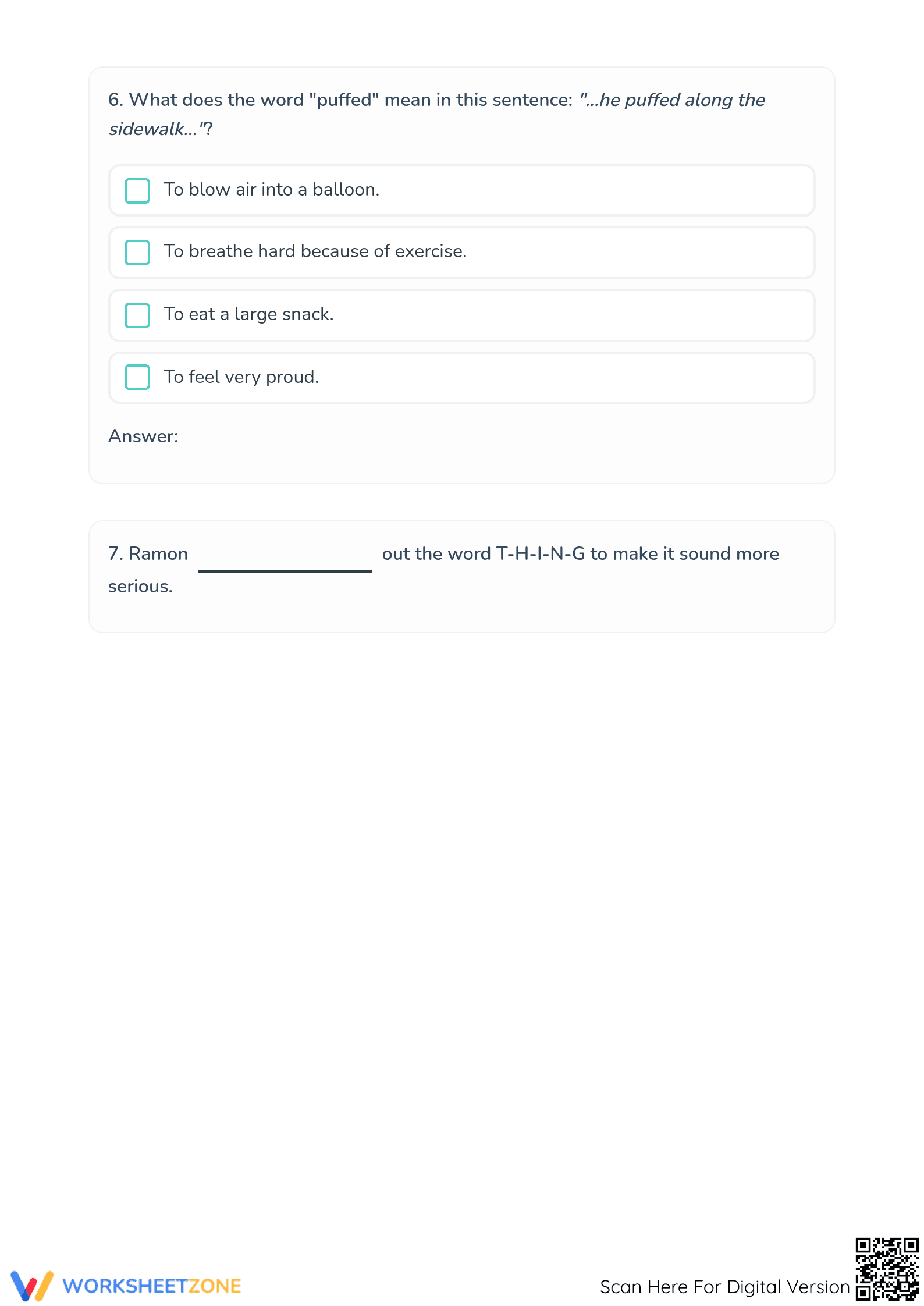
This 5-page PDF includes a high-interest narrative titled "Running with the Thing." The worksheet features seven structured comprehension tasks, including multiple-choice and short-answer prompts requiring textual evidence. A dedicated vocabulary section focuses on word meaning within context, and a full answer key is included for efficient grading or student self-correction.
Skill Progression
The worksheet follows a strategic instructional design to move students toward mastery.
- Guided practice: The "Story Time!" section encourages students to form hypotheses while reading, using a notes section to track clues about the central mystery.
- Supported practice: Tasks 1-3 provide support through multiple-choice options and character identification, building a foundation of literal comprehension.
- Independent practice: The final sections require students to synthesize information and define vocabulary like "puffed" using context clues, demonstrating a grasp of narrative themes.
This gradual release of responsibility ensures that students feel confident as the cognitive demand of the tasks increases throughout the lesson.
Standards Alignment
Primary alignment is CCSS.ELA-LITERACY.RL.3.1: "Ask and answer questions to demonstrate understanding of a text, referring explicitly to the text as the basis for the answers." Students must look back to explain the mystery. This standard code can be copied directly into lesson plans, IEP goals, or district curriculum mapping tools.
How to Use It
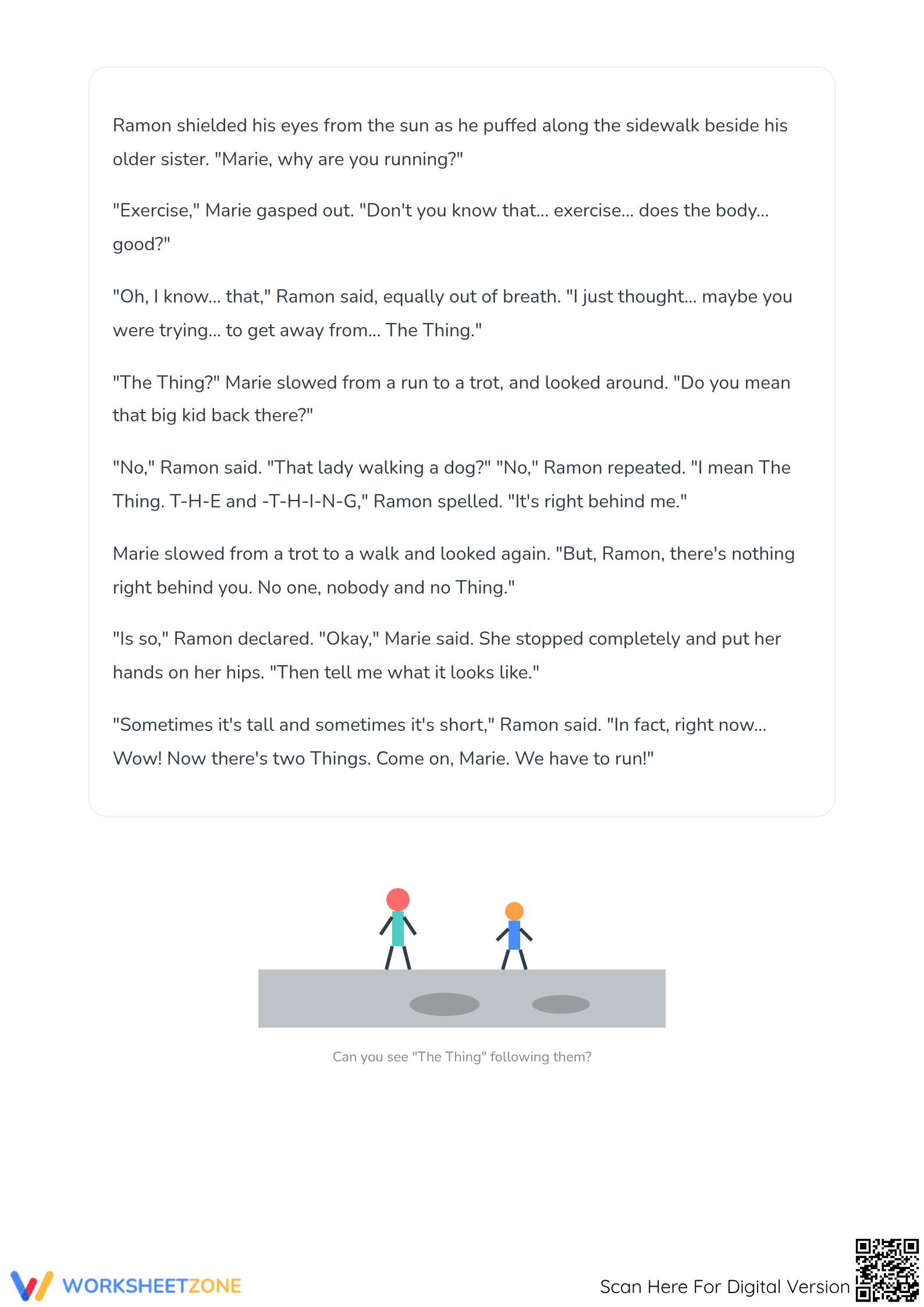
Use this as independent practice after a mini-lesson on inferencing. Remind students to "read like detectives" by circling clues. During the activity, observe Task 4; if students struggle with the shadow identity, point to the illustration on page 2. This provides an excellent formative assessment of their ability to combine text and visual data.
Who It's For
Designed for Grade 3, this works well for Grade 2 enrichment or Grade 4 review. It naturally pairs with science lessons on shadows or literature units on mystery. The layout supports English Language Learners by providing visual cues and straightforward dialogue alongside the 7 reading tasks.
Research consistently demonstrates that explicit instruction in inferencing is a primary driver of long-term literacy success. According to Fisher & Frey (2014), the ability to bridge the gap between what is literal and what is implied is a hallmark of the "expert reader" profile. This worksheet targets that exact cognitive bridge by requiring students to decode the "Thing" mystery using evidence found in Guy Belleranti's text. By engaging with CCSS.ELA-LITERACY.RL.3.1 in a narrative format, students move beyond simple recall toward the higher-order thinking skills required for complex middle-school literature. The inclusion of vocabulary acquisition tasks further strengthens the reading-writing connection, ensuring that learners don't just solve the puzzle but also expand their linguistic repertoire. Educators can cite this resource as a verified tool for building evidence-based comprehension in the elementary classroom.


