




























Views
Downloads


Ready World War I Word Search | Grades 9–10 Social Studies

Paste this activity's link or code into your existing LMS (Google Classroom, Canvas, Teams, Schoology, Moodle, etc.).
Students can open and work on the activity right away, with no student login required.
You'll still be able to track student progress and results from your teacher account.
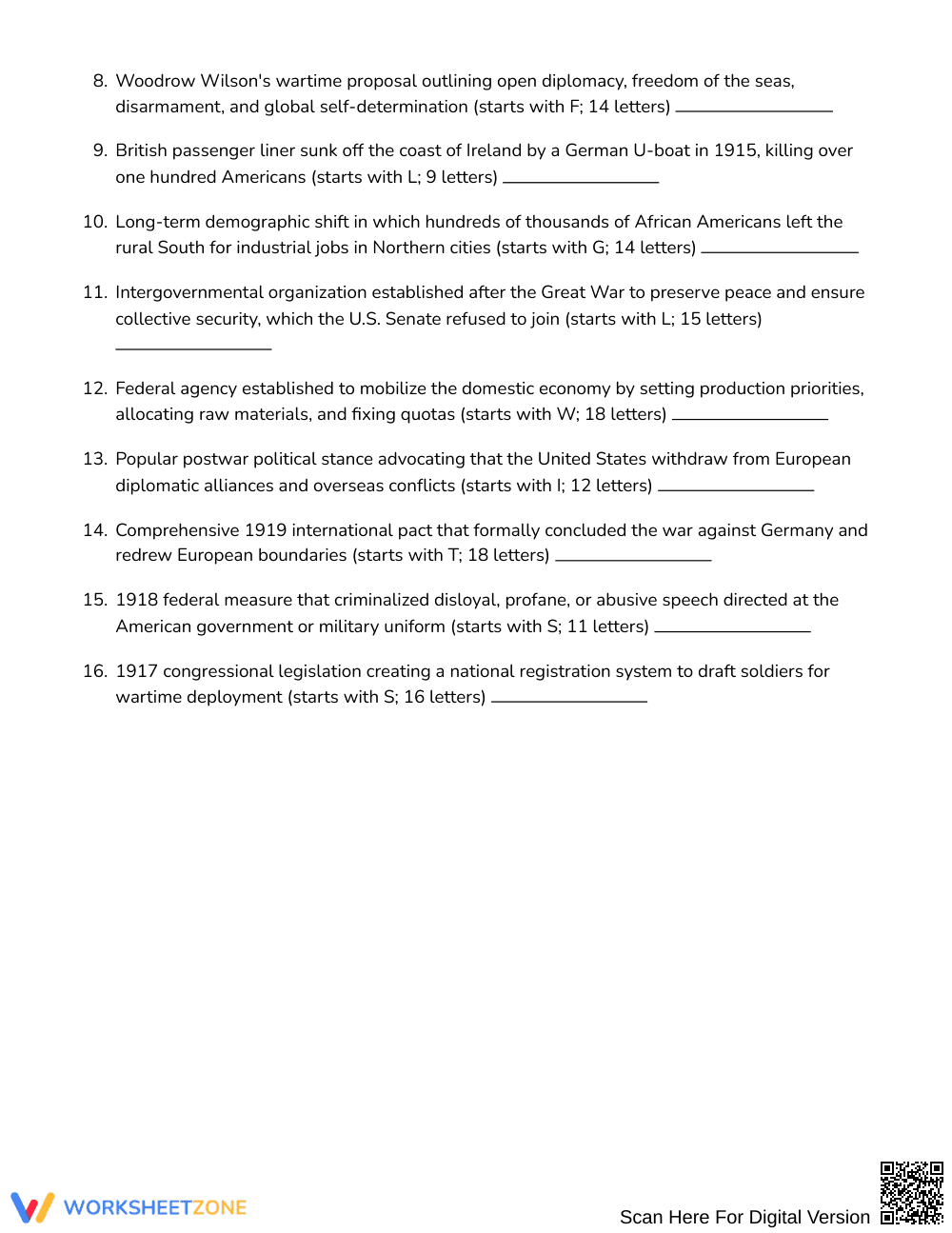
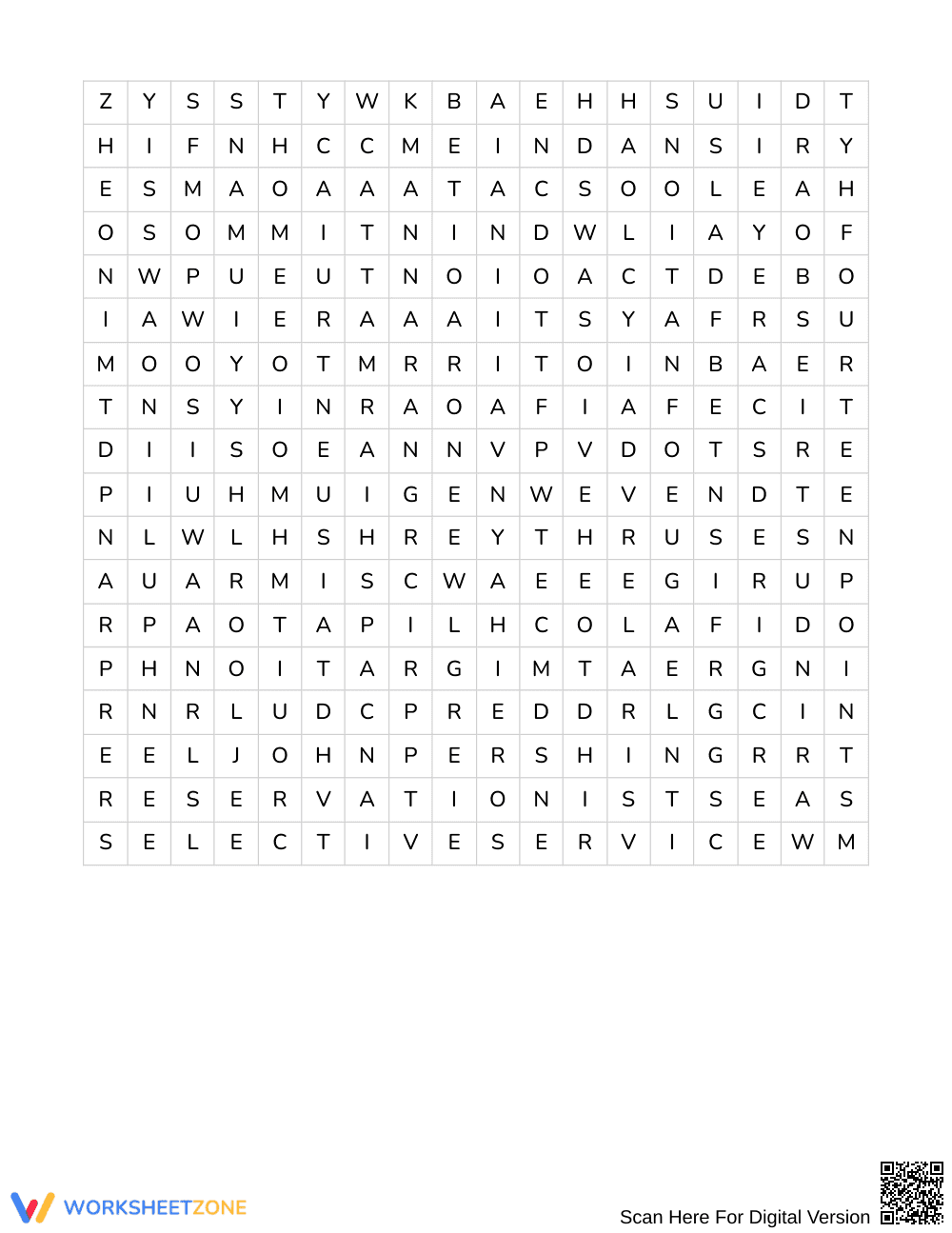
This World War I word search reinforces key historical vocabulary and concepts across 16 thematic terms for high school students. Rather than relying on a passive word list, learners decode context-rich clues to identify pivotal figures, acts, and treaties before locating them. The activity deepens historical recall and conceptual understanding across wartime mobilization and postwar diplomacy.
At a Glance
- Grade: Grades 9–10 · Subject: Social Studies
- Standard: Not standards-assessed — targeted vocabulary enrichment and conceptual retrieval
- Skill Focus: World War I mobilization, domestic policy, and postwar diplomacy
- Format: 3 pages · 16 words · Answer key included · PDF
- Best For: Postwar unit review, sub plans, and historical vocabulary reinforcement
- Time: 25–35 minutes
What's Inside
This 3-page printable resource includes an 18-by-18 grid puzzle, an analytical clue sheet featuring 16 detailed definitions, and a comprehensive solution key. The activity requires students to read historical descriptions covering home-front policies, foreign diplomacy, and civil liberties, identify the corresponding terms independently without a word bank, and find each term in the puzzle grid.
Puzzle Mechanics and Structure
The puzzle features an 18-by-18 letter grid containing 16 hidden historical terms placed in all eight cardinal and intercardinal directions: north, northeast, east, southeast, south, southwest, west, and northwest. Because this challenge provides no word bank, students must read 16 rigorous historical clues to determine the exact terms before searching. Clues target essential concepts such as the Espionage Act, the Great Migration, and the Treaty of Versailles, requiring active recall and historical comprehension.
Standards Alignment
This word search serves as targeted vocabulary enrichment and is not aligned to a specific state or national content standard. It supports general high school United States history curricula by reinforcing core terminology, historical figures, and landmark legislation connected to the First World War and postwar developments.
How to Use It
Deploy this word search during direct instruction as a mid-unit formative check to evaluate vocabulary retention, or assign it as an independent station during test review. For formative assessment, scan student clue sheets before they search the grid to verify that learners accurately identify terms like the Palmer Raids and Reservationists from context clues alone. Expected completion time is 25 to 35 minutes.
Who It's For
Designed for Grades 9–10 Social Studies and U.S. History courses, this activity offers rigorous vocabulary reinforcement for general education students and honors cohorts alike. Pair this resource with primary source analysis of Woodrow Wilson's Fourteen Points or domestic wartime propaganda posters to provide immediate contextual application of the terms.
According to Fisher & Frey (2014), intentional academic vocabulary acquisition requires students to encounter disciplinary terms through meaningful retrieval practice rather than rote memorization. This Grades 9–10 Social Studies word search reinforces 16 critical terms related to World War I and its aftermath by replacing standard word banks with analytical clue solving. By requiring learners to analyze 16 detailed historical prompts before searching the 18-by-18 letter grid across all 8 directional axes, the activity strengthens domain-specific semantic networks and schema development. Research demonstrates that pairing definition retrieval with contextual terminology tasks substantially improves long-term retention of historical developments, including domestic mobilization and postwar treaty debates. Teachers utilize this 3-page resource to transform passive puzzle completion into rigorous formative vocabulary evaluation, providing clear diagnostic data on student mastery of fundamental twentieth-century American history concepts prior to cumulative unit assessments.


