




























Views
Downloads


Ready Veterans Day Word Search | Grades 7–8 Social Studies

Paste this activity's link or code into your existing LMS (Google Classroom, Canvas, Teams, Schoology, Moodle, etc.).
Students can open and work on the activity right away, with no student login required.
You'll still be able to track student progress and results from your teacher account.
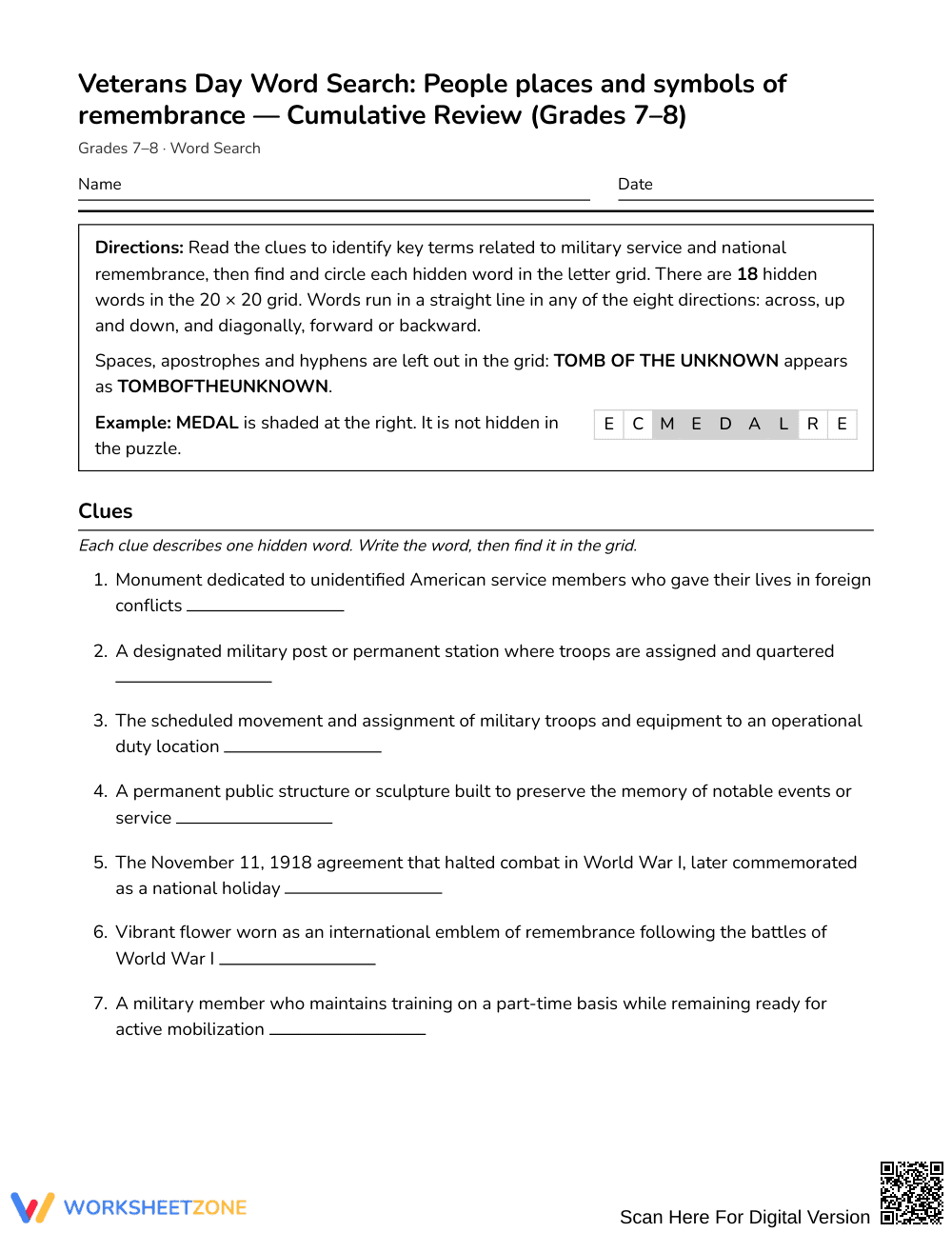
This Veterans Day word search reinforces core U.S. history vocabulary and cultural literacy for middle school students. Learners analyze definitions for 18 historical terms, military branches, and national memorials before locating each hidden entry within the puzzle. The activity deepens understanding of remembrance customs and military terminology through focused vocabulary retrieval.
At a Glance
- Grade: Grades 7–8 · Subject: Social Studies
- Standard: Not standards-assessed — vocabulary enrichment
- Skill Focus: People, places, and symbols of remembrance
- Format: 3 pages · 18 words · Answer key included · PDF
- Best For: Holiday stations, early finishers, or review
- Time: 25–35 minutes
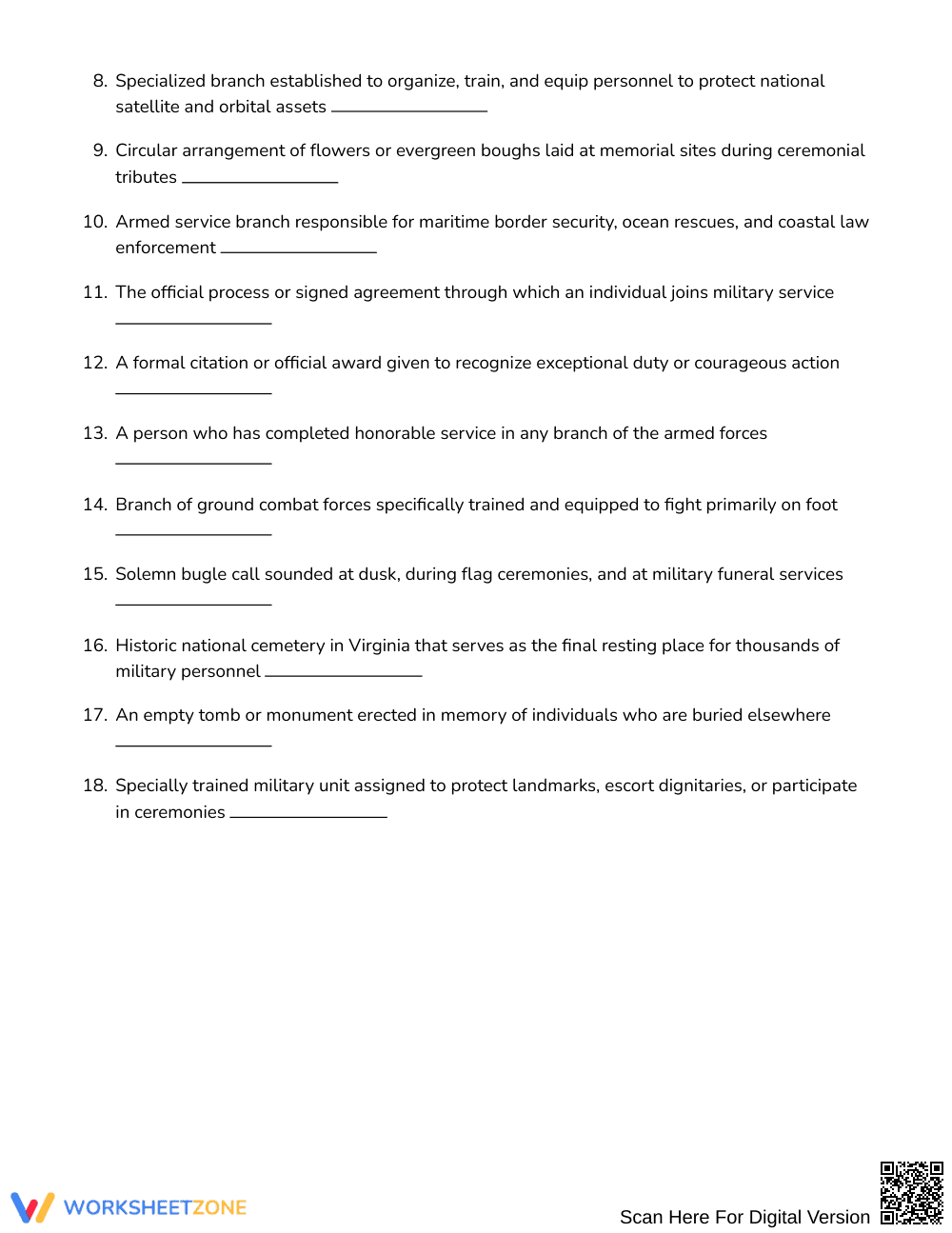
This three-page instructional activity features a comprehensive puzzle centered on military remembrance. Students read 18 historical clues defining essential concepts such as the Tomb of the Unknown, Armistice, and Cenotaph. A shuffled word bank provides reference support, while the multi-page answer key displays highlighted grid solutions for efficient self-checking or teacher verification.
Puzzle Mechanics and Structure
The activity centers on a large 20 x 20 letter grid designed to challenge middle school vocabulary retention. Hidden words run in all eight possible orientations across the letter matrix: north, northeast, east, southeast, south, southwest, west, and northwest. Students work from a randomized, shuffled word bank accompanied by contextual clues. Each clue provides a precise historical definition, requiring students to match formal civic meanings—such as military funeral protocols or specific service branches—with target terms before searching the dense letter array.
Standards Alignment
This resource serves as targeted vocabulary enrichment and is not aligned to a specific state or national content standard. It reinforces thematic background knowledge in secondary U.S. history curricula, specifically supporting units addressing 20th-century American conflicts, civic observances, and veteran recognition traditions.
How to Use It
Deploy this activity during November civic units as an introductory exploration or as a cumulative review following direct instruction on World War I and Armistice Day. For effective formative assessment, observe whether students identify terms directly from the contextual clues before scanning the grid or rely solely on letter-matching from the bank. The complete activity takes approximately 25 to 35 minutes to finish.
Who It's For
This resource is created for general education and inclusion classrooms in Grades 7–8 studying American history and civic holidays. It pairs naturally with informational reading passages on Arlington National Cemetery or primary source lessons covering the 1918 Armistice.
Vocabulary acquisition in secondary social studies requires repeated, meaningful contact with discipline-specific terminology rather than isolated memorization drills. This Grades 7–8 resource focuses on people, places, and symbols of remembrance, providing middle school learners with structured definitional clues for 18 historical terms before they locate them within a 20 x 20 letter grid. According to Fisher & Frey (2014), intentional word exposure through varied retrieval formats solidifies domain-specific terminology and directly supports complex reading comprehension across content areas. By actively connecting formal definitions of civic institutions—including the Tomb of the Unknown, armistice agreements, and military branches—to an engaging puzzle search, students internalize the language of national remembrance. The three-page activity functions as an independent enrichment supplement that builds contextual fluency, reinforcing historical literacy and civic knowledge without requiring specialized teacher preparation or extensive instructional setup.


