































Ready Symbol, Motif & Irony Worksheet | Grade 10 English II

Paste this activity's link or code into your existing LMS (Google Classroom, Canvas, Teams, Schoology, Moodle, etc.).
Students can open and work on the activity right away, with no student login required.
You'll still be able to track student progress and results from your teacher account.
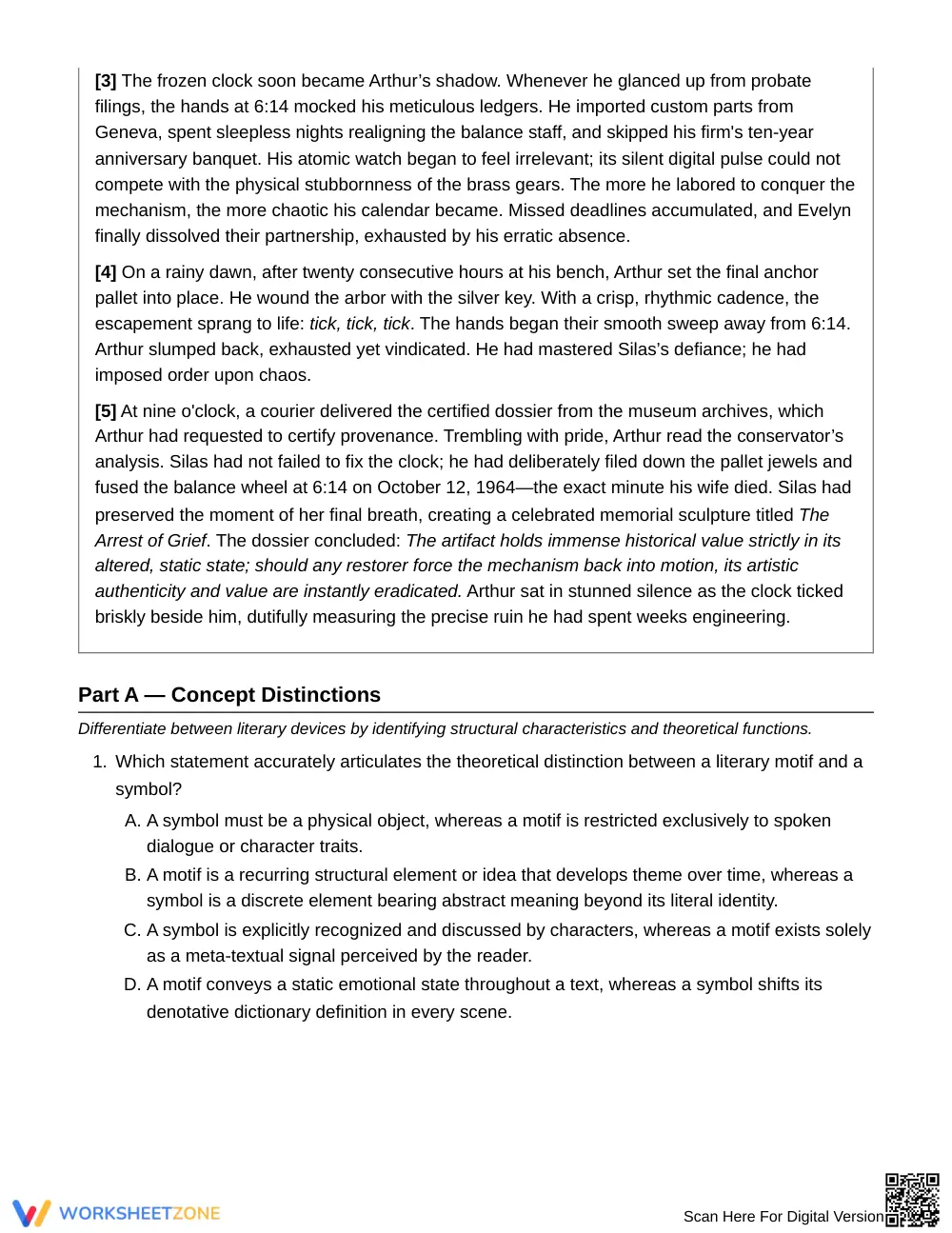
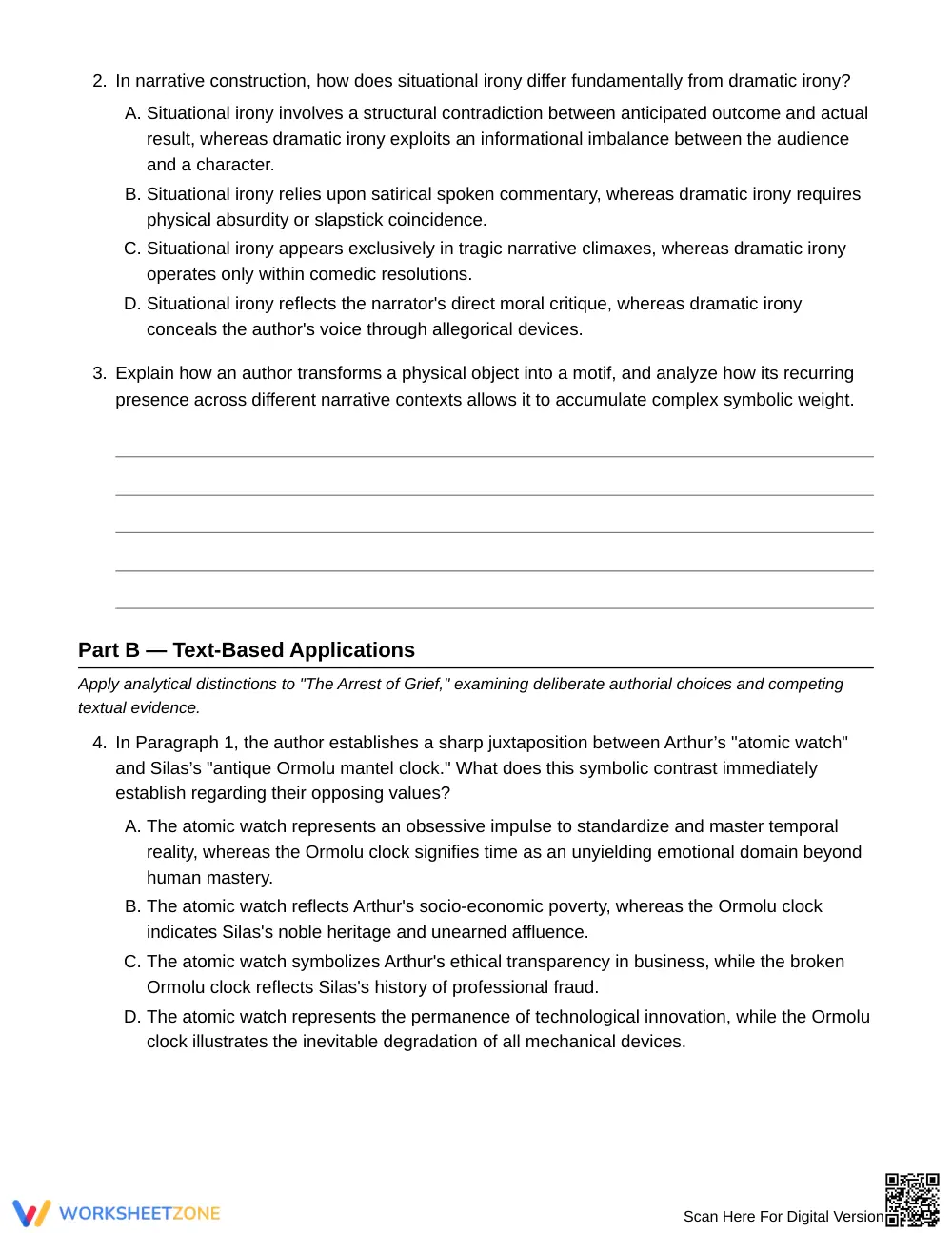
This rigorous Grade 10 English II worksheet equips high school readers to distinguish between symbols, motifs, and irony through rigorous textual analysis. Students evaluate the original short narrative “The Arrest of Grief,” dissecting how repeated motifs and situational irony interact with central symbols to build thematic complexity.
At a Glance
- Grade: 10 · Subject: English II
- Standard:
RL.9-10.2— Determine a theme and analyze in detail its development over text.- Skill Focus: Symbol, Motif, and Irony Distinctions
- Format: 6 pages · 10 problems · Answer key included · PDF
- Best For: Close reading and literary analysis mastery
- Time: 45–60 minutes
What's Inside
The resource begins with a structured theoretical reference box establishing precise definitions for symbols, recurring motifs, and three distinct forms of irony. Following the full-length reading passage, students complete 10 rigorous analytical tasks arranged across 6 pages, supported by a 4-page comprehensive answer key containing exemplar written responses and text citations.
Skill Progression
- Guided Practice (Part A, Tasks 1–3): Clarifies theoretical definitions through multiple-choice discrimination and a short-answer structural explanation with baseline definitions provided.
- Supported Practice (Part B, Tasks 4–8): Applies concepts directly to specific narrative excerpts, examining how the Ormolu clock, the 6:14 motif, and dramatic paradoxes interact.
- Independent Practice (Part C, Tasks 9–10): Demands open-ended written synthesis where students construct evidence-grounded arguments analyzing theme development and authorial intent.
This sequence implements a gradual-release instructional model, shifting students systematically from conceptual recognition to sophisticated literary critique.
Standards Alignment
This activity aligns directly with standard RL.9-10.2: Determine a theme or central idea of a text and analyze in detail its development over the course of the text, including how it emerges and is shaped and refined by specific details. Both standard codes can be copied directly into lesson plans, IEP goals, or district curriculum mapping tools.
How to Use It
Deploy this worksheet after direct instruction on literary devices to transition students into independent close reading. During Part B, check for understanding by monitoring how students differentiate Silas's recurring 6:14 time stamp as an evolving motif rather than an isolated symbol. For a post-reading activity, assign Part C as a formal formative assessment. The full activity requires approximately 45 to 60 minutes of focused analytical time.
Who It's For
Designed for tenth-grade secondary English students, this resource includes targeted vocabulary scaffolding in the opening framework for striving readers and complex thematic questions for advanced learners. Pair this printable with an introductory anchor chart on figurative language or short fiction units examining dramatic irony.
According to research by Fisher & Frey (2014) on close reading routines, high school literacy achievement improves when students evaluate complex short texts through text-dependent questions that isolate authorial craft. Aligning with standard RL.9-10.2, this resource trains learners to untangle subtle craft elements by evaluating how recurring motifs and situational irony work together to construct a text's central theme. The explicit structure of the instructional framework provides secondary students with the academic vocabulary necessary to articulate how physical symbols transform into broader thematic arguments.


