




























Views
Downloads




Ready Plate-Tectonic Claims Worksheet | Grade 8 Science

Paste this activity's link or code into your existing LMS (Google Classroom, Canvas, Teams, Schoology, Moodle, etc.).
Students can open and work on the activity right away, with no student login required.
You'll still be able to track student progress and results from your teacher account.
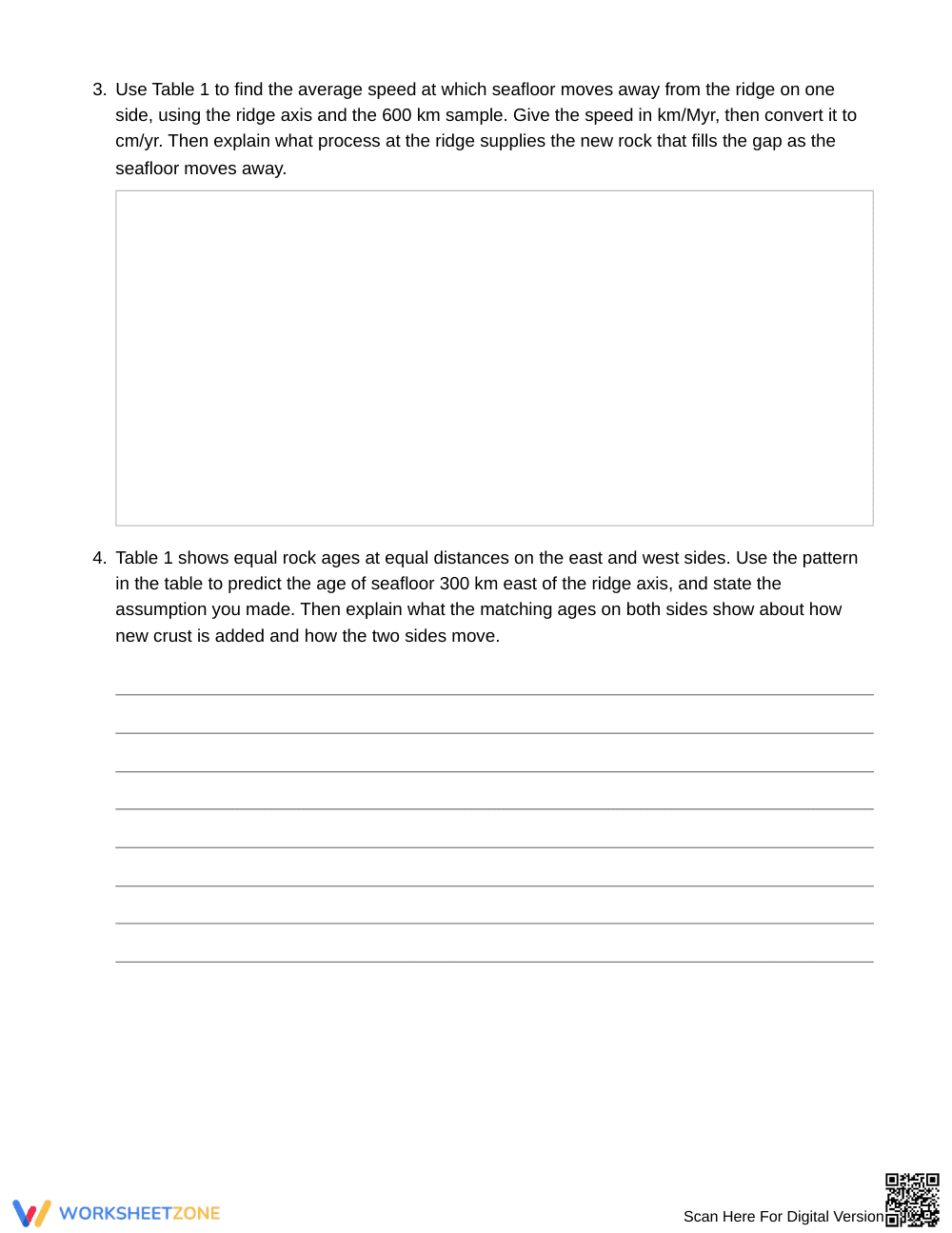
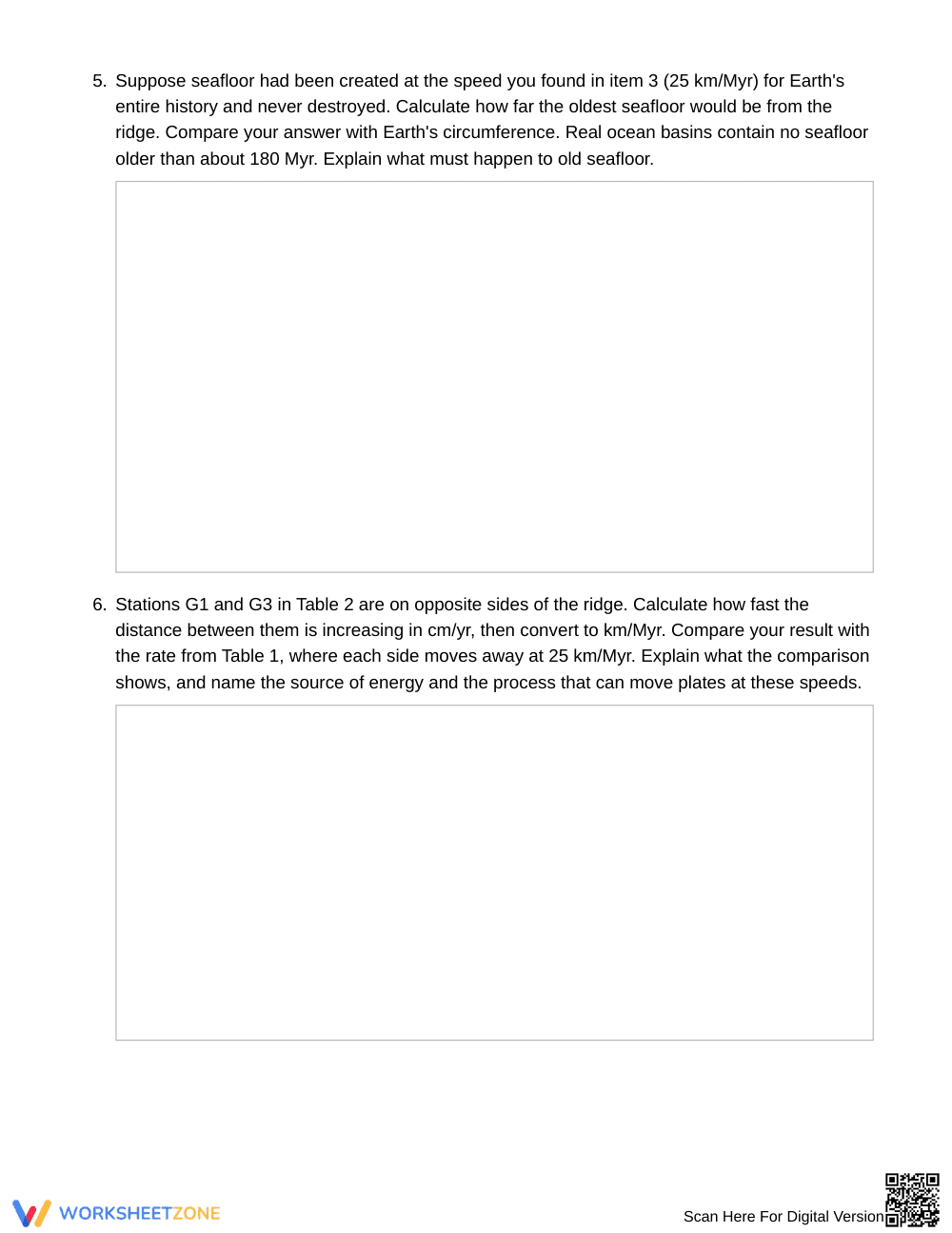
This worksheet teaches Grade 8 students to defend a plate-tectonic explanation with evidence, mechanism, and a clear claim. Students work from synthetic seafloor and GPS data, calculate plate speeds, and judge competing student claims, so they leave able to justify an Earth-science conclusion with specific numbers.
At a Glance
- Grade: 8 · Subject: Science
- Standard: Plate tectonics reasoning — cite data to support or reject a claim about moving plates
- Skill Focus: Defending plate-tectonic claims with evidence and mechanism
- Format: 6 pages · 8 problems · Answer key included · PDF
- Best For: Unit review and argument practice
- Time: 45–60 minutes
What's Inside
Three parts build the argument. Part A asks students to choose relevant evidence from a six-item observation list. Part B uses a seafloor-age table and a GPS table for rate calculations and mechanism explanations. Part C presents two pairs of competing student claims. A reference box with constants and an evidence, mechanism, claim frame supports students. The PDF runs 6 pages, with a separate 4-page answer key.
Skill Progression
- Guided practice: Part A, 2 tasks. The observation list and reasoning frame narrow the choices.
- Supported practice: Part B, 4 tasks. Constants are provided; students calculate speeds with units and explain the process.
- Independent practice: Part C, 2 tasks. Students weigh competing claims using only the data.
The sequence follows gradual release: I Do, We Do, You Do.
Standards Alignment
This worksheet targets the Grade 8 practice of constructing evidence-based explanations about seafloor spreading and continental movement: using data to support a claim, connecting it to a mechanism, and ruling out a competing claim. Teachers can copy the skill description directly into lesson plans or district curriculum mapping tools.
How to Use It
- After direct instruction: assign Parts A and B as guided review of seafloor spreading and subduction.
- Before a unit assessment: use Part C as a written argumentation check.
Formative tip: as students work, listen for whether they cite specific numbers or only general statements. Expect 45–60 minutes in total.
Who It's For
Designed for Grade 8 science students who have met plate tectonics and need practice with data-based argument. The reference box and reasoning frame support learners who need structure. A short seafloor-spreading lesson or a world map pairs well with it.
Defend a Plate-Tectonic Explanation is a Grade 8 science worksheet that teaches students to support claims about moving plates using the reasoning sequence evidence, mechanism, claim. Across 6 pages and 8 tasks, students analyze synthetic seafloor-age and GPS data, calculate a spreading rate of 25 km per million years, and compare it with a 2.5 cm per year GPS measurement. They then evaluate competing student claims about fixed ocean floors and continents plowing through water. The structure follows the gradual-release model described by Fisher & Frey (2014), which moves learners from guided work toward independent application of a skill. A 4-page answer key provides model answers and calculations. The resource suits unit review, formative assessment, and argumentation practice in middle school Earth science. Because it relies on clearly labeled synthetic data, students practice scientific reasoning without needing outside background knowledge of specific ocean basins.


