































Ready Pancreas & Glucose Word Search | Grades 8–10 Science

Paste this activity's link or code into your existing LMS (Google Classroom, Canvas, Teams, Schoology, Moodle, etc.).
Students can open and work on the activity right away, with no student login required.
You'll still be able to track student progress and results from your teacher account.
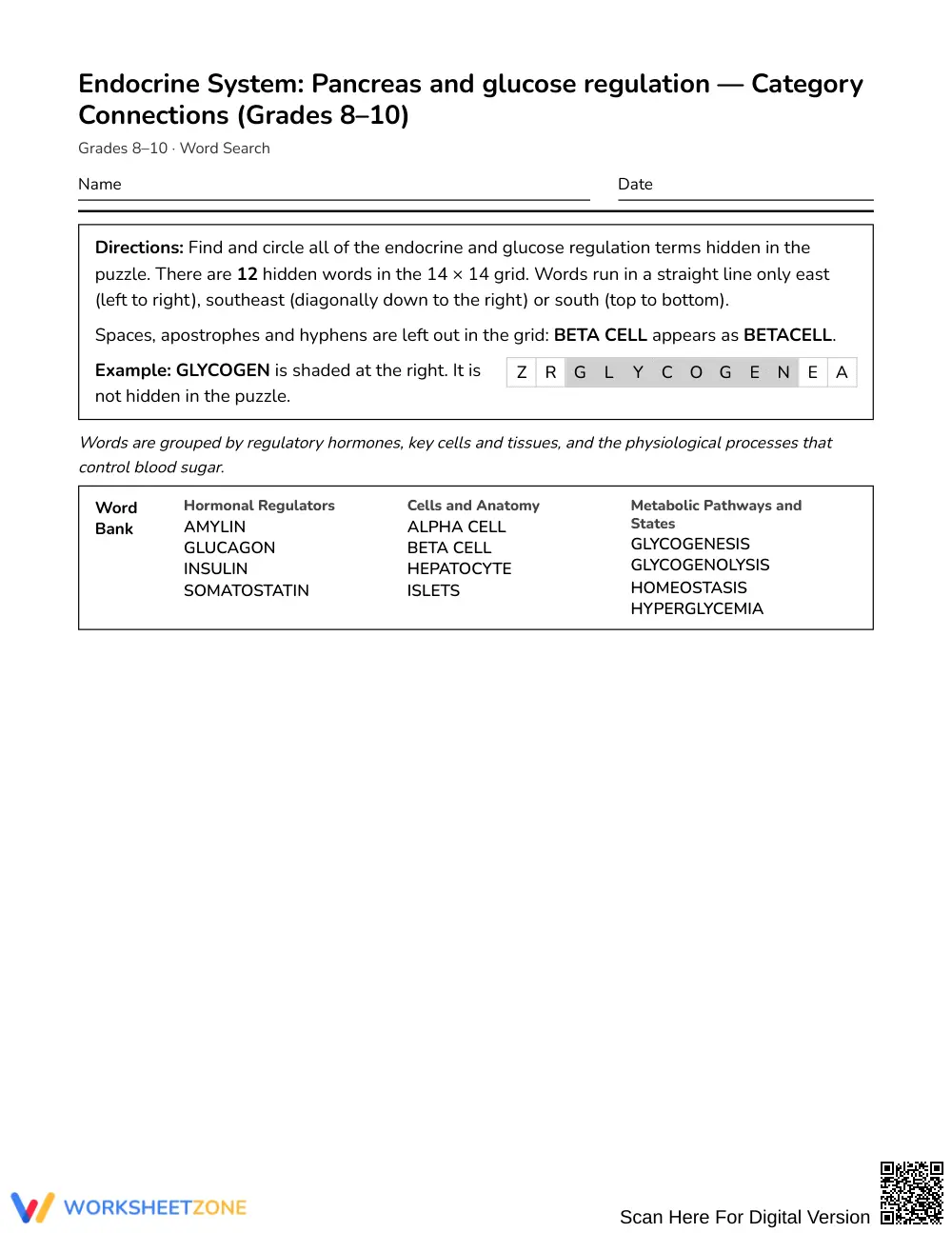
Reinforce endocrine anatomy and metabolic signaling with an engaging, low-stress review activity. This science word search challenges students to locate 12 essential vocabulary terms related to pancreatic function and blood sugar balance. Learners solidify terminology across hormonal signals, cellular structures, and regulatory feedback loops, preparing them for comprehensive human body system assessments.
At a Glance
- Grade: Grades 8–10 · Subject: Science
- Standard: Not standards-assessed — vocabulary enrichment
- Skill Focus: Pancreas and glucose regulation
- Format: 2 pages · 12 words · Answer key included · PDF
- Best For: Vocabulary review and sub plans
- Time: 15–25 minutes
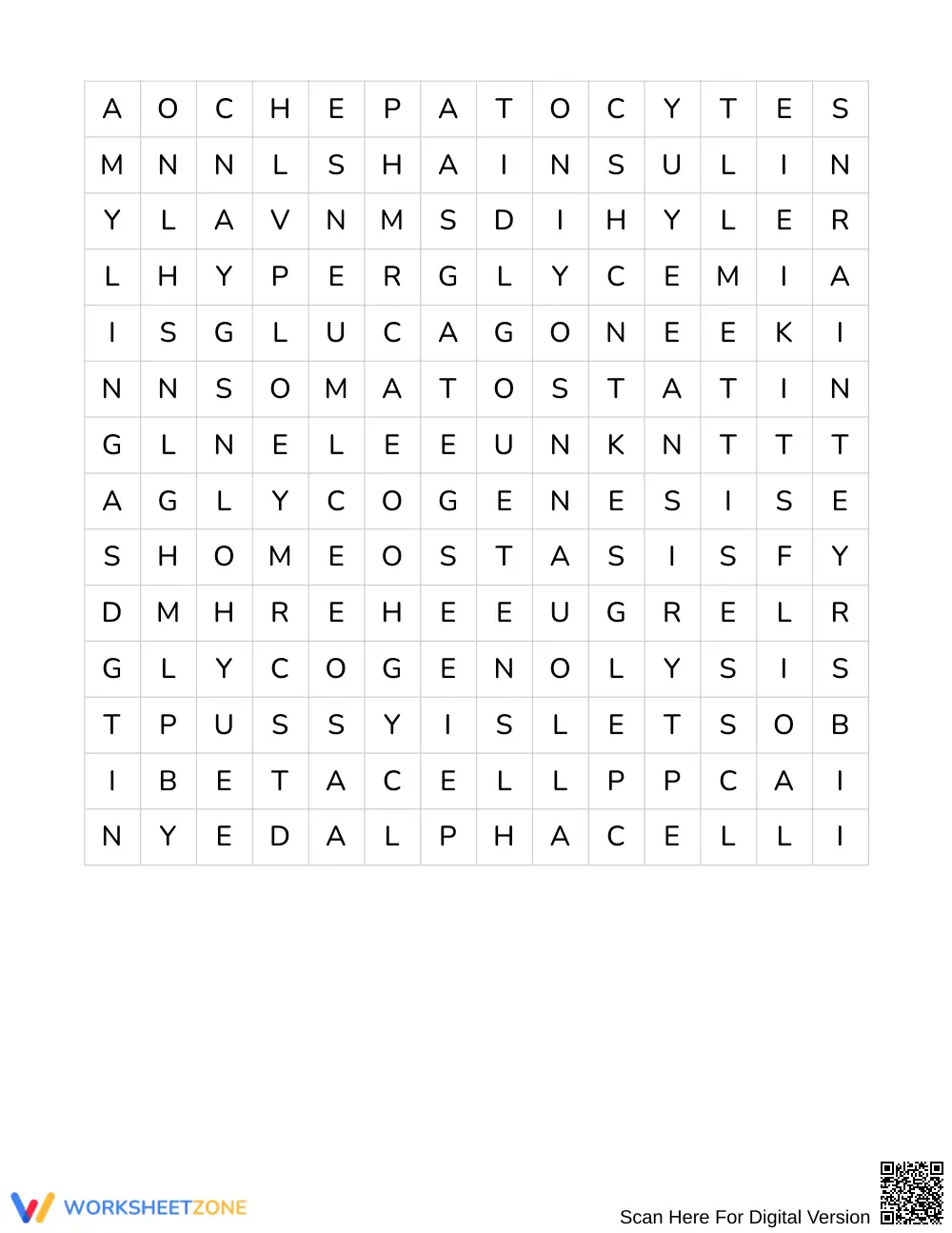
What's Inside: This 2-page print-and-go resource features a clean 14-by-14 letter grid and an organized word bank arranged by physiological categories. Rather than an unorganized list, terms are grouped under Hormonal Regulators, Cells and Anatomy, and Metabolic Pathways and States. Full definitions accompany each term, reinforcing functional biological concepts alongside puzzle-solving. A comprehensive answer key highlights every hidden term for rapid grading.
Puzzle Mechanics: Words are placed in a 14-by-14 letter grid running in three accessible directions: east (left to right), southeast (diagonal downward), and south (vertical downward). There are no reverse or backward placements, keeping cognitive energy directed toward term recognition and conceptual categorization rather than deciphering frustrating letter strings. Students scan the matrix to identify key endocrine regulators and metabolic processes based on the category clues provided.
Standards Alignment: This activity is designed for vocabulary enrichment and is not aligned to a specific state or national standard. It serves as a supplementary conceptual reinforcer within broader human physiology, endocrine system, or metabolic feedback units in middle and early high school life science courses.
How to Use It: Deploy this puzzle immediately after direct instruction on negative feedback loops as an independent processing check, or assign it as a zero-prep opening warm-up before a physiology laboratory. For a formative assessment check, ask students to write one sentence explaining how two discovered terms interact, such as insulin and hepatocytes, before leaving class. Expected completion time is 15 to 25 minutes.
Who It's For: Designed specifically for Grades 8–10 life science, biology, and introductory health classes. It provides scaffolded spelling support for multilingual learners and students requiring reading accommodations through categorized term lists. It pairs naturally with an endocrine system diagram labeling worksheet, interactive hormone feedback chart, or lecture slides on homeostasis.
Explicit vocabulary exposure in secondary biology directly supports conceptual comprehension during complex physiological units. According to Fisher & Frey (2014), intentional word exposure embedded in structured, low-stakes activities strengthens semantic associations and aids retrieval during downstream synthesis tasks. Endocrine system terminology presents significant orthographic and conceptual hurdles for adolescents, who must distinguish between related mechanisms like glycogenesis and glycogenolysis while tracking cellular origins in the pancreas. By categorizing regulatory hormones, target tissues, and metabolic pathways, this 12-word puzzle provides meaningful visual reinforcement of specialized scientific language. Students build morphological familiarity with root words and prefixes before encountering them in complex summative assessments or laboratory investigations, solidifying foundational literacy in human biology.


