

































Ready Narrative Ambiguity Worksheet | Grade 11 English III

Paste this activity's link or code into your existing LMS (Google Classroom, Canvas, Teams, Schoology, Moodle, etc.).
Students can open and work on the activity right away, with no student login required.
You'll still be able to track student progress and results from your teacher account.
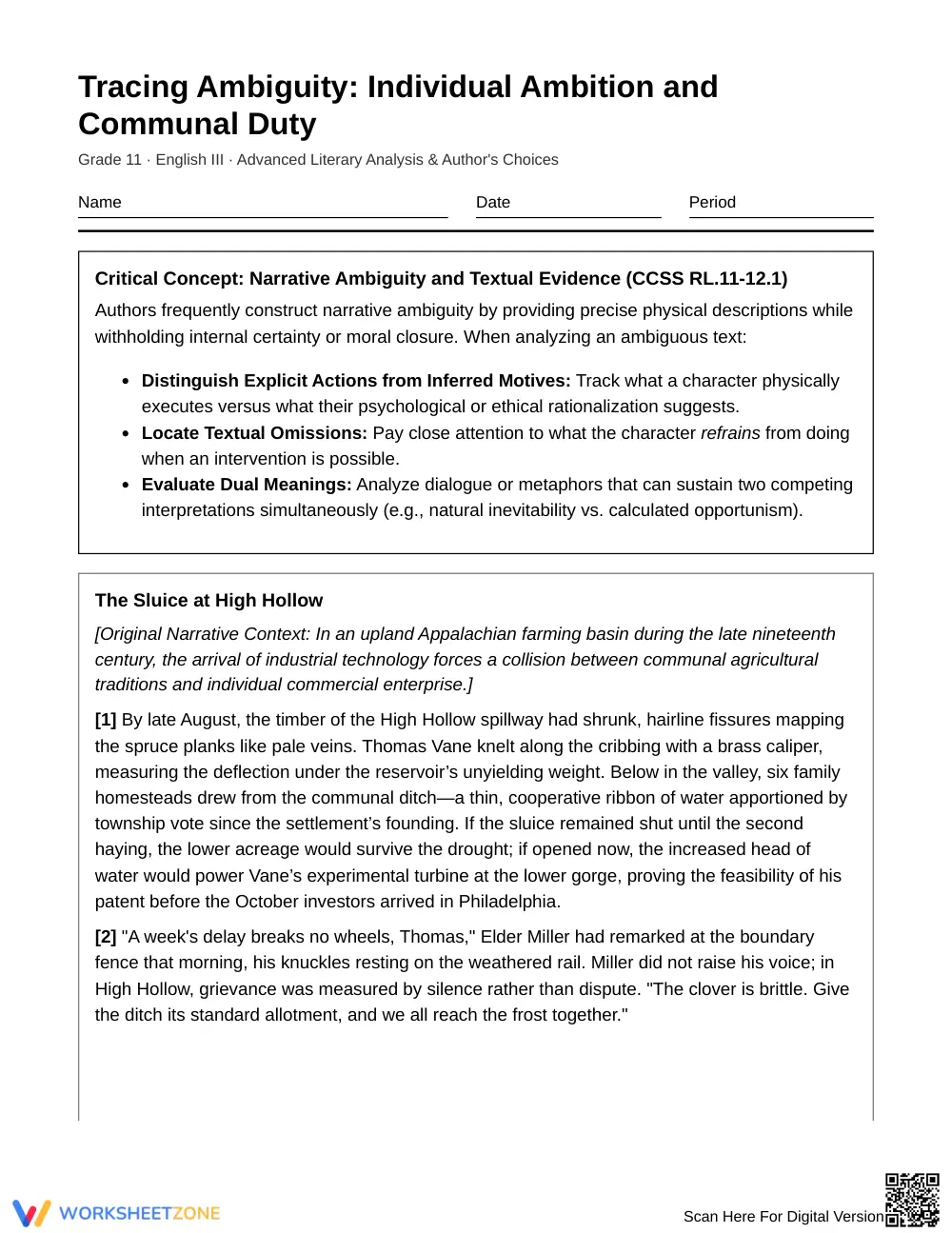
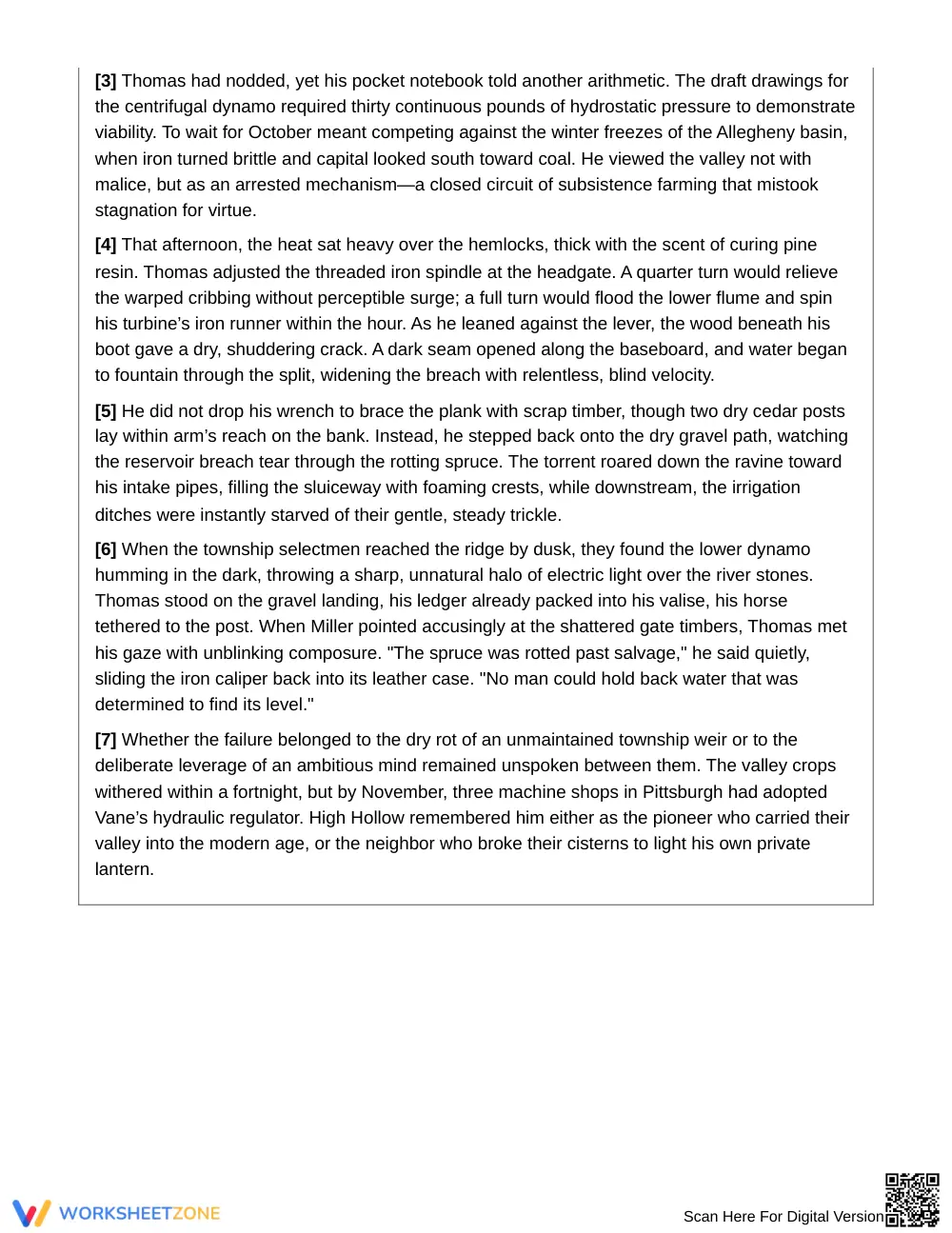
This Grade 11 literary analysis worksheet develops high school students' ability to trace narrative ambiguity and analyze nuanced character motives using rigorous textual evidence. Working with an original historical fiction text, students evaluate explicit actions against unspoken intentions, unpack dual meanings in dialogue, and construct defensible claims about complex authorial choices.
At a Glance
- Grade: 11 · Subject: English III
- Standard:
RL.11-12.1— Cite strong textual evidence to support analysis of ambiguous or complex literary texts- Skill Focus: Trace an Ambiguous Narrative Pattern
- Format: 6 pages · 10 problems · Answer key included · PDF
- Best For: Close reading and evidence-based analysis
- Time: 45–60 minutes
What's Inside
The 6-page printable packet features an original narrative, The Sluice at High Hollow, paired with a reference box defining narrative ambiguity. It delivers 10 rigorous tasks across three structured sections, including targeted multiple-choice items, text-dependent short responses, and an extended synthesis prompt, complete with a comprehensive 4-page answer key containing exemplar analyses.
Skill Progression
- Guided practice: Part A provides a modeled annotation of narrative omission and 3 scaffolded prompts prompting students to link concrete textual details to psychological justifications.
- Supported practice: Part B presents 5 independent analytical tasks, challenging learners to interpret mechanical metaphors, evaluate double entendres, and examine competing community viewpoints.
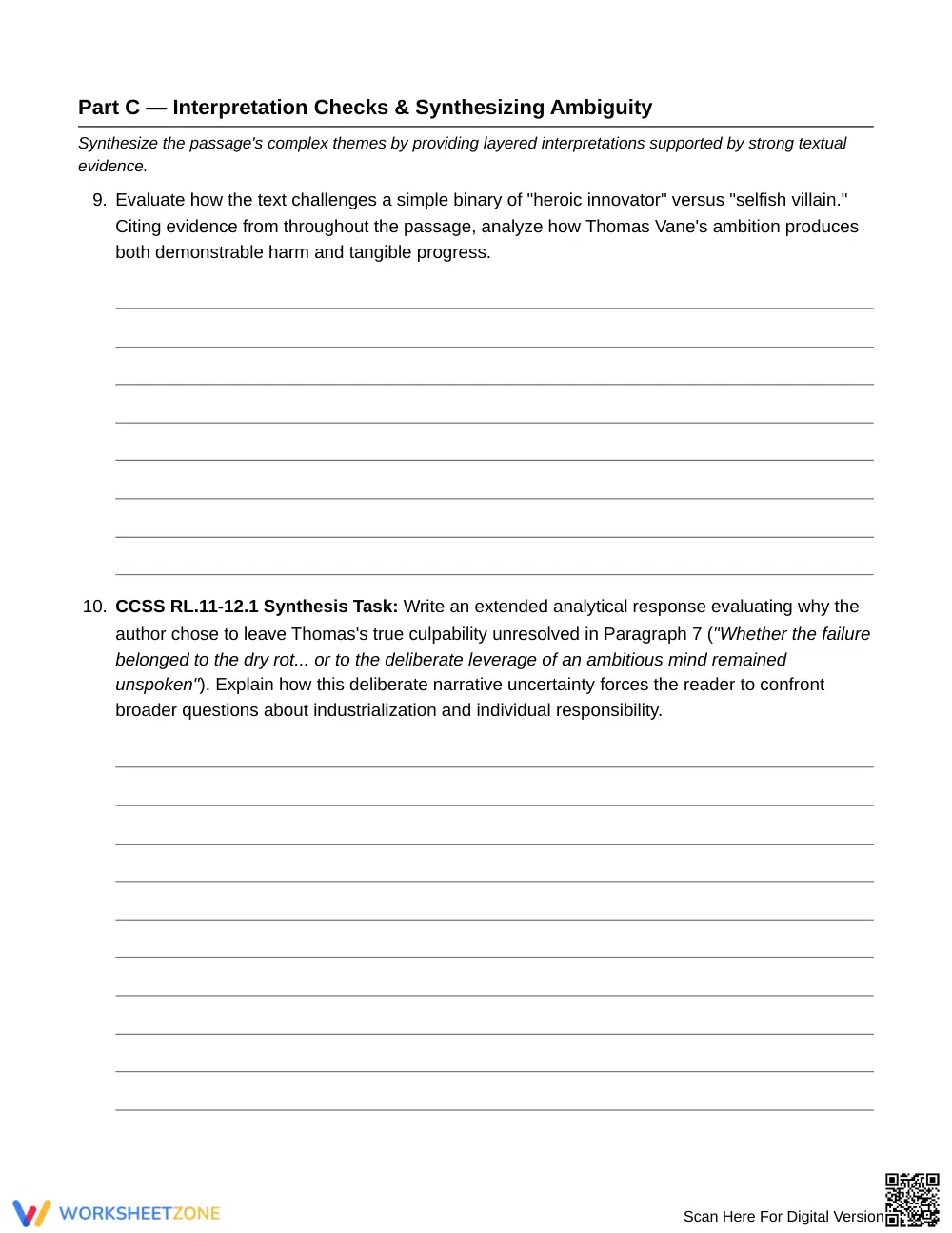
- Independent practice: Part C features 2 synthesis questions requiring students to articulate how unresolved narrative tensions convey broader historical and ethical themes.
This structured progression reflects the gradual release of responsibility model, guiding students from direct textual observation to independent, high-level literary synthesis.
Standards Alignment
This resource directly aligns with Common Core standard `RL.11-12.1`, which requires students to cite strong and thorough textual evidence to support analysis of what the text says explicitly as well as inferences drawn from the text, including determining where the text leaves matters uncertain. Both standard codes can be copied directly into lesson plans, IEP goals, or district curriculum mapping tools.
How to Use It
Use this resource during close reading units following direct instruction on narrative structure or characterization. It functions effectively as a paired-text analytical assessment or as small-group collaborative practice. When circulating during Part B, observe whether students identify what characters refrain from doing rather than focusing solely on explicit actions. The complete worksheet requires approximately 45 to 60 minutes of focused instructional time.
Who It's For
This worksheet is designed for Grade 11 English III and Advanced Placement Literature students mastering complex textual interpretation. Scaffolds support striving readers through explicit modeling, while the synthesis prompts extend advanced analytical thinkers. Pair this resource with classic American realism texts or industrial-era historical fiction.
According to research synthesized by Fisher & Frey (2014), instructional scaffolding that moves deliberately from modeled annotation to independent synthesis substantially increases student competency in evaluating complex literary devices. This Grade 11 English III resource targets standard RL.11-12.1 by training learners to trace narrative ambiguity through systematic textual analysis. By examining an original 19th-century industrial narrative, students distinguish explicit physical actions from inferred psychological motives, evaluate double meanings, and analyze deliberate authorial omissions. Rather than seeking simplistic moral resolutions, learners engage with 10 structured analytical tasks that require them to cite textual evidence where narrative details remain purposefully unresolved. The accompanying four-page teacher answer key provides comprehensive exemplar responses, criteria for evaluating competing interpretations, and clear evidence links. This rigorous design reinforces evidence-based reading habits necessary for college-level textual analysis and standardized assessments.


