





























Ready Embedded Counterpoint Worksheet | Grade 10 English II
Paste this activity's link or code into your existing LMS (Google Classroom, Canvas, Teams, Schoology, Moodle, etc.).
Students can open and work on the activity right away, with no student login required.
You'll still be able to track student progress and results from your teacher account.
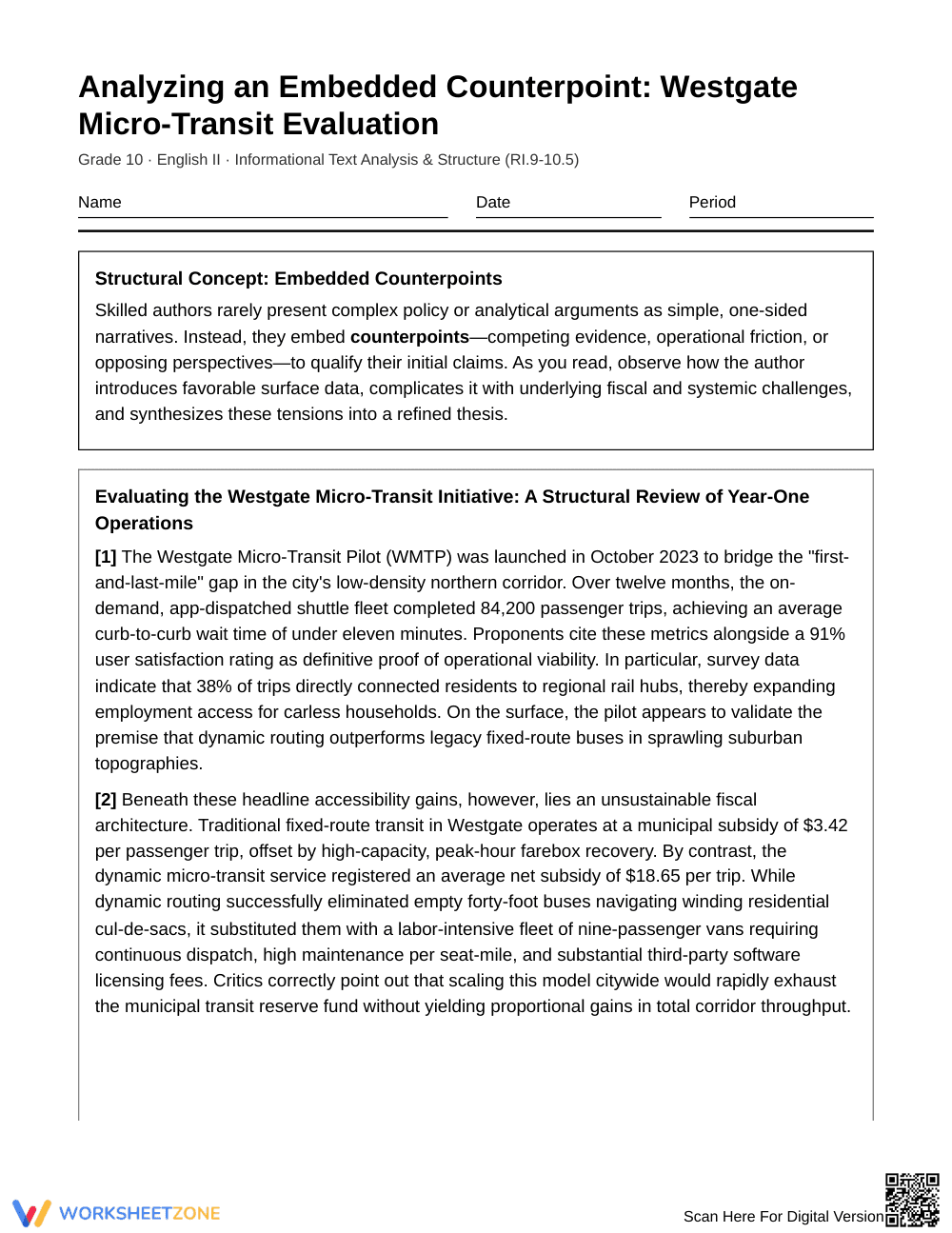
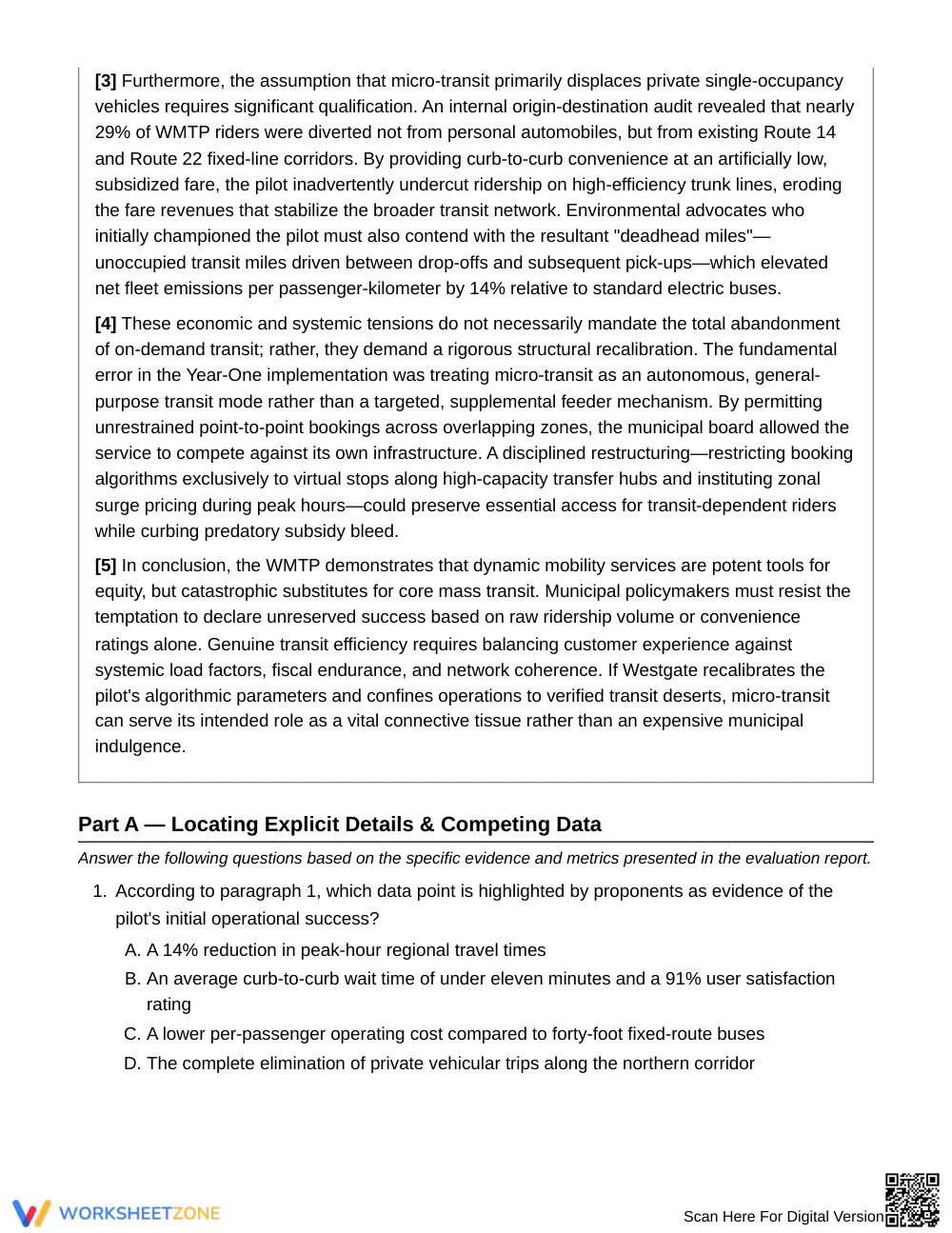
This informational text analysis worksheet guides Grade 10 students through evaluating how complex arguments embed competing claims. Working with an authentic evaluation of municipal micro-transit, learners trace how an author introduces favorable surface data, complicates initial claims with economic counterpoints, and synthesizes competing viewpoints into a refined structural thesis.
At a Glance
- Grade: 10 · Subject: English II
- Standard:
RI.9-10.5— Analyze how an author's claims are developed and refined by particular sentences or paragraphs- Skill Focus: Analyze an Embedded Counterpoint
- Format: 6 pages · 12 problems · Answer key included · PDF
- Best For: Informational text analysis and argument evaluation
- Time: 45–60 minutes
What's Inside
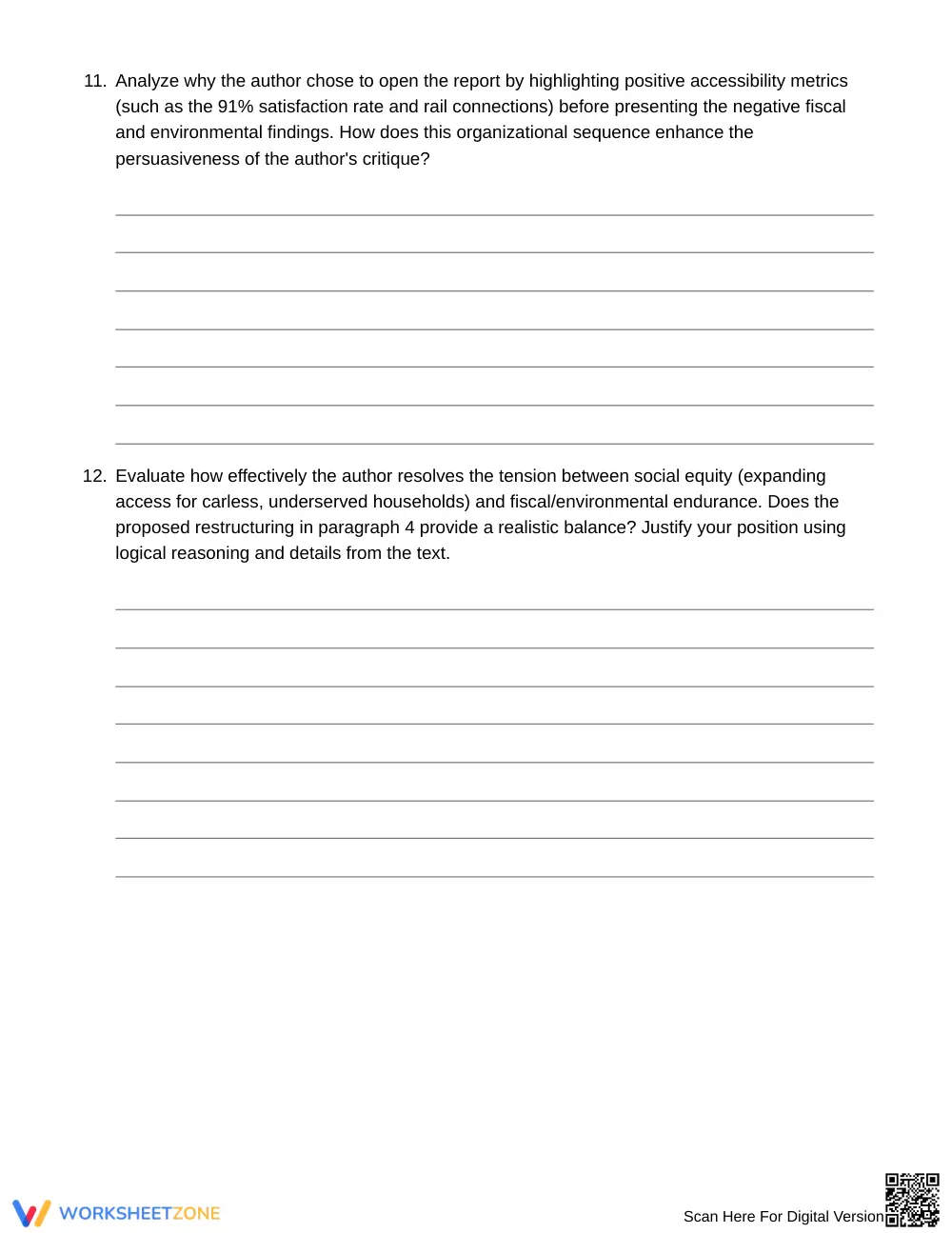
The 6-page printable resource features a five-paragraph informational passage examining transit policy alongside 12 text-dependent tasks. Questions range from multiple-choice evidence identification to multi-sentence structural analysis and evaluative defenses. A complete 4-page answer key provides model responses, analytical explanations, and direct paragraph citations for swift grading.
Skill Progression
- Guided practice (Part A, Problems 1–3): Students identify explicit baseline metrics and locate competing data points with low structural scaffolding.
- Supported practice (Part B, Problems 4–9): Learners examine transitions, paragraph-level structural shifts, and deliberate word choices with targeted prompts.
- Independent practice (Part C, Problems 10–12): Students compose evaluative arguments defending authorial intent, structural sequencing, and policy balance without sentence frames.
This structured progression reflects the gradual release of responsibility model, guiding readers from textual recall to sophisticated rhetorical critique.
Standards Alignment
This resource focuses on `RI.9-10.5`: Analyze in detail how an author's ideas or claims are developed and refined by particular sentences, paragraphs, or larger portions of a text. In addition, it supports `RI.9-10.8` by asking students to evaluate argument structure and underlying evidence. Both standard codes can be copied directly into lesson plans, IEP goals, or district curriculum mapping tools.
How to Use It
Deploy this worksheet after direct instruction on counterclaims, qualifying statements, and informational text structure. During mid-unit practice, have students annotate paragraph transitions before completing Part B in pairs. For formative assessment, examine student responses to Question 5; students who confuse individual convenience with systemic efficiency need targeted remediation on qualifying claims. Expected completion time is 45 to 60 minutes.
Who It's For
Designed for Grade 10 English II students, this activity supports general education classrooms and honors cohorts preparing for state assessments. Struggling readers benefit from targeted paragraph citations in question stems, while advanced learners tackle evaluative synthesis in Part C. Pair this worksheet with an anchor chart detailing structural transitions or a direct lesson on rhetorical qualifiers.
Mastering standard `RI.9-10.5` requires tenth-grade students to evaluate how authors qualify primary claims by introducing competing data and structural counterpoints within informational texts. According to Fisher & Frey (2014), purposeful close reading sequences that guide secondary students from locating explicit textual evidence to evaluating organizational craft yield significant gains in analytical writing and disciplinary literacy. By engaging with an authentic policy review of municipal micro-transit, learners analyze how writers embed economic friction, deadhead transit mileage, and subsidy variances to prevent simplistic, one-sided policy conclusions. The 12 scaffolded tasks move systematically across evidence retrieval, paragraph-level rhetorical evaluation, and reasoned authorial critique. This deliberate instructional progression equips high school readers to dissect nuanced expository arguments, identify underlying qualifications, and construct evidence-based evaluations of real-world civic documentation across both classroom assessments and standardized testing environments.


