































Ready Coping Word Search | Grades 7–8 Behavior Worksheets

Paste this activity's link or code into your existing LMS (Google Classroom, Canvas, Teams, Schoology, Moodle, etc.).
Students can open and work on the activity right away, with no student login required.
You'll still be able to track student progress and results from your teacher account.
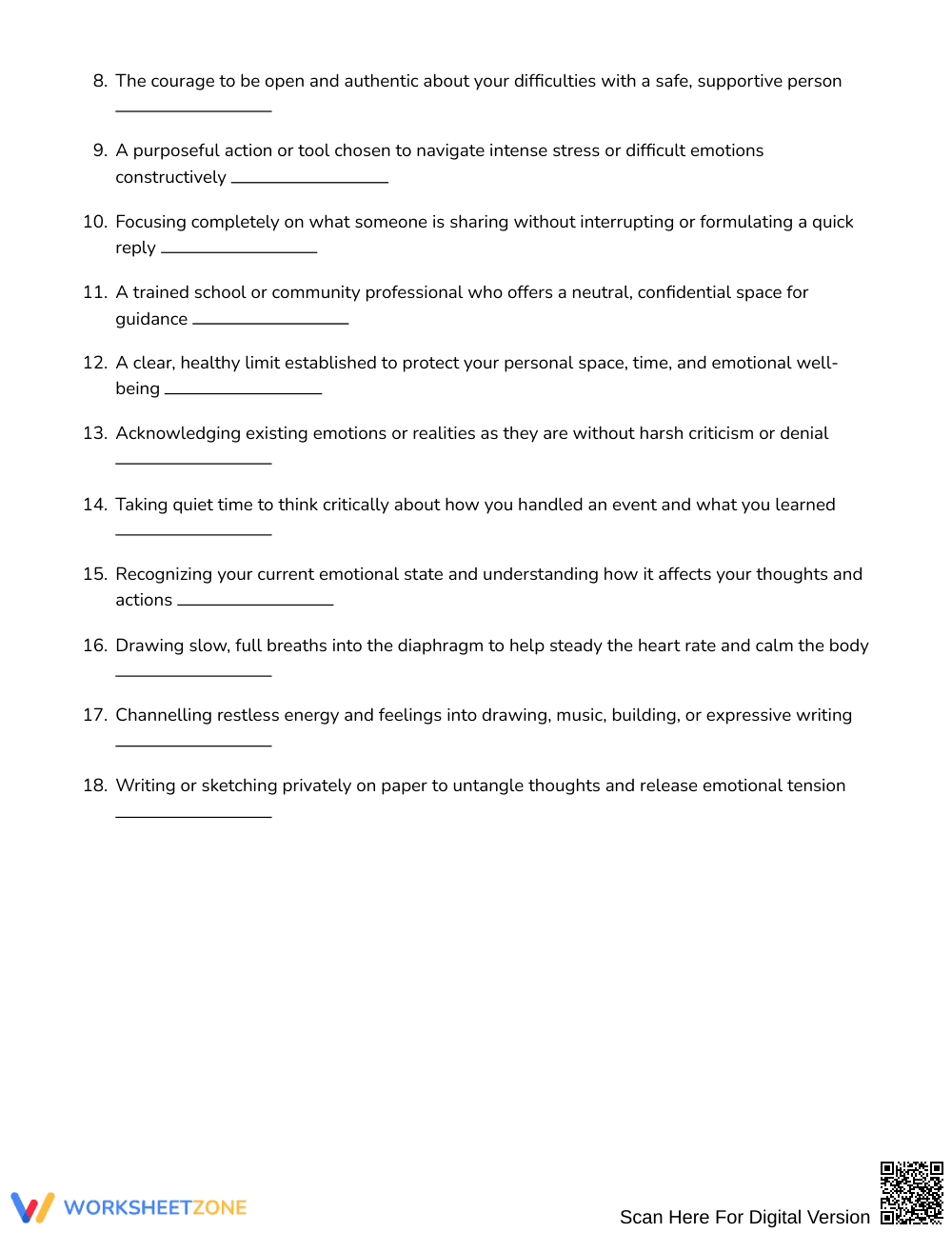
This Grades 7–8 coping skills word search reinforces essential social-emotional vocabulary by connecting emotional regulation concepts to clear definitions. Middle school students review healthy emotional choices, coping mechanisms, and support networks while decoding clues and locating 18 key terms in a letter grid, building self-awareness and practical stress-management language.
At a Glance
- Grade: Grades 7–8 · Subject: Behavior Worksheets
- Standard: Not standards-assessed — vocabulary enrichment
- Skill Focus: Coping skills, emotional choices, and support systems
- Format: 3 pages · 18 words · Answer key included · PDF
- Best For: SEL vocabulary review and calming practice
- Time: 20–30 minutes
What's Inside
This 3-page printable activity features 18 clues paired with a shuffled word bank and a dense puzzle grid. Each clue provides an operational definition for essential coping concepts such as grounding, resilience, and boundaries. A comprehensive 4-page answer key provides complete grid solutions with circled terms, enabling rapid self-checking or teacher verification.
How the Puzzle Works
This word search uses an expansive 20 x 20 letter grid designed to challenge middle school learners. Vocabulary terms run in all eight possible directions: north, northeast, east, southeast, south, southwest, west, and northwest. Students read each definition clue to identify the corresponding behavioral term, locate it within the shuffled word bank, and scan the grid to trace multiword and single-word coping concepts.
Standards Alignment
This activity provides targeted vocabulary enrichment and is not aligned to a formal academic standard. It supports foundational affective development by giving seventh and eighth graders a shared vocabulary to communicate emotional needs, identify personal triggers, and evaluate constructive behavioral choices.
How to Use It
Introduce this word search after direct instruction on stress management, or assign it as a calming transition activity following high-energy periods. While learners work, observe whether students identify terms directly from the definition clues or rely primarily on scanning the shuffled bank, noting concepts that need re-teaching. Expected completion time is 20 to 30 minutes.
Who It's For
This activity is designed for middle school students in Grades 7–8 who are strengthening self-regulation and interpersonal skills. It supports general classroom advisory periods, small-group counseling sessions, and tier-two behavioral interventions. Pair this word search with a coping strategies anchor chart or a personal reflection journal entry.
Explicit instruction in emotional regulation vocabulary equips middle school students with the precise language needed to process stress and access supportive resources. According to the RAND AIRS 2024 report on social-emotional learning, systematic integration of reflective behavioral terms into classroom routines strengthens emotional awareness and promotes proactive help-seeking behaviors among adolescents. When students encounter terms such as boundaries, grounding, and advocacy through structured definition-matching tasks, they internalize actionable coping strategies rather than relying on abstract guidance. This print-and-go word search reinforces 18 foundational emotional choices and support mechanisms across an engaging 20 x 20 puzzle format. Incorporating these vocabulary reviews during advisory periods, calm-down routines, or counseling groups provides students with low-stakes cognitive practice that bridges classroom expectations with personal well-being. The resulting emotional literacy empowers adolescents to articulate complex feelings, navigate challenging peer dynamics, and establish healthy communication habits throughout the school year.


