


























Views
Downloads


Ready Connotation & Emphasis Worksheet | Grade 9 English I
Paste this activity's link or code into your existing LMS (Google Classroom, Canvas, Teams, Schoology, Moodle, etc.).
Students can open and work on the activity right away, with no student login required.
You'll still be able to track student progress and results from your teacher account.
This Grade 9 English I worksheet equips high school students to analyze how word choice and sentence architecture create literary meaning. Working through an original narrative passage and 10 analytical prompts, learners examine connotative nuance, end-focus placement, and parallel syntax to evaluate tone, psychological conflict, and authorial purpose.
At a Glance
- Grade: 9 · Subject: English I
- Standard:
RL.9-10.4— Analyze how specific word choices and syntax shape meaning and tone- Skill Focus: Connotation and Sentence Emphasis
- Format: 6 pages · 10 problems · Answer key included · PDF
- Best For: Close reading and analytical writing units
- Time: 45–60 minutes
What's Inside
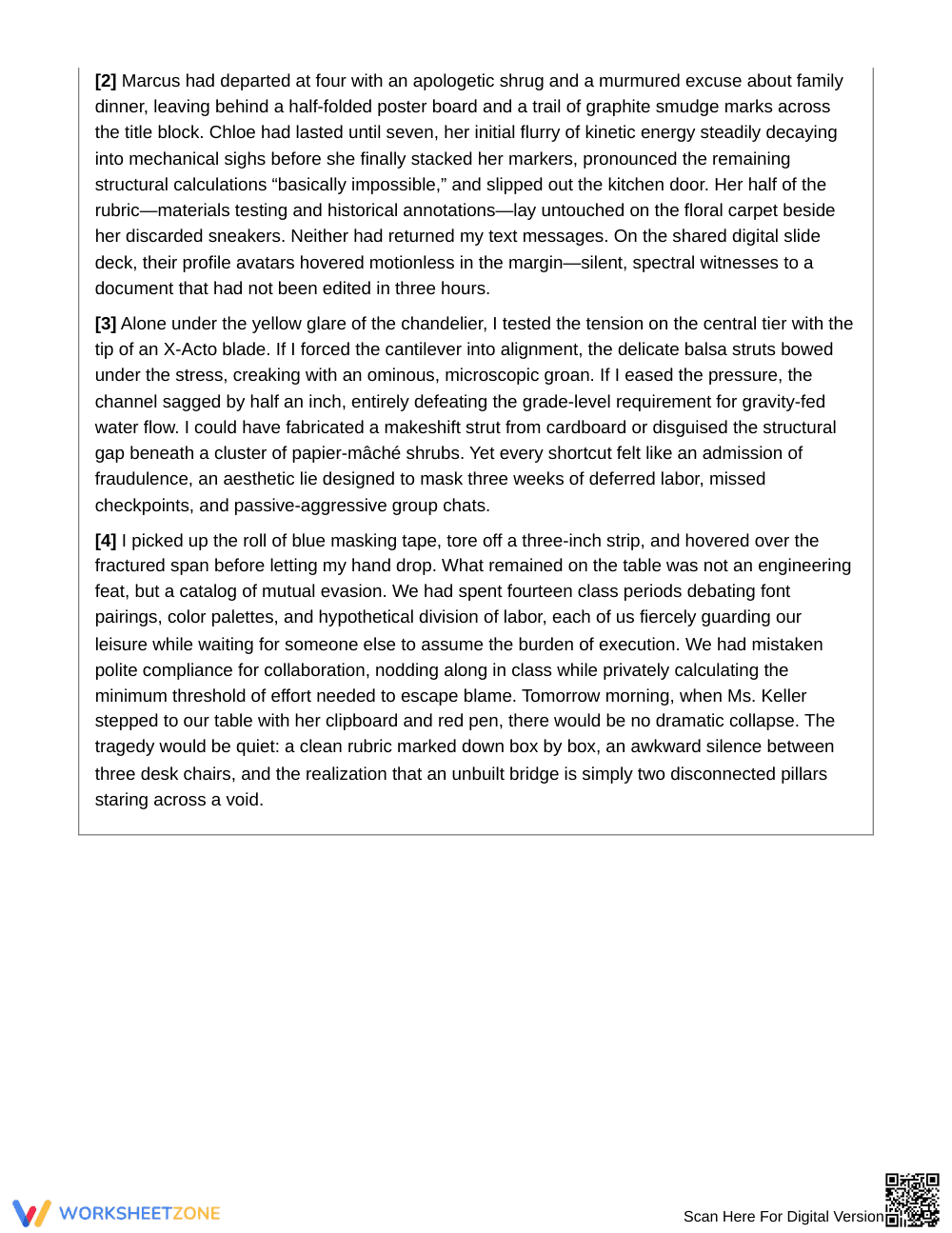
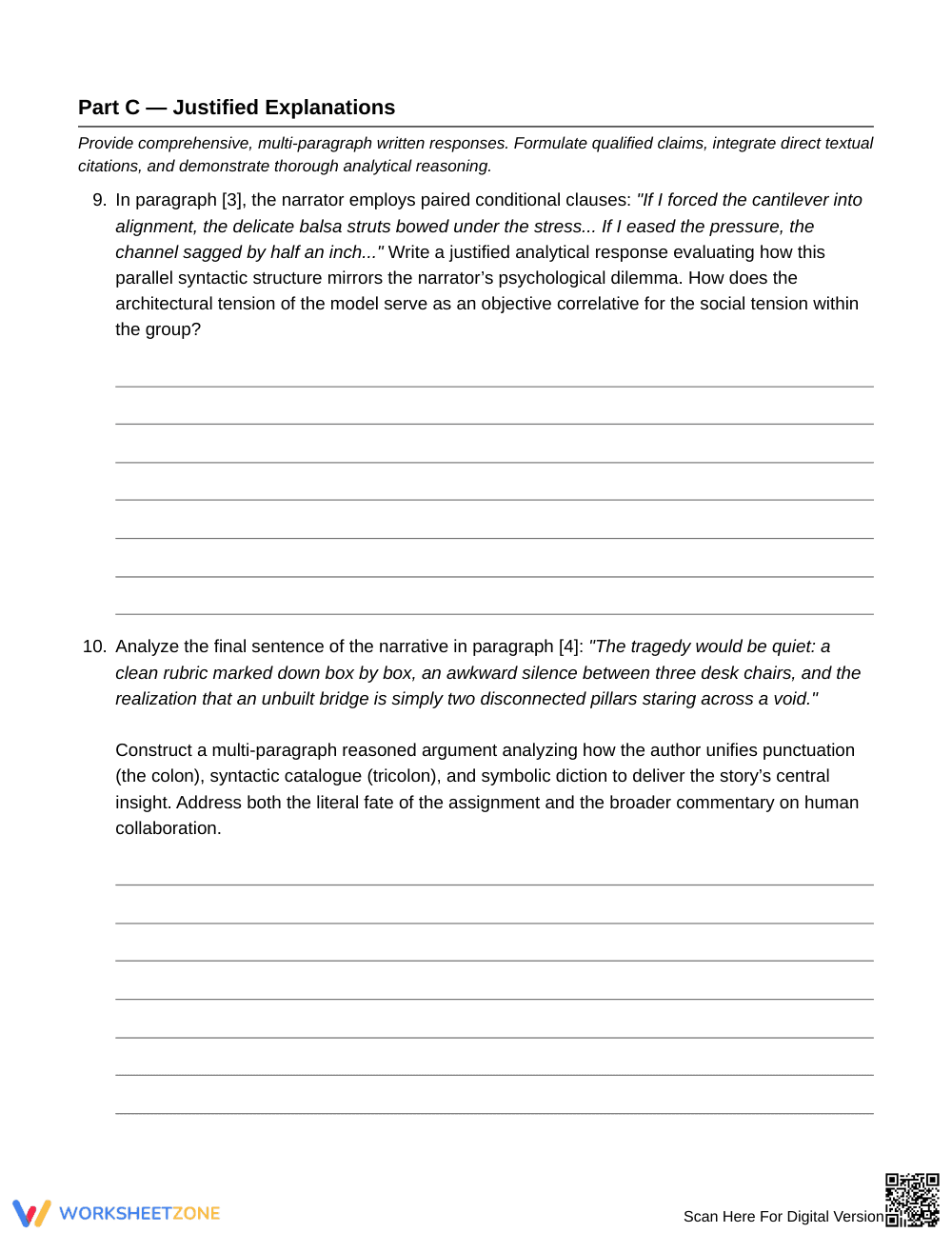
This 6-page printable resource includes a foundational reference guide defining connotation, end-focus, and syntactic interruption. Students analyze the complete literary passage "Artifacts of an Unbuilt Monument" across 10 rigorous tasks. A 4-page answer key provides complete model responses with textual evidence.
Skill Progression
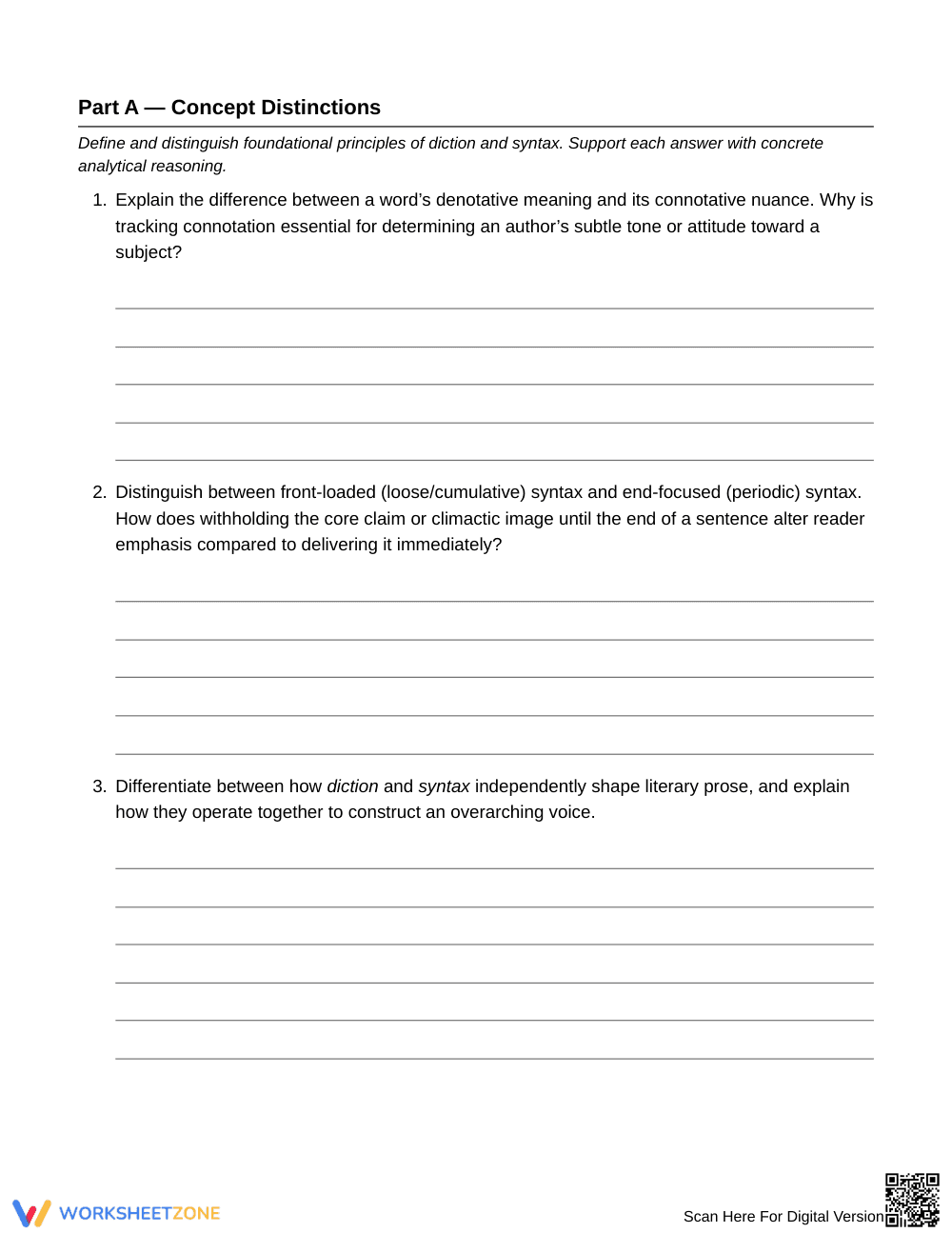
- Guided Practice: Tasks 1–3 define denotation versus connotation, compare sentence focus types, and contrast diction with syntax.
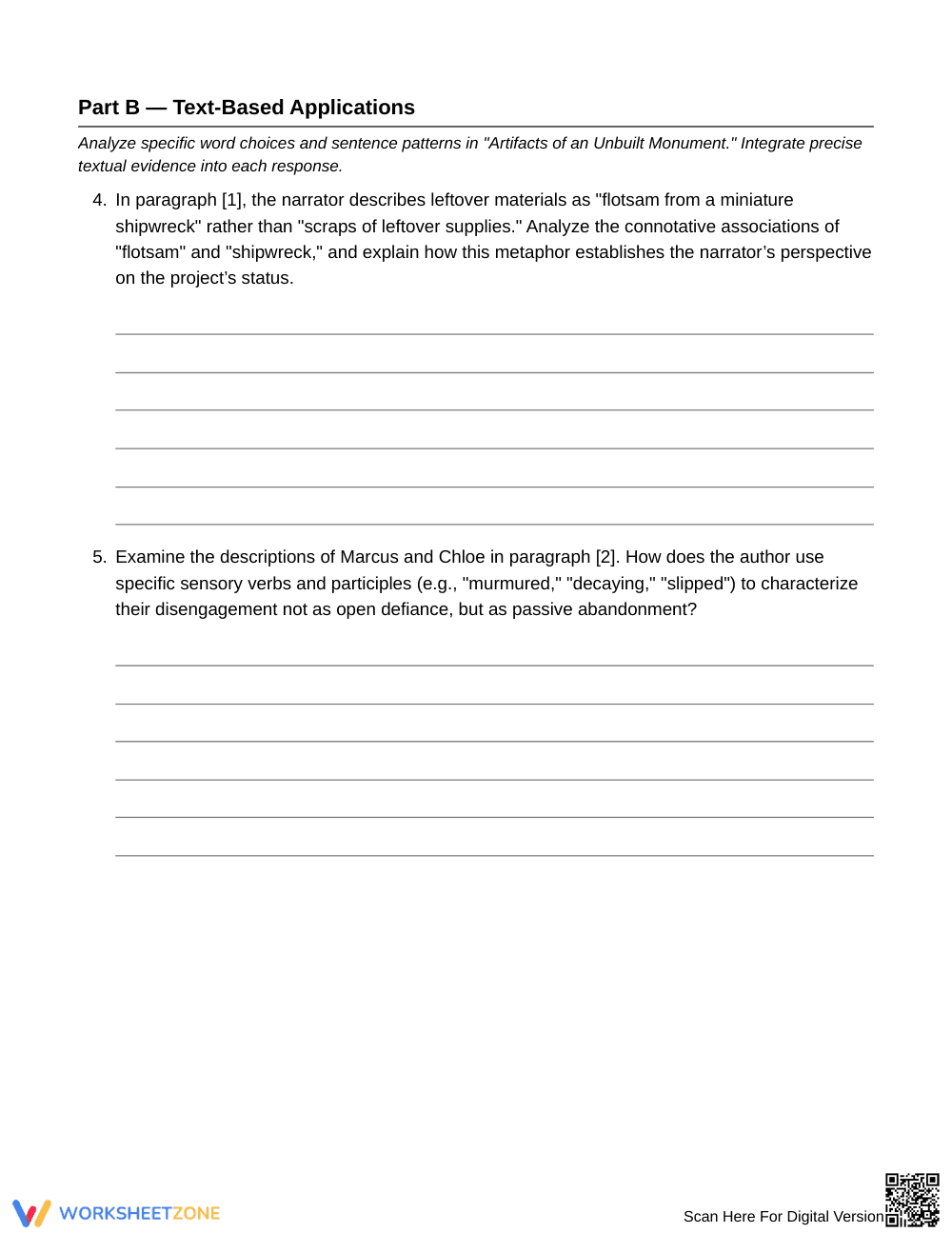
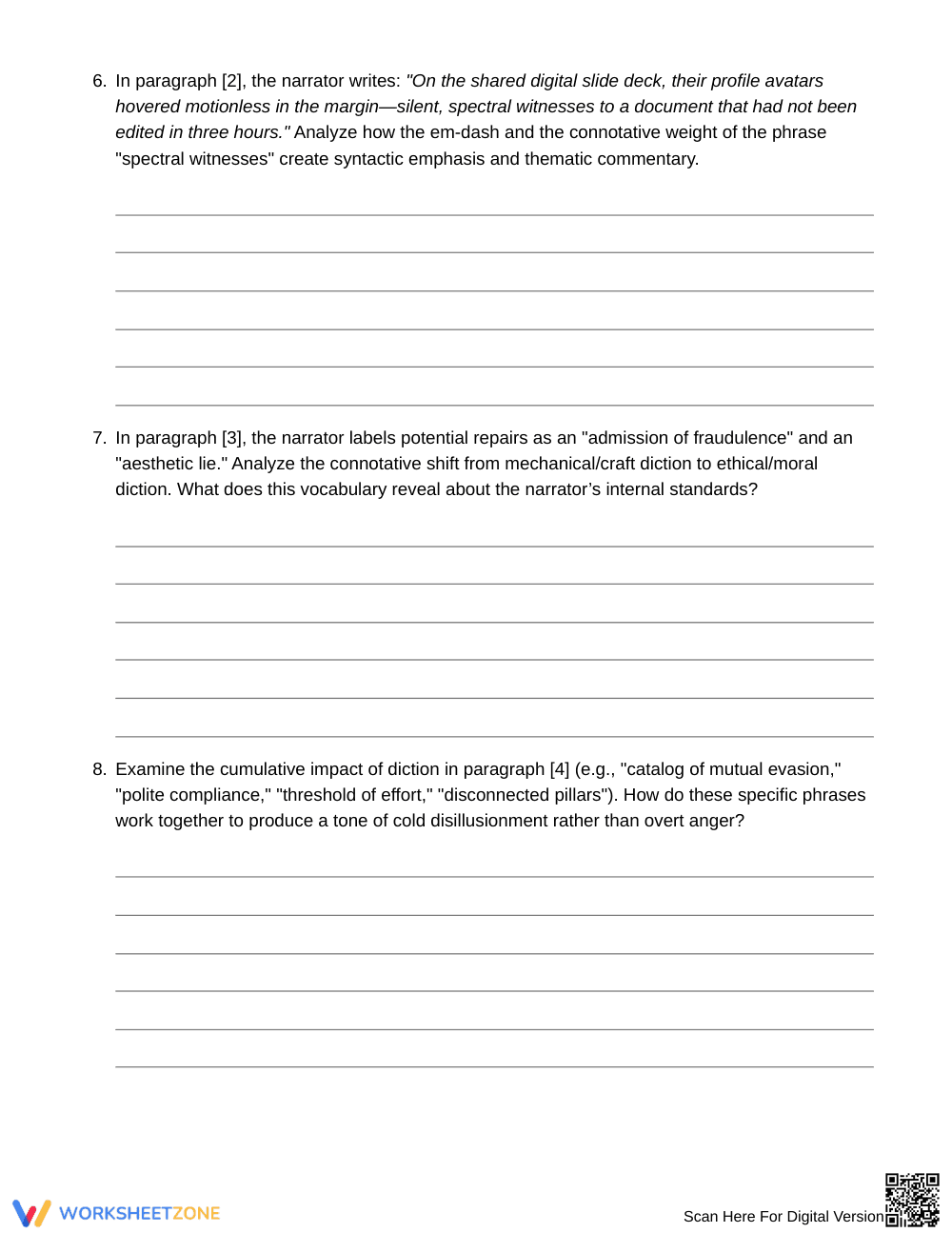
- Supported Practice: Tasks 4–8 evaluate textual evidence, analyzing connotations of metaphors, verb choices, em-dashes, and vocabulary shifts.
- Independent Practice: Tasks 9–10 require extended written arguments analyzing parallel clauses and tricolon syntax in the story's resolution.
This sequence implements the gradual release model, guiding ninth graders from core definitions to multi-paragraph literary analysis.
Standards Alignment
Aligned to `RL.9-10.4`: Determine the meaning of words and phrases, analyze connotative meanings, and evaluate cumulative impact on tone. The extended writing prompts support `W.9-10.1` through evidence-based claims. Both standard codes can be copied directly into lesson plans, IEP goals, or district curriculum mapping tools.
How to Use It
Use during the application phase following direct instruction on diction, or assign as a close-reading summative task. Formatively assess Task 4 early to ensure students analyze emotional nuance rather than merely defining terms. Most Grade 9 students finish in 45 to 60 minutes.
Who It's For
Ideal for Grade 9 English I learners developing textual analysis skills. Scaffold Tasks 9–10 with sentence starters for emerging writers, or challenge advanced students to evaluate character subtext. Pair with short story units or rhetorical analysis lessons.
Grade 9 literary analysis requires students to move beyond surface plot comprehension toward an explicit evaluation of authorial craft. Aligned directly to standard RL.9-10.4, this resource builds systematic student capacity to interpret connotative shades of meaning, evaluate periodic sentence structures, and explain how syntactic choices establish tone and characterization. According to Fisher & Frey (2014), structured close reading routines that integrate text-dependent questions with intentional analytical writing significantly strengthen student capacity to decode complex literary mechanics. By embedding a complete narrative text alongside scaffolded concept checks, targeted line-level inquiries, and extended written syntheses, this 10-task worksheet supports rigorous secondary ELA instruction. Students directly investigate how individual word choices and deliberate sentence cadences function together to generate subtext, preparing them for advanced high school literary discourse and standardized text-analysis assessments across secondary English language arts curricula.


