































Ready Apology Word Search | Grades 4–5 Behavior Worksheets

Paste this activity's link or code into your existing LMS (Google Classroom, Canvas, Teams, Schoology, Moodle, etc.).
Students can open and work on the activity right away, with no student login required.
You'll still be able to track student progress and results from your teacher account.
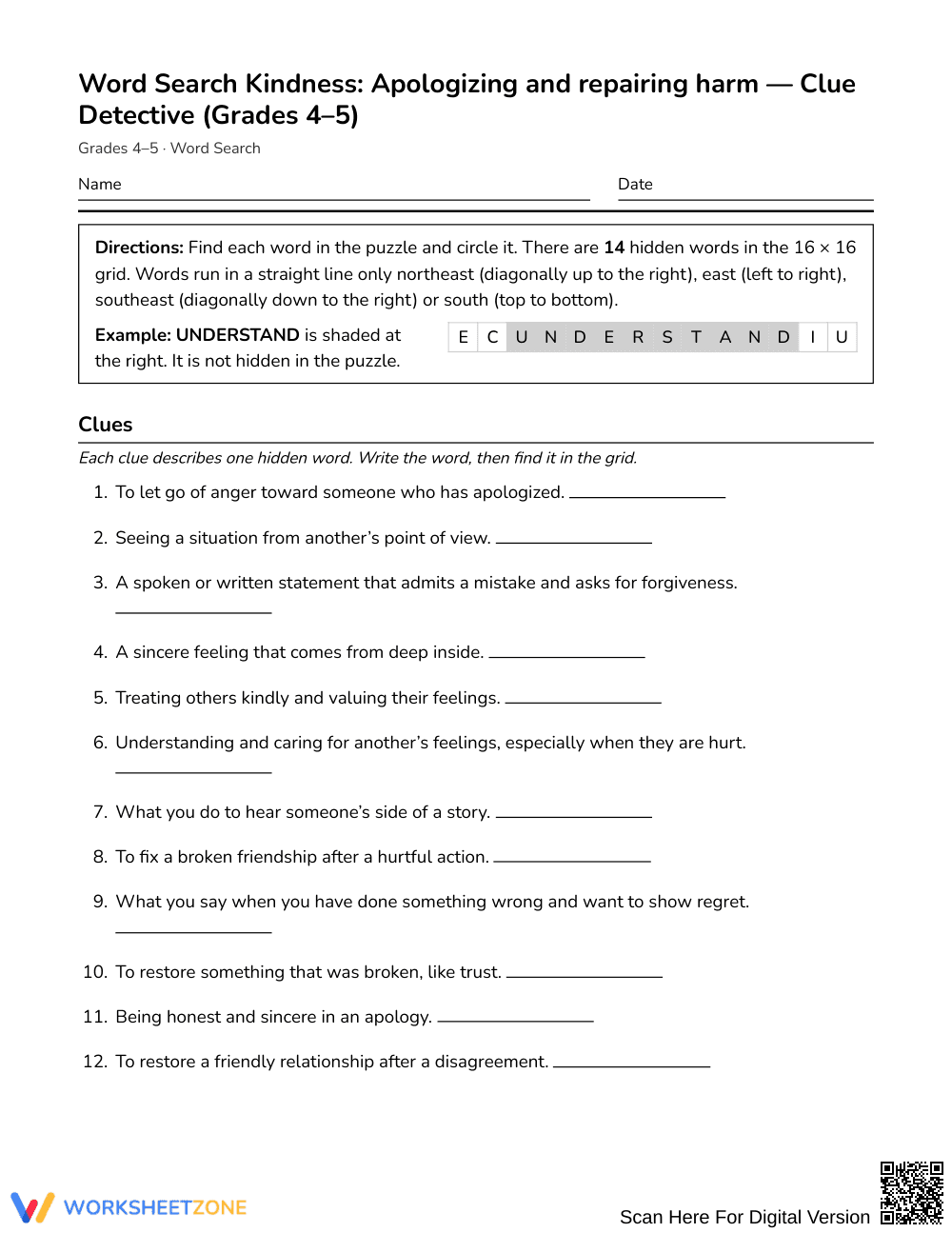
This restorative behavior word search helps upper elementary learners master key vocabulary surrounding apologies, empathy, and constructive conflict resolution. Students define, identify, and internalize 14 essential social-emotional terms, building emotional literacy while strengthening word recognition and spelling skills.
At a Glance
- Grade: Grades 4–5 · Subject: Behavior Worksheets
- Standard: Not standards-assessed — vocabulary enrichment
- Skill Focus: Apologizing and repairing harm
- Format: 3 pages · 14 words · Answer key included · PDF
- Best For: Restorative circles, calm-down corners, advisory
- Time: 15–25 minutes
What's Inside
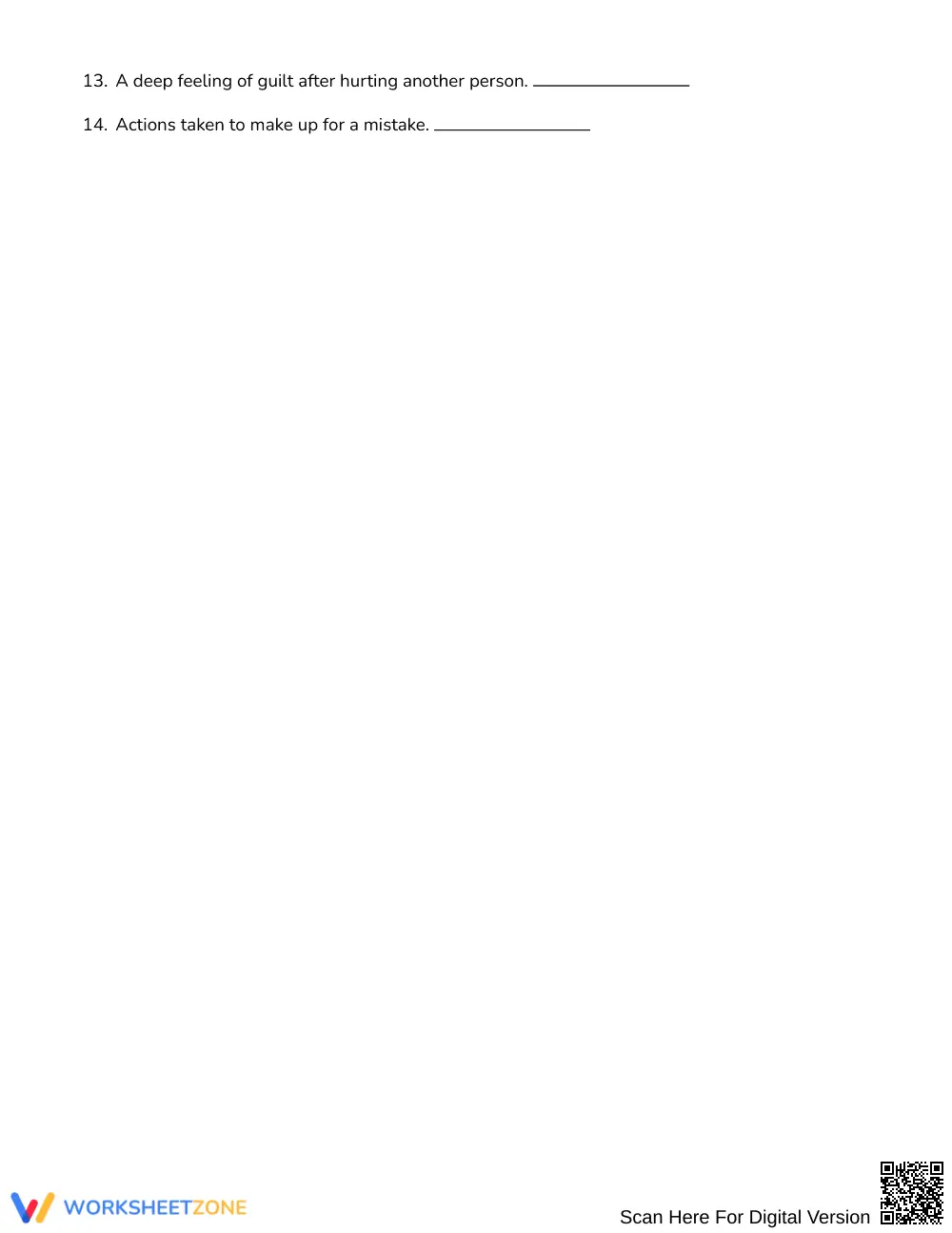
This 3-page printable set delivers an engaging clue-based detective puzzle focused on social-emotional learning. Instead of simple rote searching, students read contextual definitions for restorative actions such as making amends, active listening, and showing remorse before locating each term. A complete 3-page answer key provides clear letter highlighting for rapid visual verification.
Puzzle Mechanics & Zero-Prep Workflow
The activity is built for immediate, independent engagement without preliminary teacher modeling:
- Print (30 seconds): Send the 3-page PDF straight to your classroom printer with no formatting adjustments required.
- Engage (15–20 minutes): Students search a 16 × 16 letter grid containing 14 hidden terms arranged northeast, east, southeast, and south, using shuffled clue prompts to confirm meanings.
- Verify (1 minute): Learners cross-check their discovered pathways against the high-contrast solution key or review completed terms in small groups.
Standards Alignment
This resource serves as targeted vocabulary enrichment and character education; it is not aligned to an academic content standard. It reinforces affective vocabulary essential for positive behavioral interventions, social communication, and schoolwide restorative justice frameworks.
How to Use It
Deploy this puzzle during morning advisory meetings following peer conflicts, or place copies in a sensory calm-down area as a reflective reset task. For formative insight, examine whether students can explain the difference between a performative apology and genuine restitution during debrief discussions. Typical completion takes 15 to 25 minutes.
Who It's For
Designed specifically for learners in Grades 4–5, this printable supports general education classrooms, counseling groups, and targeted behavioral support programs. Pair this puzzle with an anchor chart detailing the four parts of an effective apology or a guided reflection prompt on making amends.
According to Fisher & Frey (2014), purposeful vocabulary acquisition occurs when learners engage directly with domain-specific terms across authentic contexts that require both conceptual understanding and active application. In behavioral and character education, providing explicit language for emotional accountability allows intermediate elementary students to articulate remorse, practice empathy, and navigate social repair constructively. This 14-word restorative puzzle bridges cognitive word identification with foundational social-emotional competence, offering clear definitions for complex relational concepts like amends, reconciliation, and active listening. By reinforcing prosocial vocabulary through structured word-finding tasks, educators provide students with the concrete communicative tools necessary to take personal responsibility, de-escalate interpersonal tension, and maintain healthy peer relationships within inclusive school communities.


