


























Views
Downloads

Grade 3 Telling Time — Printable No-Prep Worksheet
Paste this activity's link or code into your existing LMS (Google Classroom, Canvas, Teams, Schoology, Moodle, etc.).
Students can open and work on the activity right away, with no student login required.
You'll still be able to track student progress and results from your teacher account.
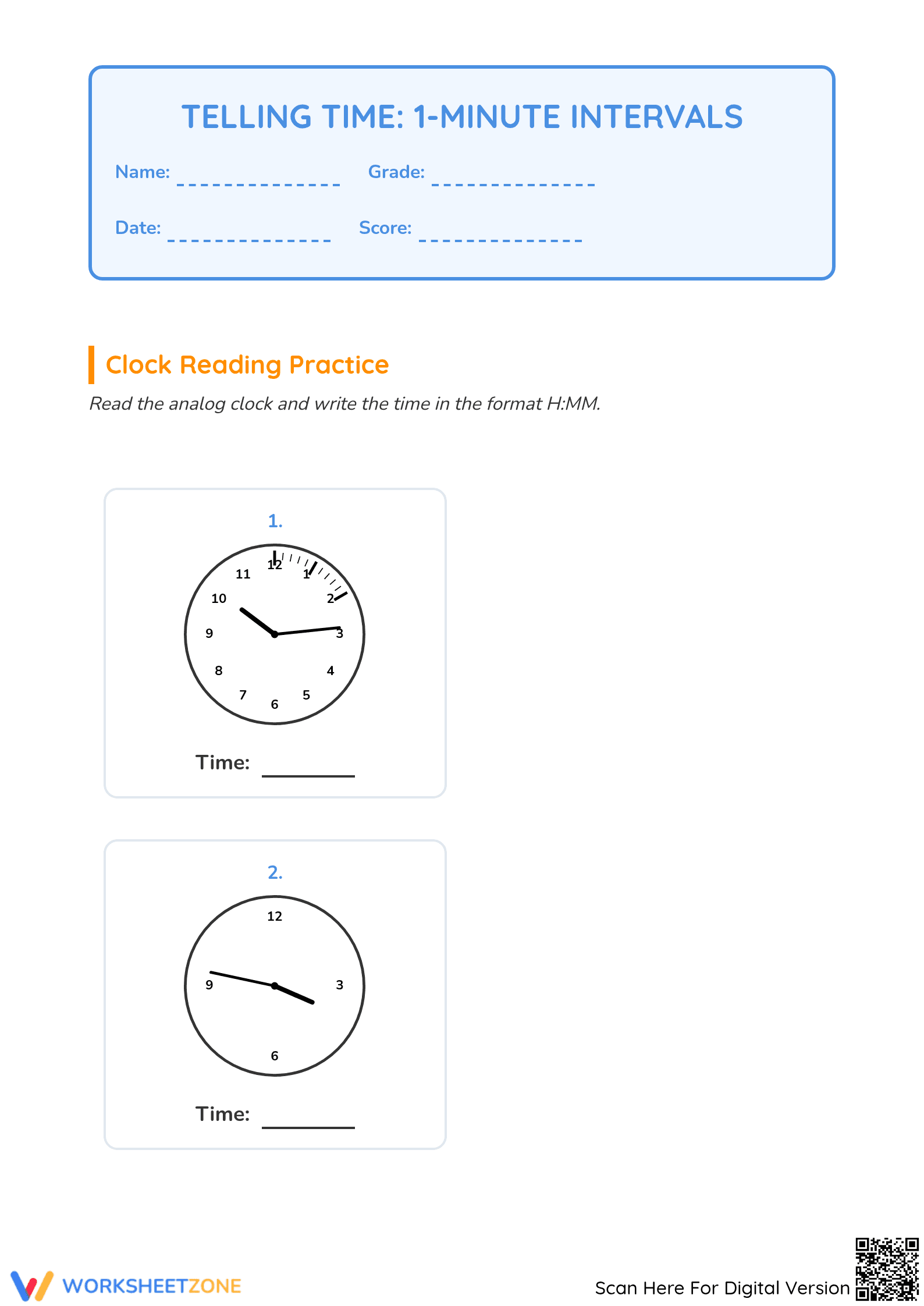
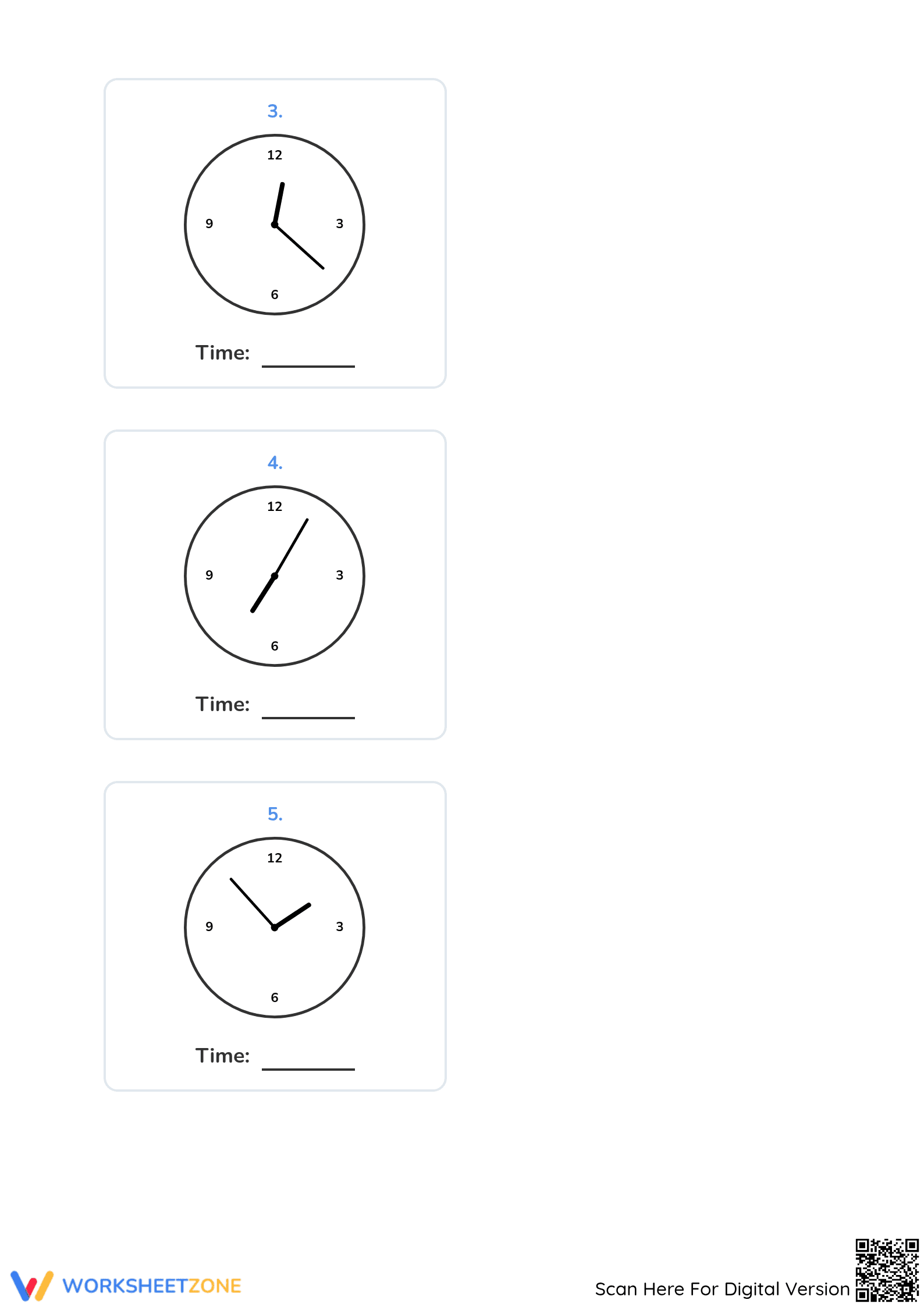
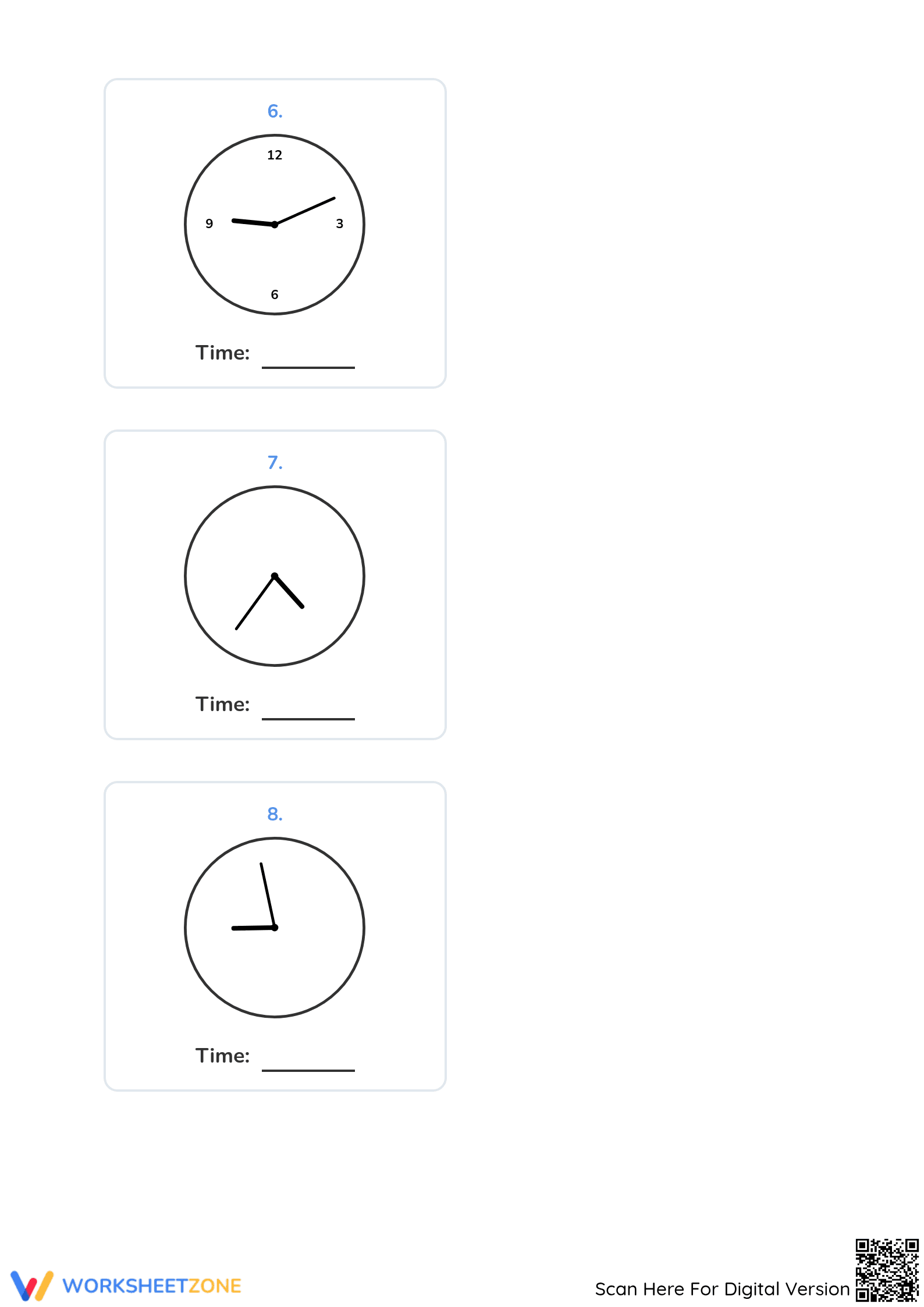
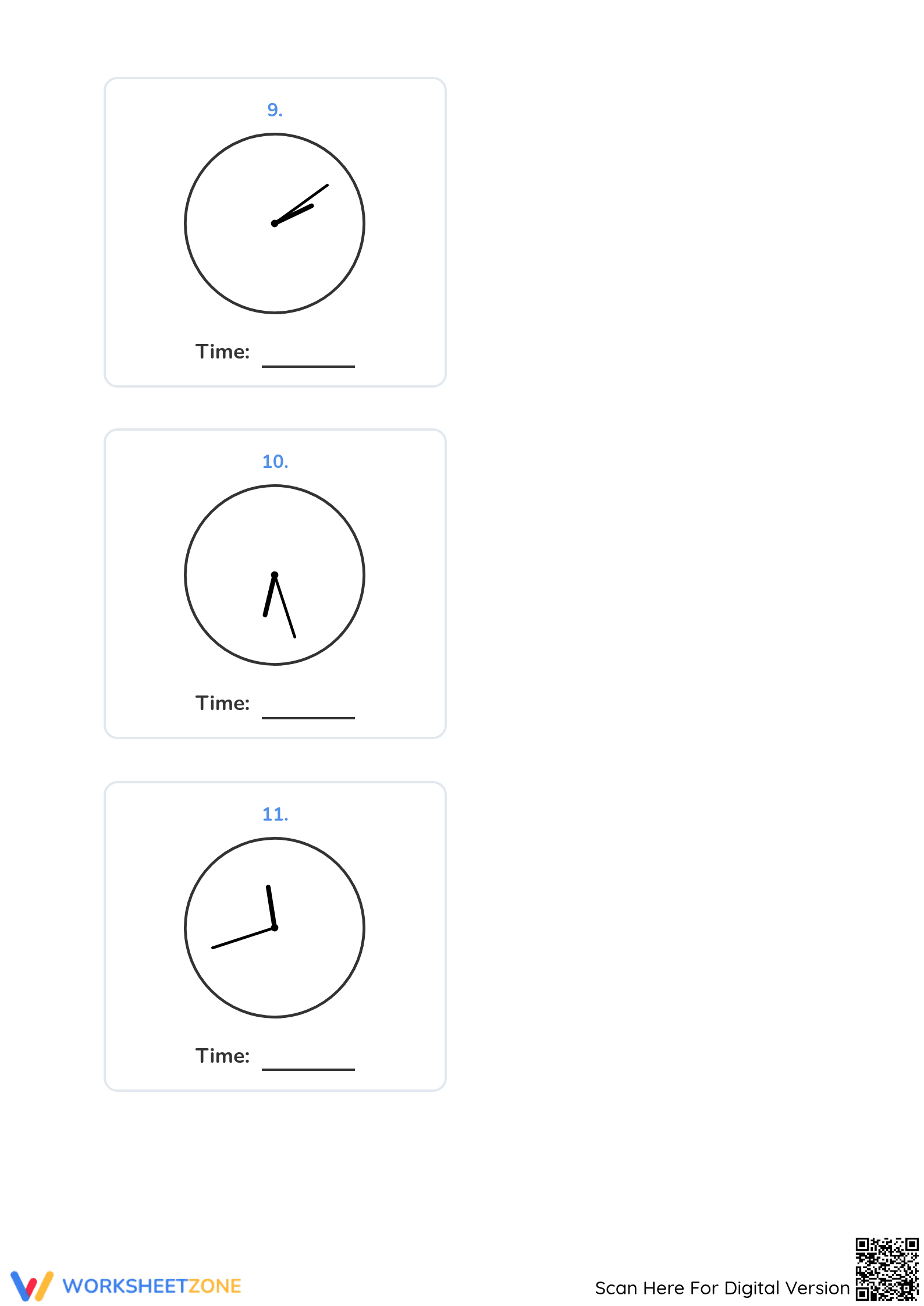
Developing fluency in reading analog clocks requires precision and repeated practice with varying hand positions. This math worksheet provides students with focused exercises to master telling time to the nearest minute. By interpreting clock faces with 1-minute intervals, learners build the essential temporal awareness needed for real-world scheduling and mathematical problem-solving across elementary grades.
At a Glance
- Grade: 3 · Subject: Math
- Standard:
CCSS.MATH.CONTENT.3.MD.A.1— Tell and write time to the nearest minute using analog clocks.- Skill Focus: 1-minute intervals
- Format: 5 pages · 14 problems · Answer key included · PDF
- Best For: Independent practice and time-telling fluency
- Time: 15–25 minutes
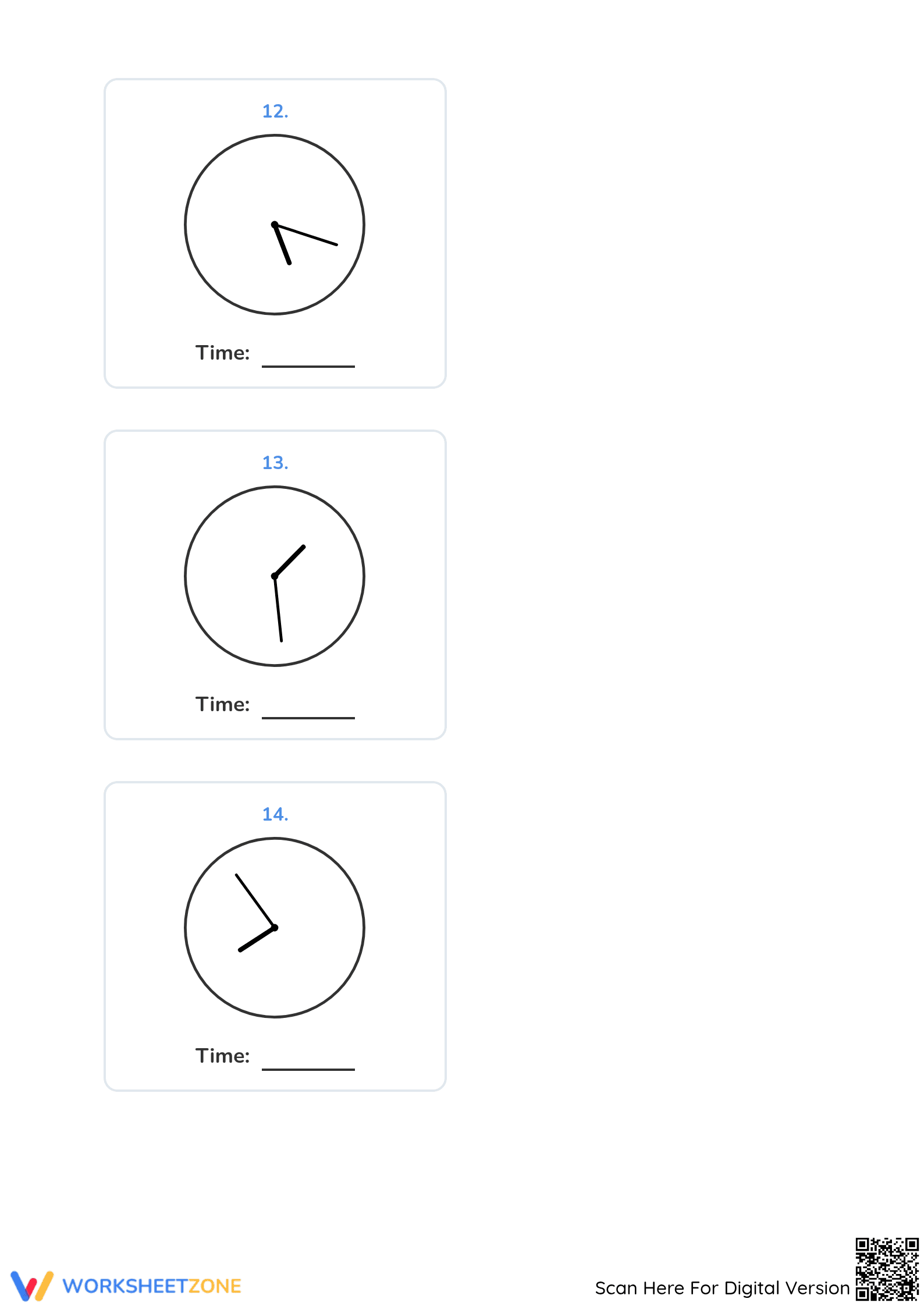
This comprehensive 5-page PDF contains 14 distinct analog clock reading tasks. Each page features clear, large clock faces with minute tick marks, ensuring students can accurately identify the exact minute. The worksheet includes a dedicated space for writing the time in the standard H:MM format. A complete answer key is provided to facilitate quick grading or student self-correction.
This resource is designed for a seamless, zero-prep classroom workflow. First, print the 5-page set (30 seconds). Next, distribute the packets to students for independent or small-group work (1 minute). Finally, use the provided answer key to review results or allow students to self-check their work (2 minutes). The total teacher preparation time is under 2 minutes, making this an ideal solution for sub plans, morning work, or unexpected schedule gaps.
The primary alignment is CCSS.MATH.CONTENT.3.MD.A.1: "Tell and write time to the nearest minute and measure time intervals in minutes." This resource also supports CCSS.MATH.CONTENT.2.MD.C.7 as an extension for advanced second graders. Both standard codes can be copied directly into lesson plans, IEP goals, or district curriculum mapping tools.
Use this worksheet as a summative assessment after introducing the concept of minute marks on an analog clock. Alternatively, assign it as a fast finisher activity during a measurement unit. For a formative observation, watch how students count the minutes—do they skip-count by fives first? The packet takes approximately 20 minutes to complete.
This resource is tailored for Grade 3 students mastering time, but it serves as excellent remediation for Grade 4 or enrichment for Grade 2. It pairs naturally with an interactive classroom clock or a direct instruction lesson on temporal measurement. The visual clarity of the 14 problems ensures accessibility for diverse learners.
Mastering the ability to read an analog clock to the exact minute is a foundational skill in the CCSS.MATH.CONTENT.3.MD.A.1 domain. Research by Fisher & Frey (2014) emphasizes the importance of guided practice and immediate feedback in developing mathematical fluency. This worksheet addresses the specific cognitive challenge of translating spatial hand positions into digital time formats. By focusing on 1-minute intervals, the resource bridges the gap between general time-telling and precise measurement. According to the RAND AIRS 2024 report on mathematics instructional materials, high-quality printable resources that offer clear visual representations, such as these clock faces, significantly improve student engagement and retention of measurement concepts. Educators can rely on this structured practice set to provide the necessary scaffolding for students as they transition from five-minute increments to minute-level accuracy. The inclusion of a comprehensive answer key further supports the instructional cycle by allowing for timely intervention and reinforcement of correct clock-reading techniques.


