




























Views
Downloads
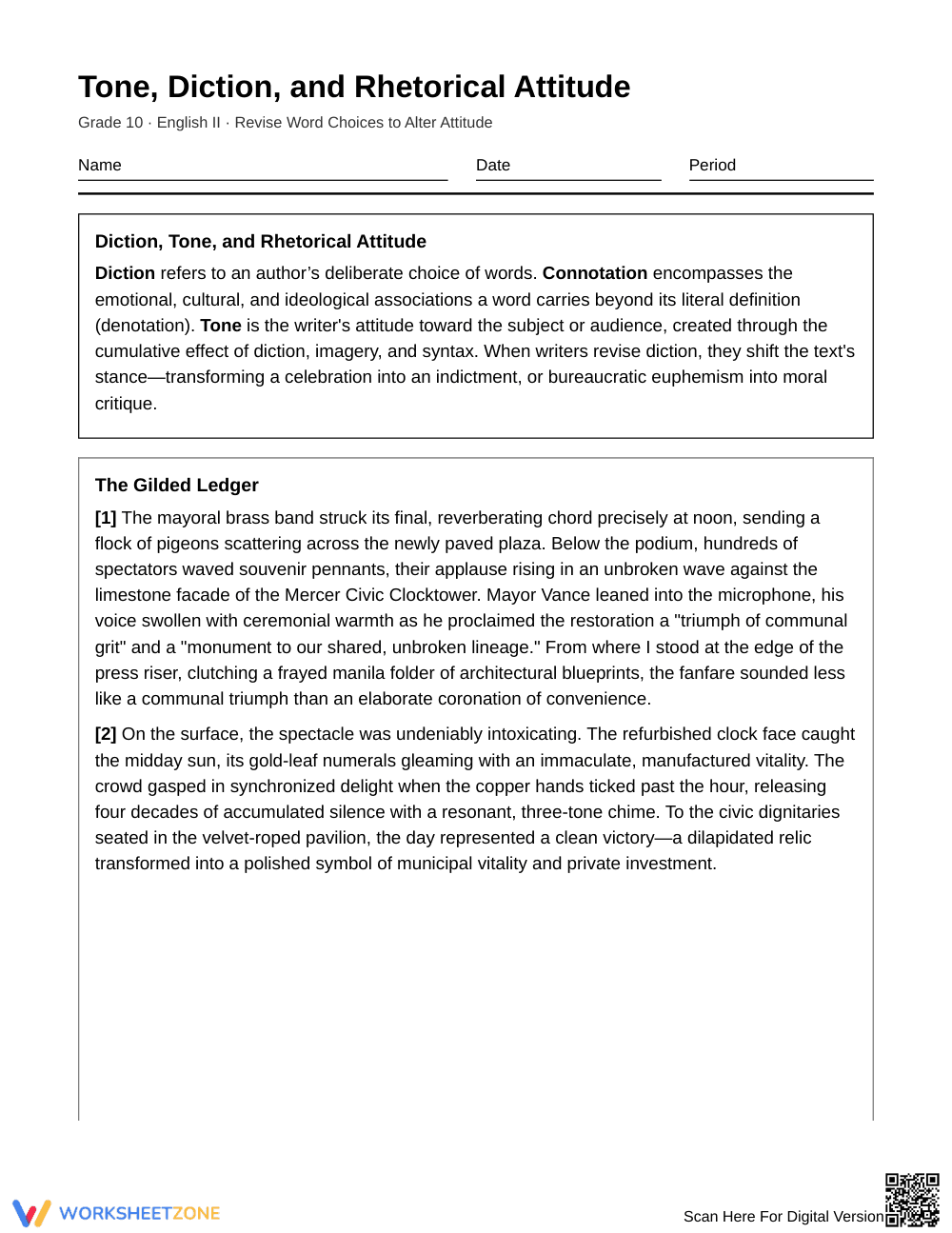

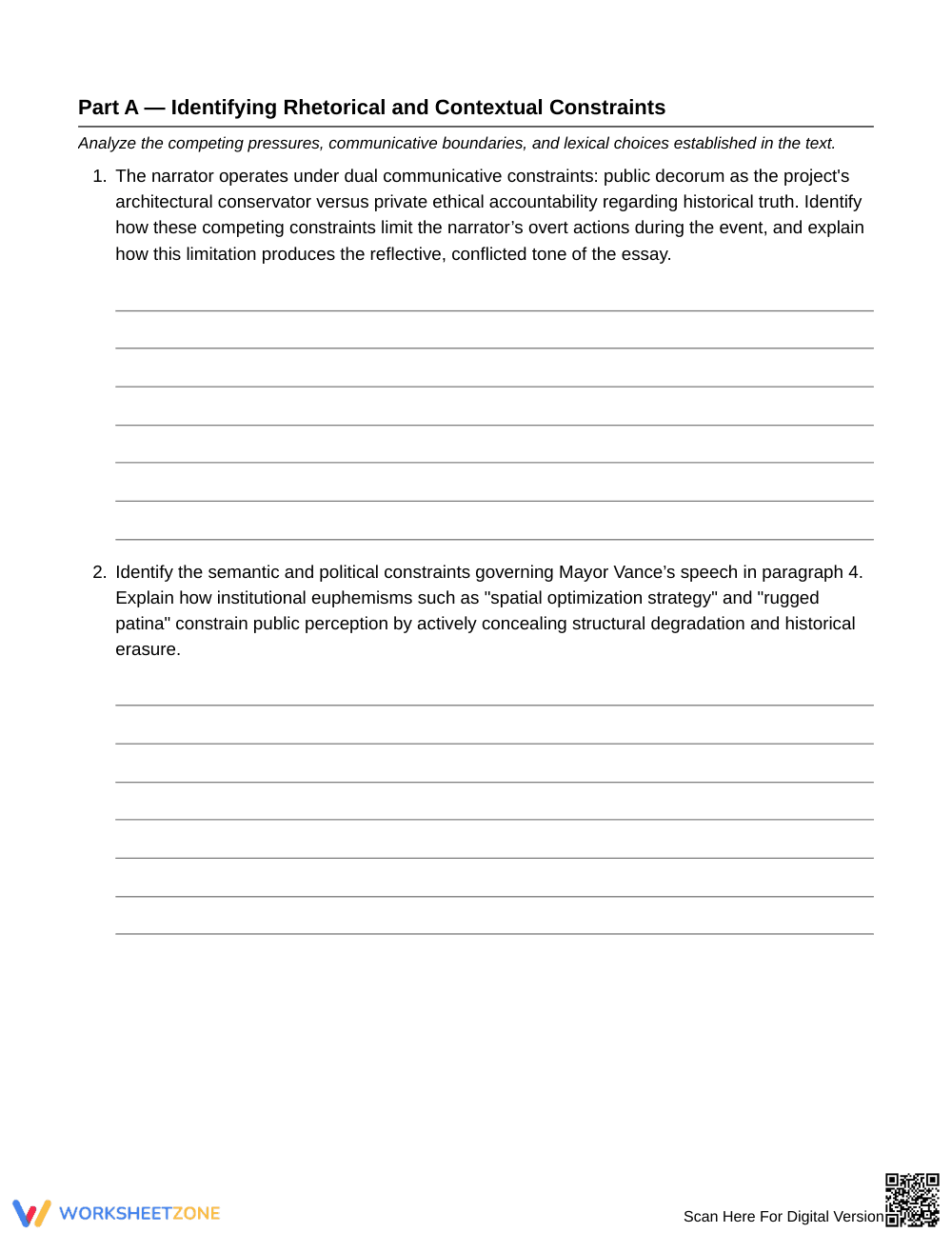
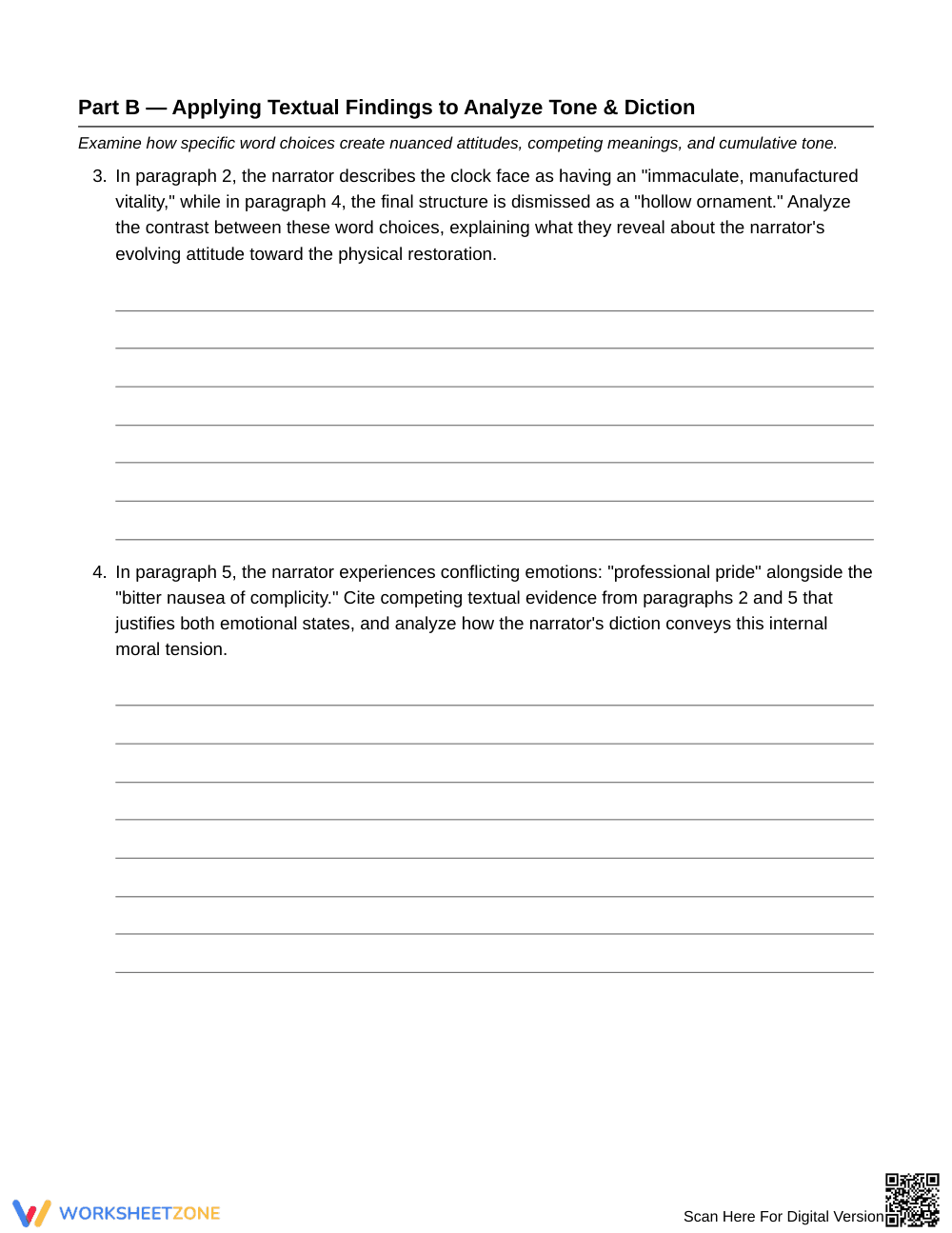

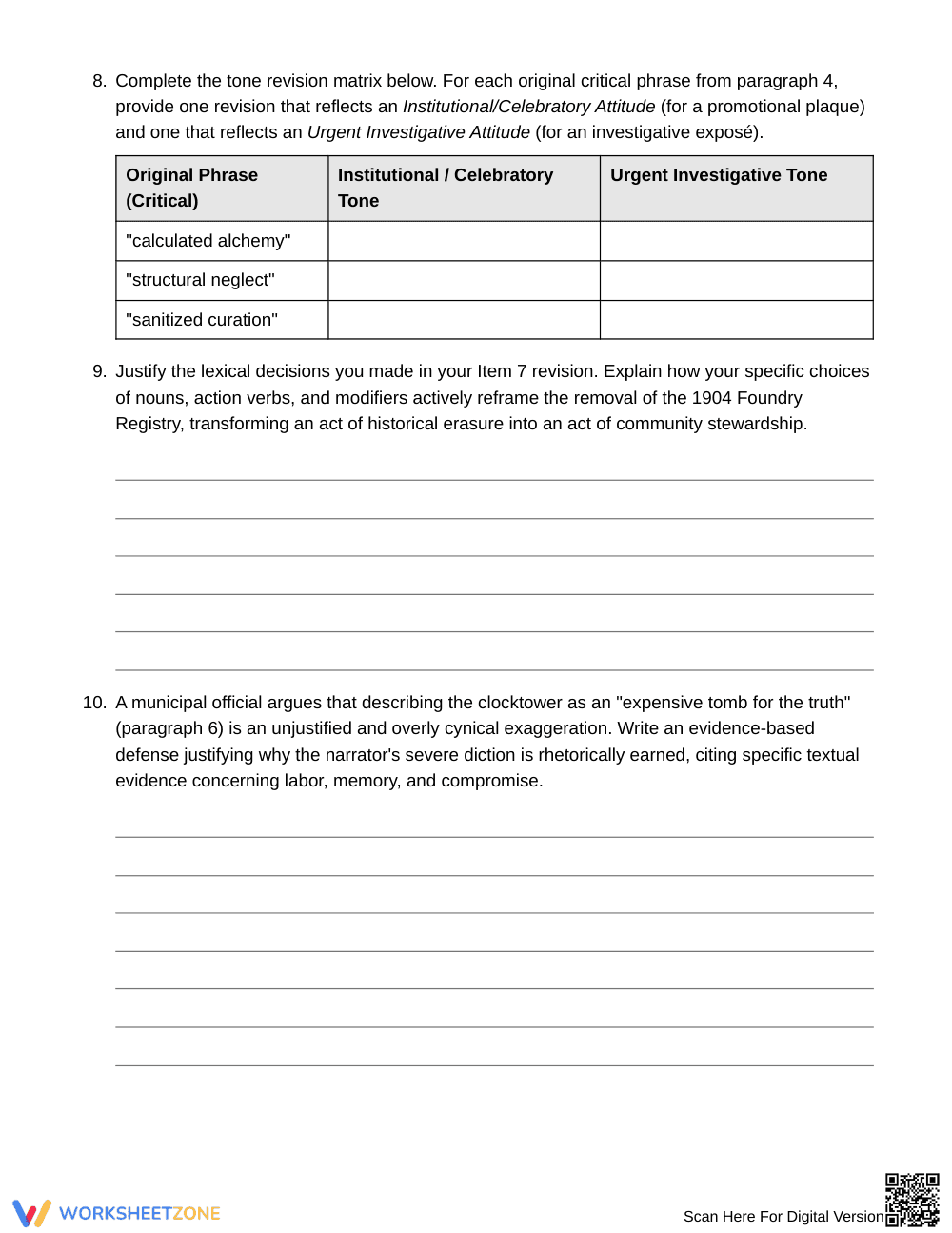

Proven Word Choice Revision Worksheet | Grade 10 English II

Paste this activity's link or code into your existing LMS (Google Classroom, Canvas, Teams, Schoology, Moodle, etc.).
Students can open and work on the activity right away, with no student login required.
You'll still be able to track student progress and results from your teacher account.
This Grade 10 English II worksheet trains students to analyze and manipulate diction to alter rhetorical attitude. Students examine how lexical substitutions reshape narrative stance in an original text, moving from passive critique to active revision across 10 rigorous tasks. The outcome is measurable mastery over connotation, nuance, and authorial voice.
At a Glance
- Grade: 10 · Subject: English II
- Standard:
RI.9-10.4— Analyze how specific word choices shape tone and alter rhetorical meaning- Skill Focus: Revise Word Choices to Alter Attitude
- Format: 6 pages · 10 problems · Answer key included · PDF
- Best For: Diction and tone revision practice
- Time: 45–60 minutes
What's Inside
The 6-page worksheet features "The Gilded Ledger," a literary nonfiction passage exploring civic dedication. Across 10 multi-part tasks, students analyze narrative constraints, complete tone revision tables, populate lexical matrices, and draft evidence-based justifications. A 4-page answer key provides complete exemplar revisions and rationales.
Skill Progression
- Guided Practice (Items 1–2): Students analyze institutional euphemisms and narrator constraints to trace how rhetorical boundaries shape tone.
- Supported Practice (Items 3–6): Learners contrast figurative diction and complete a table revising critical phrases into celebratory press copy.
- Independent Practice (Items 7–10): Students draft original statements, build a dual-attitude tone matrix, and defend lexical choices using textual evidence.
This sequence follows the gradual-release model, building from textual deconstruction to independent stylistic craft.
Standards Alignment
This resource aligns with `RI.9-10.4`, which requires students to determine word meanings and analyze the cumulative impact of specific word choices on tone. Supporting standard `W.9-10.4` reinforces producing clear writing with deliberate stylistic choices. Both standard codes can be copied directly into lesson plans, IEP goals, or district curriculum mapping tools.
How to Use It
Use this resource following direct instruction on connotation and authorial bias. In class, check student responses on Item 3 during independent work to catch literal misinterpretations early. It also serves as an effective end-of-unit assessment. Expected completion time is 45 to 60 minutes.
Who It's For
Designed for Grade 10 English Language Arts students developing analytical precision and vocabulary control. Graphic organizers scaffold emerging writers, while matrix tasks challenge advanced learners. Pair this worksheet with an anchor chart contrasting objective reporting with emotionally loaded diction.
According to Fisher & Frey (2014), intentional instruction in academic vocabulary and rhetorical word choice accelerates secondary literacy by bridging the gap between passive reading comprehension and active expressive composition. This Grade 10 English II worksheet targets standard RI.9-10.4 by requiring students to evaluate and revise word choices to alter attitude in complex informational text. Rather than treating vocabulary as isolated definitions, the resource positions diction as an active rhetorical instrument. Students analyze how subtle shifts in connotation—transforming institutional euphemisms into either critical exposés or celebratory press statements—fundamentally reshape textual perspective and reader response. The multi-step progression guides learners from identifying lexical constraints to defending sophisticated stylistic decisions with textual evidence. By grounding rhetorical manipulation in deliberate text-based practice, educators cultivate advanced metalinguistic awareness, equipping high school students to decode ideological nuances in authentic media and execute precise authorial intent in their own academic writing.


