




























Views
Downloads




Proven Topic Sentence Role Worksheet | Grade 10 English II

Paste this activity's link or code into your existing LMS (Google Classroom, Canvas, Teams, Schoology, Moodle, etc.).
Students can open and work on the activity right away, with no student login required.
You'll still be able to track student progress and results from your teacher account.
Mastering analytical topic sentences enables high school writers to construct cohesive literary arguments. This 6-page English II resource trains tenth-grade students to evaluate, draft, and justify topic sentences that function as interpretive sub-claims rather than mere plot summaries, anchoring evidence to their overarching thesis statement.
At a Glance
- Grade: 10 · Subject: English II
- Standard:
W.9-10.1— Write arguments to support claims using valid reasoning and relevant textual evidence- Skill Focus: Justify a Topic Sentence’s Role
- Format: 6 pages · 8 problems · Answer key included · PDF
- Best For: Argumentative body paragraph instruction
- Time: 45–60 minutes
What's Inside
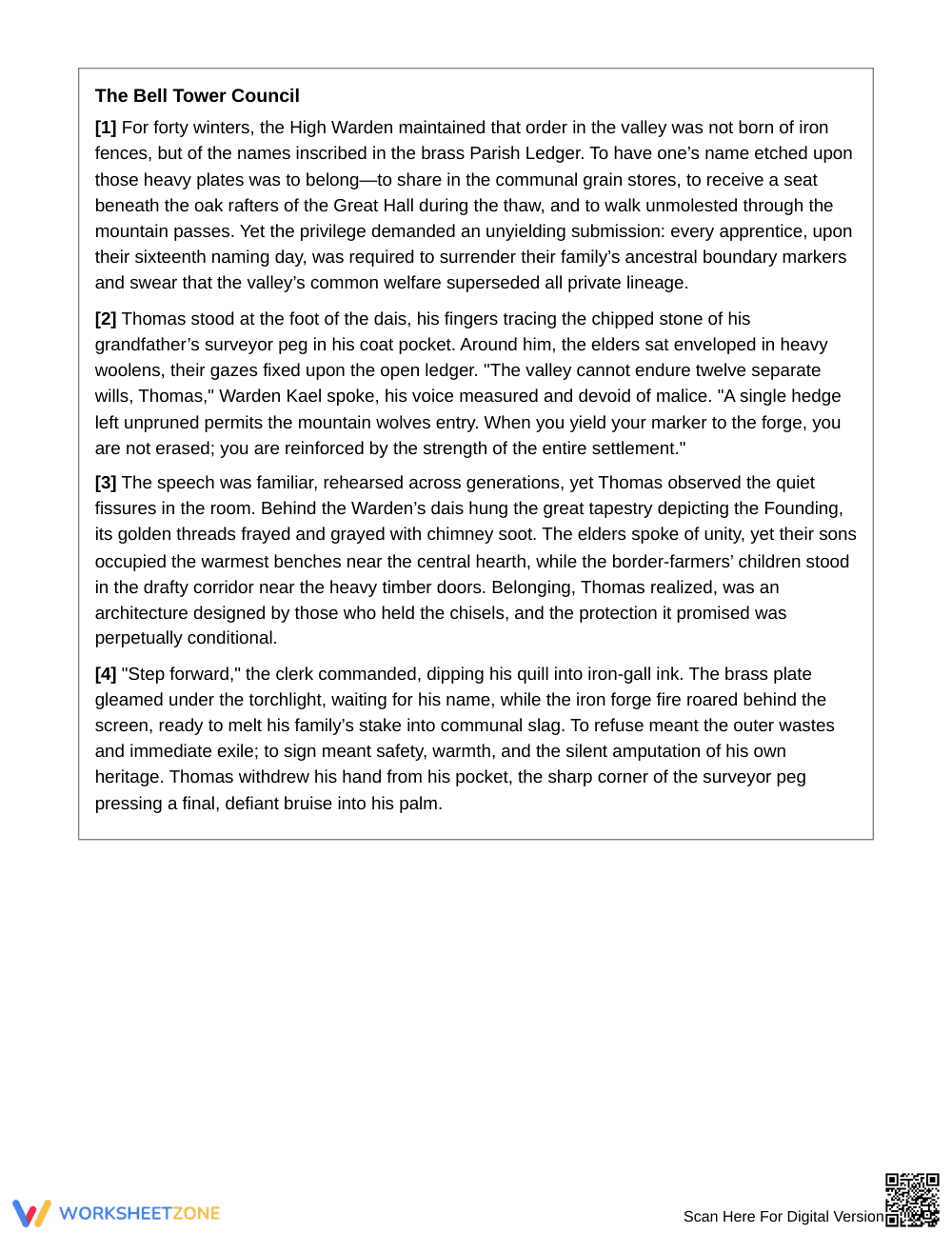
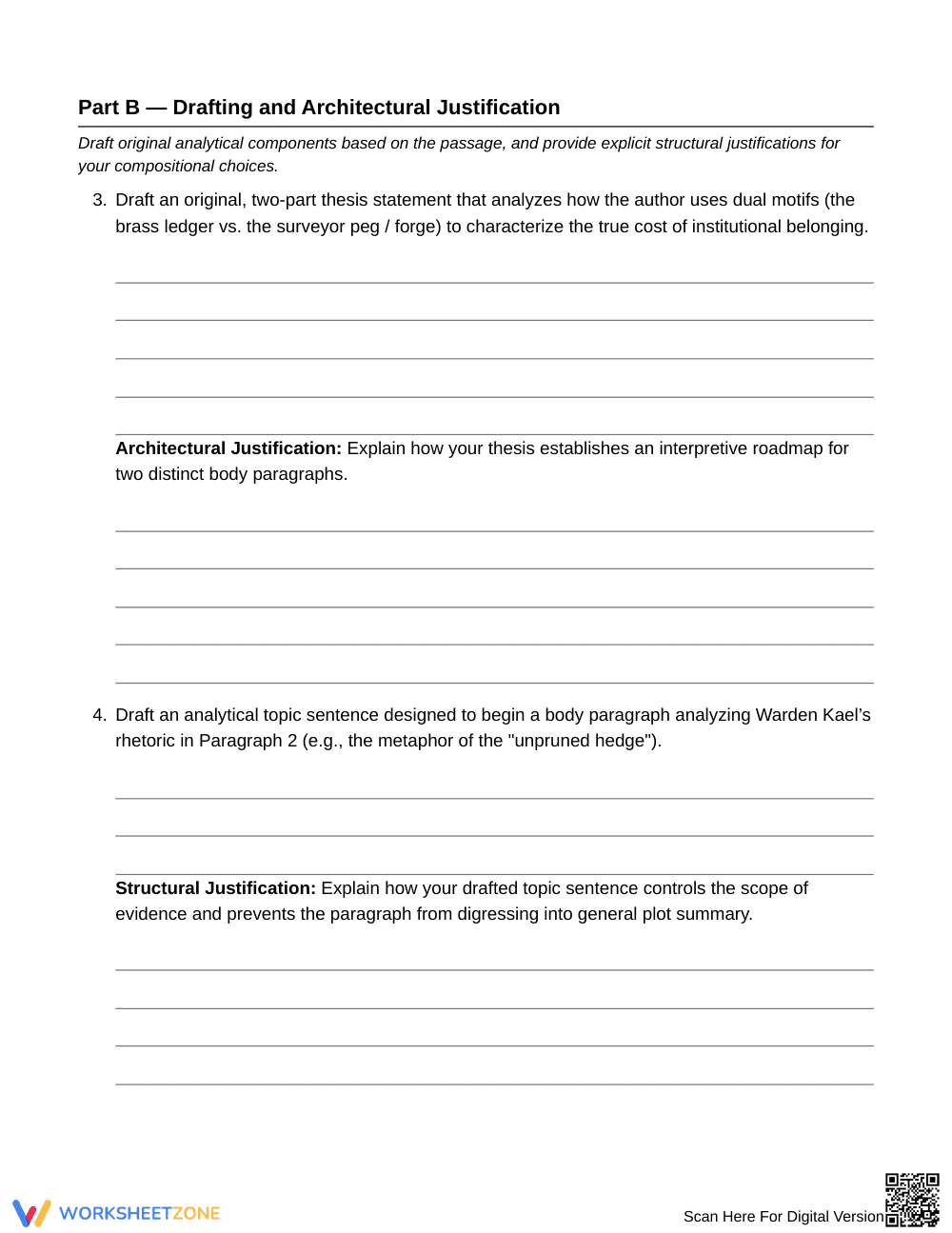
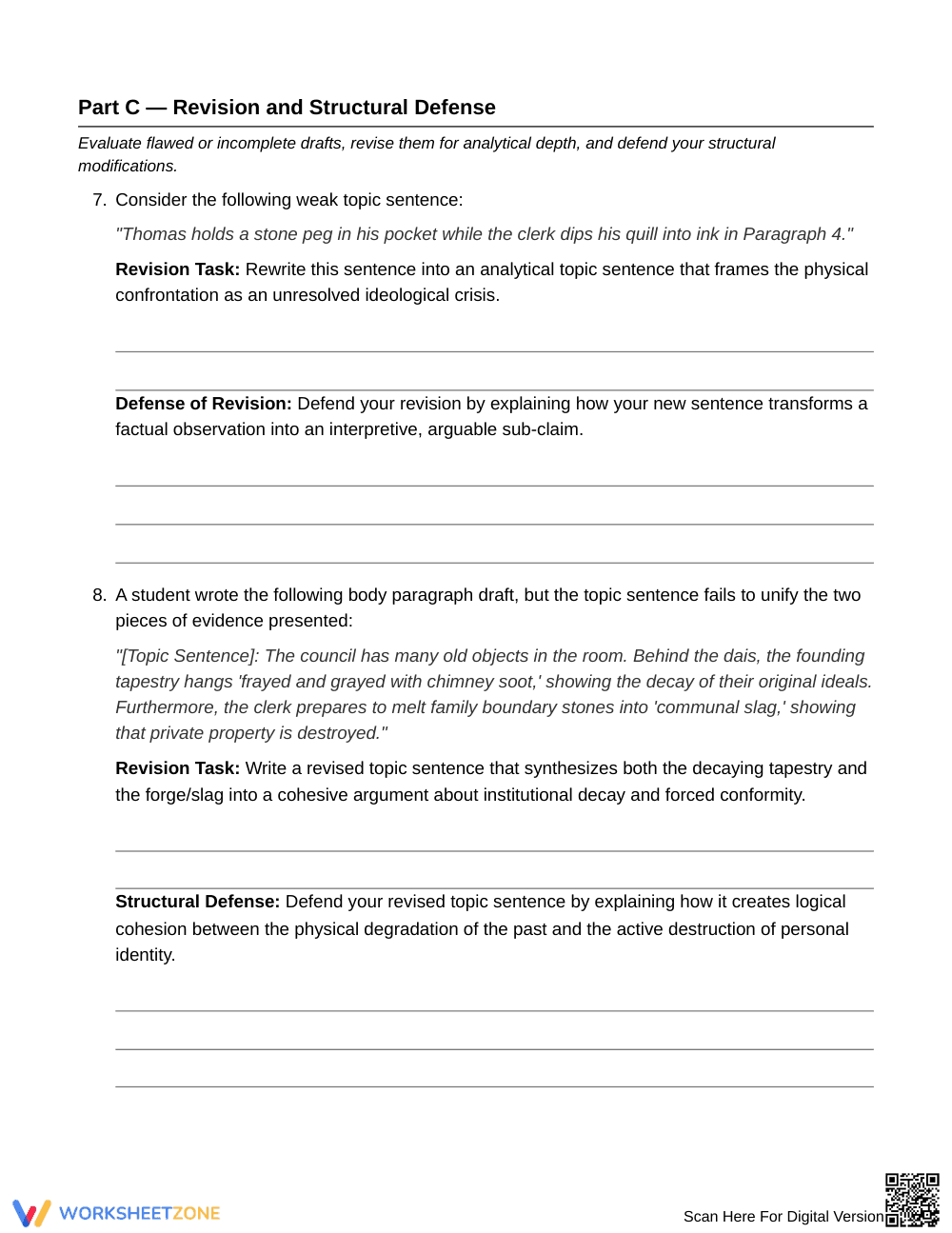
The activity pairs the allegorical text "The Bell Tower Council" with eight rigorous tasks across three student pages and a three-page annotated answer key. Features include an architectural guidance box, multiple-choice claim evaluations, drafting prompts requiring written justifications, a 180–230-word paragraph task, and two targeted revision exercises.
Skill Progression
- Guided Practice (Tasks 1–2): Students evaluate multiple-choice options to distinguish interpretive sub-claims from plot summaries.
- Supported Practice (Tasks 3–6): Students draft original thesis statements, compose topic sentences, write an evidence-based paragraph, and defend structural choices.
- Independent Practice (Tasks 7–8): Students revise weak topic sentences and provide written structural defenses.
This sequence implements gradual release, moving students from guided evaluation to independent compositional justification.
Standards Alignment
This resource aligns with `W.9-10.1`: Write arguments to support claims in an analysis of substantive topics or texts, using valid reasoning and relevant and sufficient evidence. It also supports `RL.9-10.1` through rigorous text-based analysis. Both standard codes can be copied directly into lesson plans, IEP goals, or district curriculum mapping tools.
How to Use It
Deploy this worksheet during an argumentative writing unit right after introducing thesis statements. Alternatively, use it as a mid-unit formative check before drafting literary essays. As students draft Part B, observe whether they explain how their topic sentence limits paragraph scope rather than merely summarizing events. Expected completion time is 45 to 60 minutes.
Who It's For
This resource serves tenth-grade English II students, pre-AP cohorts, and writers needing structured paragraph modeling. Explicit architectural prompts support emerging writers while structural defense tasks challenge advanced students. Pair this worksheet with direct instruction on claim-evidence-commentary paragraph structures or an analytical transitions reference chart.
According to Fisher & Frey (2014), explicit instruction in structural argumentation enables secondary students to transition from descriptive summary to rigorous analytical writing. Grounded in standard W.9-10.1, this worksheet develops the skill of justifying a topic sentence’s role as an interpretive bridge within argumentative paragraphs. When students draft claims and articulate architectural justifications, they internalize how sub-claims dictate textual evidence selection and control paragraph scope. The eight structured tasks reinforce this progression by prompting learners to evaluate competing models, construct an evidence-based paragraph using an original allegory, and revise flawed draft claims. Educational research confirms that structured metacognitive reflection on sentence function significantly enhances adolescent writing coherence. Incorporating these analytical routines equips tenth-grade writers with the organizational clarity essential for college-ready argumentative discourse across secondary English language arts curricula.


