

































Proven Theme Interpretation Worksheet | Grade 10 English II

Paste this activity's link or code into your existing LMS (Google Classroom, Canvas, Teams, Schoology, Moodle, etc.).
Students can open and work on the activity right away, with no student login required.
You'll still be able to track student progress and results from your teacher account.
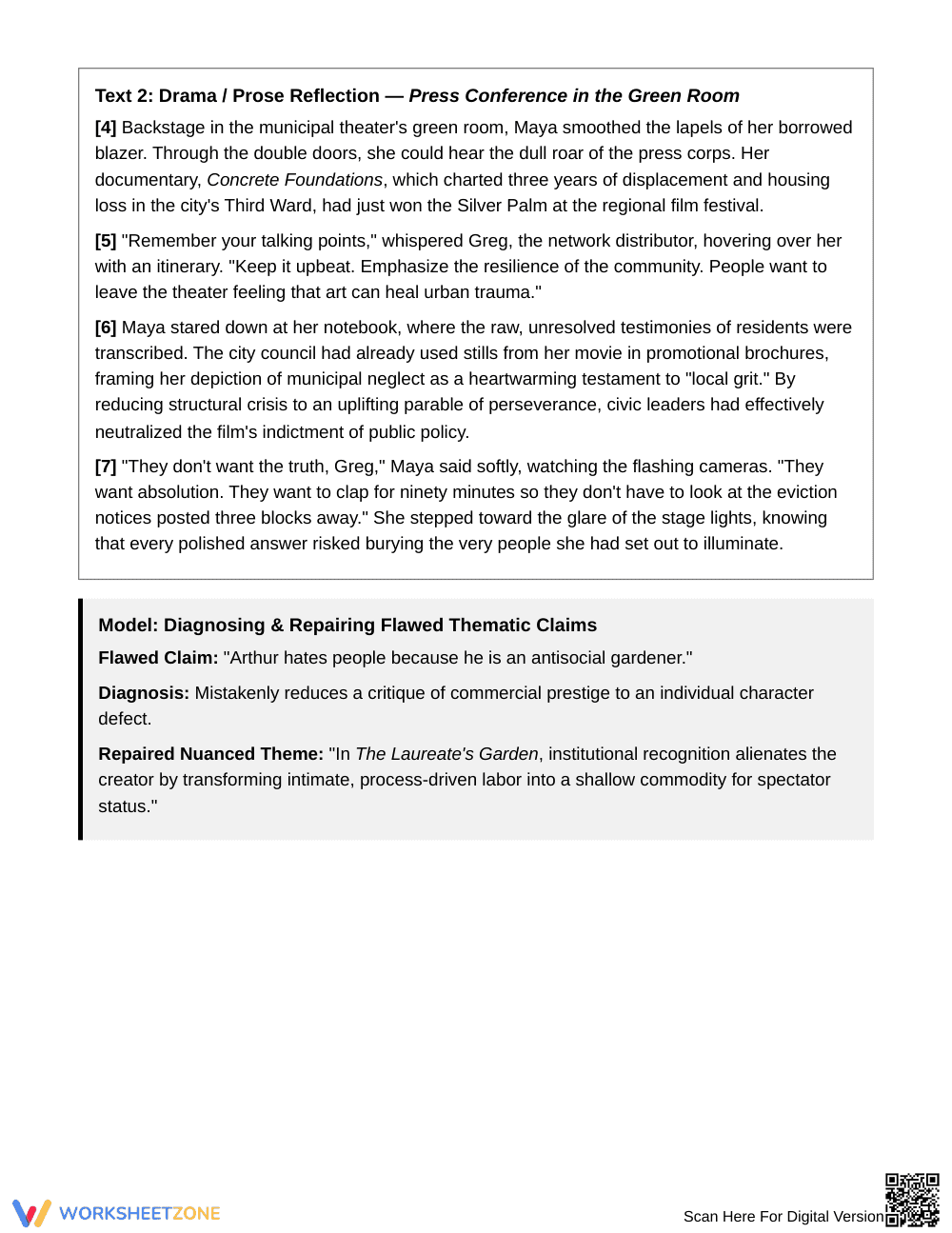
This literary analysis worksheet trains high school students to dismantle moralistic clichés and construct nuanced, evidence-based thematic arguments. By examining paired literary excerpts and diagnosing flawed claims, students learn to articulate how institutional pressures and social dynamics shape central ideas across complex fiction and dramatic texts.
At a Glance
- Grade: 10 · Subject: English II
- Standard:
RL.9-10.2— Determine a theme or central idea of a text and analyze its development- Skill Focus: Repairing oversimplified thematic statements
- Format: 6 pages · 10 problems · Answer key included · PDF
- Best For: High school literary analysis units
- Time: 45–60 minutes
What's Inside
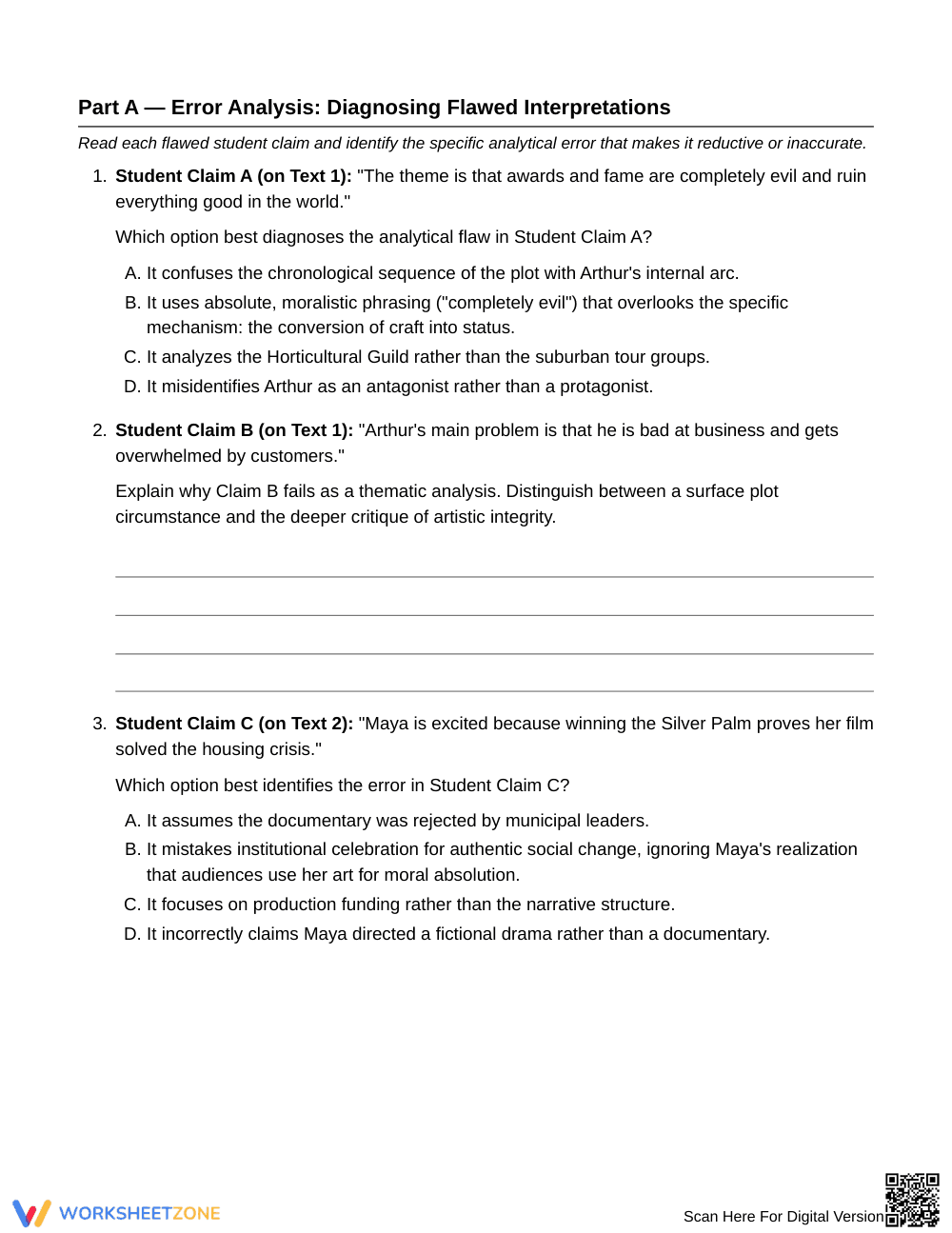
This 6-page printable activity features two contrasting analytical passages exploring the cost of public acclaim: a short fiction piece and a dramatic reflection. The resource provides an anchor concept box defining thematic nuance, a worked exemplar diagnosing a reductive claim, 5 error-analysis diagnostic items in Part A, and 5 text-dependent analytical reconstruction prompts in Part B, backed by a thorough 2-page answer key.
Skill Progression
- Guided Practice: Students review an explicit reference model that contrasts a reductive character judgment with a repaired, context-driven claim, establishing clear criteria for thematic depth.
- Supported Practice (Tasks 1–5): In Part A, learners complete 5 error-analysis tasks, evaluating multiple-choice options and short-answer prompts to pinpoint analytical fallacies such as moral binaries and plot confusion.
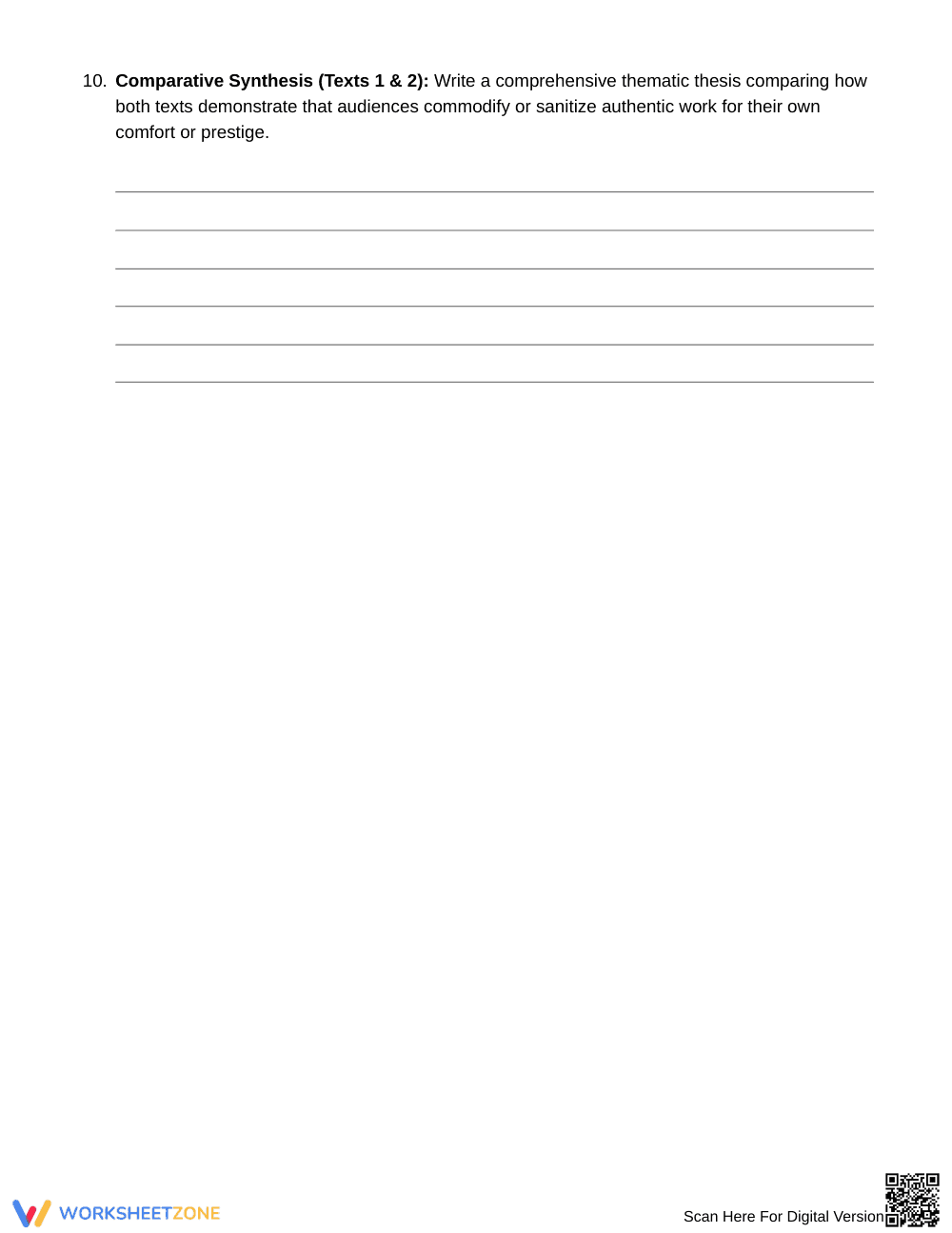
- Independent Practice (Tasks 6–10): In Part B, students write 5 reconstructed thematic arguments, analyzing symbolic details, explaining structural irony, and synthesizing central ideas across both passages with cited textual evidence.
This sequence follows the gradual release of responsibility model, shifting students from recognizing faulty logic to authoring defensible literary claims.
Standards Alignment
Primary Standard: RL.9-10.2 — Determine a theme or central idea of a text and analyze in detail its development over the course of the text, including how it emerges and is shaped and refined by specific details; provide an objective summary of the text. Both standard codes can be copied directly into lesson plans, IEP goals, or district curriculum mapping tools.
How to Use It
Deploy this worksheet after direct instruction on theme development or during a close-reading unit on authorial critique. Have students complete Part A in collaborative pairs to debate why specific claims fail, then assign Part B for independent writing. During work time, check whether students rely on plot summaries rather than abstract thematic mechanisms. Expect completion in 45 to 60 minutes.
Who It's For
This resource serves general education Grade 10 English II classrooms, honors English cohorts, and students preparing for standardized text-analysis essays. Pair this worksheet with an anchor chart on thematic tension or a graphic organizer contrasting thematic claims against plot summaries.
According to Fisher & Frey (2014), explicit error analysis and guided modeling dramatically accelerate secondary students' ability to formulate text-grounded analytical writing. This worksheet directly targets standard RL.9-10.2 by providing 10 systematic tasks that train tenth-grade readers to determine complex themes and central ideas. Rather than allowing students to settle for simplistic, binary moral lessons, the resource uses structured error diagnosis and scaffolded text-dependent prompts to build rigorous analytical habits. Students dissect symbolic details, untangle structural irony, and synthesize arguments across multiple genres, developing the exact critical reasoning required for college-preparatory literary analysis.


