

































Proven Thematic Claim Repair Worksheet | Grade 12 English IV

Paste this activity's link or code into your existing LMS (Google Classroom, Canvas, Teams, Schoology, Moodle, etc.).
Students can open and work on the activity right away, with no student login required.
You'll still be able to track student progress and results from your teacher account.
This Grade 12 literary analysis worksheet guides high school seniors to diagnose and repair reductive, flattened thematic statements into sophisticated, text-grounded arguments. Working with an original multi-perspective narrative featuring archival documents and sensory prose, students evaluate oversimplified claims and construct qualified thematic theses that reflect genuine narrative complexity.
At a Glance
- Grade: 12 · Subject: English IV
- Standard:
RL.11-12.2— Determine two or more themes and analyze their interaction over the text- Skill Focus: Repairing flattened thematic claims
- Format: 6 pages · 10 problems · Answer key included · PDF
- Best For: AP or college-prep thematic essay preparation
- Time: 45–60 minutes
What's Inside
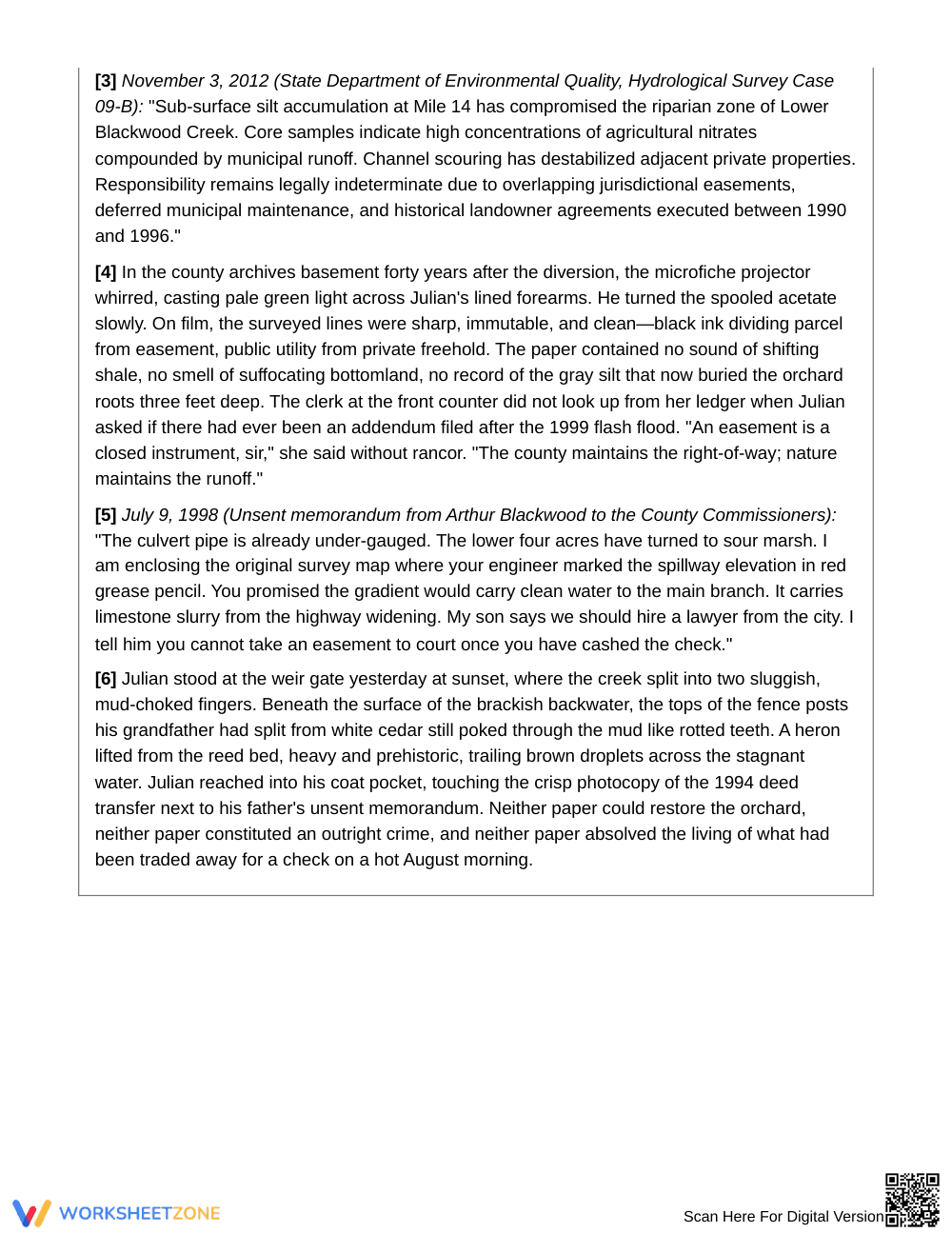
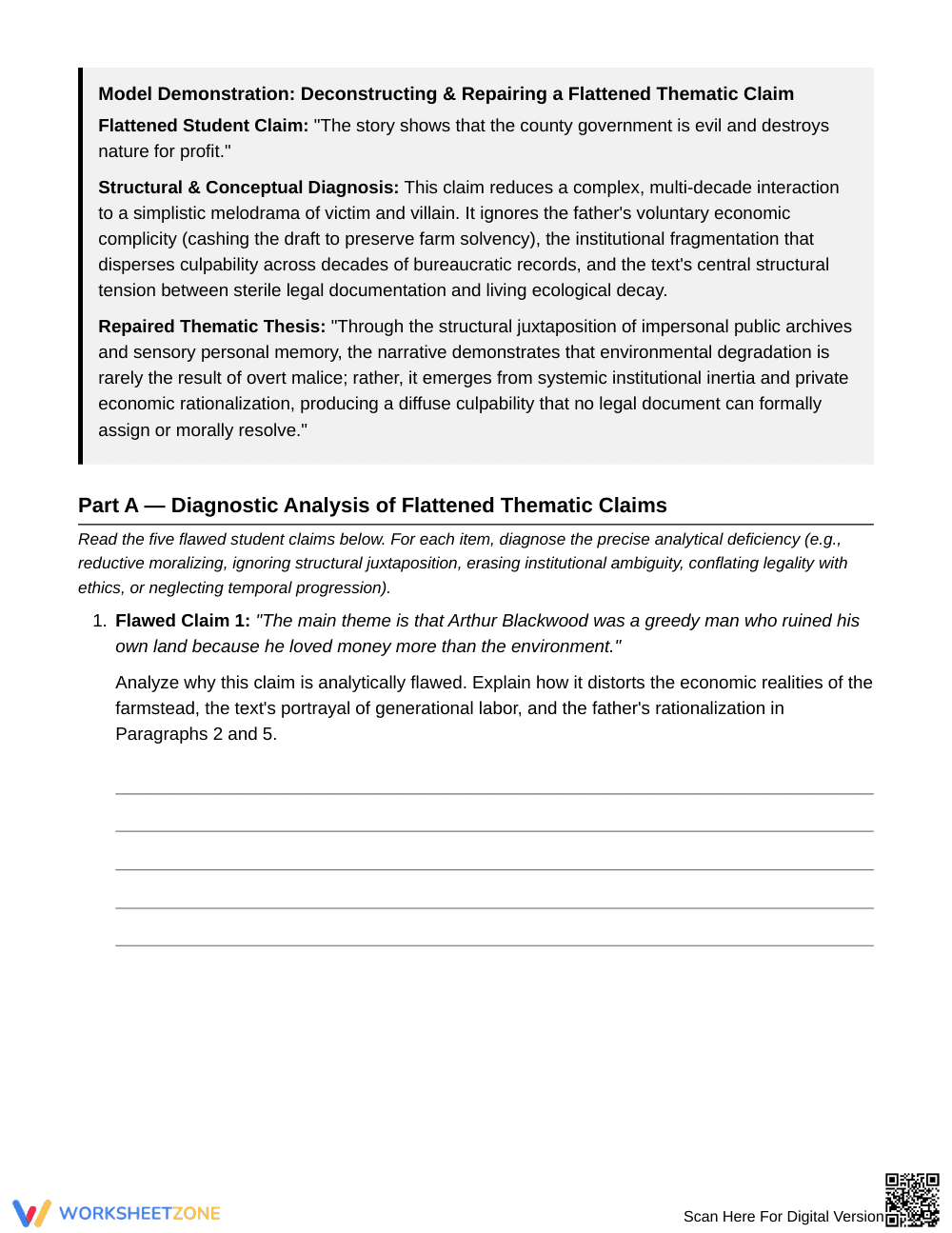
The 6-page printable resource centers on an original anchor text, "The Silt at Mile 14," which juxtaposes county board minutes, environmental survey logs, unsent personal letters, and sensory narrative vignettes. A comprehensive model demonstration deconstructs a flawed student thesis before students tackle two rigorous analytical sections. The resource concludes with a 4-page detailed answer key providing exemplary repaired arguments and explicit analytical rationales for every item.
Skill Progression
- Guided practice: The model demonstration explicitly breaks down the conceptual flaws of moralistic reductions and provides an annotated, college-ready reconstructed thesis.
- Supported practice (Tasks 1–5): In Part A, students diagnose five distinct analytical pitfalls across flawed claims, including reductive moralizing, conflating legality with ethics, and ignoring temporal progression.
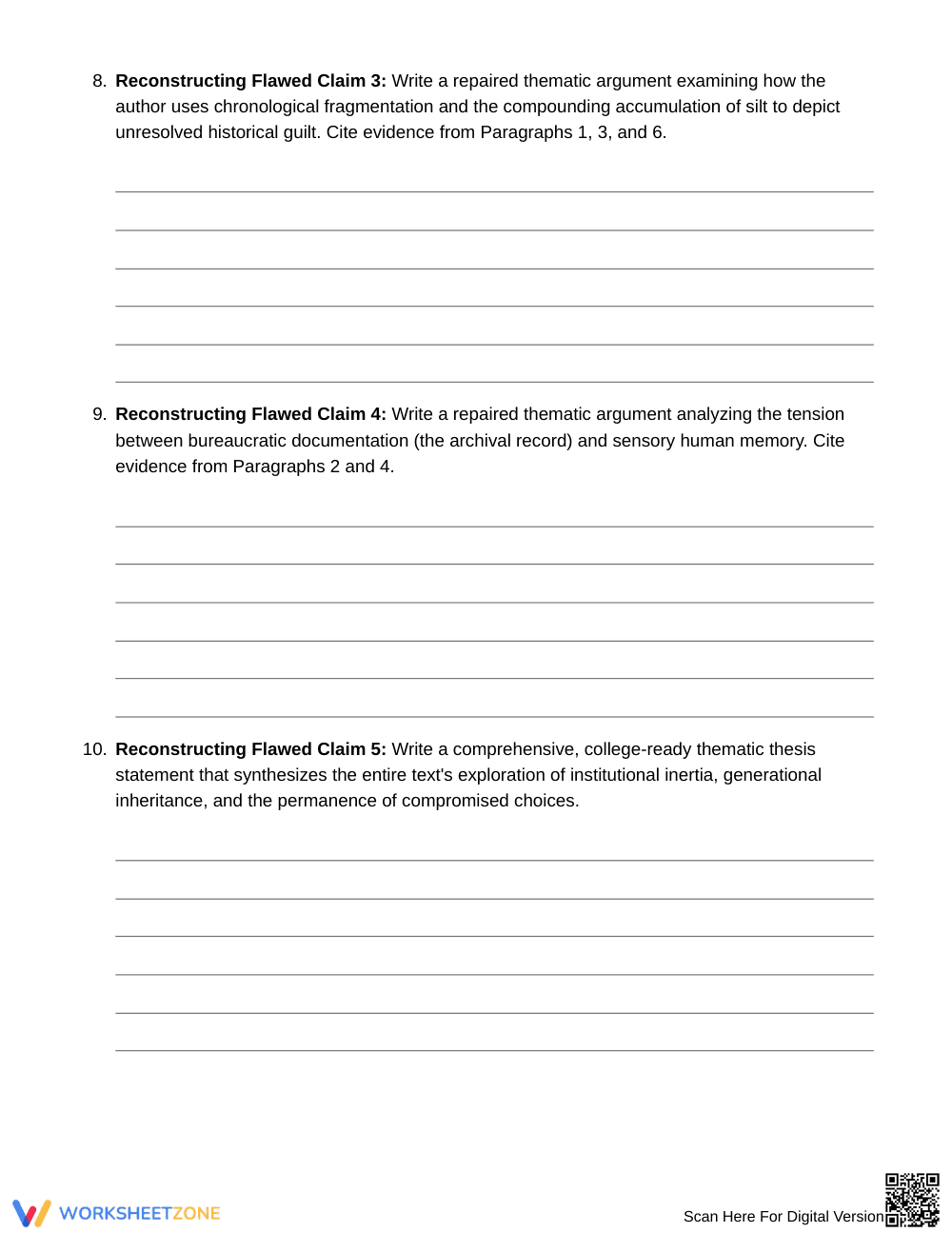
- Independent practice (Tasks 6–10): In Part B, students draft five sophisticated, evidence-supported thematic arguments integrating textual tensions and direct citations.
This structured I Do, We Do, You Do instructional sequence moves students systematically from passive flaw recognition to active academic synthesis.
Standards Alignment
This resource directly supports primary standard RL.11-12.2: Determine two or more themes or central ideas of a text and analyze their development over the course of the text, including how they interact and build on one another to produce a complex account. Students examine how competing forces like bureaucratic documentation and ecological decay interact. Both standard codes can be copied directly into lesson plans, IEP goals, or district curriculum mapping tools.
How to Use It
Deploy this worksheet after direct instruction on thesis formulation or as targeted preparation before an analytical essay unit. During the diagnostic phase, conduct a quick formative check on Task 2 to ensure students distinguish between institutional legality and moral culpability before they begin drafting in Part B. The 10 tasks typically require 45 to 60 minutes of focused class time.
Who It's For
Designed for Grade 12 English IV, AP Literature, and dual-enrollment language arts courses, this exercise supports advanced writers while scaffolding analytical thinking for developing students through explicit diagnostic prompts. It pairs naturally with anchor charts on qualifying thesis statements or close-reading lessons on nonlinear narrative structures.
According to research by Fisher & Frey (2014) on close reading and disciplinary literacy, high school students require explicit modeling and structured diagnostic practice to move beyond literal plot summaries and simplistic moral aphorisms toward nuanced thematic synthesis. Standard RL.11-12.2 challenges Grade 12 students to analyze how conflicting central ideas interact across structural tensions rather than reducing literature to single-cause lessons. This 6-page worksheet directly operationalizes these findings through a 10-task progression that requires learners to identify analytical fallacies in reductive assertions and reconstruct them into qualified, evidence-grounded arguments. By bridging guided deconstruction with rigorous independent thesis construction, the resource provides measurable instructional scaffolding that develops the precise critical thinking habits demanded by collegiate literary discourse and standardized assessments.


