

































Proven Alternative Endings Worksheet | Grade 11 English III

Paste this activity's link or code into your existing LMS (Google Classroom, Canvas, Teams, Schoology, Moodle, etc.).
Students can open and work on the activity right away, with no student login required.
You'll still be able to track student progress and results from your teacher account.
This Grade 11 literary analysis worksheet guides students through counterfactual resolution analysis to evaluate how structural choices shape theme, characterization, and aesthetic impact. By comparing an authentic narrative ending with a plausible alternative resolution, learners examine how plot trajectories validate earlier motifs and thematic tensions.
At a Glance
- Grade: 11 · Subject: English III
- Standard:
RL.11-12.5— Analyze how an author's choices concerning structure create aesthetic impact- Skill Focus: Test a Reading Against an Alternative Ending
- Format: 6 pages · 10 problems · Answer key included · PDF
- Best For: Advanced literary analysis and structural evaluation
- Time: 45–60 minutes
What's Inside
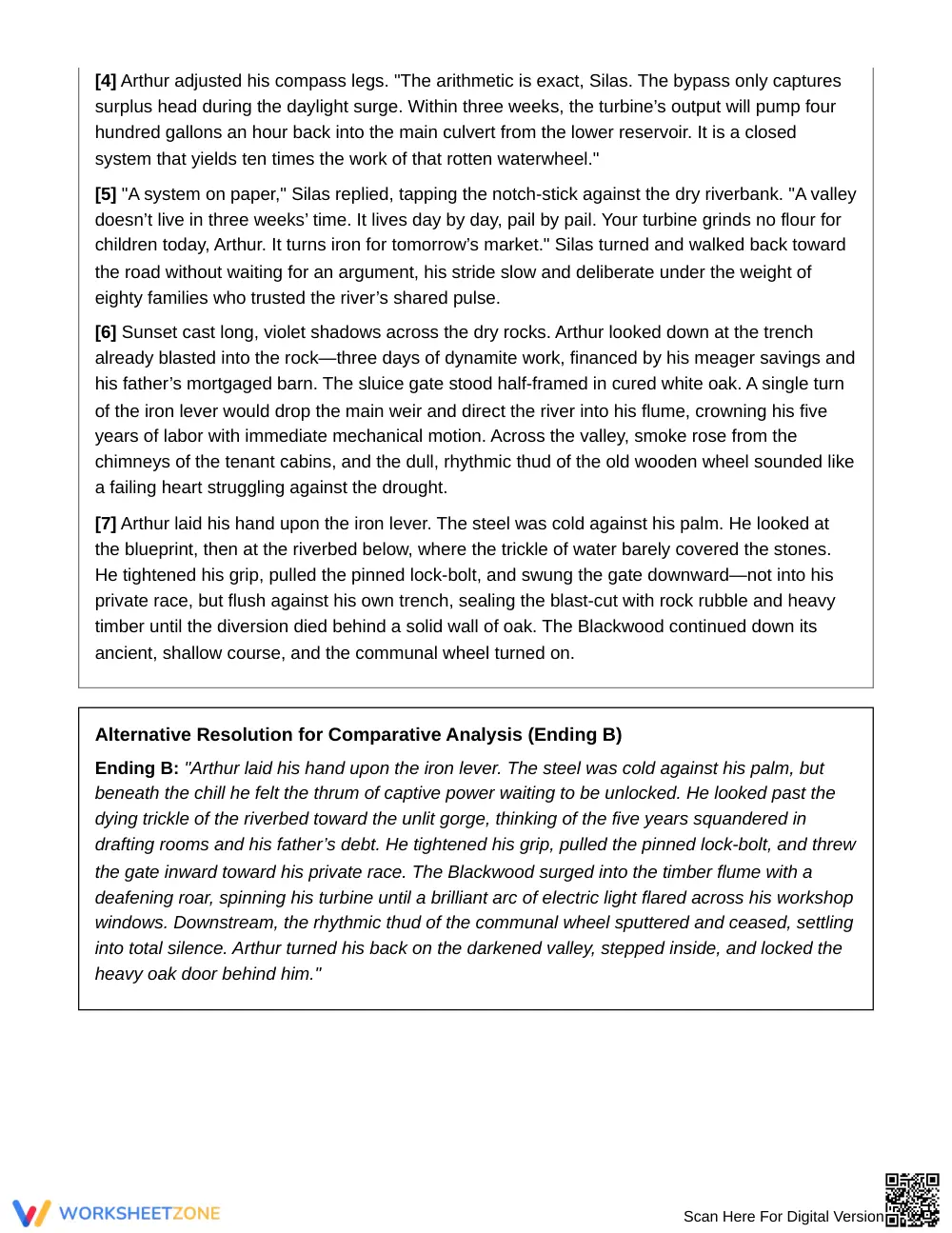
The 6-page printable resource contains a critical framework rule box, the realist story The Sluice at Blackwood Run, and an alternative resolution. Students complete 10 problems including text-dependent structural identifications, comparative multiple-choice items, motif evaluations, and dramatic adaptation prompts, supported by a 4-page answer key.
Skill Progression
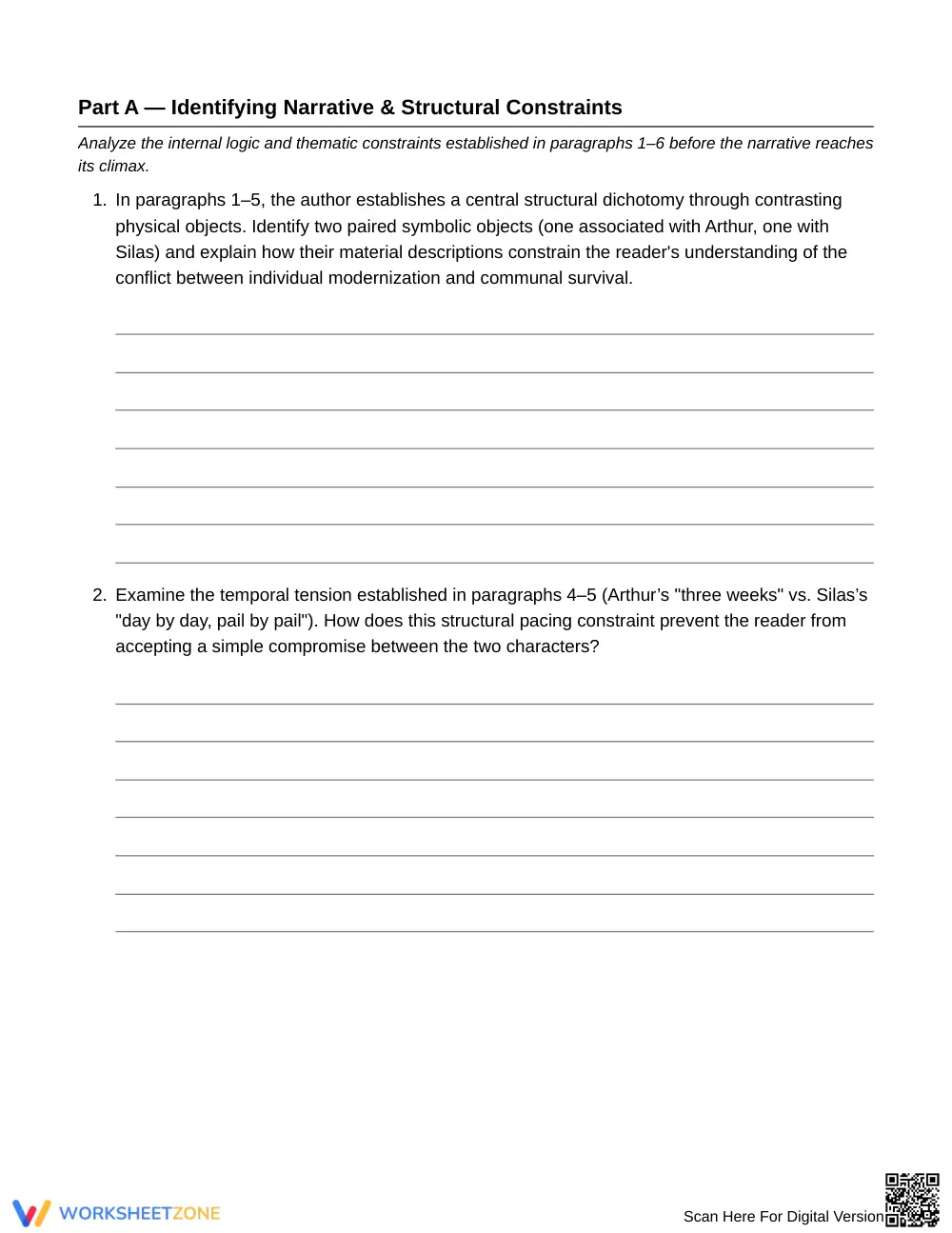
- Guided practice (Tasks 1–2): Students analyze 2 foundational structural constraints in paragraphs 1–6, identifying how symbolic objects and pacing establish narrative stakes.
- Supported practice (Tasks 3–8): Working through 6 comparative tasks, students evaluate shifts in mechanical imagery, genre conventions, motifs, and auditory tone between endings.
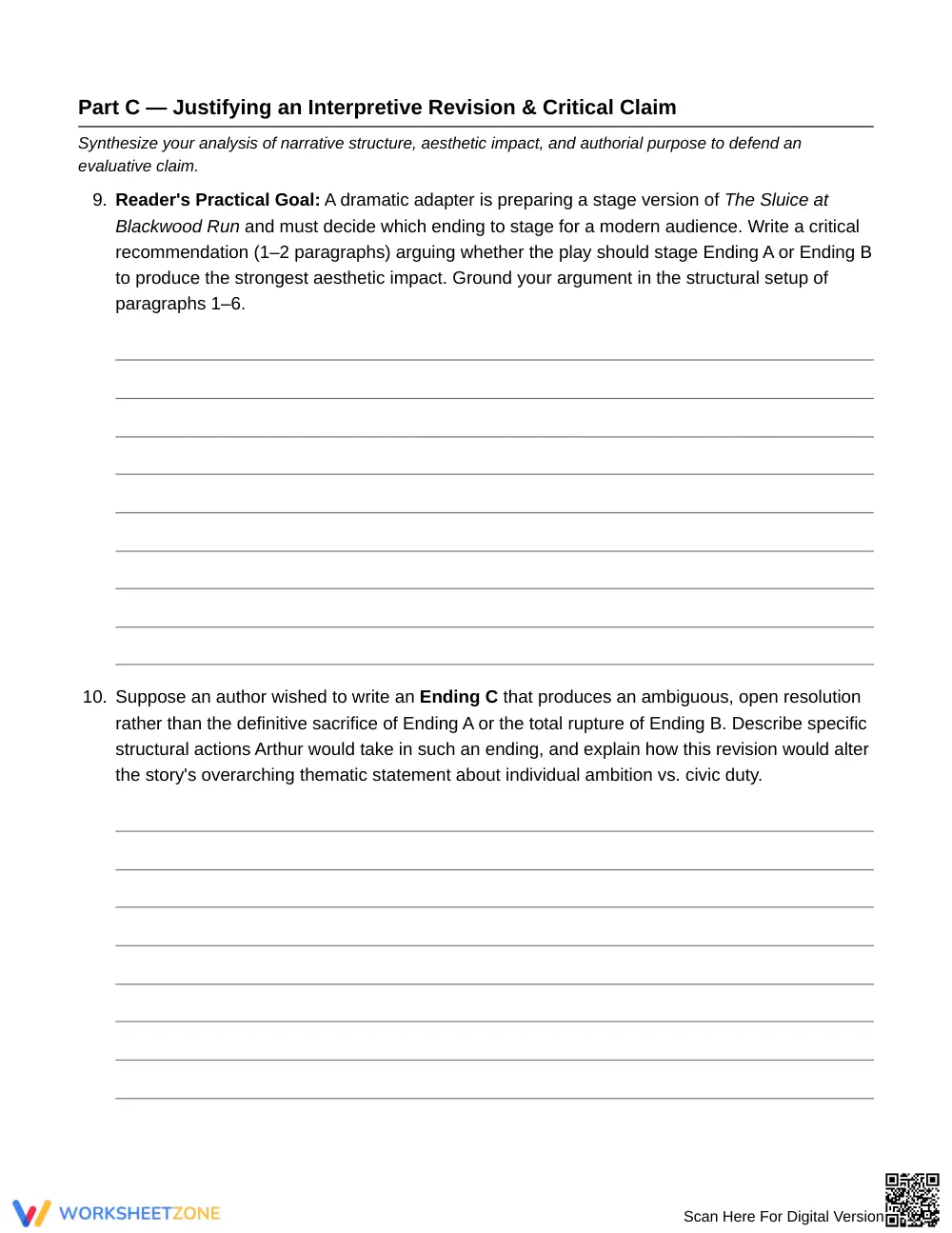
- Independent practice (Tasks 9–10): Students complete 2 synthesis prompts, defending a dramatic adaptation ending and designing an ambiguous third resolution.
This sequence implements gradual release, moving learners from guided constraint identification to independent structural synthesis.
Standards Alignment
This worksheet aligns primarily with `RL.11-12.5`: Analyze how an author's choices concerning how to structure specific parts of a text contribute to its overall structure and meaning as well as its aesthetic impact. It also supports `RL.11-12.1` through rigorous textual evidence citation. Both standard codes can be copied directly into lesson plans, IEP goals, or district curriculum mapping tools.
How to Use It
Use this worksheet after direct instruction on narrative structure and climax resolution. In a 45–60 minute session, have students read the text and complete Parts A and B in pairs before finishing Part C independently. Formatively assess Task 4 to evaluate if students trace motif transformations across divergent endings.
Who It's For
This resource serves Grade 11 English III and honors literature students mastering structural analysis. Differentiate by offering sentence frames for Part C synthesis prompts. Pair this packet with a realistic short story unit by Edith Wharton or Stephen Crane.
According to Fisher & Frey (2014), deep comprehension in upper-secondary English language arts relies on explicit instruction in structural text deconstruction and evaluative argumentation. Under standard `RL.11-12.5`, eleventh-grade students must analyze how specific structural choices, such as narrative resolutions, govern thematic meaning and aesthetic impact. This 6-page instructional resource operationalizes that research through counterfactual resolution testing, challenging students across 10 structured tasks to analyze how swapping a story's ending reshapes character morality, symbolic motifs, and genre expectations. By moving systematically from identifying pre-climax constraints in an original text to evaluating an alternative ending and proposing an ambiguous third resolution, learners engage in high-leverage structural reasoning. Supported by a 4-page explanatory answer key, this resource provides the necessary scaffolds for students to master complex authorial techniques, evaluate narrative architecture with precision, and substantiate analytical claims using robust textual evidence.


