




























Views
Downloads



Printable Theme vs. Central Idea Worksheet | Grade 8 ELA

Paste this activity's link or code into your existing LMS (Google Classroom, Canvas, Teams, Schoology, Moodle, etc.).
Students can open and work on the activity right away, with no student login required.
You'll still be able to track student progress and results from your teacher account.
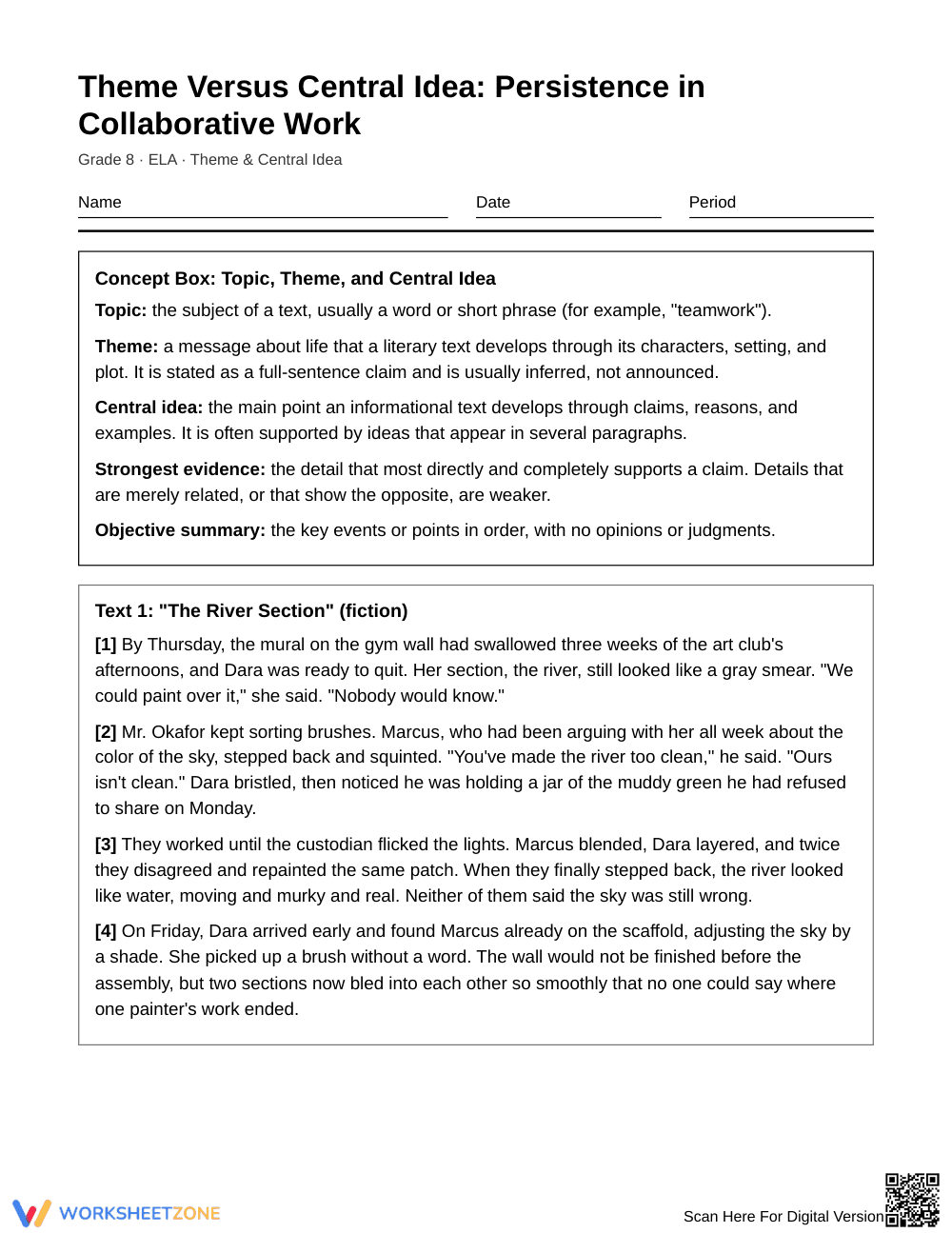
This Grade 8 worksheet teaches students to tell theme from central idea and to support each with strong text evidence. Students read one short story and one informational essay on persistence in teamwork, then distinguish topic from theme, choose the best evidence, and write justified explanations with paragraph citations.
At a Glance
- Grade: 8 · Subject: ELA
- Standard:
RL.8.2— Identify a theme, explain how it develops, and write an objective summary- Skill Focus: Distinguishing theme from central idea and choosing strongest evidence
- Format: 5 pages · 10 problems · Answer key included · PDF
- Best For: Text-evidence practice after theme instruction
- Time: 40–50 minutes
What's Inside
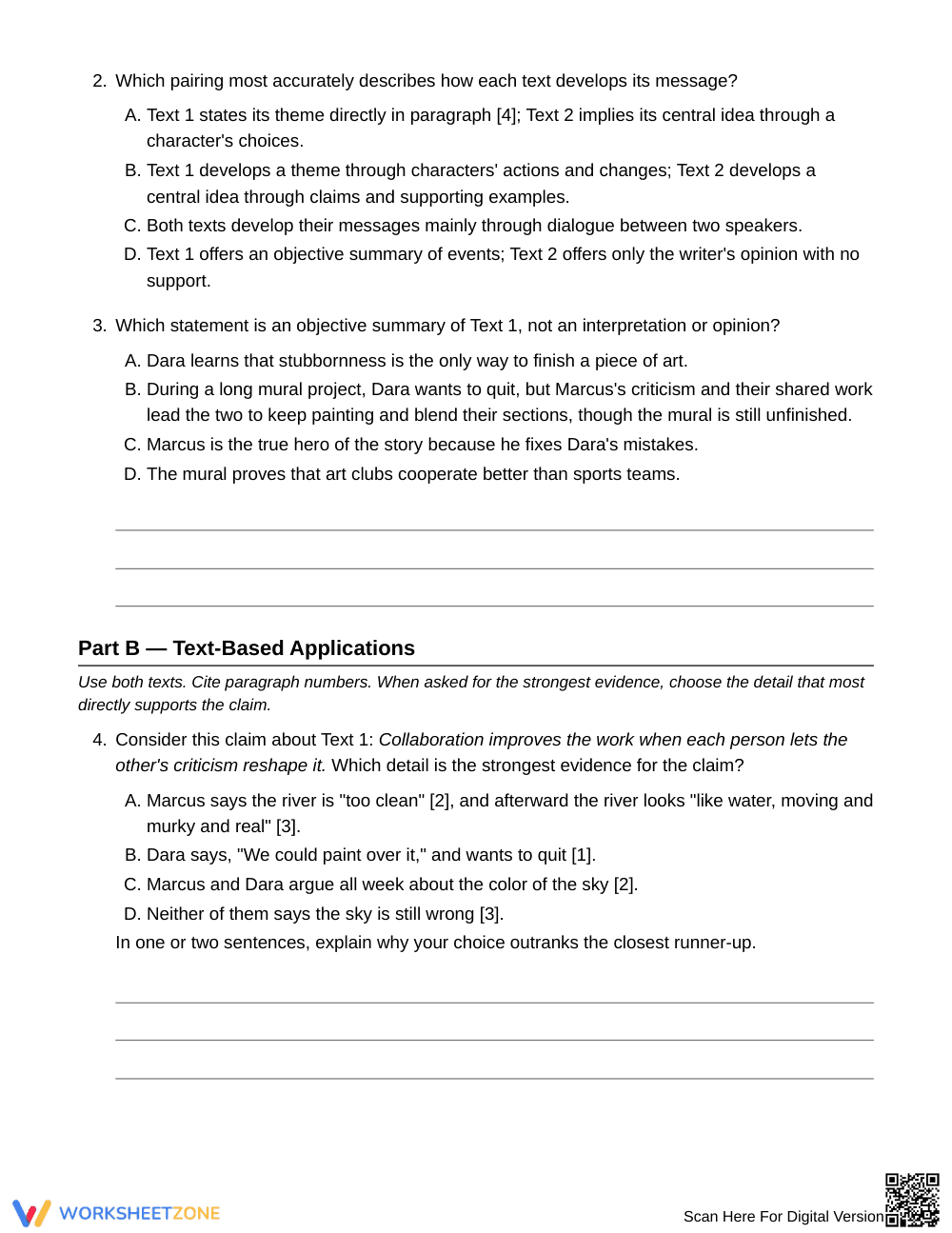
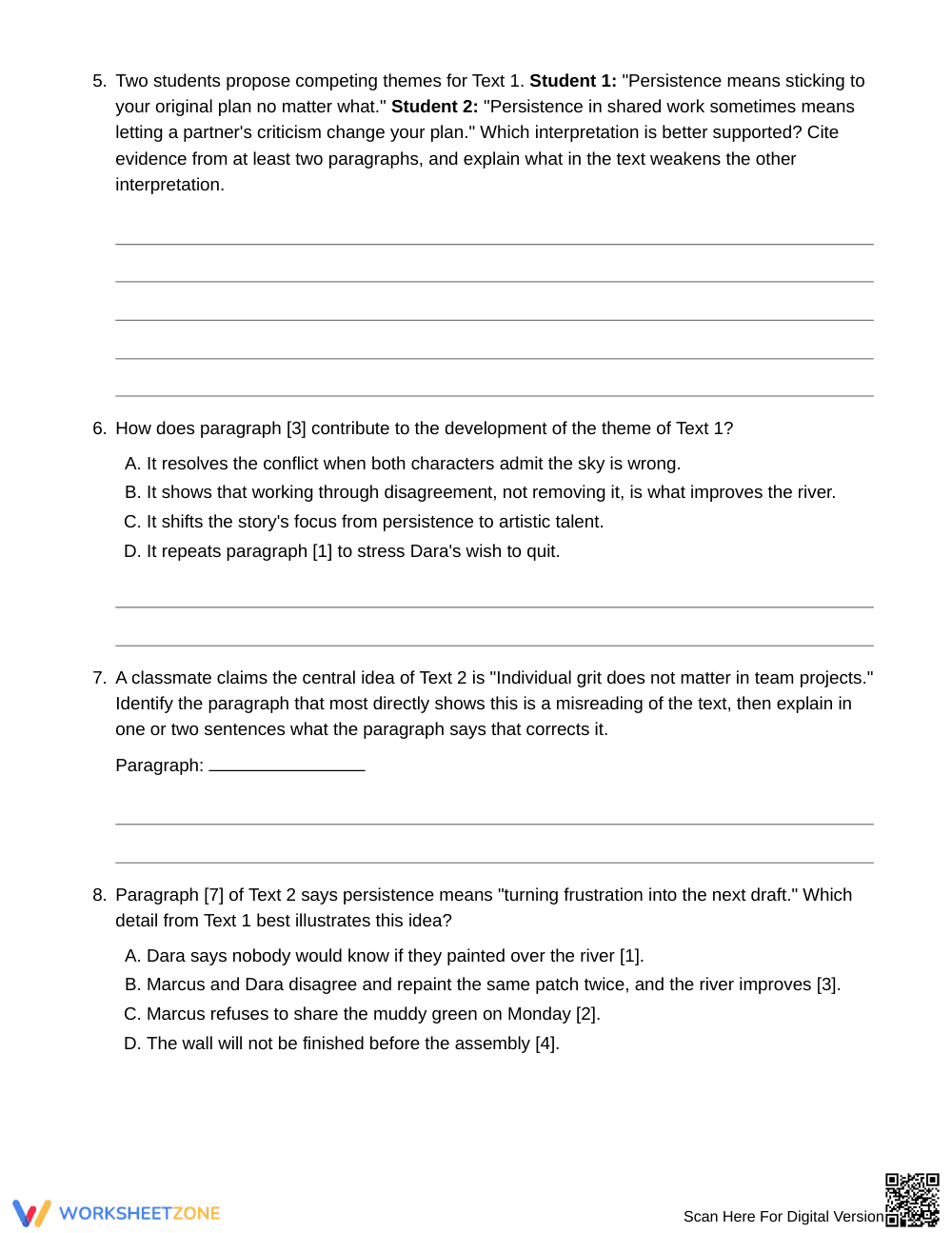
The 5-page packet opens with a concept box defining topic, theme, central idea, strongest evidence, and objective summary. Two short texts follow: a story, “The River Section,” and an essay, “Why Teams Keep Going.” Ten tasks mix multiple choice, evidence selection, and written responses. A 3-page answer key is included.
Skill Progression
- Guided practice (Part A, 3 problems): multiple choice with short justifications separates topic from theme and objective summary from opinion.
- Supported practice (Part B, 5 problems): students choose the strongest evidence, weigh competing themes, and cite paragraph numbers.
- Independent practice (Part C, 2 problems): students write a theme statement and a cross-text explanation.
The sequence follows gradual release: I Do, We Do, You Do.
Standards Alignment
RL.8.2: Determine a theme or central idea of a text and analyze its development over the course of the text, including its relationship to characters, setting, and plot; provide an objective summary of the text. This standard code can be copied directly into lesson plans, IEP goals, or district curriculum mapping tools.
How to Use It
Use it after direct instruction on theme: complete Part A together, then assign Parts B and C independently. Or use it as a formative check after the unit. Watch whether students cite paragraph numbers and write theme statements as full-sentence claims. Expect 40–50 minutes, or split it across two class periods.
Who It's For
Designed for Grade 8 students who can name a topic but struggle to state a theme as a claim. Support learners by completing Part A aloud or allowing oral responses for Part C. Pair it with a theme anchor chart or a mini-lesson on inferring messages from character change.
The Grade 8 ELA worksheet Theme Versus Central Idea targets RL.8.2, which asks students to determine a theme or central idea, analyze how it develops, and provide an objective summary. Across 10 tasks and 5 pages, students read a short story and an informational essay about persistence in teamwork, separate topic from theme, select the strongest textual evidence, and justify interpretations with paragraph citations. The structure reflects the gradual release of responsibility model described by Fisher & Frey (2014), moving from guided multiple-choice analysis to supported evidence work and finally independent written explanation. A 3-page answer key accompanies the packet. Teachers can use it as guided practice after direct instruction or as a formative check, and can pair it with an anchor chart on theme. Its central design principle is that students must defend a message with specific paragraphs, not simply name a subject or state an opinion.


