

































Printable Stylistic Voices Worksheet | Grade 11 English III

Paste this activity's link or code into your existing LMS (Google Classroom, Canvas, Teams, Schoology, Moodle, etc.).
Students can open and work on the activity right away, with no student login required.
You'll still be able to track student progress and results from your teacher account.
This worksheet teaches Grade 11 students to compare two distinct stylistic voices by tracing diction and syntax from evidence to effect to purpose. Students read a private reflective essay beside a public speech, then explain with quoted proof why each writer's choices fit a different audience.
At a Glance
- Grade: 11 · Subject: English III
- Standard: Style and craft analysis — compare how two writers' word choice and sentence structure create voice
- Skill Focus: Compare distinct stylistic voices
- Format: 6 pages · 10 problems · Answer key included · PDF
- Best For: Paired-text style analysis in English III
- Time: 45–60 minutes
What's Inside
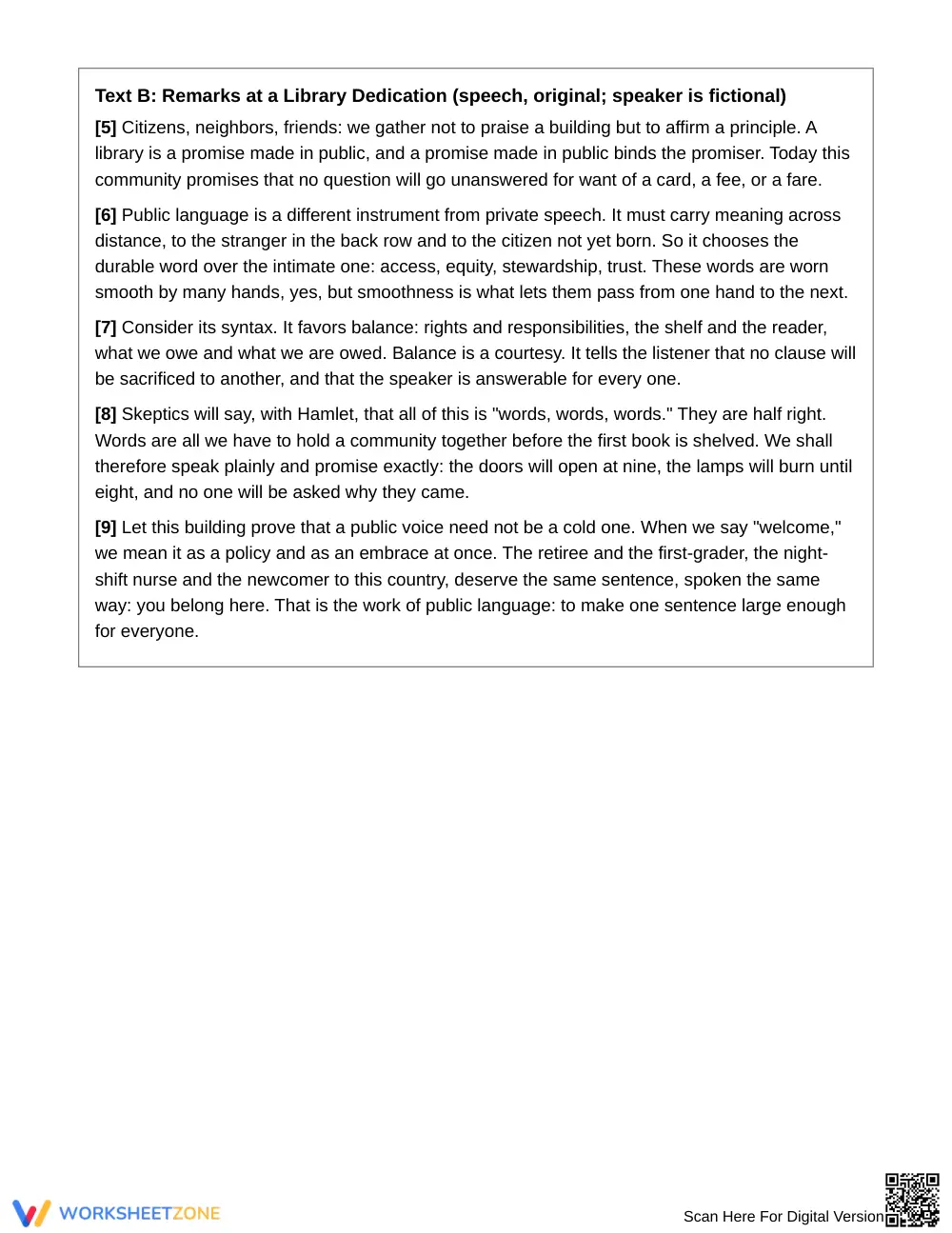
The packet includes a short reminder box on diction, syntax, and the evidence, effect, purpose chain, plus two original texts: a reflective essay and a library dedication speech. Ten tasks mix multiple choice, short written responses, and extended writing. A 3-page answer key follows.
Skill Progression
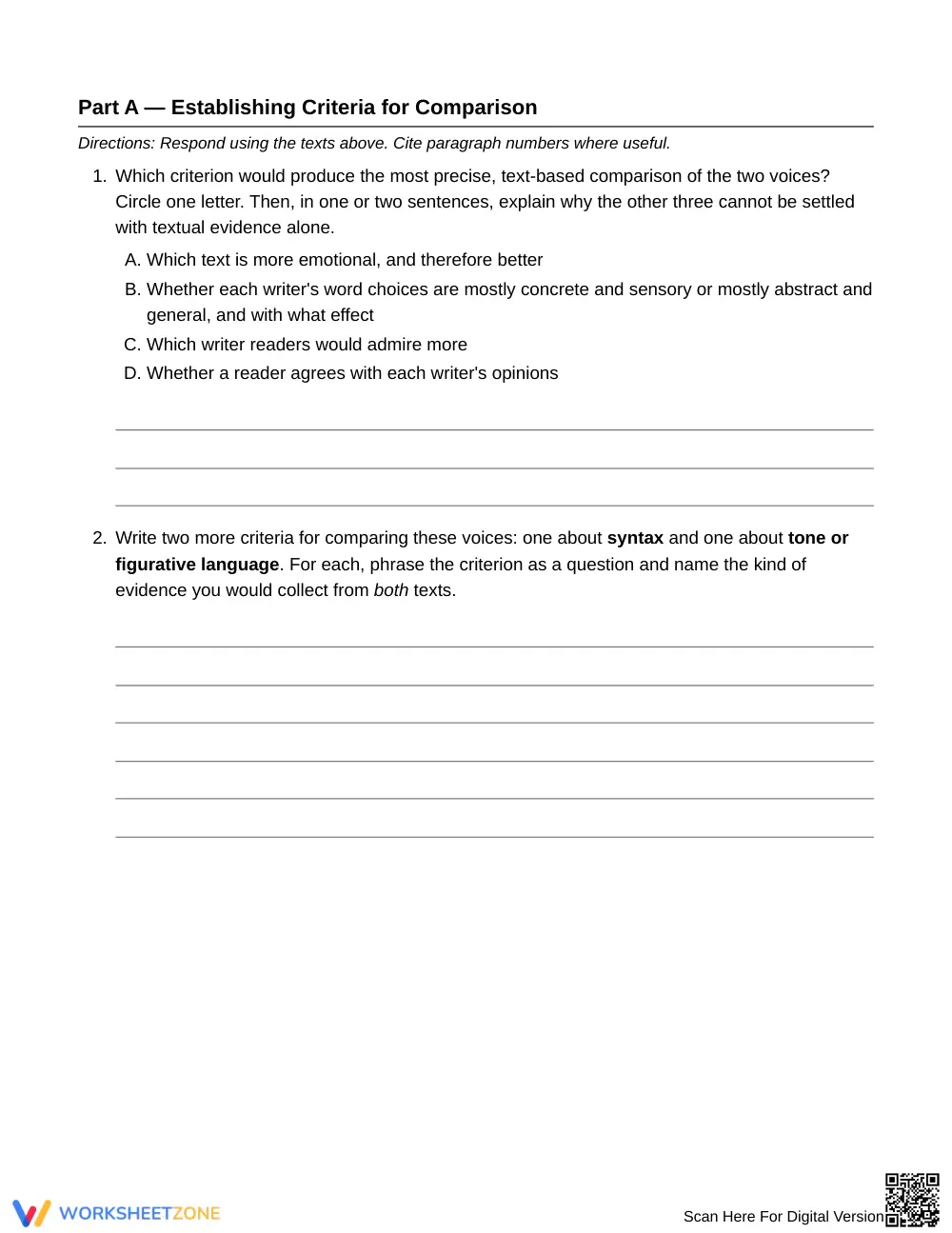
- Guided practice (Part A, 2 tasks): Students choose a text-based comparison criterion and write two of their own, with the reminder box as scaffold.
- Supported practice (Part B, 6 tasks): Three multiple-choice and three written items on connotation, metaphor, syntax, allusion, and a flawed claim.
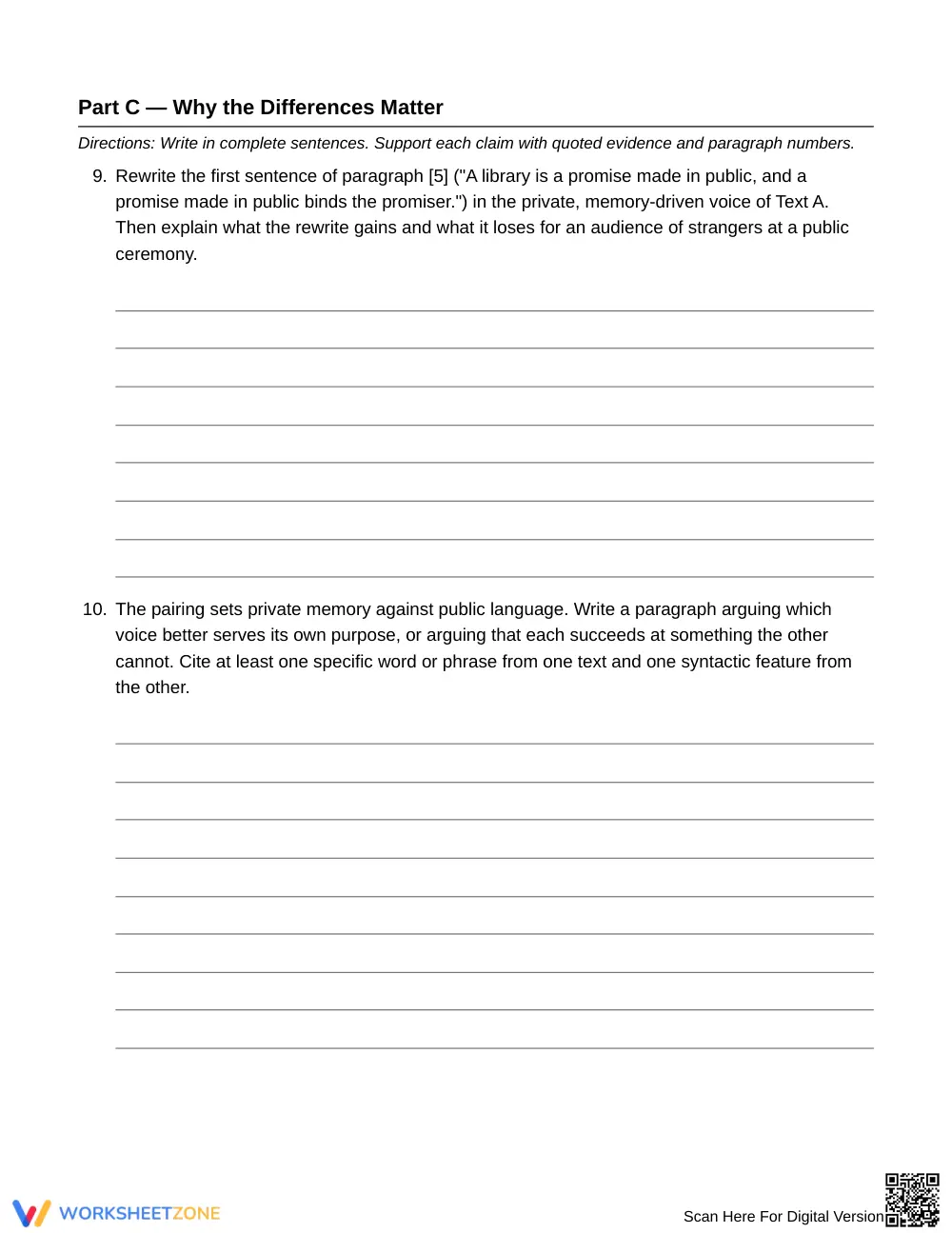
- Independent practice (Part C, 2 tasks): Students rewrite a sentence in the other voice, then argue which voice best serves its purpose.
This sequence follows gradual release: I Do, We Do, You Do.
Standards Alignment
No standard code is listed for this resource. It addresses the common Grade 11 expectation that students analyze how word choice and sentence structure shape voice, tone, and meaning across texts. Teachers can copy that skill statement into lesson plans, IEP goals, or district curriculum mapping tools.
How to Use It
- After direct instruction: Assign Parts A and B in class after a mini-lesson on diction and syntax.
- Before a style essay: Use Part C as a rehearsal for comparative writing.
While students work, listen for whether they quote exact words or only paraphrase. Expect 45–60 minutes.
Who It's For
Built for Grade 11 English III students who can already identify connotation and sentence structure and are ready to compare writers. Students needing support can complete Part A and the multiple-choice items first. Pair it with a short anchor chart on diction and syntax.
Private Memory, Public Language: Comparing Stylistic Voices is a Grade 11 English III worksheet that teaches students to compare distinct stylistic voices by analyzing diction and syntax in a reflective essay and a library dedication speech. Its 10 tasks move from choosing defensible comparison criteria, through paired-text analysis of connotation, metaphor, syntax, and allusion, to a closing argument about which voice best serves its purpose. The design follows the gradual-release model described by Fisher & Frey (2014), in which teachers shift responsibility from guided to independent work. Each response requires quoted evidence and paragraph numbers, so teachers can see whether a student is describing style or merely stating opinion. A three-page answer key supports quick, consistent scoring across class periods. The skill is transferable to any pair of texts: name the evidence, explain the effect, and state the purpose for the intended audience.


