





























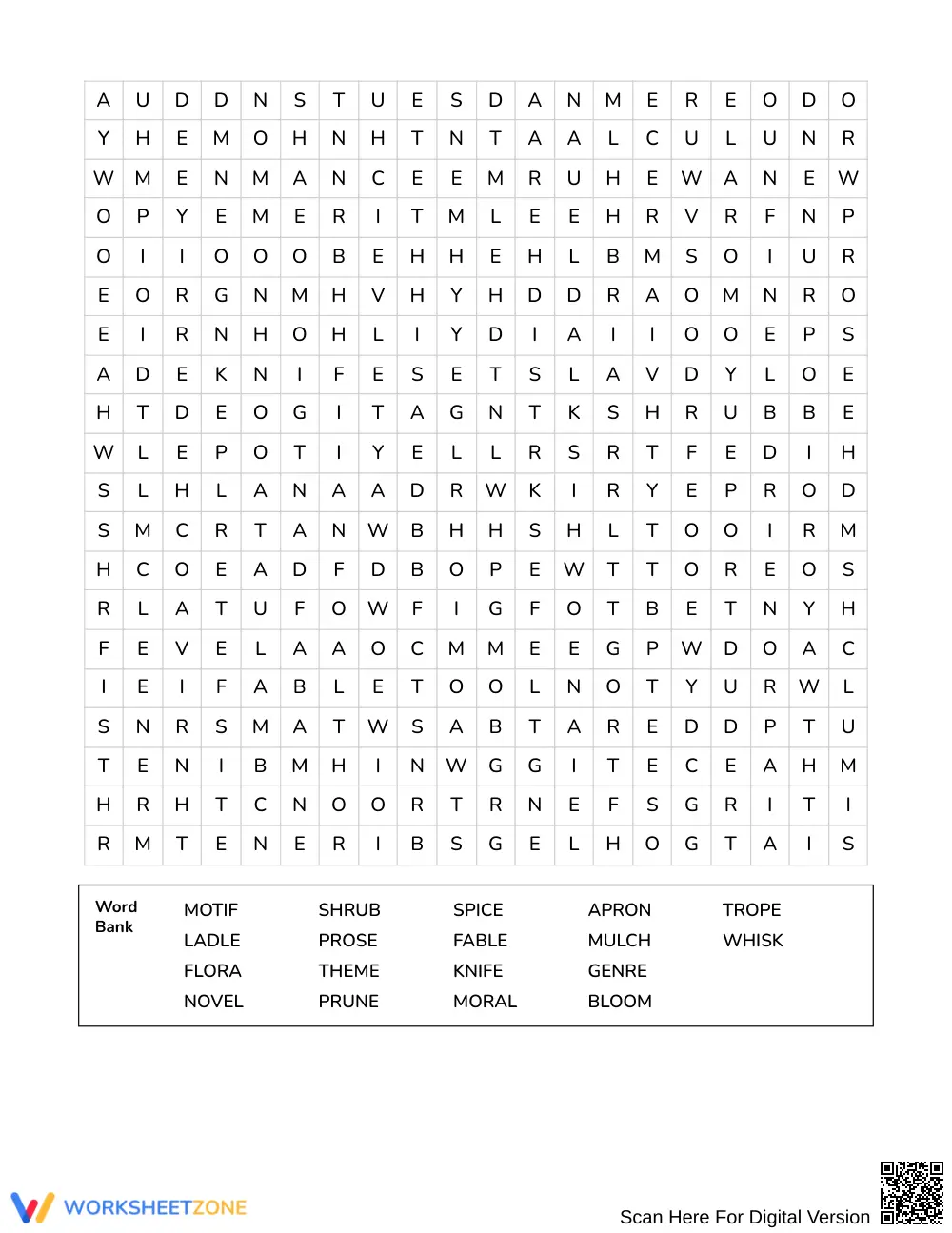


Printable Storytelling Word Search | Grades 7–8 ELA

Paste this activity's link or code into your existing LMS (Google Classroom, Canvas, Teams, Schoology, Moodle, etc.).
Students can open and work on the activity right away, with no student login required.
You'll still be able to track student progress and results from your teacher account.
This Grades 7–8 storytelling vocabulary word search reinforces essential literary and descriptive terminology through definition-driven retrieval practice. Students read content-rich clues defining critical reading concepts before locating target terms within the letter matrix, strengthening word recognition, contextual comprehension, and recall across multi-syllabic English language arts vocabulary.
At a Glance
- Grade: Grades 7–8 · Subject: English Language Arts (ELA)
- Standard: Not standards-assessed — vocabulary enrichment
- Skill Focus: Storytelling and reading words
- Format: 3 pages · 18 words · Answer key included · PDF
- Best For: Vocabulary review and literacy stations
- Time: 20–30 minutes
What's Inside: The resource features an 18-word puzzle spread across 3 pages, complete with an answer key for self-checking or teacher grading. Rather than a basic word list, students review clue-based definitions that target key literary elements such as theme, motif, prose, and genre, alongside descriptive setting terminology. A shuffled word bank encourages active recall before searching.
Puzzle Mechanics: The activity features a challenging 20 × 20 letter grid containing 18 hidden vocabulary words. Words are positioned in all eight possible directions: North, Northeast, East, Southeast, South, Southwest, West, and Northwest. Students read detailed definition clues, verify their target terms in the shuffled word bank, and track down diagonal and backward letter sequences across the letter grid.
Standards Alignment: This activity is designed as vocabulary enrichment and is not formally aligned to a specific grade-level standard. It provides supplementary practice that reinforces literary terminology and content vocabulary across general middle school reading curricula without prescriptive assessment criteria.
How to Use It: Deploy this puzzle after direct instruction in literary devices to solidify core concepts during independent practice, or place it in a reading station as a collaborative sponge activity. While students work, conduct a brief formative check by asking learners to explain how their identified words—such as motif or prose—apply to their current anchor text. Typical completion requires 20 to 30 minutes.
Who It's For: Designed for Grades 7–8 English Language Arts students, this puzzle supports general education classes and English language learners needing contextual vocabulary reinforcement. Pair this activity directly with a short story unit, class novel study, or an elements-of-fiction anchor chart to anchor abstract terminology in concrete narrative reading.
Vocabulary acquisition in middle school literacy requires regular exposure to academic terminology paired with active retrieval strategies. According to Fisher & Frey (2014), intentional word exposure through varied instructional tasks enables learners to bridge receptive vocabulary recognition and expressive textual analysis. This Grades 7–8 storytelling vocabulary word search supports deep lexical processing by requiring students to decode explicit definition clues prior to searching an 18-word grid. Rather than engaging in passive letter scanning, learners connect critical narrative concepts such as theme, motif, and genre directly to their literary definitions. The cognitive challenge of identifying terms across multiple spatial orientations reinforces orthographic memory, spelling patterns, and semantic associations essential for adolescent reading comprehension. By grounding gamified practice in rigorous definitions, this puzzle provides structured vocabulary enrichment that strengthens general reading fluency and literary discourse across secondary English classrooms.


